Request Demo
What are Alpha glucosidase replacements and how do they work?
21 June 2024
Alpha glucosidase replacements are an exciting area of medical research and treatment that hold great promise for individuals suffering from metabolic disorders. This article aims to shed light on what these replacements are, how they function, and their practical applications in modern medicine.
Alpha glucosidase is an enzyme crucial for the breakdown of complex carbohydrates into simpler sugars, such as glucose. This process allows the body to absorb and utilize carbohydrates as a source of energy. People who suffer from deficiencies in this enzyme, such as those with Pompe disease, experience an array of debilitating symptoms due to the accumulation of glycogen in the body’s tissues, particularly in muscles. Alpha glucosidase replacements serve as an essential treatment for these conditions, providing patients with a synthetic or recombinant form of the enzyme that their bodies lack.
Alpha glucosidase replacements work by mimicking the natural function of the enzyme. These replacements are typically created through recombinant DNA technology, where the gene responsible for producing alpha glucosidase is inserted into a host cell, often yeast or bacteria. The host cells then produce the enzyme, which is subsequently harvested and purified for medical use.
When administered to patients, the replacement enzyme travels through the bloodstream to various tissues where it breaks down glycogen into glucose. The process effectively reduces the harmful buildup of glycogen, alleviating symptoms and improving overall health. The therapy usually requires regular infusions, which are personalized to meet the specific needs and conditions of each patient.
One of the most significant uses of alpha glucosidase replacements is in the treatment of Pompe disease, also known as glycogen storage disease type II. This is a rare, inherited disorder characterized by the buildup of glycogen in the lysosomes due to the deficiency of the enzyme acid alpha-glucosidase (GAA). Without proper treatment, the disease can lead to severe muscle weakness, respiratory difficulties, and even death. The introduction of alpha glucosidase replacements has dramatically enhanced the quality of life and life expectancy for individuals with Pompe disease. The first such treatment, alglucosidase alfa, was approved by the FDA in 2006 and has since been a cornerstone in the management of the condition.
Beyond Pompe disease, research is ongoing to explore the potential of alpha glucosidase replacements in treating other metabolic disorders. While Pompe disease is the primary condition treated with these replacements today, scientists are investigating how this approach can be adapted for other glycogen storage diseases and related metabolic conditions. The versatility of recombinant enzyme technology suggests that it may have far-reaching implications beyond its current uses.
Moreover, alpha glucosidase replacements are also being studied for their role in improving outcomes in critical care settings. Patients in intensive care units often experience acute conditions that impair their metabolism, and supplemental enzymes might help stabilize their metabolic functions. While this is still an emerging field of research, the preliminary results are promising and could broaden the scope of how these enzyme replacements are utilized in medical practice.
In conclusion, alpha glucosidase replacements represent a vital advancement in the treatment of metabolic disorders, especially for those suffering from Pompe disease. By providing a synthetic version of a deficient enzyme, these treatments help manage and mitigate the symptoms of debilitating conditions, offering patients a new lease on life. As research continues, it is likely that the scope of applications for alpha glucosidase replacements will expand, offering hope to even more individuals with metabolic disorders. The journey of enzyme replacement therapy is still unfolding, but its impact is already profoundly felt in the world of medical science.
Alpha glucosidase is an enzyme crucial for the breakdown of complex carbohydrates into simpler sugars, such as glucose. This process allows the body to absorb and utilize carbohydrates as a source of energy. People who suffer from deficiencies in this enzyme, such as those with Pompe disease, experience an array of debilitating symptoms due to the accumulation of glycogen in the body’s tissues, particularly in muscles. Alpha glucosidase replacements serve as an essential treatment for these conditions, providing patients with a synthetic or recombinant form of the enzyme that their bodies lack.
Alpha glucosidase replacements work by mimicking the natural function of the enzyme. These replacements are typically created through recombinant DNA technology, where the gene responsible for producing alpha glucosidase is inserted into a host cell, often yeast or bacteria. The host cells then produce the enzyme, which is subsequently harvested and purified for medical use.
When administered to patients, the replacement enzyme travels through the bloodstream to various tissues where it breaks down glycogen into glucose. The process effectively reduces the harmful buildup of glycogen, alleviating symptoms and improving overall health. The therapy usually requires regular infusions, which are personalized to meet the specific needs and conditions of each patient.
One of the most significant uses of alpha glucosidase replacements is in the treatment of Pompe disease, also known as glycogen storage disease type II. This is a rare, inherited disorder characterized by the buildup of glycogen in the lysosomes due to the deficiency of the enzyme acid alpha-glucosidase (GAA). Without proper treatment, the disease can lead to severe muscle weakness, respiratory difficulties, and even death. The introduction of alpha glucosidase replacements has dramatically enhanced the quality of life and life expectancy for individuals with Pompe disease. The first such treatment, alglucosidase alfa, was approved by the FDA in 2006 and has since been a cornerstone in the management of the condition.
Beyond Pompe disease, research is ongoing to explore the potential of alpha glucosidase replacements in treating other metabolic disorders. While Pompe disease is the primary condition treated with these replacements today, scientists are investigating how this approach can be adapted for other glycogen storage diseases and related metabolic conditions. The versatility of recombinant enzyme technology suggests that it may have far-reaching implications beyond its current uses.
Moreover, alpha glucosidase replacements are also being studied for their role in improving outcomes in critical care settings. Patients in intensive care units often experience acute conditions that impair their metabolism, and supplemental enzymes might help stabilize their metabolic functions. While this is still an emerging field of research, the preliminary results are promising and could broaden the scope of how these enzyme replacements are utilized in medical practice.
In conclusion, alpha glucosidase replacements represent a vital advancement in the treatment of metabolic disorders, especially for those suffering from Pompe disease. By providing a synthetic version of a deficient enzyme, these treatments help manage and mitigate the symptoms of debilitating conditions, offering patients a new lease on life. As research continues, it is likely that the scope of applications for alpha glucosidase replacements will expand, offering hope to even more individuals with metabolic disorders. The journey of enzyme replacement therapy is still unfolding, but its impact is already profoundly felt in the world of medical science.
How to obtain the latest development progress of all targets?
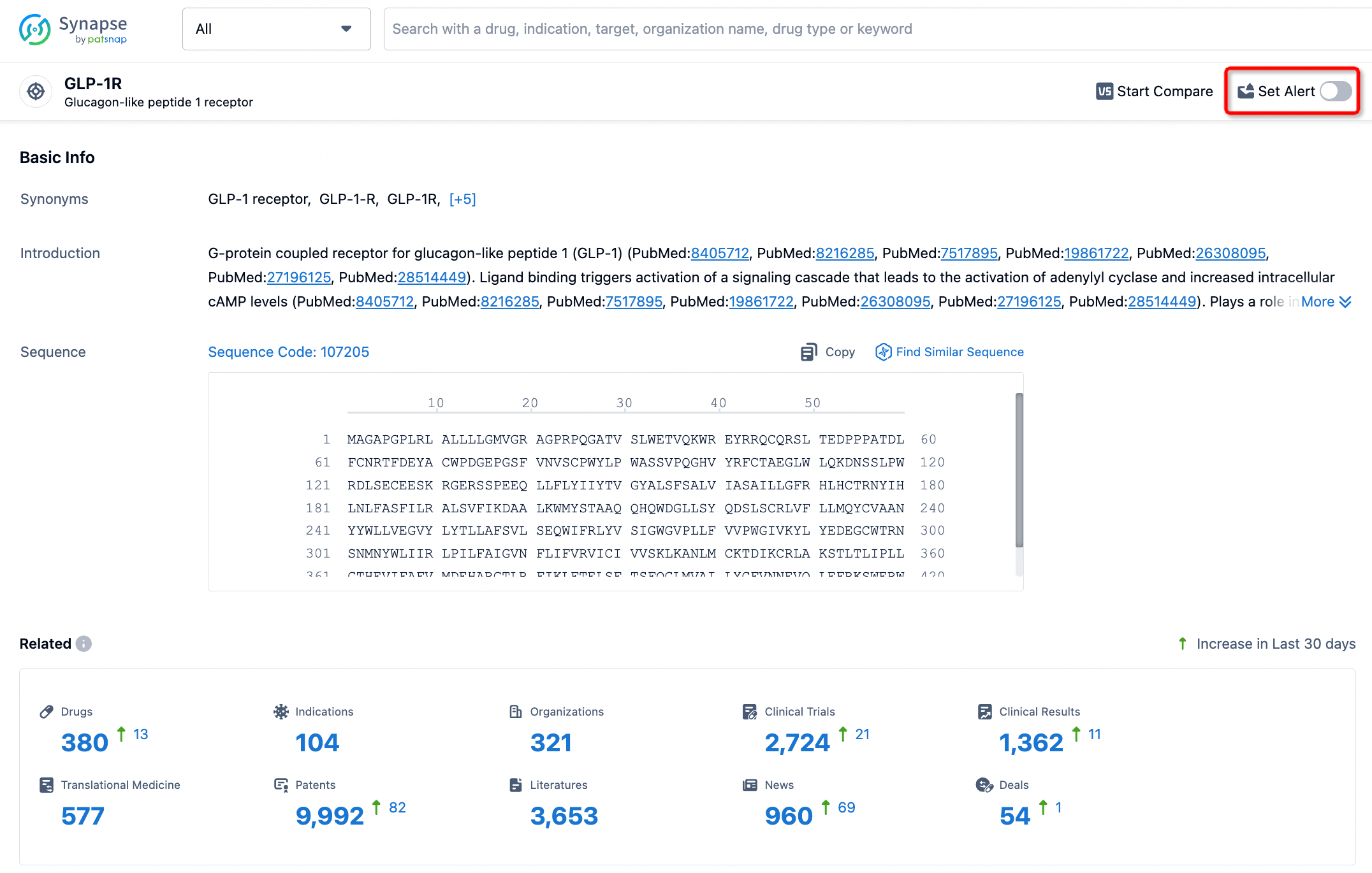
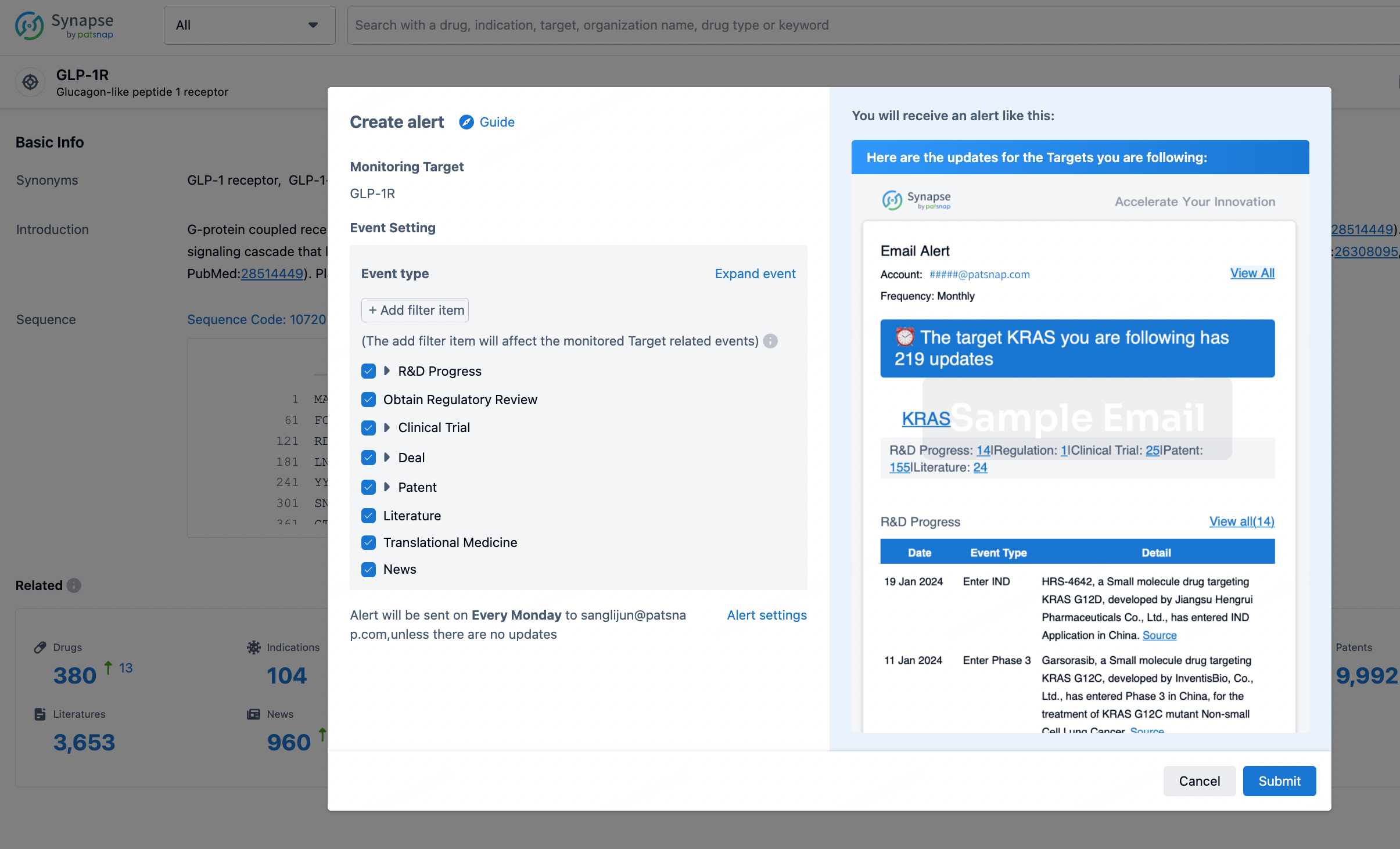
In the Synapse database, you can stay updated on the latest research and development advances of all targets. This service is accessible anytime and anywhere, with updates available daily or weekly. Use the "Set Alert" function to stay informed. Click on the image below to embark on a brand new journey of drug discovery!

AI Agents Built for Biopharma Breakthroughs
Accelerate discovery. Empower decisions. Transform outcomes.
Get started for free today!
Accelerate Strategic R&D decision making with Synapse, PatSnap’s AI-powered Connected Innovation Intelligence Platform Built for Life Sciences Professionals.
Start your data trial now!
Synapse data is also accessible to external entities via APIs or data packages. Empower better decisions with the latest in pharmaceutical intelligence.