Request Demo
What are ALPI modulators and how do they work?
25 June 2024
In the rapidly advancing field of biotechnology, one of the most exciting areas of development is the manipulation of gene expression. ALPI modulators, short for Acyclic Lignan Phosphoinositol modulators, represent a significant leap in this technology. These compounds are designed to influence gene activity in precise and controllable ways, making them invaluable tools for both research and therapeutic applications. Let's delve into what ALPI modulators are, how they function, and their various applications in the scientific and medical communities.
ALPI modulators are a class of bioactive molecules that interact with specific cellular pathways to regulate gene expression. Unlike traditional genetic modification techniques, which often involve permanent changes to the DNA sequence, ALPI modulators offer a reversible and more nuanced approach. This characteristic allows for greater flexibility and control, making them particularly useful for dynamic studies of gene function and regulation.
The working mechanism of ALPI modulators is both intricate and fascinating. These modulators typically operate by binding to receptor sites on the cell membrane, which in turn initiates a cascade of intracellular events. This signaling cascade often involves the activation or inhibition of certain enzymes, transcription factors, or other proteins that directly or indirectly influence gene expression. By modulating these pathways, ALPI modulators can either upregulate or downregulate the activity of specific genes.
One of the key advantages of ALPI modulators is their specificity. They are designed to interact with particular molecular targets, minimizing off-target effects and reducing potential side effects. This specificity is achieved through meticulous chemical engineering, where the structure of the modulator is tailored to fit the active site of its target precisely. Furthermore, the reversibility of ALPI modulator action allows for transient modulation of gene activity, which is particularly useful in experimental settings where temporary changes are desirable.
ALPI modulators are used in a wide range of applications, reflecting their versatility and efficacy. In the realm of basic research, these modulators are invaluable for studying gene function and regulation. Scientists can use ALPI modulators to transiently activate or inhibit specific genes, allowing them to observe the resultant phenotypic changes and gain insights into the gene's role in various biological processes. This approach is especially useful for studying genes that are essential for cell survival, where permanent knockout would be lethal.
In the field of medicine, ALPI modulators hold great promise for therapeutic interventions. By precisely regulating gene expression, these modulators can be used to correct genetic imbalances associated with various diseases. For instance, in cancer therapy, ALPI modulators can be designed to downregulate oncogenes or upregulate tumor suppressor genes, thereby inhibiting cancer cell proliferation and promoting apoptosis. Similarly, in genetic disorders caused by the overexpression or underexpression of specific genes, ALPI modulators offer a targeted approach to restore normal gene activity.
Beyond their use in research and therapy, ALPI modulators are also being explored for their potential in enhancing agricultural productivity. By modulating the expression of genes involved in growth, stress response, and disease resistance, these modulators can help develop crops that are more resilient and higher yielding. This application is particularly relevant in the context of climate change, where developing crops that can withstand extreme conditions is of paramount importance.
In conclusion, ALPI modulators represent a powerful and versatile tool in the field of biotechnology. Their ability to precisely and reversibly modulate gene expression opens up numerous possibilities for research, therapeutic, and agricultural applications. As our understanding of gene regulation continues to expand, the development and utilization of ALPI modulators are likely to play an increasingly prominent role, heralding a new era of targeted and efficient genetic manipulation.
ALPI modulators are a class of bioactive molecules that interact with specific cellular pathways to regulate gene expression. Unlike traditional genetic modification techniques, which often involve permanent changes to the DNA sequence, ALPI modulators offer a reversible and more nuanced approach. This characteristic allows for greater flexibility and control, making them particularly useful for dynamic studies of gene function and regulation.
The working mechanism of ALPI modulators is both intricate and fascinating. These modulators typically operate by binding to receptor sites on the cell membrane, which in turn initiates a cascade of intracellular events. This signaling cascade often involves the activation or inhibition of certain enzymes, transcription factors, or other proteins that directly or indirectly influence gene expression. By modulating these pathways, ALPI modulators can either upregulate or downregulate the activity of specific genes.
One of the key advantages of ALPI modulators is their specificity. They are designed to interact with particular molecular targets, minimizing off-target effects and reducing potential side effects. This specificity is achieved through meticulous chemical engineering, where the structure of the modulator is tailored to fit the active site of its target precisely. Furthermore, the reversibility of ALPI modulator action allows for transient modulation of gene activity, which is particularly useful in experimental settings where temporary changes are desirable.
ALPI modulators are used in a wide range of applications, reflecting their versatility and efficacy. In the realm of basic research, these modulators are invaluable for studying gene function and regulation. Scientists can use ALPI modulators to transiently activate or inhibit specific genes, allowing them to observe the resultant phenotypic changes and gain insights into the gene's role in various biological processes. This approach is especially useful for studying genes that are essential for cell survival, where permanent knockout would be lethal.
In the field of medicine, ALPI modulators hold great promise for therapeutic interventions. By precisely regulating gene expression, these modulators can be used to correct genetic imbalances associated with various diseases. For instance, in cancer therapy, ALPI modulators can be designed to downregulate oncogenes or upregulate tumor suppressor genes, thereby inhibiting cancer cell proliferation and promoting apoptosis. Similarly, in genetic disorders caused by the overexpression or underexpression of specific genes, ALPI modulators offer a targeted approach to restore normal gene activity.
Beyond their use in research and therapy, ALPI modulators are also being explored for their potential in enhancing agricultural productivity. By modulating the expression of genes involved in growth, stress response, and disease resistance, these modulators can help develop crops that are more resilient and higher yielding. This application is particularly relevant in the context of climate change, where developing crops that can withstand extreme conditions is of paramount importance.
In conclusion, ALPI modulators represent a powerful and versatile tool in the field of biotechnology. Their ability to precisely and reversibly modulate gene expression opens up numerous possibilities for research, therapeutic, and agricultural applications. As our understanding of gene regulation continues to expand, the development and utilization of ALPI modulators are likely to play an increasingly prominent role, heralding a new era of targeted and efficient genetic manipulation.
How to obtain the latest development progress of all targets?
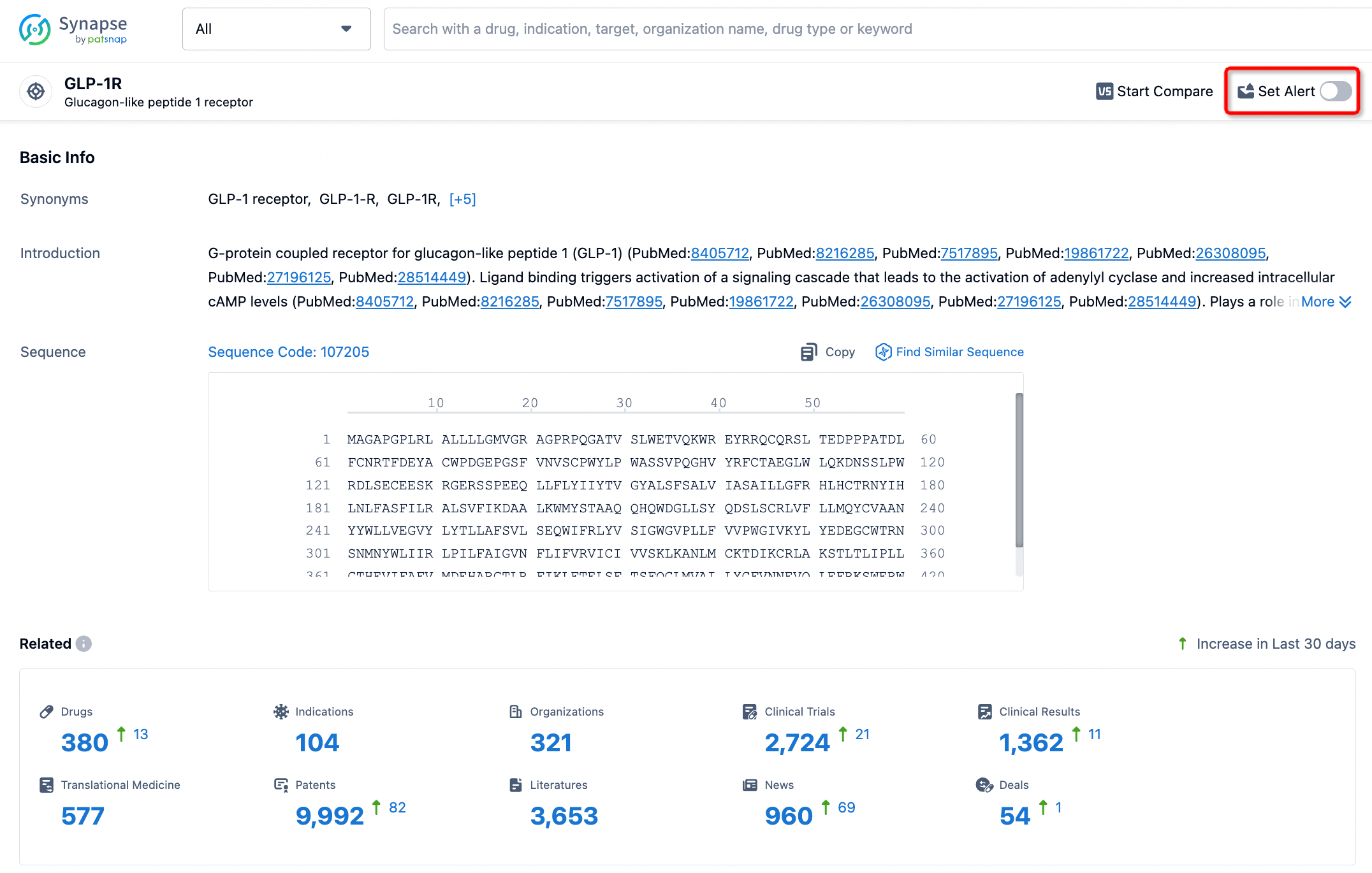
In the Synapse database, you can stay updated on the latest research and development advances of all targets. This service is accessible anytime and anywhere, with updates available daily or weekly. Use the "Set Alert" function to stay informed. Click on the image below to embark on a brand new journey of drug discovery!


AI Agents Built for Biopharma Breakthroughs
Accelerate discovery. Empower decisions. Transform outcomes.
Get started for free today!
Accelerate Strategic R&D decision making with Synapse, PatSnap’s AI-powered Connected Innovation Intelligence Platform Built for Life Sciences Professionals.
Start your data trial now!
Synapse data is also accessible to external entities via APIs or data packages. Empower better decisions with the latest in pharmaceutical intelligence.