Request Demo
What are ANGPTL8 antagonists and how do they work?
25 June 2024
In recent years, the realm of biomedical research has illuminated new pathways and targets for the treatment of metabolic diseases. One such promising frontier is the antagonism of angiopoietin-like protein 8 (ANGPTL8), a protein intricately linked to lipid metabolism and energy homeostasis. As researchers continue to unravel the complexities of metabolic disorders like diabetes and obesity, ANGPTL8 antagonists have emerged as potential therapeutic agents. This blog post delves into the mechanisms of ANGPTL8 antagonists, their mode of action, and their potential applications in modern medicine.
ANGPTL8, also known as betatrophin, is a member of the angiopoietin-like protein family. It plays a crucial role in the regulation of lipid metabolism by influencing the activity of lipoprotein lipase (LPL), an enzyme essential for the hydrolysis of triglycerides in lipoproteins. ANGPTL8 expression is primarily found in the liver and adipose tissues, and its levels are known to fluctuate with nutritional status, such as fasting and feeding. The protein is particularly interesting to researchers because of its dual role in both promoting lipid accumulation during feeding and mobilizing energy stores during fasting.
ANGPTL8 antagonists are compounds designed to inhibit the activity of ANGPTL8, thereby modulating its effect on lipid metabolism. The primary mechanism by which these antagonists function is through the inhibition of ANGPTL8's interaction with LPL. Normally, ANGPTL8 binds to LPL and inhibits its activity, leading to increased plasma triglyceride levels. By blocking this interaction, ANGPTL8 antagonists allow LPL to remain active, thus promoting the breakdown of triglycerides into free fatty acids and glycerol. This process can effectively lower plasma triglyceride levels and improve lipid profiles.
Moreover, ANGPTL8 antagonists may also influence glucose metabolism. Although the exact mechanisms are still being studied, evidence suggests that by modulating lipid metabolism, these antagonists can indirectly affect insulin sensitivity and glucose uptake in tissues. This is significant given the close relationship between lipid and glucose metabolic pathways.
The therapeutic potential of ANGPTL8 antagonists is vast, particularly in the treatment of metabolic disorders such as hypertriglyceridemia, obesity, and type 2 diabetes. Hypertriglyceridemia, characterized by elevated levels of triglycerides in the blood, is a major risk factor for cardiovascular diseases. By reducing triglyceride levels, ANGPTL8 antagonists could help mitigate this risk and offer a novel approach to managing cardiovascular health.
In the context of obesity and type 2 diabetes, ANGPTL8 antagonists hold promise due to their ability to enhance lipid metabolism and potentially improve insulin sensitivity. Obesity is often accompanied by dyslipidemia and insulin resistance, both of which are key contributors to the development of type 2 diabetes. By promoting the breakdown of triglycerides and improving lipid profiles, ANGPTL8 antagonists could support weight management and metabolic health, thus offering a dual benefit for individuals struggling with these conditions.
Furthermore, the ability of ANGPTL8 antagonists to influence energy homeostasis and lipid utilization makes them attractive candidates for addressing non-alcoholic fatty liver disease (NAFLD). NAFLD, characterized by excessive fat accumulation in liver cells, is closely linked to metabolic syndrome and can progress to more severe liver conditions. By enhancing the breakdown of triglycerides, ANGPTL8 antagonists may help reduce hepatic fat content and ameliorate the symptoms of NAFLD.
In conclusion, ANGPTL8 antagonists represent a significant advancement in the field of metabolic disease research. By targeting a key regulator of lipid metabolism, these compounds offer a new avenue for the treatment of hypertriglyceridemia, obesity, type 2 diabetes, and potentially other metabolic disorders. As research progresses and clinical trials advance, the hope is that ANGPTL8 antagonists will become a valuable addition to the therapeutic arsenal, improving the quality of life for millions of individuals affected by metabolic diseases.
ANGPTL8, also known as betatrophin, is a member of the angiopoietin-like protein family. It plays a crucial role in the regulation of lipid metabolism by influencing the activity of lipoprotein lipase (LPL), an enzyme essential for the hydrolysis of triglycerides in lipoproteins. ANGPTL8 expression is primarily found in the liver and adipose tissues, and its levels are known to fluctuate with nutritional status, such as fasting and feeding. The protein is particularly interesting to researchers because of its dual role in both promoting lipid accumulation during feeding and mobilizing energy stores during fasting.
ANGPTL8 antagonists are compounds designed to inhibit the activity of ANGPTL8, thereby modulating its effect on lipid metabolism. The primary mechanism by which these antagonists function is through the inhibition of ANGPTL8's interaction with LPL. Normally, ANGPTL8 binds to LPL and inhibits its activity, leading to increased plasma triglyceride levels. By blocking this interaction, ANGPTL8 antagonists allow LPL to remain active, thus promoting the breakdown of triglycerides into free fatty acids and glycerol. This process can effectively lower plasma triglyceride levels and improve lipid profiles.
Moreover, ANGPTL8 antagonists may also influence glucose metabolism. Although the exact mechanisms are still being studied, evidence suggests that by modulating lipid metabolism, these antagonists can indirectly affect insulin sensitivity and glucose uptake in tissues. This is significant given the close relationship between lipid and glucose metabolic pathways.
The therapeutic potential of ANGPTL8 antagonists is vast, particularly in the treatment of metabolic disorders such as hypertriglyceridemia, obesity, and type 2 diabetes. Hypertriglyceridemia, characterized by elevated levels of triglycerides in the blood, is a major risk factor for cardiovascular diseases. By reducing triglyceride levels, ANGPTL8 antagonists could help mitigate this risk and offer a novel approach to managing cardiovascular health.
In the context of obesity and type 2 diabetes, ANGPTL8 antagonists hold promise due to their ability to enhance lipid metabolism and potentially improve insulin sensitivity. Obesity is often accompanied by dyslipidemia and insulin resistance, both of which are key contributors to the development of type 2 diabetes. By promoting the breakdown of triglycerides and improving lipid profiles, ANGPTL8 antagonists could support weight management and metabolic health, thus offering a dual benefit for individuals struggling with these conditions.
Furthermore, the ability of ANGPTL8 antagonists to influence energy homeostasis and lipid utilization makes them attractive candidates for addressing non-alcoholic fatty liver disease (NAFLD). NAFLD, characterized by excessive fat accumulation in liver cells, is closely linked to metabolic syndrome and can progress to more severe liver conditions. By enhancing the breakdown of triglycerides, ANGPTL8 antagonists may help reduce hepatic fat content and ameliorate the symptoms of NAFLD.
In conclusion, ANGPTL8 antagonists represent a significant advancement in the field of metabolic disease research. By targeting a key regulator of lipid metabolism, these compounds offer a new avenue for the treatment of hypertriglyceridemia, obesity, type 2 diabetes, and potentially other metabolic disorders. As research progresses and clinical trials advance, the hope is that ANGPTL8 antagonists will become a valuable addition to the therapeutic arsenal, improving the quality of life for millions of individuals affected by metabolic diseases.
How to obtain the latest development progress of all targets?
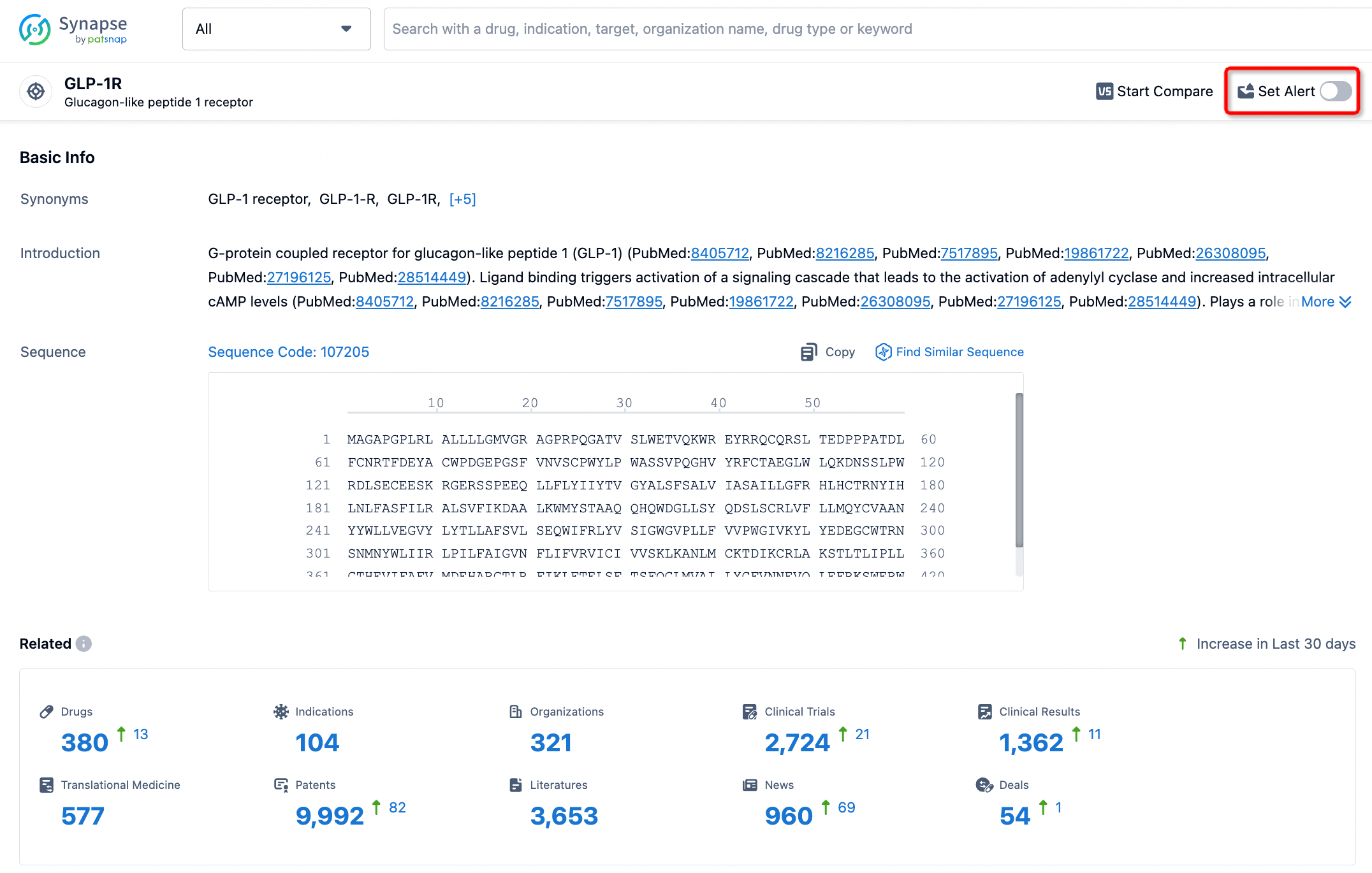
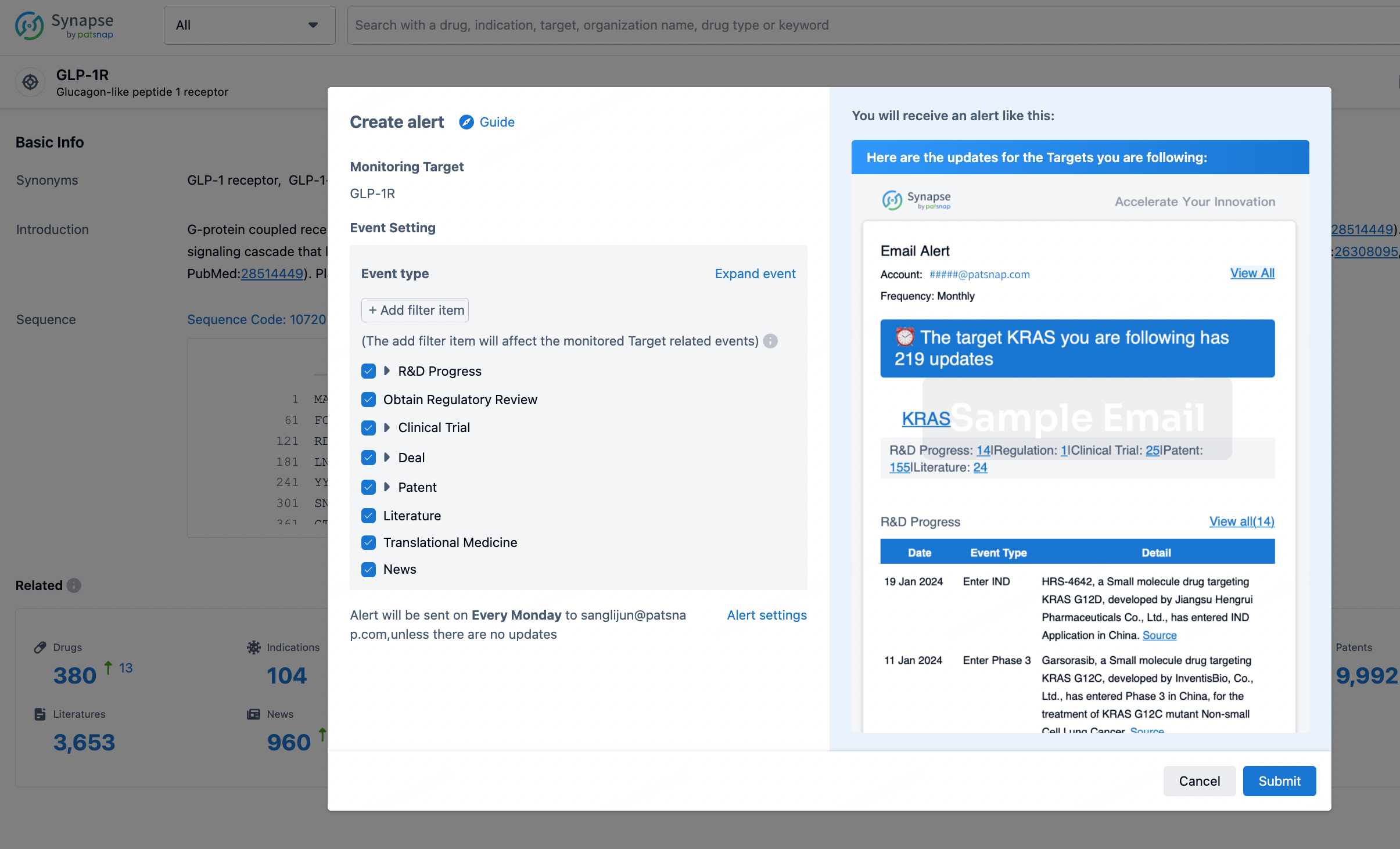
In the Synapse database, you can stay updated on the latest research and development advances of all targets. This service is accessible anytime and anywhere, with updates available daily or weekly. Use the "Set Alert" function to stay informed. Click on the image below to embark on a brand new journey of drug discovery!
AI Agents Built for Biopharma Breakthroughs
Accelerate discovery. Empower decisions. Transform outcomes.
Get started for free today!
Accelerate Strategic R&D decision making with Synapse, PatSnap’s AI-powered Connected Innovation Intelligence Platform Built for Life Sciences Professionals.
Start your data trial now!
Synapse data is also accessible to external entities via APIs or data packages. Empower better decisions with the latest in pharmaceutical intelligence.