Request Demo
What are APB inhibitors and how do they work?
25 June 2024
APB inhibitors, or Alpha-phosphatidylinositol-3-kinase (PI3K) inhibitors, are a class of compounds that have garnered significant interest in the field of medicinal chemistry and oncology. These inhibitors target the PI3K signaling pathway, which plays a critical role in various cellular processes such as growth, proliferation, and survival. Dysregulation of this pathway is often implicated in the development and progression of several types of cancers, making APB inhibitors a promising area of research for targeted cancer therapies.
How do APB inhibitors work?
The PI3K pathway is a complex signaling cascade that is activated by various extracellular signals, including growth factors and hormones. Upon activation, PI3K phosphorylates the lipid phosphatidylinositol-4,5-bisphosphate (PIP2) to produce phosphatidylinositol-3,4,5-trisphosphate (PIP3). This lipid molecule then serves as a docking site for various downstream signaling proteins, including AKT, which subsequently get activated and propagate the signal leading to cellular growth, survival, and proliferation.
APB inhibitors specifically target the PI3K enzyme, thereby preventing the phosphorylation of PIP2 to PIP3. By inhibiting this critical step, APB inhibitors effectively disrupt the downstream signaling events mediated by AKT and other proteins. This inhibition leads to reduced cellular proliferation and increased apoptosis (programmed cell death) in cancer cells, thereby curbing tumor growth and potentially leading to tumor regression.
There are different isoforms of the PI3K enzyme, and APB inhibitors can be either pan-PI3K inhibitors, targeting all isoforms, or isoform-specific inhibitors, targeting particular isoforms such as PI3Kα, PI3Kβ, PI3Kγ, or PI3Kδ. The specificity of these inhibitors can be tailored to the particular type of cancer being targeted, as different cancers may rely on different PI3K isoforms for their survival and growth.
What are APB inhibitors used for?
The primary use of APB inhibitors is in the treatment of various cancers. Since the PI3K pathway is frequently mutated or dysregulated in many types of cancer, these inhibitors offer a targeted approach to therapy. For instance, PI3Kα mutations are commonly found in breast cancer, making isoform-specific inhibitors targeting PI3Kα an effective treatment strategy. Similarly, PI3Kδ inhibitors have shown efficacy in treating hematologic malignancies such as chronic lymphocytic leukemia (CLL) and non-Hodgkin's lymphoma.
Beyond oncology, APB inhibitors are also being explored for their potential use in other diseases characterized by overactive PI3K signaling. For example, research is ongoing to investigate their efficacy in autoimmune diseases, where the PI3K pathway plays a role in the activation and survival of immune cells. By inhibiting PI3K, these drugs may help to modulate the immune response and provide therapeutic benefits in diseases such as rheumatoid arthritis and systemic lupus erythematosus.
Moreover, APB inhibitors are being studied for their potential in treating metabolic disorders. The PI3K/AKT pathway is involved in the regulation of glucose metabolism and insulin signaling. Dysregulation of this pathway is a hallmark of type 2 diabetes and metabolic syndrome. Preclinical studies have shown that APB inhibitors can improve insulin sensitivity and glucose tolerance, suggesting their potential as therapeutic agents in metabolic diseases.
Despite their promising potential, the use of APB inhibitors is not without challenges. One of the main concerns is the development of resistance, as cancer cells can activate alternative signaling pathways to bypass the inhibited PI3K pathway. Additionally, due to the central role of PI3K in various normal cellular functions, APB inhibitors may cause significant side effects, including hyperglycemia, rash, and diarrhea. Therefore, ongoing research is focused on improving the specificity and safety profile of these inhibitors to maximize their therapeutic benefits while minimizing adverse effects.
In conclusion, APB inhibitors represent a promising class of targeted therapies with potential applications in oncology, autoimmune diseases, and metabolic disorders. By specifically targeting the PI3K signaling pathway, these inhibitors offer a strategic approach to treating diseases characterized by dysregulated cellular growth and survival. Continued research and clinical trials will be essential to fully understand their therapeutic potential and to overcome the challenges associated with their use.
How do APB inhibitors work?
The PI3K pathway is a complex signaling cascade that is activated by various extracellular signals, including growth factors and hormones. Upon activation, PI3K phosphorylates the lipid phosphatidylinositol-4,5-bisphosphate (PIP2) to produce phosphatidylinositol-3,4,5-trisphosphate (PIP3). This lipid molecule then serves as a docking site for various downstream signaling proteins, including AKT, which subsequently get activated and propagate the signal leading to cellular growth, survival, and proliferation.
APB inhibitors specifically target the PI3K enzyme, thereby preventing the phosphorylation of PIP2 to PIP3. By inhibiting this critical step, APB inhibitors effectively disrupt the downstream signaling events mediated by AKT and other proteins. This inhibition leads to reduced cellular proliferation and increased apoptosis (programmed cell death) in cancer cells, thereby curbing tumor growth and potentially leading to tumor regression.
There are different isoforms of the PI3K enzyme, and APB inhibitors can be either pan-PI3K inhibitors, targeting all isoforms, or isoform-specific inhibitors, targeting particular isoforms such as PI3Kα, PI3Kβ, PI3Kγ, or PI3Kδ. The specificity of these inhibitors can be tailored to the particular type of cancer being targeted, as different cancers may rely on different PI3K isoforms for their survival and growth.
What are APB inhibitors used for?
The primary use of APB inhibitors is in the treatment of various cancers. Since the PI3K pathway is frequently mutated or dysregulated in many types of cancer, these inhibitors offer a targeted approach to therapy. For instance, PI3Kα mutations are commonly found in breast cancer, making isoform-specific inhibitors targeting PI3Kα an effective treatment strategy. Similarly, PI3Kδ inhibitors have shown efficacy in treating hematologic malignancies such as chronic lymphocytic leukemia (CLL) and non-Hodgkin's lymphoma.
Beyond oncology, APB inhibitors are also being explored for their potential use in other diseases characterized by overactive PI3K signaling. For example, research is ongoing to investigate their efficacy in autoimmune diseases, where the PI3K pathway plays a role in the activation and survival of immune cells. By inhibiting PI3K, these drugs may help to modulate the immune response and provide therapeutic benefits in diseases such as rheumatoid arthritis and systemic lupus erythematosus.
Moreover, APB inhibitors are being studied for their potential in treating metabolic disorders. The PI3K/AKT pathway is involved in the regulation of glucose metabolism and insulin signaling. Dysregulation of this pathway is a hallmark of type 2 diabetes and metabolic syndrome. Preclinical studies have shown that APB inhibitors can improve insulin sensitivity and glucose tolerance, suggesting their potential as therapeutic agents in metabolic diseases.
Despite their promising potential, the use of APB inhibitors is not without challenges. One of the main concerns is the development of resistance, as cancer cells can activate alternative signaling pathways to bypass the inhibited PI3K pathway. Additionally, due to the central role of PI3K in various normal cellular functions, APB inhibitors may cause significant side effects, including hyperglycemia, rash, and diarrhea. Therefore, ongoing research is focused on improving the specificity and safety profile of these inhibitors to maximize their therapeutic benefits while minimizing adverse effects.
In conclusion, APB inhibitors represent a promising class of targeted therapies with potential applications in oncology, autoimmune diseases, and metabolic disorders. By specifically targeting the PI3K signaling pathway, these inhibitors offer a strategic approach to treating diseases characterized by dysregulated cellular growth and survival. Continued research and clinical trials will be essential to fully understand their therapeutic potential and to overcome the challenges associated with their use.
How to obtain the latest development progress of all targets?
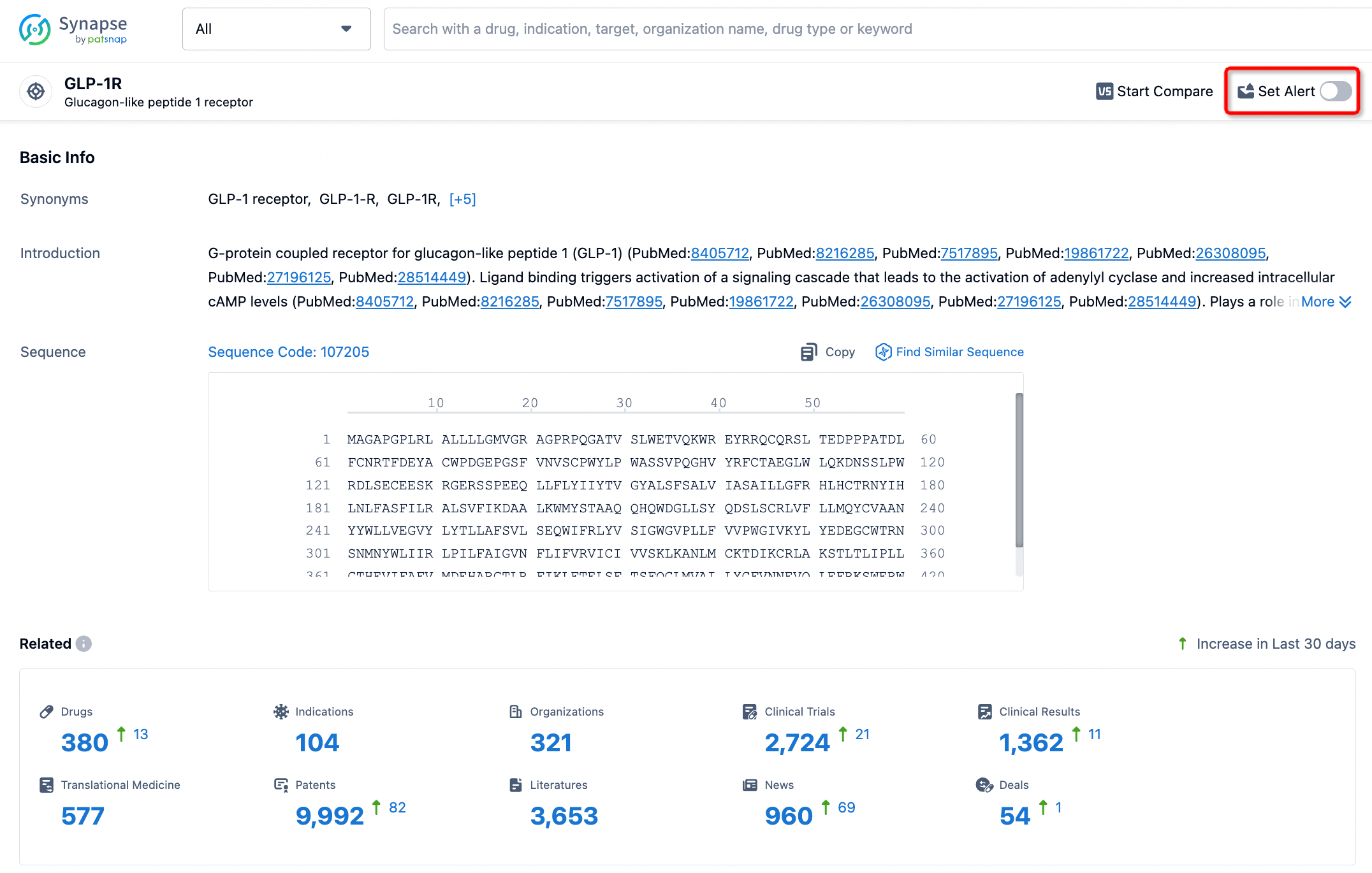
In the Synapse database, you can stay updated on the latest research and development advances of all targets. This service is accessible anytime and anywhere, with updates available daily or weekly. Use the "Set Alert" function to stay informed. Click on the image below to embark on a brand new journey of drug discovery!


AI Agents Built for Biopharma Breakthroughs
Accelerate discovery. Empower decisions. Transform outcomes.
Get started for free today!
Accelerate Strategic R&D decision making with Synapse, PatSnap’s AI-powered Connected Innovation Intelligence Platform Built for Life Sciences Professionals.
Start your data trial now!
Synapse data is also accessible to external entities via APIs or data packages. Empower better decisions with the latest in pharmaceutical intelligence.