Request Demo
What are APOB modulators and how do they work?
21 June 2024
In recent years, the field of lipid metabolism has witnessed significant advances, especially with the emergence of APOB modulators. These agents offer promising therapeutic avenues for a range of lipid disorders, paving the way for more targeted and effective treatments. But what exactly are APOB modulators, how do they work, and what conditions are they used to treat? This blog post delves into the intricacies of APOB modulators, shedding light on their mechanisms and applications.
APOB, or apolipoprotein B, is a primary protein component of low-density lipoproteins (LDL) and very low-density lipoproteins (VLDL). These lipoproteins are integral to the transport of cholesterol and triglycerides in the bloodstream. Elevated levels of LDL cholesterol are a well-established risk factor for cardiovascular disease, making APOB a crucial target for therapeutic intervention. APOB modulators aim to regulate the levels and function of this protein, thereby influencing lipid metabolism and reducing the risk of cardiovascular complications.
APOB modulators work through various mechanisms to control the production, secretion, and function of APOB-containing lipoproteins. One class of APOB modulators includes antisense oligonucleotides (ASOs), which are short, synthetic strands of nucleic acids designed to bind to the mRNA of APOB. This binding prevents the translation of the mRNA into the APOB protein, effectively reducing the amount of APOB available in the liver to form LDL and VLDL. By lowering the production of these lipoproteins, ASOs can reduce circulating cholesterol levels.
Another mechanism involves small molecule inhibitors that target microsomal triglyceride transfer protein (MTP), which is essential for the assembly and secretion of APOB-containing lipoproteins in the liver and intestines. Inhibiting MTP can lead to a decrease in the secretion of VLDL and LDL, thereby lowering plasma cholesterol levels. Additionally, there are monoclonal antibodies that target proprotein convertase subtilisin/kexin type 9 (PCSK9), an enzyme that promotes the degradation of LDL receptors. By inhibiting PCSK9, these antibodies increase the number of LDL receptors available to clear LDL from the bloodstream, indirectly affecting APOB levels.
APOB modulators hold significant promise for treating a variety of lipid disorders, particularly those that are refractory to conventional therapies like statins. Familial hypercholesterolemia (FH), for instance, is a genetic condition characterized by extremely high levels of LDL cholesterol due to mutations in genes involved in cholesterol metabolism. Traditional treatments often fall short in adequately managing LDL levels in FH patients, making APOB modulators a valuable alternative. Mipomersen, an antisense oligonucleotide targeting APOB mRNA, has shown efficacy in significantly reducing LDL cholesterol levels in individuals with homozygous FH.
Beyond familial hypercholesterolemia, APOB modulators are also being explored for their potential in managing atherosclerosis and other cardiovascular diseases. By reducing LDL cholesterol levels, these agents can help prevent the formation and progression of atherosclerotic plaques, thereby lowering the risk of heart attacks and strokes. In addition, individuals with non-alcoholic fatty liver disease (NAFLD) and non-alcoholic steatohepatitis (NASH) may benefit from APOB modulators due to their role in reducing the hepatic secretion of VLDL, a major contributor to liver fat accumulation.
Moreover, APOB modulators might prove beneficial in mixed dyslipidemia, a condition characterized by elevated levels of LDL cholesterol, triglycerides, and low levels of high-density lipoprotein (HDL) cholesterol. By targeting the production and secretion of APOB-containing lipoproteins, these agents can offer a comprehensive approach to managing lipid levels and reducing cardiovascular risk.
In conclusion, APOB modulators represent a promising frontier in the treatment of lipid disorders. Their ability to specifically target the pathways involved in the production and function of APOB-containing lipoproteins offers a novel and effective means of managing conditions that are otherwise difficult to treat. As research continues to advance, it is likely that these agents will become invaluable tools in the fight against cardiovascular disease and other lipid-related conditions.
APOB, or apolipoprotein B, is a primary protein component of low-density lipoproteins (LDL) and very low-density lipoproteins (VLDL). These lipoproteins are integral to the transport of cholesterol and triglycerides in the bloodstream. Elevated levels of LDL cholesterol are a well-established risk factor for cardiovascular disease, making APOB a crucial target for therapeutic intervention. APOB modulators aim to regulate the levels and function of this protein, thereby influencing lipid metabolism and reducing the risk of cardiovascular complications.
APOB modulators work through various mechanisms to control the production, secretion, and function of APOB-containing lipoproteins. One class of APOB modulators includes antisense oligonucleotides (ASOs), which are short, synthetic strands of nucleic acids designed to bind to the mRNA of APOB. This binding prevents the translation of the mRNA into the APOB protein, effectively reducing the amount of APOB available in the liver to form LDL and VLDL. By lowering the production of these lipoproteins, ASOs can reduce circulating cholesterol levels.
Another mechanism involves small molecule inhibitors that target microsomal triglyceride transfer protein (MTP), which is essential for the assembly and secretion of APOB-containing lipoproteins in the liver and intestines. Inhibiting MTP can lead to a decrease in the secretion of VLDL and LDL, thereby lowering plasma cholesterol levels. Additionally, there are monoclonal antibodies that target proprotein convertase subtilisin/kexin type 9 (PCSK9), an enzyme that promotes the degradation of LDL receptors. By inhibiting PCSK9, these antibodies increase the number of LDL receptors available to clear LDL from the bloodstream, indirectly affecting APOB levels.
APOB modulators hold significant promise for treating a variety of lipid disorders, particularly those that are refractory to conventional therapies like statins. Familial hypercholesterolemia (FH), for instance, is a genetic condition characterized by extremely high levels of LDL cholesterol due to mutations in genes involved in cholesterol metabolism. Traditional treatments often fall short in adequately managing LDL levels in FH patients, making APOB modulators a valuable alternative. Mipomersen, an antisense oligonucleotide targeting APOB mRNA, has shown efficacy in significantly reducing LDL cholesterol levels in individuals with homozygous FH.
Beyond familial hypercholesterolemia, APOB modulators are also being explored for their potential in managing atherosclerosis and other cardiovascular diseases. By reducing LDL cholesterol levels, these agents can help prevent the formation and progression of atherosclerotic plaques, thereby lowering the risk of heart attacks and strokes. In addition, individuals with non-alcoholic fatty liver disease (NAFLD) and non-alcoholic steatohepatitis (NASH) may benefit from APOB modulators due to their role in reducing the hepatic secretion of VLDL, a major contributor to liver fat accumulation.
Moreover, APOB modulators might prove beneficial in mixed dyslipidemia, a condition characterized by elevated levels of LDL cholesterol, triglycerides, and low levels of high-density lipoprotein (HDL) cholesterol. By targeting the production and secretion of APOB-containing lipoproteins, these agents can offer a comprehensive approach to managing lipid levels and reducing cardiovascular risk.
In conclusion, APOB modulators represent a promising frontier in the treatment of lipid disorders. Their ability to specifically target the pathways involved in the production and function of APOB-containing lipoproteins offers a novel and effective means of managing conditions that are otherwise difficult to treat. As research continues to advance, it is likely that these agents will become invaluable tools in the fight against cardiovascular disease and other lipid-related conditions.
How to obtain the latest development progress of all targets?
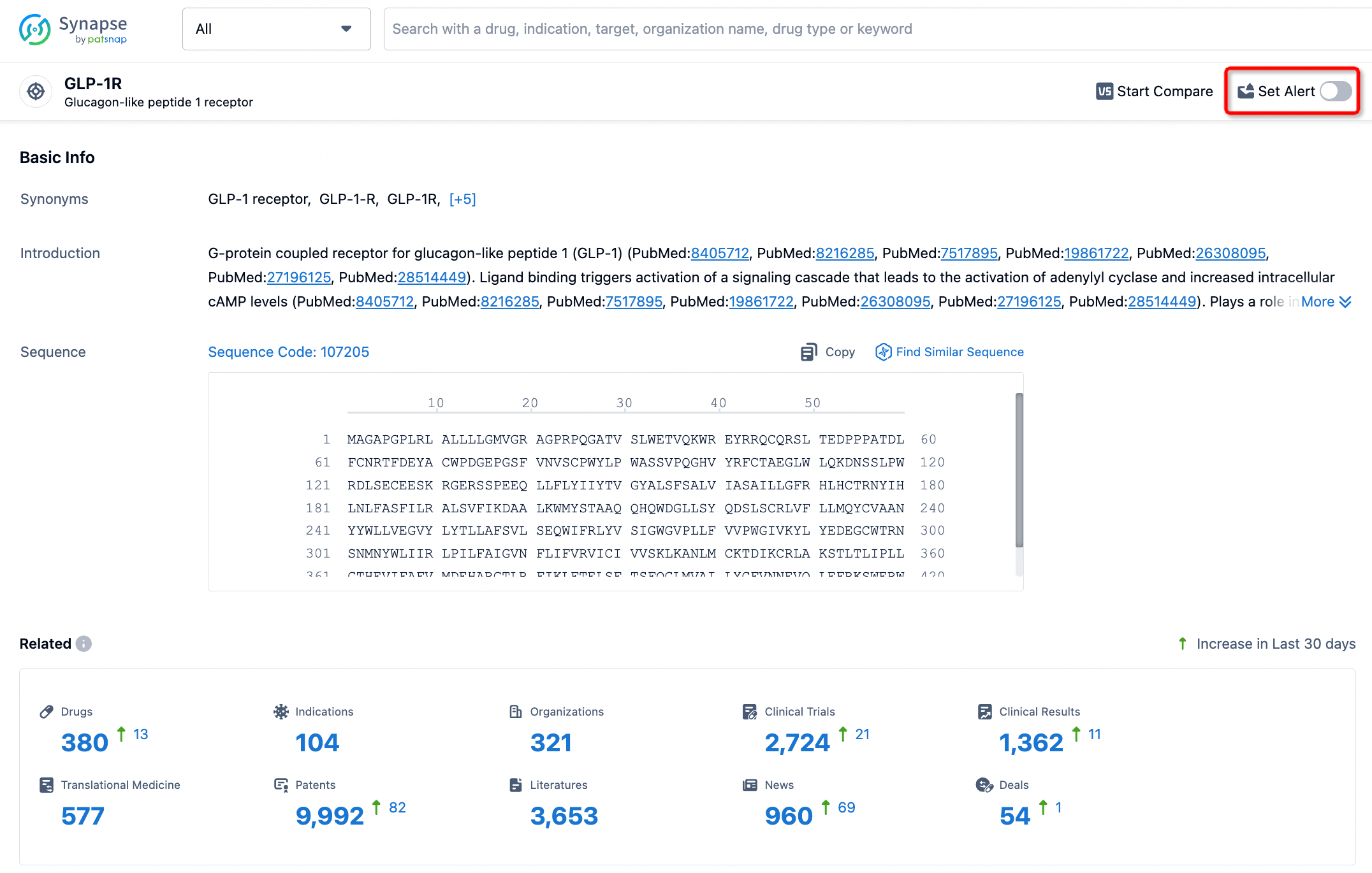
In the Synapse database, you can stay updated on the latest research and development advances of all targets. This service is accessible anytime and anywhere, with updates available daily or weekly. Use the "Set Alert" function to stay informed. Click on the image below to embark on a brand new journey of drug discovery!

AI Agents Built for Biopharma Breakthroughs
Accelerate discovery. Empower decisions. Transform outcomes.
Get started for free today!
Accelerate Strategic R&D decision making with Synapse, PatSnap’s AI-powered Connected Innovation Intelligence Platform Built for Life Sciences Professionals.
Start your data trial now!
Synapse data is also accessible to external entities via APIs or data packages. Empower better decisions with the latest in pharmaceutical intelligence.