Request Demo
What are Aurora C inhibitors and how do they work?
21 June 2024
Aurora C inhibitors represent a burgeoning field of interest in the realm of targeted cancer therapies. As researchers delve deeper into the molecular mechanics of cell division and cancer progression, Aurora kinases have emerged as pivotal players. Among them, Aurora C, though less well-known than its counterparts Aurora A and Aurora B, has garnered attention for its crucial role in mitosis and meiosis. Aurora C inhibitors are specifically designed to curtail the activity of this kinase, offering promising new avenues for cancer treatment.
Aurora C is a serine/threonine kinase, predominantly involved in the regulation of chromosome segregation and cytokinesis during cell division. In healthy cells, it ensures the accurate distribution of chromosomes to daughter cells, thus maintaining genomic stability. However, in cancer cells, aberrant expression or overactivation of Aurora C can lead to aneuploidy and uncontrolled cell proliferation. This makes Aurora C an attractive target for cancer therapy, as inhibiting its activity could potentially restore normal cell division and curtail tumor growth.
Aurora C inhibitors function by specifically binding to the active site of the Aurora C kinase, thereby blocking its enzymatic activity. This inhibition disrupts the kinase's ability to phosphorylate its substrates, a critical step required for the progression of cell division. By halting this process, the inhibitors effectively induce cell cycle arrest, leading to apoptosis (programmed cell death) or senescence (permanent cessation of cell division) in cancer cells. Some inhibitors are designed to be selective for Aurora C, while others may target multiple Aurora kinases simultaneously, potentially enhancing their therapeutic efficacy.
The mechanism of action of Aurora C inhibitors can be understood through a closer look at their biochemical interactions. Once administered, these inhibitors compete with ATP (adenosine triphosphate) for binding to the ATP-binding pocket of Aurora C. This competitive inhibition prevents the kinase from transferring phosphate groups to its target proteins. Since phosphorylation is a key regulatory mechanism in cell cycle progression, its disruption leads to a cascade of cellular events culminating in mitotic catastrophe—a state where cells cannot successfully complete mitosis.
Aurora C inhibitors are primarily being explored as potential treatments for various types of cancer. Their ability to induce cell cycle arrest and apoptosis makes them particularly promising for targeting rapidly dividing tumor cells. Preclinical studies have demonstrated that Aurora C inhibitors can effectively reduce tumor growth in models of leukemia, lymphoma, and solid tumors such as colorectal and breast cancer.
One of the most compelling applications of Aurora C inhibitors is in combination therapy. Given that cancer is a multifaceted disease often driven by multiple genetic and molecular aberrations, combining Aurora C inhibitors with other therapeutic agents can enhance treatment efficacy. For instance, combining these inhibitors with traditional chemotherapeutic drugs or other targeted therapies has shown synergistic effects, leading to improved outcomes in preclinical models. By simultaneously targeting different pathways involved in cancer progression, combination therapy can potentially overcome resistance mechanisms that often limit the success of single-agent treatments.
In addition to their role in cancer therapy, Aurora C inhibitors are also valuable tools for basic research. By selectively inhibiting Aurora C, researchers can dissect its specific functions in cell division and better understand the molecular underpinnings of mitosis and meiosis. This knowledge can inform the development of new therapeutic strategies and refine existing ones.
However, like all therapeutic agents, Aurora C inhibitors are not without challenges. One of the primary concerns is the potential for off-target effects, given the high degree of similarity between Aurora kinases. Selectivity is crucial to minimize adverse effects and maximize therapeutic benefit. Furthermore, the development of resistance to Aurora C inhibitors is a potential hurdle, necessitating ongoing research to identify and counteract resistance mechanisms.
In conclusion, Aurora C inhibitors represent a promising frontier in cancer therapy. By targeting a key regulator of cell division, these inhibitors have the potential to halt tumor growth and improve patient outcomes. As research progresses, the development of more selective and potent inhibitors, as well as combination therapies, will be critical to fully harness their therapeutic potential. Aurora C inhibitors not only hold promise for treating cancer but also offer valuable insights into the fundamental processes of cell division, paving the way for future innovations in biomedical research.
Aurora C is a serine/threonine kinase, predominantly involved in the regulation of chromosome segregation and cytokinesis during cell division. In healthy cells, it ensures the accurate distribution of chromosomes to daughter cells, thus maintaining genomic stability. However, in cancer cells, aberrant expression or overactivation of Aurora C can lead to aneuploidy and uncontrolled cell proliferation. This makes Aurora C an attractive target for cancer therapy, as inhibiting its activity could potentially restore normal cell division and curtail tumor growth.
Aurora C inhibitors function by specifically binding to the active site of the Aurora C kinase, thereby blocking its enzymatic activity. This inhibition disrupts the kinase's ability to phosphorylate its substrates, a critical step required for the progression of cell division. By halting this process, the inhibitors effectively induce cell cycle arrest, leading to apoptosis (programmed cell death) or senescence (permanent cessation of cell division) in cancer cells. Some inhibitors are designed to be selective for Aurora C, while others may target multiple Aurora kinases simultaneously, potentially enhancing their therapeutic efficacy.
The mechanism of action of Aurora C inhibitors can be understood through a closer look at their biochemical interactions. Once administered, these inhibitors compete with ATP (adenosine triphosphate) for binding to the ATP-binding pocket of Aurora C. This competitive inhibition prevents the kinase from transferring phosphate groups to its target proteins. Since phosphorylation is a key regulatory mechanism in cell cycle progression, its disruption leads to a cascade of cellular events culminating in mitotic catastrophe—a state where cells cannot successfully complete mitosis.
Aurora C inhibitors are primarily being explored as potential treatments for various types of cancer. Their ability to induce cell cycle arrest and apoptosis makes them particularly promising for targeting rapidly dividing tumor cells. Preclinical studies have demonstrated that Aurora C inhibitors can effectively reduce tumor growth in models of leukemia, lymphoma, and solid tumors such as colorectal and breast cancer.
One of the most compelling applications of Aurora C inhibitors is in combination therapy. Given that cancer is a multifaceted disease often driven by multiple genetic and molecular aberrations, combining Aurora C inhibitors with other therapeutic agents can enhance treatment efficacy. For instance, combining these inhibitors with traditional chemotherapeutic drugs or other targeted therapies has shown synergistic effects, leading to improved outcomes in preclinical models. By simultaneously targeting different pathways involved in cancer progression, combination therapy can potentially overcome resistance mechanisms that often limit the success of single-agent treatments.
In addition to their role in cancer therapy, Aurora C inhibitors are also valuable tools for basic research. By selectively inhibiting Aurora C, researchers can dissect its specific functions in cell division and better understand the molecular underpinnings of mitosis and meiosis. This knowledge can inform the development of new therapeutic strategies and refine existing ones.
However, like all therapeutic agents, Aurora C inhibitors are not without challenges. One of the primary concerns is the potential for off-target effects, given the high degree of similarity between Aurora kinases. Selectivity is crucial to minimize adverse effects and maximize therapeutic benefit. Furthermore, the development of resistance to Aurora C inhibitors is a potential hurdle, necessitating ongoing research to identify and counteract resistance mechanisms.
In conclusion, Aurora C inhibitors represent a promising frontier in cancer therapy. By targeting a key regulator of cell division, these inhibitors have the potential to halt tumor growth and improve patient outcomes. As research progresses, the development of more selective and potent inhibitors, as well as combination therapies, will be critical to fully harness their therapeutic potential. Aurora C inhibitors not only hold promise for treating cancer but also offer valuable insights into the fundamental processes of cell division, paving the way for future innovations in biomedical research.
How to obtain the latest development progress of all targets?
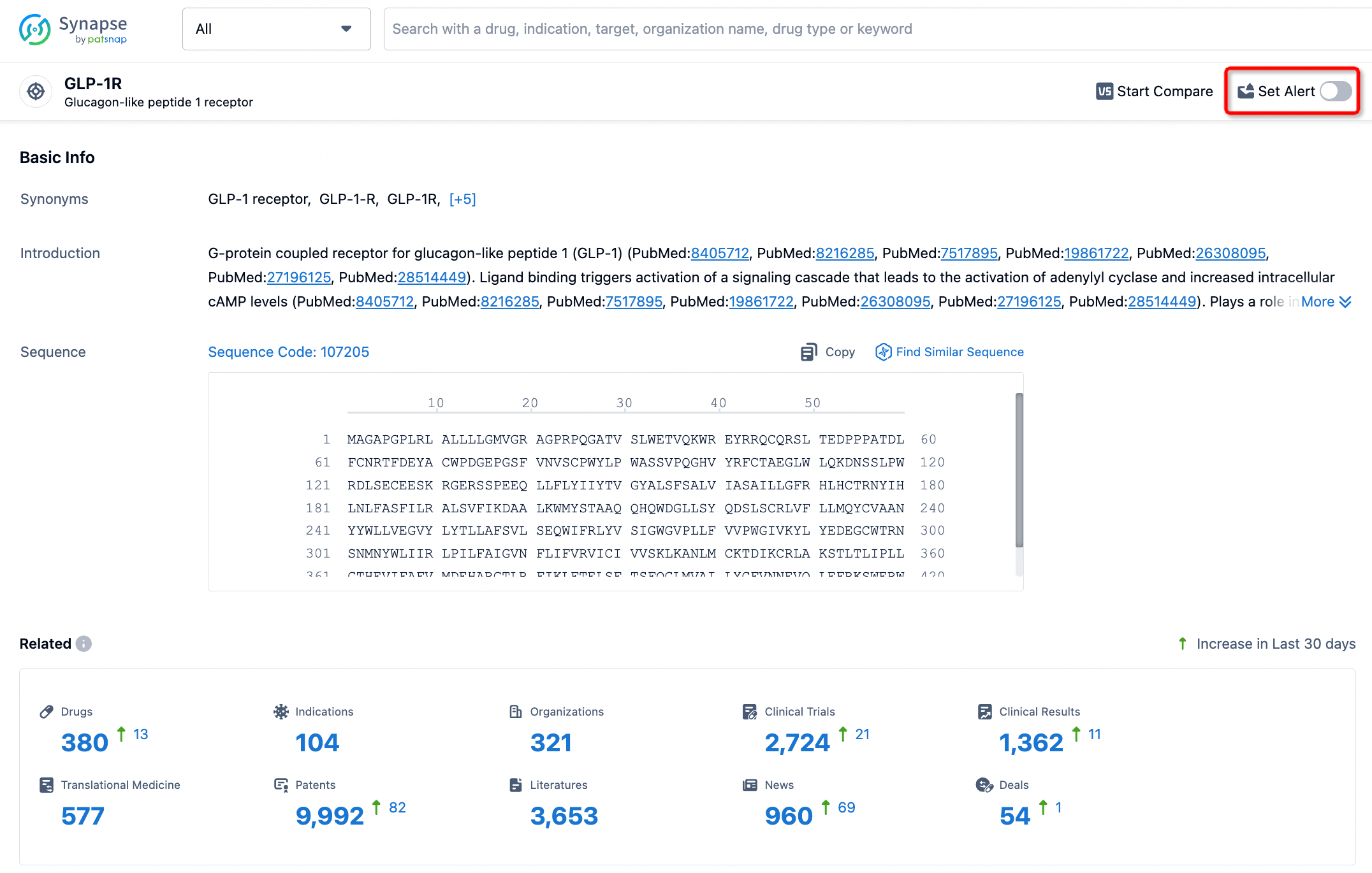
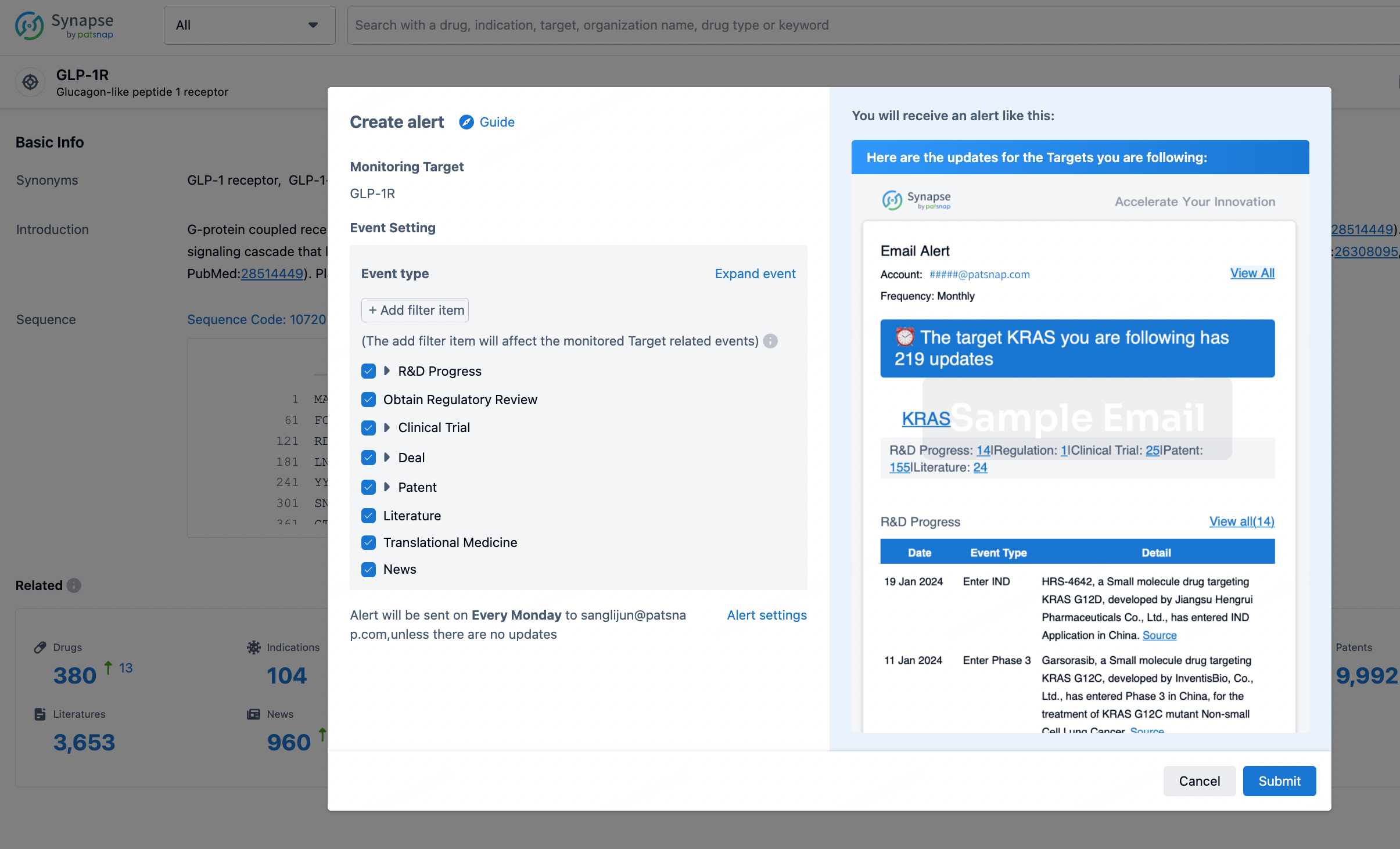
In the Synapse database, you can stay updated on the latest research and development advances of all targets. This service is accessible anytime and anywhere, with updates available daily or weekly. Use the "Set Alert" function to stay informed. Click on the image below to embark on a brand new journey of drug discovery!

AI Agents Built for Biopharma Breakthroughs
Accelerate discovery. Empower decisions. Transform outcomes.
Get started for free today!
Accelerate Strategic R&D decision making with Synapse, PatSnap’s AI-powered Connected Innovation Intelligence Platform Built for Life Sciences Professionals.
Start your data trial now!
Synapse data is also accessible to external entities via APIs or data packages. Empower better decisions with the latest in pharmaceutical intelligence.