Request Demo
What are BCMA inhibitors and how do they work?
21 June 2024
B-cell maturation antigen (BCMA) inhibitors have emerged as a groundbreaking development in the field of oncology, particularly in the treatment of multiple myeloma. Multiple myeloma is a type of blood cancer that affects plasma cells in the bone marrow, leading to various complications such as bone lesions, anemia, and kidney dysfunction. Traditional treatments have included chemotherapy, radiation, and stem cell transplants, but these methods often come with severe side effects and varying degrees of effectiveness. BCMA inhibitors offer a more targeted approach, potentially transforming the landscape of multiple myeloma treatment.
BCMA, also known as TNFRSF17, is a protein that is highly expressed on the surface of malignant plasma cells. This makes it an ideal target for therapeutic interventions. The role of BCMA in normal physiology is to support the survival and growth of B-cells, a type of white blood cell that plays a crucial role in the immune system. However, in the context of multiple myeloma, BCMA is overexpressed, contributing to the growth and survival of malignant plasma cells. By targeting BCMA, these inhibitors can specifically attack cancerous cells while sparing most normal cells, leading to fewer side effects compared to traditional therapies.
BCMA inhibitors work through various mechanisms to target and eliminate cancerous cells. One of the most common forms involves the use of monoclonal antibodies. These lab-engineered molecules can bind specifically to the BCMA proteins on the surface of multiple myeloma cells. Once attached, these antibodies can recruit other immune cells to attack and destroy the cancerous cells. Some monoclonal antibodies are conjugated with toxic agents that can directly kill the cancer cells once the antibody binds to BCMA, adding another layer of efficacy.
Another innovative approach involves the use of chimeric antigen receptor (CAR) T-cell therapy. This method involves extracting a patient’s T-cells and genetically modifying them to express receptors that specifically target BCMA. These engineered T-cells are then infused back into the patient’s body, where they seek out and destroy BCMA-expressing cancer cells. This approach has shown significant promise in clinical trials, leading to durable responses in many patients who have exhausted other treatment options.
In addition to monoclonal antibodies and CAR T-cell therapies, there are also bispecific T-cell engagers (BiTEs) that simultaneously bind to BCMA on myeloma cells and CD3 on T-cells. This dual binding brings the T-cells into close proximity with the cancer cells, facilitating a targeted immune response. BiTEs are another exciting avenue being explored in clinical trials, offering yet another method to leverage the immune system against multiple myeloma.
BCMA inhibitors are primarily used for the treatment of multiple myeloma, particularly in patients who have relapsed or are refractory to other treatments. Given the nature of multiple myeloma as a relapsing and incurable disease, the quest for more effective and less toxic treatments is ongoing. BCMA inhibitors have shown remarkable efficacy in clinical trials, with many patients achieving partial or complete remission. This is particularly significant for patients who have undergone multiple prior lines of therapy and have limited treatment options remaining.
Clinical trials have demonstrated that BCMA inhibitors can significantly extend progression-free survival and, in some cases, overall survival. This has generated considerable excitement among oncologists and researchers, as these treatments offer a new lifeline for patients battling this challenging disease. Furthermore, the targeted nature of BCMA inhibitors often results in a more favorable side effect profile compared to traditional chemotherapy and radiation treatments. Common side effects include manageable symptoms such as fatigue, fever, and low blood counts, but these are generally less severe than the toxicities associated with conventional therapies.
In summary, BCMA inhibitors represent a cutting-edge advancement in the treatment of multiple myeloma. By specifically targeting the BCMA protein on malignant plasma cells, these therapies offer a more precise and effective approach to combating this devastating disease. Through mechanisms involving monoclonal antibodies, CAR T-cell therapy, and bispecific T-cell engagers, BCMA inhibitors have shown great promise in clinical trials, providing new hope for patients with limited treatment options. As research continues, it is likely that BCMA inhibitors will become an integral part of the multiple myeloma treatment paradigm, potentially improving outcomes for countless patients.
BCMA, also known as TNFRSF17, is a protein that is highly expressed on the surface of malignant plasma cells. This makes it an ideal target for therapeutic interventions. The role of BCMA in normal physiology is to support the survival and growth of B-cells, a type of white blood cell that plays a crucial role in the immune system. However, in the context of multiple myeloma, BCMA is overexpressed, contributing to the growth and survival of malignant plasma cells. By targeting BCMA, these inhibitors can specifically attack cancerous cells while sparing most normal cells, leading to fewer side effects compared to traditional therapies.
BCMA inhibitors work through various mechanisms to target and eliminate cancerous cells. One of the most common forms involves the use of monoclonal antibodies. These lab-engineered molecules can bind specifically to the BCMA proteins on the surface of multiple myeloma cells. Once attached, these antibodies can recruit other immune cells to attack and destroy the cancerous cells. Some monoclonal antibodies are conjugated with toxic agents that can directly kill the cancer cells once the antibody binds to BCMA, adding another layer of efficacy.
Another innovative approach involves the use of chimeric antigen receptor (CAR) T-cell therapy. This method involves extracting a patient’s T-cells and genetically modifying them to express receptors that specifically target BCMA. These engineered T-cells are then infused back into the patient’s body, where they seek out and destroy BCMA-expressing cancer cells. This approach has shown significant promise in clinical trials, leading to durable responses in many patients who have exhausted other treatment options.
In addition to monoclonal antibodies and CAR T-cell therapies, there are also bispecific T-cell engagers (BiTEs) that simultaneously bind to BCMA on myeloma cells and CD3 on T-cells. This dual binding brings the T-cells into close proximity with the cancer cells, facilitating a targeted immune response. BiTEs are another exciting avenue being explored in clinical trials, offering yet another method to leverage the immune system against multiple myeloma.
BCMA inhibitors are primarily used for the treatment of multiple myeloma, particularly in patients who have relapsed or are refractory to other treatments. Given the nature of multiple myeloma as a relapsing and incurable disease, the quest for more effective and less toxic treatments is ongoing. BCMA inhibitors have shown remarkable efficacy in clinical trials, with many patients achieving partial or complete remission. This is particularly significant for patients who have undergone multiple prior lines of therapy and have limited treatment options remaining.
Clinical trials have demonstrated that BCMA inhibitors can significantly extend progression-free survival and, in some cases, overall survival. This has generated considerable excitement among oncologists and researchers, as these treatments offer a new lifeline for patients battling this challenging disease. Furthermore, the targeted nature of BCMA inhibitors often results in a more favorable side effect profile compared to traditional chemotherapy and radiation treatments. Common side effects include manageable symptoms such as fatigue, fever, and low blood counts, but these are generally less severe than the toxicities associated with conventional therapies.
In summary, BCMA inhibitors represent a cutting-edge advancement in the treatment of multiple myeloma. By specifically targeting the BCMA protein on malignant plasma cells, these therapies offer a more precise and effective approach to combating this devastating disease. Through mechanisms involving monoclonal antibodies, CAR T-cell therapy, and bispecific T-cell engagers, BCMA inhibitors have shown great promise in clinical trials, providing new hope for patients with limited treatment options. As research continues, it is likely that BCMA inhibitors will become an integral part of the multiple myeloma treatment paradigm, potentially improving outcomes for countless patients.
How to obtain the latest development progress of all targets?
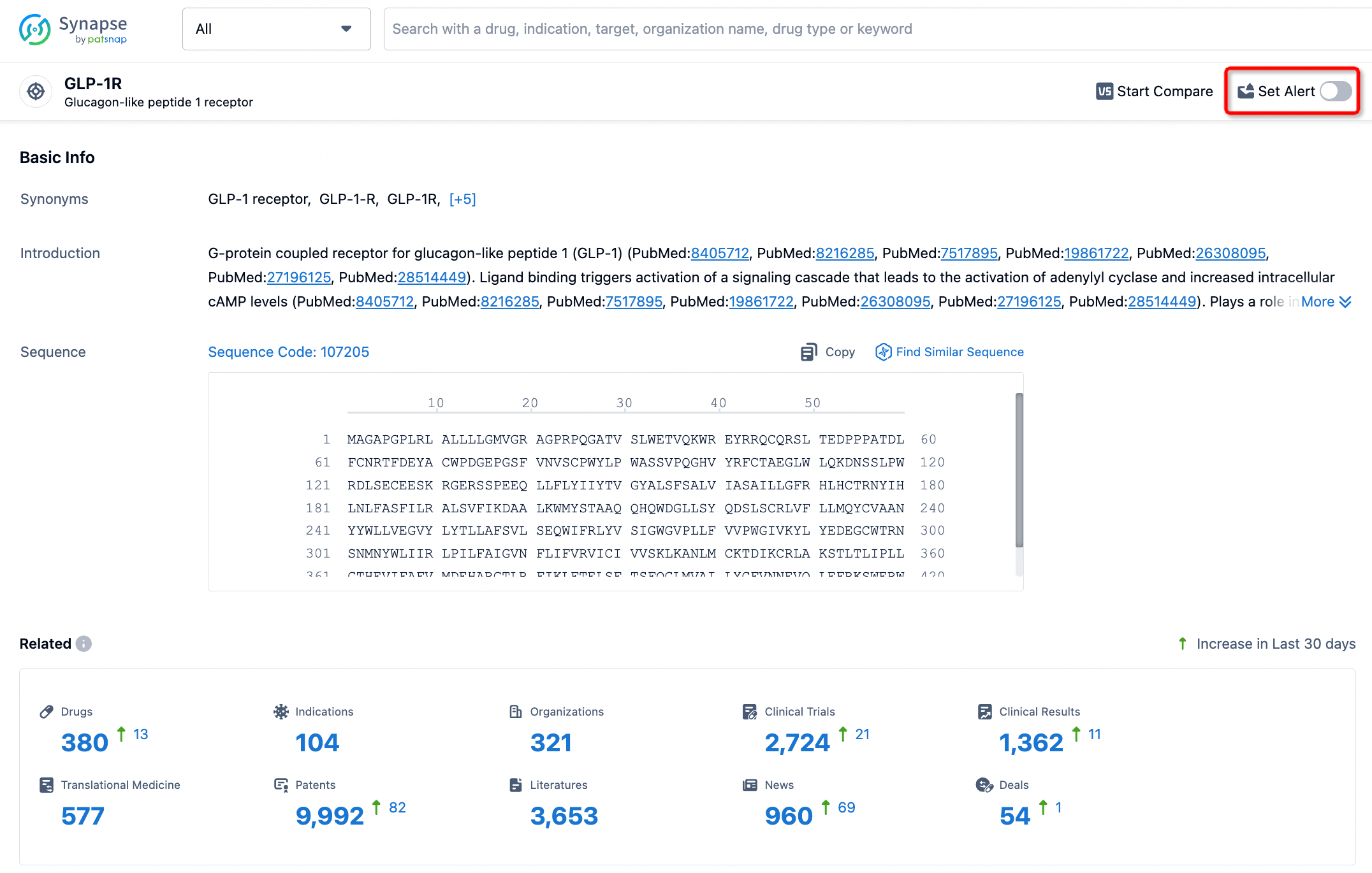
In the Synapse database, you can stay updated on the latest research and development advances of all targets. This service is accessible anytime and anywhere, with updates available daily or weekly. Use the "Set Alert" function to stay informed. Click on the image below to embark on a brand new journey of drug discovery!


AI Agents Built for Biopharma Breakthroughs
Accelerate discovery. Empower decisions. Transform outcomes.
Get started for free today!
Accelerate Strategic R&D decision making with Synapse, PatSnap’s AI-powered Connected Innovation Intelligence Platform Built for Life Sciences Professionals.
Start your data trial now!
Synapse data is also accessible to external entities via APIs or data packages. Empower better decisions with the latest in pharmaceutical intelligence.