Request Demo
What are BRPF2 inhibitors and how do they work?
21 June 2024
Bromodomain and PHD finger-containing protein 2 (BRPF2) inhibitors have gained significant attention in the field of epigenetics in recent years. These inhibitors target BRPF2, a key component in the regulation of gene expression. Researchers and pharmaceutical companies are exploring their potential in treating various diseases, particularly those related to cancer and inflammatory conditions. In this article, we will delve into what BRPF2 inhibitors are, how they work, and the potential applications they hold in modern medicine.
At the core of epigenetics lies the ability to regulate gene expression without altering the underlying DNA sequence. This regulation is often mediated by proteins that can add or remove chemical groups on histones, the protein molecules around which DNA is wound. BRPF2 is one such protein that contains a bromodomain, a structure that recognizes acetylated lysine residues on histones. Through this recognition, BRPF2 plays a crucial role in the "reading" part of the epigenetic code, thereby influencing which genes are turned on or off at any given time.
BRPF2 inhibitors are small molecules designed to interfere with the function of the BRPF2 protein. By binding to the bromodomain of BRPF2, these inhibitors prevent the protein from attaching to acetylated histones. This action disrupts the recruitment of other proteins necessary for gene transcription, effectively silencing certain genes. The specificity of BRPF2 inhibitors is advantageous; they can target particular histone marks and bromodomains without affecting other similar proteins. This selectivity reduces potential side effects and increases the efficacy of the treatment.
One of the primary mechanisms through which BRPF2 inhibitors work is by hindering chromatin remodeling. Chromatin, a complex of DNA and proteins, must be remodeled to make specific genes accessible for transcription. BRPF2 inhibitors disrupt this process, leading to the suppression of gene expression. Additionally, these inhibitors may also interfere with the recruitment of transcription factors and other co-activators that are crucial for initiating gene transcription.
The therapeutic potential of BRPF2 inhibitors is vast, owing to their ability to modulate gene expression. One of the most promising areas of application is in cancer treatment. Many types of cancer are driven by the aberrant expression of oncogenes or the silencing of tumor suppressor genes. By selectively inhibiting BRPF2, researchers aim to restore normal gene expression patterns, thereby inhibiting tumor growth and progression. Preclinical studies have shown that BRPF2 inhibitors can effectively reduce the proliferation of cancer cells in various types of malignancies, including leukemia and solid tumors.
Beyond cancer, BRPF2 inhibitors also hold promise in treating inflammatory diseases. Chronic inflammation is often linked to the dysregulation of gene expression. By modulating the activity of BRPF2, these inhibitors can potentially alleviate the symptoms of inflammatory conditions such as rheumatoid arthritis and inflammatory bowel disease. Research in this area is still in its early stages, but the initial results are encouraging.
Moreover, BRPF2 inhibitors may have applications in neurological disorders. Epigenetic dysregulation is implicated in several neurodegenerative diseases, including Alzheimer's and Parkinson's. While the exact mechanisms are still being unraveled, the ability of BRPF2 inhibitors to influence gene expression in neurons opens up new avenues for therapeutic intervention. Early studies suggest that these inhibitors could help in restoring cognitive functions and slowing down the progression of neurodegenerative diseases.
In summary, BRPF2 inhibitors represent a promising class of therapeutic agents with the potential to treat a wide range of diseases. By targeting the specific epigenetic mechanisms mediated by the BRPF2 protein, these inhibitors offer a novel approach to restoring normal gene expression patterns. While much of the research is still in the preclinical stage, the future looks bright for BRPF2 inhibitors as they move closer to clinical applications. As our understanding of epigenetics and disease continues to grow, so too will the potential for these innovative treatments to make a significant impact on human health.
At the core of epigenetics lies the ability to regulate gene expression without altering the underlying DNA sequence. This regulation is often mediated by proteins that can add or remove chemical groups on histones, the protein molecules around which DNA is wound. BRPF2 is one such protein that contains a bromodomain, a structure that recognizes acetylated lysine residues on histones. Through this recognition, BRPF2 plays a crucial role in the "reading" part of the epigenetic code, thereby influencing which genes are turned on or off at any given time.
BRPF2 inhibitors are small molecules designed to interfere with the function of the BRPF2 protein. By binding to the bromodomain of BRPF2, these inhibitors prevent the protein from attaching to acetylated histones. This action disrupts the recruitment of other proteins necessary for gene transcription, effectively silencing certain genes. The specificity of BRPF2 inhibitors is advantageous; they can target particular histone marks and bromodomains without affecting other similar proteins. This selectivity reduces potential side effects and increases the efficacy of the treatment.
One of the primary mechanisms through which BRPF2 inhibitors work is by hindering chromatin remodeling. Chromatin, a complex of DNA and proteins, must be remodeled to make specific genes accessible for transcription. BRPF2 inhibitors disrupt this process, leading to the suppression of gene expression. Additionally, these inhibitors may also interfere with the recruitment of transcription factors and other co-activators that are crucial for initiating gene transcription.
The therapeutic potential of BRPF2 inhibitors is vast, owing to their ability to modulate gene expression. One of the most promising areas of application is in cancer treatment. Many types of cancer are driven by the aberrant expression of oncogenes or the silencing of tumor suppressor genes. By selectively inhibiting BRPF2, researchers aim to restore normal gene expression patterns, thereby inhibiting tumor growth and progression. Preclinical studies have shown that BRPF2 inhibitors can effectively reduce the proliferation of cancer cells in various types of malignancies, including leukemia and solid tumors.
Beyond cancer, BRPF2 inhibitors also hold promise in treating inflammatory diseases. Chronic inflammation is often linked to the dysregulation of gene expression. By modulating the activity of BRPF2, these inhibitors can potentially alleviate the symptoms of inflammatory conditions such as rheumatoid arthritis and inflammatory bowel disease. Research in this area is still in its early stages, but the initial results are encouraging.
Moreover, BRPF2 inhibitors may have applications in neurological disorders. Epigenetic dysregulation is implicated in several neurodegenerative diseases, including Alzheimer's and Parkinson's. While the exact mechanisms are still being unraveled, the ability of BRPF2 inhibitors to influence gene expression in neurons opens up new avenues for therapeutic intervention. Early studies suggest that these inhibitors could help in restoring cognitive functions and slowing down the progression of neurodegenerative diseases.
In summary, BRPF2 inhibitors represent a promising class of therapeutic agents with the potential to treat a wide range of diseases. By targeting the specific epigenetic mechanisms mediated by the BRPF2 protein, these inhibitors offer a novel approach to restoring normal gene expression patterns. While much of the research is still in the preclinical stage, the future looks bright for BRPF2 inhibitors as they move closer to clinical applications. As our understanding of epigenetics and disease continues to grow, so too will the potential for these innovative treatments to make a significant impact on human health.
How to obtain the latest development progress of all targets?
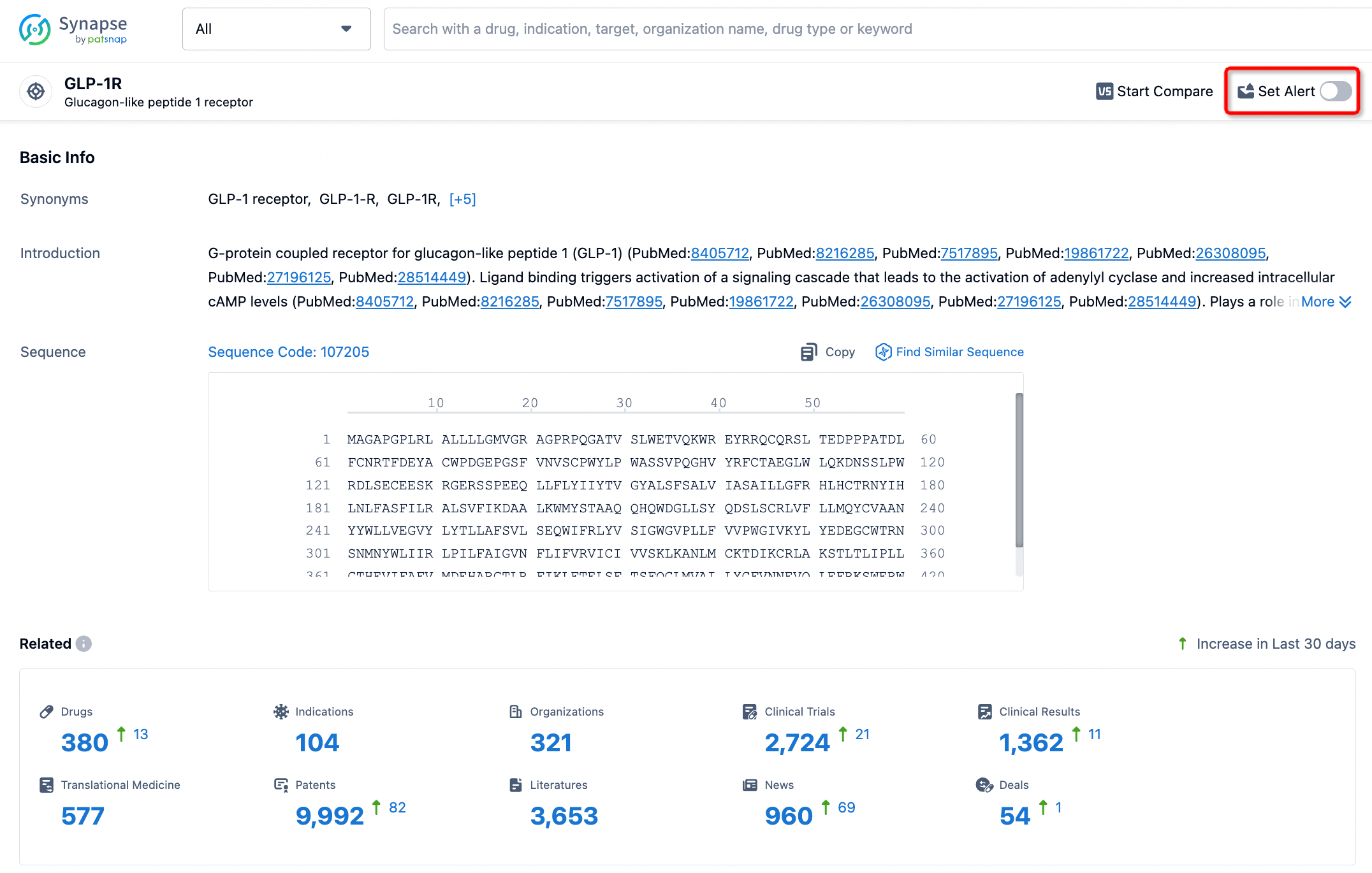
In the Synapse database, you can stay updated on the latest research and development advances of all targets. This service is accessible anytime and anywhere, with updates available daily or weekly. Use the "Set Alert" function to stay informed. Click on the image below to embark on a brand new journey of drug discovery!


AI Agents Built for Biopharma Breakthroughs
Accelerate discovery. Empower decisions. Transform outcomes.
Get started for free today!
Accelerate Strategic R&D decision making with Synapse, PatSnap’s AI-powered Connected Innovation Intelligence Platform Built for Life Sciences Professionals.
Start your data trial now!
Synapse data is also accessible to external entities via APIs or data packages. Empower better decisions with the latest in pharmaceutical intelligence.