Request Demo
What are C5AR1 stimulants and how do they work?
25 June 2024
The immune system is a highly complex and finely tuned network designed to protect the body from harmful pathogens, including bacteria, viruses, and other foreign invaders. At the heart of this system lie various receptors and molecules that work in concert to identify and neutralize these threats. One such critical player is the C5a receptor 1 (C5AR1), a protein that binds to the complement component 5a (C5a) and facilitates a range of immune responses. In recent years, researchers have been exploring ways to manipulate C5AR1 activity through stimulants, opening up new avenues for therapeutic interventions.
C5AR1, also known as CD88, is a G-protein-coupled receptor (GPCR) that plays a pivotal role in the complement system, a key component of the innate immune response. When activated by its ligand, C5a, this receptor can initiate a cascade of cellular events, including the chemotaxis of immune cells, the release of inflammatory mediators, and the enhancement of phagocytosis. C5AR1 is expressed on various cell types, including neutrophils, monocytes, macrophages, and dendritic cells, making it a versatile target for modulating immune function.
C5AR1 stimulants are compounds that activate the C5AR1 receptor, thereby enhancing its downstream signaling pathways. These stimulants are designed to mimic the effects of natural C5a, but with greater specificity and potency. Upon binding to C5AR1, these stimulants induce conformational changes in the receptor, leading to the activation of intracellular signaling pathways such as the MAPK/ERK and PI3K/Akt pathways. This activation results in the mobilization of immune cells to the site of infection or injury, the production of pro-inflammatory cytokines, and the amplification of other immune responses.
The design and development of C5AR1 stimulants involve a thorough understanding of the receptor's structure and its interaction with ligands. Advanced techniques such as X-ray crystallography, cryo-electron microscopy, and computational modeling are employed to elucidate these interactions at the molecular level. This knowledge allows scientists to design small molecules, peptides, or other biologics that can effectively stimulate C5AR1 with high specificity and minimal off-target effects.
C5AR1 stimulants hold promise in the treatment of various medical conditions characterized by impaired or inadequate immune responses. One of the primary applications is in infectious diseases, where enhancing the activity of the innate immune system can aid in the rapid clearance of pathogens. For example, in bacterial infections that are resistant to antibiotics, C5AR1 stimulants could serve as adjunct therapies, boosting the body's natural defenses and improving clinical outcomes.
Another potential application is in cancer immunotherapy. Tumors can evade the immune system by creating an immunosuppressive microenvironment. By stimulating C5AR1, it may be possible to recruit and activate immune cells within the tumor, enhancing their ability to recognize and destroy cancer cells. Preclinical studies have shown that C5AR1 activation can improve the efficacy of existing immunotherapies, such as checkpoint inhibitors, suggesting a synergistic approach to cancer treatment.
Additionally, C5AR1 stimulants are being investigated for their role in vaccine adjuvants. Adjuvants are substances that enhance the body's immune response to an antigen, making vaccines more effective. By incorporating C5AR1 stimulants into vaccine formulations, it may be possible to achieve stronger and longer-lasting immunity, particularly against challenging pathogens such as viruses and intracellular bacteria.
Despite the exciting potential, the development of C5AR1 stimulants faces several challenges. The complexity of the immune system means that overstimulation could lead to excessive inflammation and tissue damage, a phenomenon known as a "cytokine storm." Therefore, achieving the right balance of activation is crucial to ensure safety and efficacy. Ongoing research aims to refine these stimulants, optimizing their dosing regimens and delivery methods to minimize adverse effects.
In conclusion, C5AR1 stimulants represent a promising frontier in immunotherapy, offering new strategies to enhance the body's natural defenses against infections, cancer, and other diseases. While challenges remain, continued advancements in our understanding of C5AR1 signaling and receptor biology will pave the way for innovative treatments that harness the power of the immune system. As research progresses, we can look forward to a future where C5AR1 stimulants play a vital role in combating a wide range of health challenges.
C5AR1, also known as CD88, is a G-protein-coupled receptor (GPCR) that plays a pivotal role in the complement system, a key component of the innate immune response. When activated by its ligand, C5a, this receptor can initiate a cascade of cellular events, including the chemotaxis of immune cells, the release of inflammatory mediators, and the enhancement of phagocytosis. C5AR1 is expressed on various cell types, including neutrophils, monocytes, macrophages, and dendritic cells, making it a versatile target for modulating immune function.
C5AR1 stimulants are compounds that activate the C5AR1 receptor, thereby enhancing its downstream signaling pathways. These stimulants are designed to mimic the effects of natural C5a, but with greater specificity and potency. Upon binding to C5AR1, these stimulants induce conformational changes in the receptor, leading to the activation of intracellular signaling pathways such as the MAPK/ERK and PI3K/Akt pathways. This activation results in the mobilization of immune cells to the site of infection or injury, the production of pro-inflammatory cytokines, and the amplification of other immune responses.
The design and development of C5AR1 stimulants involve a thorough understanding of the receptor's structure and its interaction with ligands. Advanced techniques such as X-ray crystallography, cryo-electron microscopy, and computational modeling are employed to elucidate these interactions at the molecular level. This knowledge allows scientists to design small molecules, peptides, or other biologics that can effectively stimulate C5AR1 with high specificity and minimal off-target effects.
C5AR1 stimulants hold promise in the treatment of various medical conditions characterized by impaired or inadequate immune responses. One of the primary applications is in infectious diseases, where enhancing the activity of the innate immune system can aid in the rapid clearance of pathogens. For example, in bacterial infections that are resistant to antibiotics, C5AR1 stimulants could serve as adjunct therapies, boosting the body's natural defenses and improving clinical outcomes.
Another potential application is in cancer immunotherapy. Tumors can evade the immune system by creating an immunosuppressive microenvironment. By stimulating C5AR1, it may be possible to recruit and activate immune cells within the tumor, enhancing their ability to recognize and destroy cancer cells. Preclinical studies have shown that C5AR1 activation can improve the efficacy of existing immunotherapies, such as checkpoint inhibitors, suggesting a synergistic approach to cancer treatment.
Additionally, C5AR1 stimulants are being investigated for their role in vaccine adjuvants. Adjuvants are substances that enhance the body's immune response to an antigen, making vaccines more effective. By incorporating C5AR1 stimulants into vaccine formulations, it may be possible to achieve stronger and longer-lasting immunity, particularly against challenging pathogens such as viruses and intracellular bacteria.
Despite the exciting potential, the development of C5AR1 stimulants faces several challenges. The complexity of the immune system means that overstimulation could lead to excessive inflammation and tissue damage, a phenomenon known as a "cytokine storm." Therefore, achieving the right balance of activation is crucial to ensure safety and efficacy. Ongoing research aims to refine these stimulants, optimizing their dosing regimens and delivery methods to minimize adverse effects.
In conclusion, C5AR1 stimulants represent a promising frontier in immunotherapy, offering new strategies to enhance the body's natural defenses against infections, cancer, and other diseases. While challenges remain, continued advancements in our understanding of C5AR1 signaling and receptor biology will pave the way for innovative treatments that harness the power of the immune system. As research progresses, we can look forward to a future where C5AR1 stimulants play a vital role in combating a wide range of health challenges.
How to obtain the latest development progress of all targets?
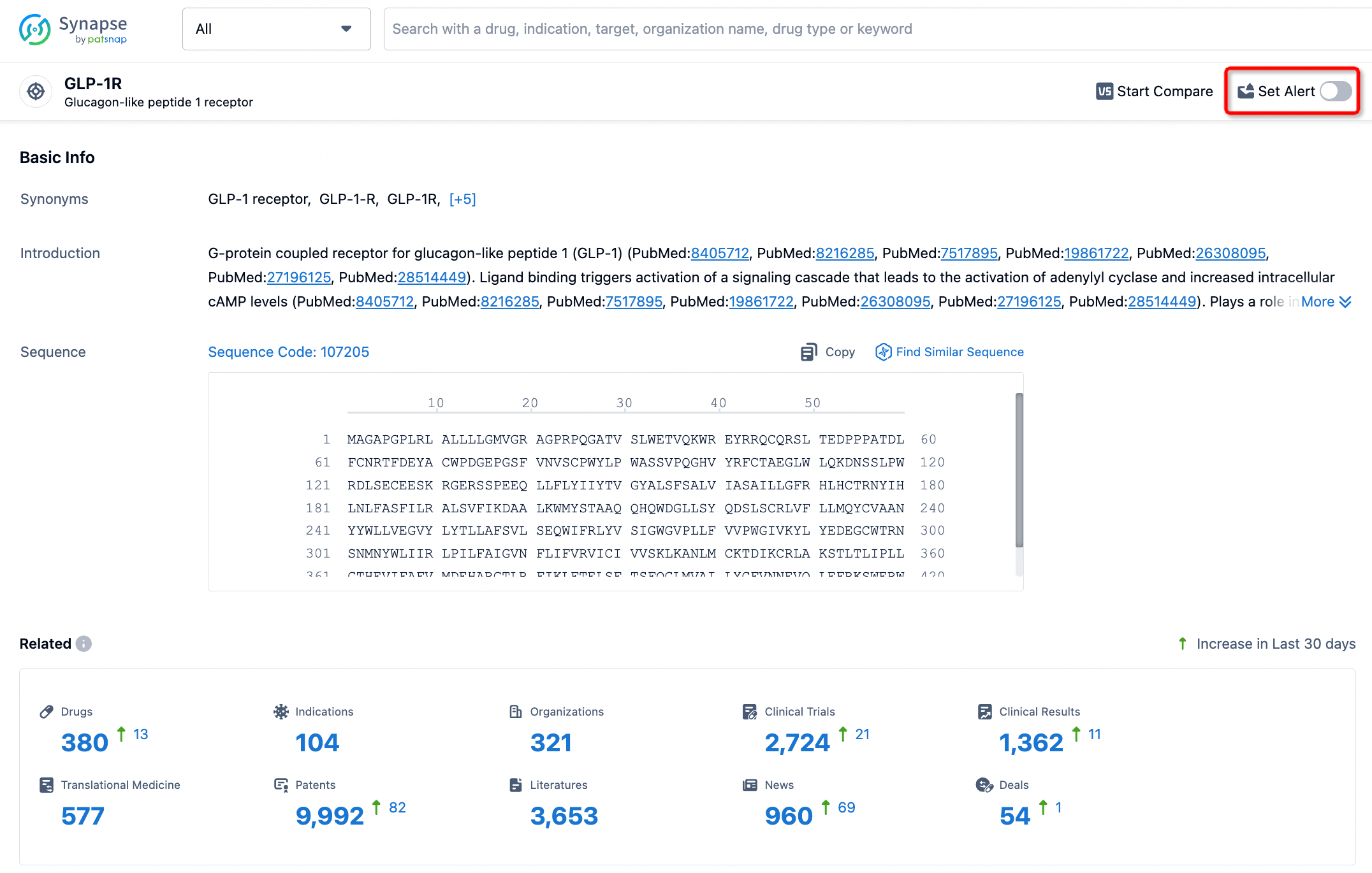
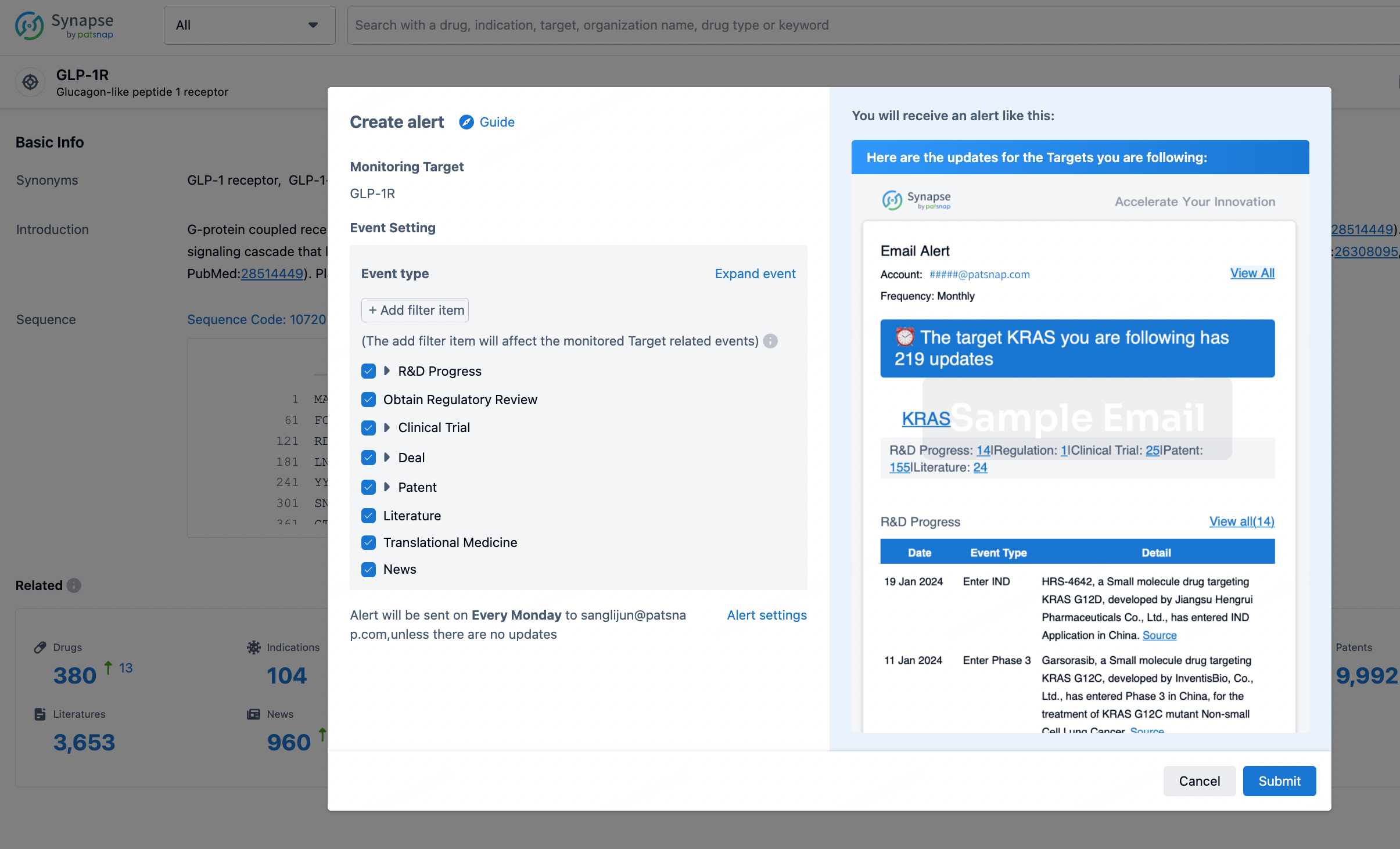
In the Synapse database, you can stay updated on the latest research and development advances of all targets. This service is accessible anytime and anywhere, with updates available daily or weekly. Use the "Set Alert" function to stay informed. Click on the image below to embark on a brand new journey of drug discovery!

AI Agents Built for Biopharma Breakthroughs
Accelerate discovery. Empower decisions. Transform outcomes.
Get started for free today!
Accelerate Strategic R&D decision making with Synapse, PatSnap’s AI-powered Connected Innovation Intelligence Platform Built for Life Sciences Professionals.
Start your data trial now!
Synapse data is also accessible to external entities via APIs or data packages. Empower better decisions with the latest in pharmaceutical intelligence.