Request Demo
What are CCL23 modulators and how do they work?
25 June 2024
Introduction to CCL23 Modulators
CCL23 modulators are emerging as a fascinating area of research within the field of immunology and therapeutic drug development. CCL23, also known as macrophage inflammatory protein-3 (MIP-3), is a chemokine that plays a crucial role in the regulation of immune responses and inflammation. Chemokines are a family of small cytokines or signaling proteins secreted by cells, whose function is to induce chemotaxis in nearby responsive cells. CCL23, in particular, is involved in the movement and activation of various immune cells, including monocytes, dendritic cells, and lymphocytes. Given the pivotal functions it performs, modulating the activity of CCL23 presents an attractive target for therapeutic intervention in numerous diseases, ranging from autoimmune disorders to cancer.
How Do CCL23 Modulators Work?
To understand how CCL23 modulators work, it’s essential first to delve into the mechanism of chemokine signaling. Chemokines like CCL23 bind to specific receptors on the surface of target cells. For CCL23, the primary receptor is CCR1, a member of the G protein-coupled receptor (GPCR) family. When CCL23 binds to CCR1, it activates intracellular signaling pathways that result in various cellular responses, including migration, proliferation, and secretion of pro-inflammatory cytokines.
CCL23 modulators can either enhance or inhibit the interaction between CCL23 and its receptor. Agonists are types of modulators that mimic the action of CCL23 by binding to CCR1 and activating the receptor, thereby promoting the downstream signaling pathways. In contrast, antagonists block the interaction between CCL23 and CCR1, preventing the activation of these pathways. By fine-tuning the activity of CCL23, these modulators can either amplify or dampen the immune response, depending on the therapeutic need.
Recent advances in molecular biology and drug development have led to the design of small molecules, monoclonal antibodies, and peptide inhibitors that specifically target CCL23 or its receptor, CCR1. These modulators can be engineered to have high specificity and affinity, reducing the likelihood of off-target effects and increasing therapeutic efficacy.
What Are CCL23 Modulators Used For?
The potential therapeutic applications of CCL23 modulators are vast, given their central role in immune cell trafficking and inflammation. One of the primary areas of interest is in the treatment of autoimmune diseases. In conditions such as rheumatoid arthritis, multiple sclerosis, and inflammatory bowel disease, the immune system mistakenly attacks the body’s own tissues, leading to chronic inflammation and tissue damage. By using CCL23 antagonists to block the recruitment and activation of immune cells at sites of inflammation, it is possible to reduce tissue damage and alleviate symptoms.
Another promising application of CCL23 modulators is in cancer therapy. Tumors often create an immunosuppressive microenvironment that allows them to evade detection and destruction by the immune system. CCL23 can contribute to this by attracting regulatory T cells and myeloid-derived suppressor cells, which inhibit anti-tumor immune responses. By inhibiting CCL23 signaling, it may be possible to disrupt this immunosuppressive environment, thereby enhancing the effectiveness of existing immunotherapies and improving patient outcomes.
In addition, CCL23 modulators are being explored for their potential in treating chronic infections. Certain pathogens exploit the chemokine system to evade immune detection and establish persistent infections. Modulating the activity of CCL23 can help in reprogramming the immune response to better control or eliminate these pathogens.
Beyond these applications, research is ongoing to explore the role of CCL23 in other diseases, including fibrotic disorders, cardiovascular diseases, and neuroinflammatory conditions. As our understanding of the intricate networks of chemokine signaling expands, the potential uses of CCL23 modulators are likely to grow, offering new avenues for therapeutic intervention.
In conclusion, CCL23 modulators represent a novel and highly promising class of therapeutic agents with the potential to treat a wide range of diseases characterized by dysregulated immune responses. As research progresses, these modulators could become an integral part of our arsenal against some of the most challenging medical conditions faced today.
CCL23 modulators are emerging as a fascinating area of research within the field of immunology and therapeutic drug development. CCL23, also known as macrophage inflammatory protein-3 (MIP-3), is a chemokine that plays a crucial role in the regulation of immune responses and inflammation. Chemokines are a family of small cytokines or signaling proteins secreted by cells, whose function is to induce chemotaxis in nearby responsive cells. CCL23, in particular, is involved in the movement and activation of various immune cells, including monocytes, dendritic cells, and lymphocytes. Given the pivotal functions it performs, modulating the activity of CCL23 presents an attractive target for therapeutic intervention in numerous diseases, ranging from autoimmune disorders to cancer.
How Do CCL23 Modulators Work?
To understand how CCL23 modulators work, it’s essential first to delve into the mechanism of chemokine signaling. Chemokines like CCL23 bind to specific receptors on the surface of target cells. For CCL23, the primary receptor is CCR1, a member of the G protein-coupled receptor (GPCR) family. When CCL23 binds to CCR1, it activates intracellular signaling pathways that result in various cellular responses, including migration, proliferation, and secretion of pro-inflammatory cytokines.
CCL23 modulators can either enhance or inhibit the interaction between CCL23 and its receptor. Agonists are types of modulators that mimic the action of CCL23 by binding to CCR1 and activating the receptor, thereby promoting the downstream signaling pathways. In contrast, antagonists block the interaction between CCL23 and CCR1, preventing the activation of these pathways. By fine-tuning the activity of CCL23, these modulators can either amplify or dampen the immune response, depending on the therapeutic need.
Recent advances in molecular biology and drug development have led to the design of small molecules, monoclonal antibodies, and peptide inhibitors that specifically target CCL23 or its receptor, CCR1. These modulators can be engineered to have high specificity and affinity, reducing the likelihood of off-target effects and increasing therapeutic efficacy.
What Are CCL23 Modulators Used For?
The potential therapeutic applications of CCL23 modulators are vast, given their central role in immune cell trafficking and inflammation. One of the primary areas of interest is in the treatment of autoimmune diseases. In conditions such as rheumatoid arthritis, multiple sclerosis, and inflammatory bowel disease, the immune system mistakenly attacks the body’s own tissues, leading to chronic inflammation and tissue damage. By using CCL23 antagonists to block the recruitment and activation of immune cells at sites of inflammation, it is possible to reduce tissue damage and alleviate symptoms.
Another promising application of CCL23 modulators is in cancer therapy. Tumors often create an immunosuppressive microenvironment that allows them to evade detection and destruction by the immune system. CCL23 can contribute to this by attracting regulatory T cells and myeloid-derived suppressor cells, which inhibit anti-tumor immune responses. By inhibiting CCL23 signaling, it may be possible to disrupt this immunosuppressive environment, thereby enhancing the effectiveness of existing immunotherapies and improving patient outcomes.
In addition, CCL23 modulators are being explored for their potential in treating chronic infections. Certain pathogens exploit the chemokine system to evade immune detection and establish persistent infections. Modulating the activity of CCL23 can help in reprogramming the immune response to better control or eliminate these pathogens.
Beyond these applications, research is ongoing to explore the role of CCL23 in other diseases, including fibrotic disorders, cardiovascular diseases, and neuroinflammatory conditions. As our understanding of the intricate networks of chemokine signaling expands, the potential uses of CCL23 modulators are likely to grow, offering new avenues for therapeutic intervention.
In conclusion, CCL23 modulators represent a novel and highly promising class of therapeutic agents with the potential to treat a wide range of diseases characterized by dysregulated immune responses. As research progresses, these modulators could become an integral part of our arsenal against some of the most challenging medical conditions faced today.
How to obtain the latest development progress of all targets?
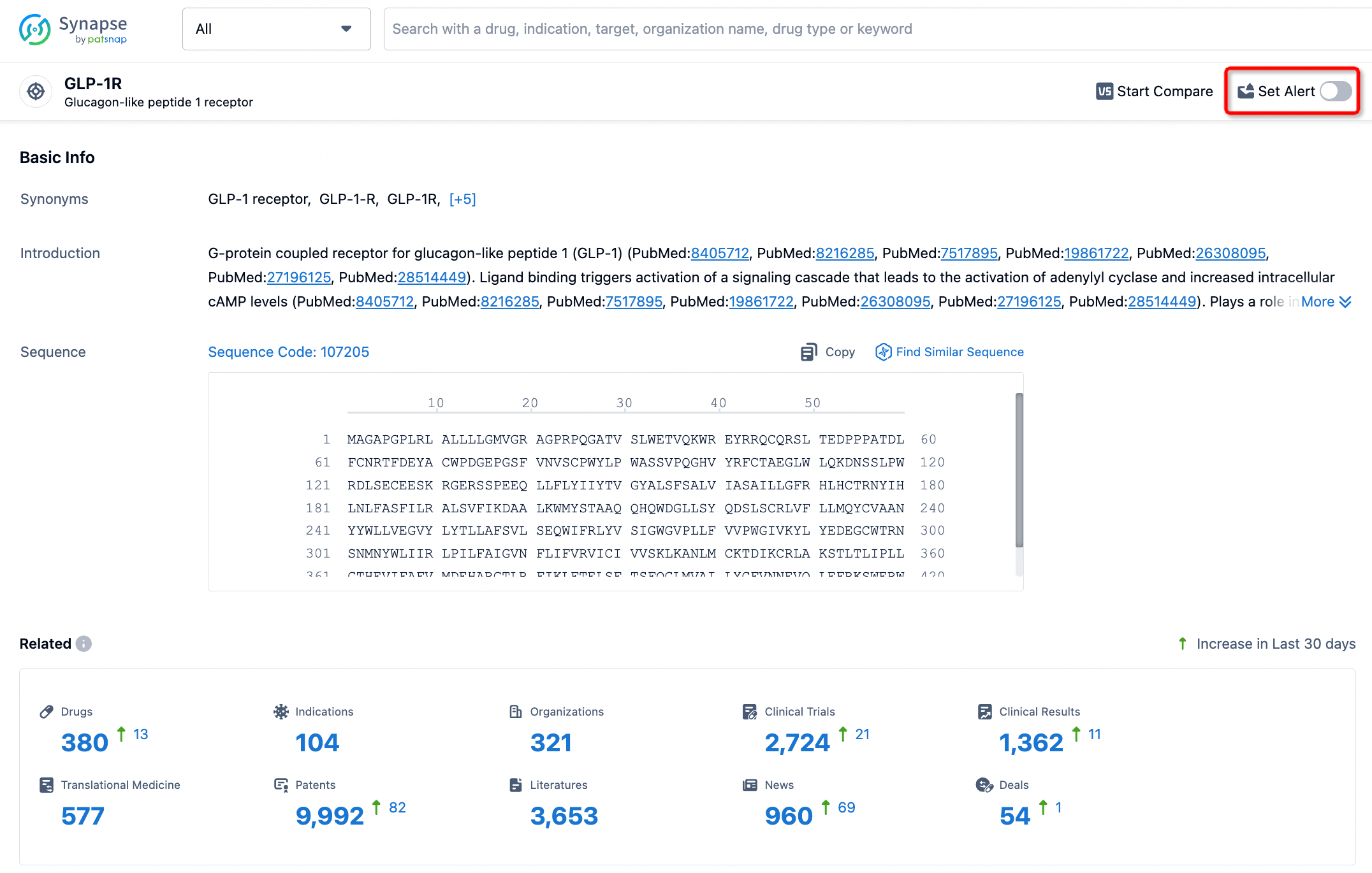
In the Synapse database, you can stay updated on the latest research and development advances of all targets. This service is accessible anytime and anywhere, with updates available daily or weekly. Use the "Set Alert" function to stay informed. Click on the image below to embark on a brand new journey of drug discovery!


AI Agents Built for Biopharma Breakthroughs
Accelerate discovery. Empower decisions. Transform outcomes.
Get started for free today!
Accelerate Strategic R&D decision making with Synapse, PatSnap’s AI-powered Connected Innovation Intelligence Platform Built for Life Sciences Professionals.
Start your data trial now!
Synapse data is also accessible to external entities via APIs or data packages. Empower better decisions with the latest in pharmaceutical intelligence.