Request Demo
What are CD3ε inhibitors and how do they work?
21 June 2024
CD3ε inhibitors represent a promising frontier in immunotherapy, particularly within the realms of cancer and autoimmune disease treatment. They target the CD3ε component of the T-cell receptor (TCR) complex, a critical player in the activation and function of T cells. Understanding the mechanisms of these inhibitors and their potential applications can shed light on their therapeutic value.
CD3ε is an integral part of the T-cell receptor-CD3 complex, which is crucial for T cell activation, differentiation, and proliferation. The TCR complex is composed of various subunits, including CD3ε, CD3γ, CD3δ, CD3ζ, and the TCRα/β or TCRγ/δ chains. Upon recognizing an antigen, the TCR transmits signals through the CD3 subunits, initiating a cascade of intracellular events that lead to T cell activation. CD3ε, specifically, plays a vital role in this signaling process.
CD3ε inhibitors function by binding to the CD3ε subunit and modulating the TCR signaling pathway. The inhibition can be achieved through various mechanisms, including direct binding to the CD3ε chain, which can block the interaction between the TCR and antigen-presenting cells, or by altering the phosphorylation status of the CD3ε subunit, thereby affecting downstream signaling events. These interventions disrupt the normal activation and proliferation of T cells, which can be beneficial in conditions where T cell activity is undesirable, such as in autoimmune diseases or in preventing transplant rejection.
In the context of cancer, CD3ε inhibitors can be employed to modulate the immune response in a more controlled fashion. Tumors often create an immunosuppressive environment that hinders the effectiveness of T cells. By carefully modulating CD3ε signaling, it is possible to enhance the anti-tumor activity of T cells while minimizing potential off-target effects. This selective inhibition can result in a more effective immune response against tumor cells, potentially leading to better clinical outcomes in cancer patients.
CD3ε inhibitors also hold significant promise in the treatment of autoimmune diseases. Autoimmune conditions, such as rheumatoid arthritis, multiple sclerosis, and type 1 diabetes, are characterized by an overactive immune response wherein T cells mistakenly attack the body's own tissues. By inhibiting CD3ε, it is possible to reduce the aberrant activation of T cells, thereby ameliorating the symptoms of these diseases. The therapeutic potential lies in the ability to dampen the immune response without completely suppressing it, maintaining the body's ability to defend against infections.
Moreover, in the realm of organ transplantation, CD3ε inhibitors can be used to prevent transplant rejection. The immune system recognizes the transplanted organ as foreign and mounts an attack against it. By inhibiting CD3ε, the activation of T cells can be controlled, reducing the likelihood of rejection and improving the success rates of transplant procedures.
Research and development in the field of CD3ε inhibitors are ongoing, with several compounds currently under investigation in preclinical and clinical trials. These studies aim to optimize the efficacy and safety profile of CD3ε inhibitors, exploring their potential as stand-alone treatments or in combination with other therapeutic modalities. The outcomes of these trials will provide valuable insights into the clinical utility and limitations of CD3ε inhibitors.
In conclusion, CD3ε inhibitors represent a novel and exciting approach to modulating the immune response. By targeting a key component of T cell activation, these inhibitors offer potential therapeutic benefits in a variety of clinical settings, including cancer, autoimmune diseases, and organ transplantation. As research progresses, CD3ε inhibitors may become an integral part of the therapeutic arsenal, offering hope for improved treatments and outcomes for patients with immune-related conditions. The future of CD3ε inhibition is promising, with the potential to revolutionize the way we approach immune modulation and therapy.
CD3ε is an integral part of the T-cell receptor-CD3 complex, which is crucial for T cell activation, differentiation, and proliferation. The TCR complex is composed of various subunits, including CD3ε, CD3γ, CD3δ, CD3ζ, and the TCRα/β or TCRγ/δ chains. Upon recognizing an antigen, the TCR transmits signals through the CD3 subunits, initiating a cascade of intracellular events that lead to T cell activation. CD3ε, specifically, plays a vital role in this signaling process.
CD3ε inhibitors function by binding to the CD3ε subunit and modulating the TCR signaling pathway. The inhibition can be achieved through various mechanisms, including direct binding to the CD3ε chain, which can block the interaction between the TCR and antigen-presenting cells, or by altering the phosphorylation status of the CD3ε subunit, thereby affecting downstream signaling events. These interventions disrupt the normal activation and proliferation of T cells, which can be beneficial in conditions where T cell activity is undesirable, such as in autoimmune diseases or in preventing transplant rejection.
In the context of cancer, CD3ε inhibitors can be employed to modulate the immune response in a more controlled fashion. Tumors often create an immunosuppressive environment that hinders the effectiveness of T cells. By carefully modulating CD3ε signaling, it is possible to enhance the anti-tumor activity of T cells while minimizing potential off-target effects. This selective inhibition can result in a more effective immune response against tumor cells, potentially leading to better clinical outcomes in cancer patients.
CD3ε inhibitors also hold significant promise in the treatment of autoimmune diseases. Autoimmune conditions, such as rheumatoid arthritis, multiple sclerosis, and type 1 diabetes, are characterized by an overactive immune response wherein T cells mistakenly attack the body's own tissues. By inhibiting CD3ε, it is possible to reduce the aberrant activation of T cells, thereby ameliorating the symptoms of these diseases. The therapeutic potential lies in the ability to dampen the immune response without completely suppressing it, maintaining the body's ability to defend against infections.
Moreover, in the realm of organ transplantation, CD3ε inhibitors can be used to prevent transplant rejection. The immune system recognizes the transplanted organ as foreign and mounts an attack against it. By inhibiting CD3ε, the activation of T cells can be controlled, reducing the likelihood of rejection and improving the success rates of transplant procedures.
Research and development in the field of CD3ε inhibitors are ongoing, with several compounds currently under investigation in preclinical and clinical trials. These studies aim to optimize the efficacy and safety profile of CD3ε inhibitors, exploring their potential as stand-alone treatments or in combination with other therapeutic modalities. The outcomes of these trials will provide valuable insights into the clinical utility and limitations of CD3ε inhibitors.
In conclusion, CD3ε inhibitors represent a novel and exciting approach to modulating the immune response. By targeting a key component of T cell activation, these inhibitors offer potential therapeutic benefits in a variety of clinical settings, including cancer, autoimmune diseases, and organ transplantation. As research progresses, CD3ε inhibitors may become an integral part of the therapeutic arsenal, offering hope for improved treatments and outcomes for patients with immune-related conditions. The future of CD3ε inhibition is promising, with the potential to revolutionize the way we approach immune modulation and therapy.
How to obtain the latest development progress of all targets?
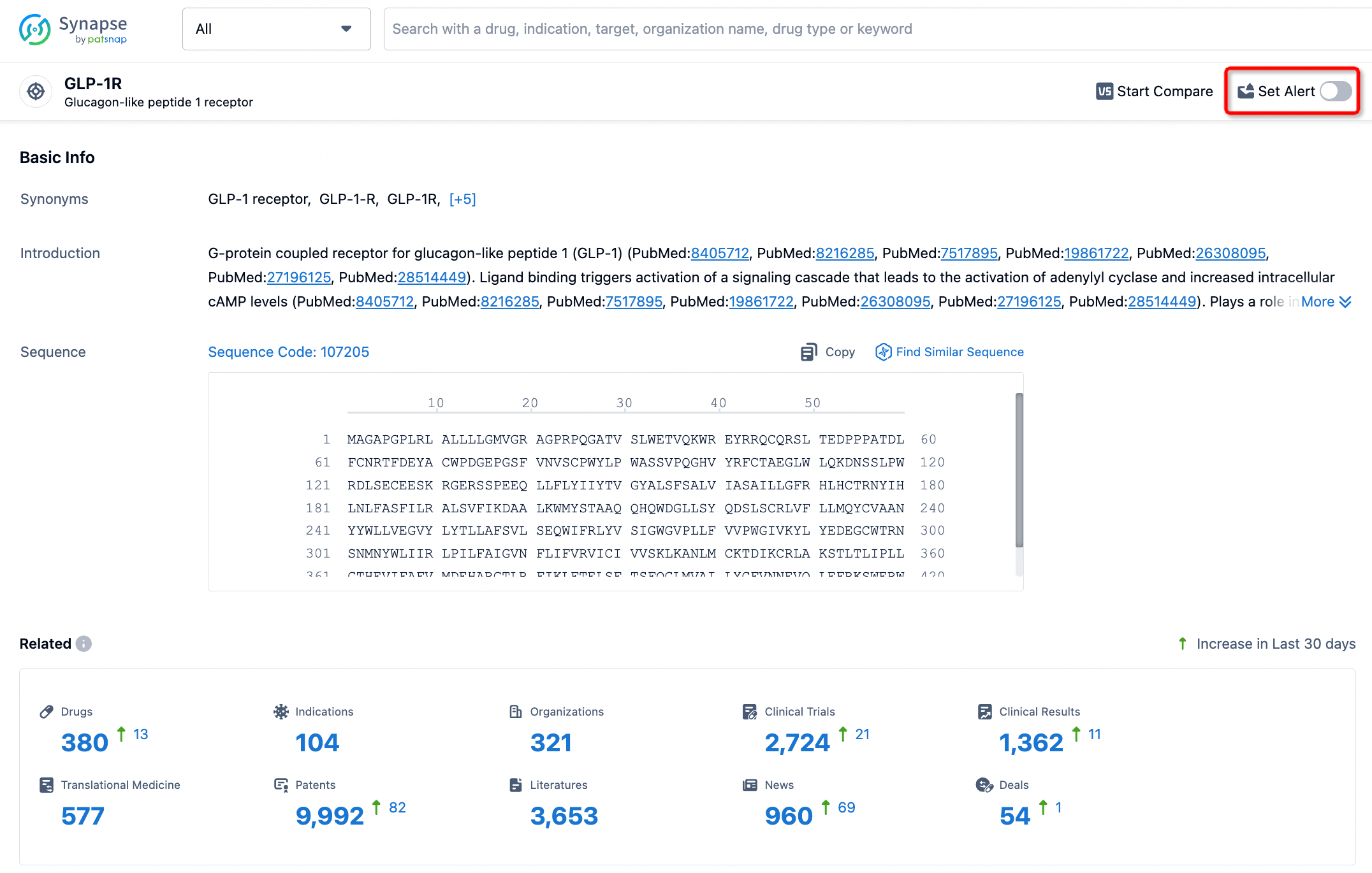
In the Synapse database, you can stay updated on the latest research and development advances of all targets. This service is accessible anytime and anywhere, with updates available daily or weekly. Use the "Set Alert" function to stay informed. Click on the image below to embark on a brand new journey of drug discovery!


AI Agents Built for Biopharma Breakthroughs
Accelerate discovery. Empower decisions. Transform outcomes.
Get started for free today!
Accelerate Strategic R&D decision making with Synapse, PatSnap’s AI-powered Connected Innovation Intelligence Platform Built for Life Sciences Professionals.
Start your data trial now!
Synapse data is also accessible to external entities via APIs or data packages. Empower better decisions with the latest in pharmaceutical intelligence.