Request Demo
What are CD44v6 inhibitors and how do they work?
21 June 2024
CD44v6 inhibitors represent a promising frontier in the field of cancer therapy. CD44 is a cell surface glycoprotein involved in cell-cell interactions, cell adhesion, and migration. Among its various isoforms, CD44 variant 6 (CD44v6) has attracted significant attention due to its prominent role in tumor progression, metastasis, and chemoresistance. This article delves into the workings, applications, and potential of CD44v6 inhibitors in modern medicine.
CD44v6 inhibitors function by targeting the CD44v6 isoform, which is often overexpressed in various malignancies. This expression is associated with the aggressive behavior of cancer cells, including enhanced motility, invasion, and resistance to standard treatments. By inhibiting CD44v6, these drugs aim to cripple the cancer cells' ability to proliferate and metastasize, rendering them more vulnerable to conventional therapies.
The mechanism of action of CD44v6 inhibitors revolves around the disruption of critical biological pathways that cancer cells exploit for survival and growth. CD44v6 interacts with various ligands, including hyaluronic acid, which plays a crucial role in cell adhesion and migration. By binding to CD44v6, these inhibitors block the receptor's interaction with its ligands, effectively impeding the downstream signaling pathways. This interruption can lead to the inhibition of cancer cell proliferation, induction of apoptosis (programmed cell death), and reduction of metastatic potential.
One of the key pathways influenced by CD44v6 is the MAPK/ERK pathway, which is instrumental in controlling cell division and survival. By targeting CD44v6, inhibitors can disrupt this pathway, leading to decreased tumor cell growth and enhanced sensitivity to other anticancer agents. Additionally, CD44v6 inhibitors can modulate the tumor microenvironment by altering the behavior of cancer-associated fibroblasts and immune cells, further stifling tumor progression.
CD44v6 inhibitors are primarily employed in the treatment of cancers where CD44v6 is significantly overexpressed. These include, but are not limited to, colorectal cancer, head and neck squamous cell carcinoma, pancreatic cancer, and gastric cancer. The overexpression of CD44v6 in these malignancies is often correlated with poor prognosis and increased resistance to chemotherapy and radiotherapy.
In colorectal cancer, for instance, CD44v6 inhibitors have shown promise in preclinical studies by reducing tumor growth and metastatic spread. Similarly, in head and neck squamous cell carcinoma, the use of CD44v6 inhibitors has been associated with decreased tumor invasiveness and improved response to treatment. Pancreatic cancer, known for its dismal prognosis and limited treatment options, has also been a target for CD44v6 inhibitors, with encouraging results in reducing tumor burden and enhancing the efficacy of existing therapies.
Beyond solid tumors, CD44v6 inhibitors are being explored for their potential in treating hematological malignancies such as multiple myeloma and certain types of leukemia. In these contexts, CD44v6 plays a role in the interaction between cancer cells and the bone marrow microenvironment, which is crucial for the survival and proliferation of malignant cells. By disrupting these interactions, CD44v6 inhibitors offer a novel approach to combat these challenging diseases.
In conclusion, CD44v6 inhibitors are an exciting development in the fight against cancer. By targeting a pivotal molecule involved in tumor progression and chemoresistance, these inhibitors hold the potential to enhance the effectiveness of existing therapies and improve patient outcomes. While research is still ongoing, the preliminary results are promising, and CD44v6 inhibitors may soon become a vital component of the oncological arsenal. As we deepen our understanding of CD44v6 and its role in cancer biology, the development of more refined and effective inhibitors will undoubtedly follow, bringing hope to patients battling the most formidable of diseases.
CD44v6 inhibitors function by targeting the CD44v6 isoform, which is often overexpressed in various malignancies. This expression is associated with the aggressive behavior of cancer cells, including enhanced motility, invasion, and resistance to standard treatments. By inhibiting CD44v6, these drugs aim to cripple the cancer cells' ability to proliferate and metastasize, rendering them more vulnerable to conventional therapies.
The mechanism of action of CD44v6 inhibitors revolves around the disruption of critical biological pathways that cancer cells exploit for survival and growth. CD44v6 interacts with various ligands, including hyaluronic acid, which plays a crucial role in cell adhesion and migration. By binding to CD44v6, these inhibitors block the receptor's interaction with its ligands, effectively impeding the downstream signaling pathways. This interruption can lead to the inhibition of cancer cell proliferation, induction of apoptosis (programmed cell death), and reduction of metastatic potential.
One of the key pathways influenced by CD44v6 is the MAPK/ERK pathway, which is instrumental in controlling cell division and survival. By targeting CD44v6, inhibitors can disrupt this pathway, leading to decreased tumor cell growth and enhanced sensitivity to other anticancer agents. Additionally, CD44v6 inhibitors can modulate the tumor microenvironment by altering the behavior of cancer-associated fibroblasts and immune cells, further stifling tumor progression.
CD44v6 inhibitors are primarily employed in the treatment of cancers where CD44v6 is significantly overexpressed. These include, but are not limited to, colorectal cancer, head and neck squamous cell carcinoma, pancreatic cancer, and gastric cancer. The overexpression of CD44v6 in these malignancies is often correlated with poor prognosis and increased resistance to chemotherapy and radiotherapy.
In colorectal cancer, for instance, CD44v6 inhibitors have shown promise in preclinical studies by reducing tumor growth and metastatic spread. Similarly, in head and neck squamous cell carcinoma, the use of CD44v6 inhibitors has been associated with decreased tumor invasiveness and improved response to treatment. Pancreatic cancer, known for its dismal prognosis and limited treatment options, has also been a target for CD44v6 inhibitors, with encouraging results in reducing tumor burden and enhancing the efficacy of existing therapies.
Beyond solid tumors, CD44v6 inhibitors are being explored for their potential in treating hematological malignancies such as multiple myeloma and certain types of leukemia. In these contexts, CD44v6 plays a role in the interaction between cancer cells and the bone marrow microenvironment, which is crucial for the survival and proliferation of malignant cells. By disrupting these interactions, CD44v6 inhibitors offer a novel approach to combat these challenging diseases.
In conclusion, CD44v6 inhibitors are an exciting development in the fight against cancer. By targeting a pivotal molecule involved in tumor progression and chemoresistance, these inhibitors hold the potential to enhance the effectiveness of existing therapies and improve patient outcomes. While research is still ongoing, the preliminary results are promising, and CD44v6 inhibitors may soon become a vital component of the oncological arsenal. As we deepen our understanding of CD44v6 and its role in cancer biology, the development of more refined and effective inhibitors will undoubtedly follow, bringing hope to patients battling the most formidable of diseases.
How to obtain the latest development progress of all targets?
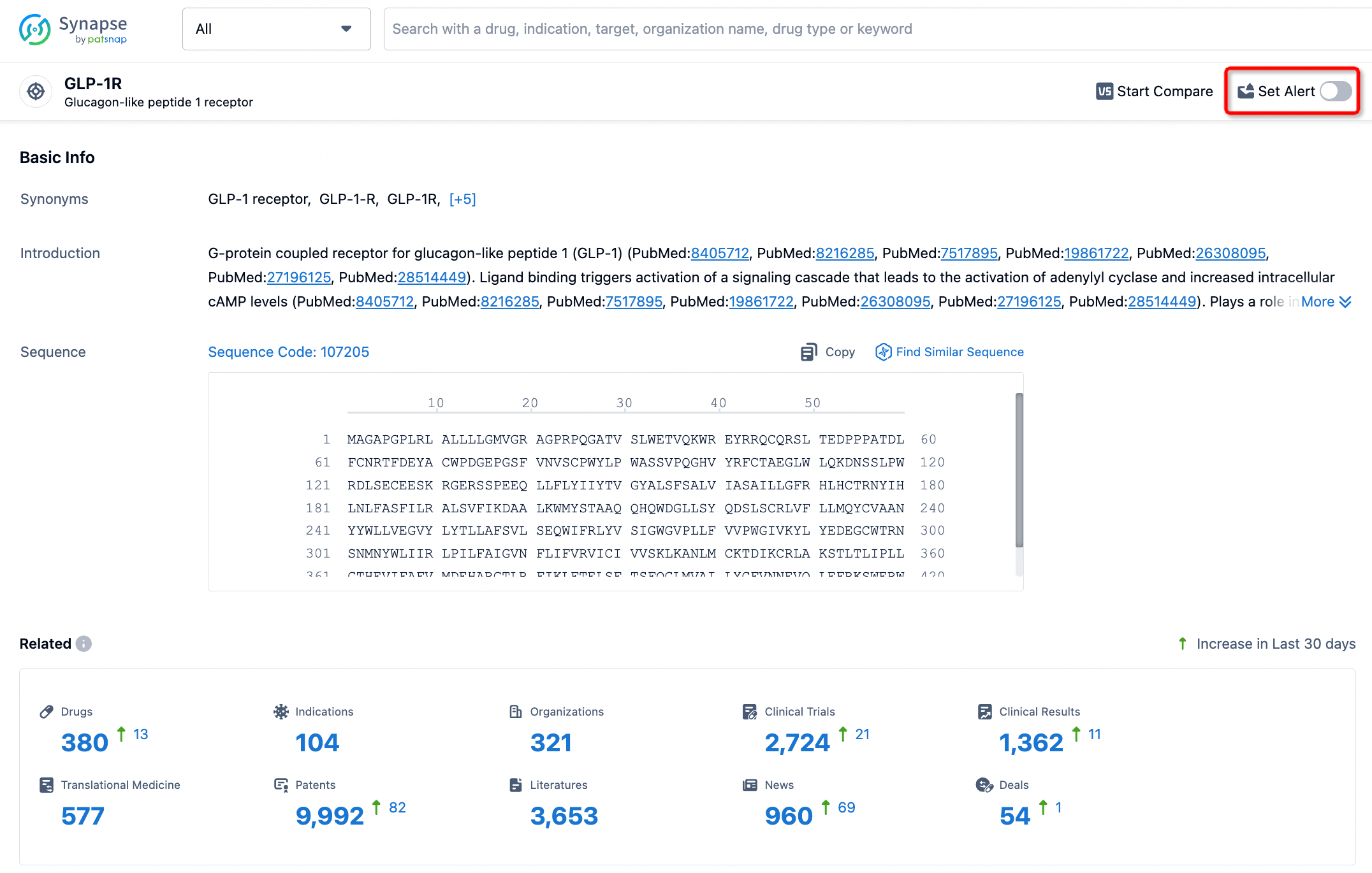
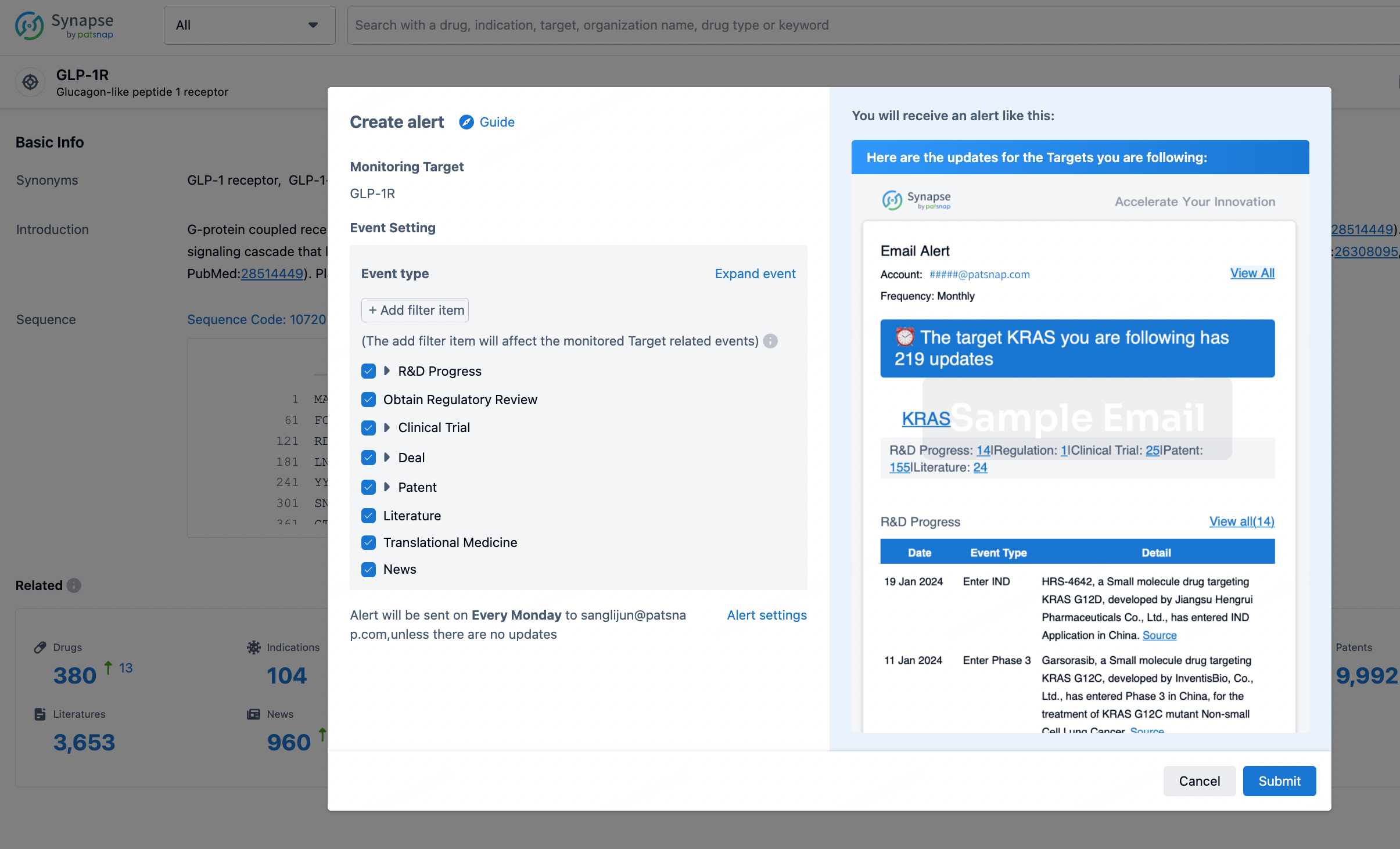
In the Synapse database, you can stay updated on the latest research and development advances of all targets. This service is accessible anytime and anywhere, with updates available daily or weekly. Use the "Set Alert" function to stay informed. Click on the image below to embark on a brand new journey of drug discovery!

AI Agents Built for Biopharma Breakthroughs
Accelerate discovery. Empower decisions. Transform outcomes.
Get started for free today!
Accelerate Strategic R&D decision making with Synapse, PatSnap’s AI-powered Connected Innovation Intelligence Platform Built for Life Sciences Professionals.
Start your data trial now!
Synapse data is also accessible to external entities via APIs or data packages. Empower better decisions with the latest in pharmaceutical intelligence.