Request Demo
What are CHIKV E2 antagonists and how do they work?
25 June 2024
Introduction to CHIKV E2 Antagonists
Chikungunya virus (CHIKV) is a mosquito-borne pathogen that has caused significant outbreaks globally, leading to debilitating symptoms such as high fever, joint pain, and rash. Despite its global impact, there is still no specific antiviral treatment available for CHIKV infections. However, recent advancements in molecular biology and virology have paved the way for the development of promising therapeutic strategies. Among these, CHIKV E2 antagonists have emerged as a compelling option. These antagonists target the E2 glycoprotein of the virus, which plays a crucial role in the virus's ability to infect host cells. This blog post delves into the mechanics of CHIKV E2 antagonists, their function, and their potential applications in combating Chikungunya virus.
How Do CHIKV E2 Antagonists Work?
To understand how CHIKV E2 antagonists operate, it is essential to first grasp the role of the E2 glycoprotein in the life cycle of the virus. The E2 glycoprotein is one of the envelope proteins present on the surface of the CHIKV virus. It is primarily responsible for mediating the attachment and entry of the virus into the host cells. By binding to specific receptors on the host cell membrane, E2 facilitates the fusion of the viral envelope with the host cell membrane, allowing the viral RNA to enter the cell and initiate infection.
CHIKV E2 antagonists are designed to inhibit this crucial interaction. These molecules bind to the E2 glycoprotein, thereby blocking its interaction with the host cell receptors. By doing so, they prevent the virus from attaching to and entering host cells, effectively halting the infection process at its earliest stage. This mechanism of action makes CHIKV E2 antagonists a highly targeted antiviral strategy, minimizing the risk of off-target effects that are often seen with broader-spectrum antivirals.
There are various classes of CHIKV E2 antagonists, including small molecules, peptides, and monoclonal antibodies. Small molecules often work by fitting into the binding pocket of the E2 glycoprotein, thereby preventing receptor interaction through steric hindrance. Peptides and monoclonal antibodies, on the other hand, typically bind to specific epitopes on the E2 glycoprotein, blocking its function through a combination of steric and allosteric effects.
What Are CHIKV E2 Antagonists Used For?
Given their targeted mechanism of action, CHIKV E2 antagonists hold immense promise for several therapeutic and preventive applications. Currently, the most immediate and apparent use for these antagonists is in the treatment of acute CHIKV infections. By administering these antagonists to infected individuals, it is possible to significantly reduce viral load and alleviate the severity of symptoms. This is especially crucial in regions where CHIKV outbreaks are common and healthcare resources are limited.
In addition to treating acute infections, CHIKV E2 antagonists could also be used as a prophylactic measure. In high-risk areas, administering these antagonists to individuals during the peak mosquito season could provide a protective barrier against the virus, reducing the incidence of new infections. This approach could be particularly beneficial for vulnerable populations, such as pregnant women and the elderly, who are at higher risk of severe disease outcomes.
Furthermore, CHIKV E2 antagonists could serve as vital tools in the study of CHIKV biology and pathogenesis. By using these antagonists in laboratory settings, researchers can gain deeper insights into the molecular mechanisms that govern CHIKV infection. This knowledge could, in turn, inform the development of new therapeutic strategies and improve our understanding of other related viral diseases.
Lastly, the development of CHIKV E2 antagonists could have broader implications for the field of virology. The strategies and technologies used to identify and optimize these antagonists could be applied to other viral pathogens that rely on similar glycoprotein-mediated entry mechanisms. Thus, the advancements made in the development of CHIKV E2 antagonists could pave the way for new antiviral therapies against a range of infectious diseases.
In conclusion, CHIKV E2 antagonists represent a promising frontier in the fight against Chikungunya virus. Their targeted mechanism of action, combined with their potential for therapeutic and prophylactic use, makes them a valuable addition to the arsenal against this debilitating disease. As research continues to advance, it is hoped that these antagonists will soon become a cornerstone of CHIKV treatment and prevention, offering relief to millions affected by this global health threat.
Chikungunya virus (CHIKV) is a mosquito-borne pathogen that has caused significant outbreaks globally, leading to debilitating symptoms such as high fever, joint pain, and rash. Despite its global impact, there is still no specific antiviral treatment available for CHIKV infections. However, recent advancements in molecular biology and virology have paved the way for the development of promising therapeutic strategies. Among these, CHIKV E2 antagonists have emerged as a compelling option. These antagonists target the E2 glycoprotein of the virus, which plays a crucial role in the virus's ability to infect host cells. This blog post delves into the mechanics of CHIKV E2 antagonists, their function, and their potential applications in combating Chikungunya virus.
How Do CHIKV E2 Antagonists Work?
To understand how CHIKV E2 antagonists operate, it is essential to first grasp the role of the E2 glycoprotein in the life cycle of the virus. The E2 glycoprotein is one of the envelope proteins present on the surface of the CHIKV virus. It is primarily responsible for mediating the attachment and entry of the virus into the host cells. By binding to specific receptors on the host cell membrane, E2 facilitates the fusion of the viral envelope with the host cell membrane, allowing the viral RNA to enter the cell and initiate infection.
CHIKV E2 antagonists are designed to inhibit this crucial interaction. These molecules bind to the E2 glycoprotein, thereby blocking its interaction with the host cell receptors. By doing so, they prevent the virus from attaching to and entering host cells, effectively halting the infection process at its earliest stage. This mechanism of action makes CHIKV E2 antagonists a highly targeted antiviral strategy, minimizing the risk of off-target effects that are often seen with broader-spectrum antivirals.
There are various classes of CHIKV E2 antagonists, including small molecules, peptides, and monoclonal antibodies. Small molecules often work by fitting into the binding pocket of the E2 glycoprotein, thereby preventing receptor interaction through steric hindrance. Peptides and monoclonal antibodies, on the other hand, typically bind to specific epitopes on the E2 glycoprotein, blocking its function through a combination of steric and allosteric effects.
What Are CHIKV E2 Antagonists Used For?
Given their targeted mechanism of action, CHIKV E2 antagonists hold immense promise for several therapeutic and preventive applications. Currently, the most immediate and apparent use for these antagonists is in the treatment of acute CHIKV infections. By administering these antagonists to infected individuals, it is possible to significantly reduce viral load and alleviate the severity of symptoms. This is especially crucial in regions where CHIKV outbreaks are common and healthcare resources are limited.
In addition to treating acute infections, CHIKV E2 antagonists could also be used as a prophylactic measure. In high-risk areas, administering these antagonists to individuals during the peak mosquito season could provide a protective barrier against the virus, reducing the incidence of new infections. This approach could be particularly beneficial for vulnerable populations, such as pregnant women and the elderly, who are at higher risk of severe disease outcomes.
Furthermore, CHIKV E2 antagonists could serve as vital tools in the study of CHIKV biology and pathogenesis. By using these antagonists in laboratory settings, researchers can gain deeper insights into the molecular mechanisms that govern CHIKV infection. This knowledge could, in turn, inform the development of new therapeutic strategies and improve our understanding of other related viral diseases.
Lastly, the development of CHIKV E2 antagonists could have broader implications for the field of virology. The strategies and technologies used to identify and optimize these antagonists could be applied to other viral pathogens that rely on similar glycoprotein-mediated entry mechanisms. Thus, the advancements made in the development of CHIKV E2 antagonists could pave the way for new antiviral therapies against a range of infectious diseases.
In conclusion, CHIKV E2 antagonists represent a promising frontier in the fight against Chikungunya virus. Their targeted mechanism of action, combined with their potential for therapeutic and prophylactic use, makes them a valuable addition to the arsenal against this debilitating disease. As research continues to advance, it is hoped that these antagonists will soon become a cornerstone of CHIKV treatment and prevention, offering relief to millions affected by this global health threat.
How to obtain the latest development progress of all targets?
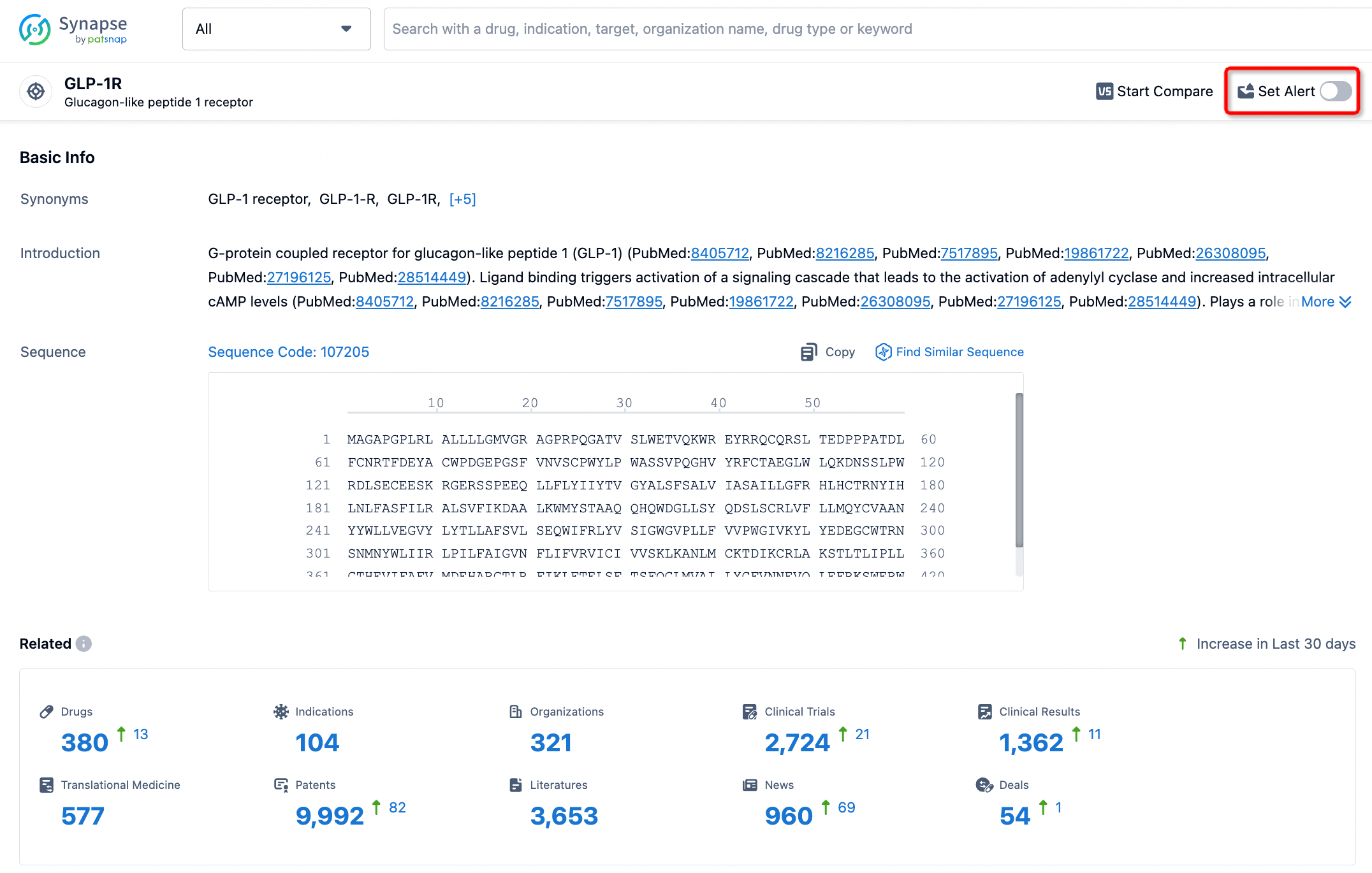
In the Synapse database, you can stay updated on the latest research and development advances of all targets. This service is accessible anytime and anywhere, with updates available daily or weekly. Use the "Set Alert" function to stay informed. Click on the image below to embark on a brand new journey of drug discovery!


AI Agents Built for Biopharma Breakthroughs
Accelerate discovery. Empower decisions. Transform outcomes.
Get started for free today!
Accelerate Strategic R&D decision making with Synapse, PatSnap’s AI-powered Connected Innovation Intelligence Platform Built for Life Sciences Professionals.
Start your data trial now!
Synapse data is also accessible to external entities via APIs or data packages. Empower better decisions with the latest in pharmaceutical intelligence.