Request Demo
What are Cholesterol modulators and how do they work?
21 June 2024
Cholesterol modulators have revolutionized the management of cardiovascular health by offering a targeted approach to controlling cholesterol levels. These medications play a crucial role in reducing the risk of heart disease, one of the leading causes of mortality worldwide. In this blog post, we will delve into the mechanisms of cholesterol modulators, their applications, and their significance in modern medicine.
Cholesterol modulators primarily work by influencing the body's cholesterol levels. Cholesterol, a waxy substance found in the blood, is essential for building cells and producing certain hormones. However, an excess of cholesterol can lead to the formation of plaques in the arteries, which can result in conditions like atherosclerosis, heart attacks, and strokes.
There are different classes of cholesterol modulators, each working through distinct mechanisms. The most widely known are statins, which function by inhibiting the enzyme HMG-CoA reductase. This enzyme plays a key role in the liver's production of cholesterol. By blocking this enzyme, statins effectively reduce the liver's cholesterol synthesis, leading to lower overall cholesterol levels in the blood.
Another class of cholesterol modulators includes bile acid sequestrants. These drugs work by binding to bile acids in the intestine, preventing their reabsorption. Since bile acids are made from cholesterol, their removal forces the liver to use up more cholesterol to produce more bile acids, thereby lowering blood cholesterol levels.
There are also cholesterol absorption inhibitors, such as ezetimibe, which act by preventing the absorption of cholesterol from the diet within the intestines. This results in a decrease in the amount of cholesterol entering the bloodstream. Additionally, PCSK9 inhibitors are a newer class of cholesterol modulators that work by increasing the number of LDL receptors on liver cells, which helps remove LDL cholesterol from the blood.
Cholesterol modulators are primarily used to manage and prevent cardiovascular diseases. Elevated cholesterol levels, particularly low-density lipoprotein (LDL) cholesterol, are a significant risk factor for developing heart disease and stroke. By lowering LDL cholesterol, these medications help to reduce the risk of plaque formation in the arteries, thereby preventing atherosclerosis and its associated complications.
For patients with hypercholesterolemia, a condition characterized by high cholesterol levels, cholesterol modulators are often prescribed as part of a comprehensive treatment plan. They are particularly important for individuals with familial hypercholesterolemia, a genetic disorder that causes extremely high cholesterol levels and significantly increases the risk of early heart disease.
Beyond their use in hypercholesterolemia, cholesterol modulators are also used in patients who have already experienced a cardiovascular event, such as a heart attack or stroke. In these cases, the aim is to prevent recurrence by aggressively managing cholesterol levels. Studies have shown that statins, in particular, can reduce the risk of subsequent cardiovascular events by stabilizing existing plaques and reducing inflammation.
Additionally, cholesterol modulators are used in individuals with diabetes, metabolic syndrome, or other conditions that put them at high risk for cardiovascular disease. These medications help manage the lipid profile, promoting a healthier balance between LDL and high-density lipoprotein (HDL) cholesterol.
In conclusion, cholesterol modulators are a cornerstone in the management of cardiovascular health. By targeting different aspects of cholesterol metabolism, these drugs effectively reduce LDL cholesterol levels and lower the risk of heart disease and stroke. Their use extends from individuals with high cholesterol to those with a history of cardiovascular events and high-risk populations. As research continues to advance, the development of new cholesterol modulators holds promise for even more effective and personalized approaches to cardiovascular care.
Cholesterol modulators primarily work by influencing the body's cholesterol levels. Cholesterol, a waxy substance found in the blood, is essential for building cells and producing certain hormones. However, an excess of cholesterol can lead to the formation of plaques in the arteries, which can result in conditions like atherosclerosis, heart attacks, and strokes.
There are different classes of cholesterol modulators, each working through distinct mechanisms. The most widely known are statins, which function by inhibiting the enzyme HMG-CoA reductase. This enzyme plays a key role in the liver's production of cholesterol. By blocking this enzyme, statins effectively reduce the liver's cholesterol synthesis, leading to lower overall cholesterol levels in the blood.
Another class of cholesterol modulators includes bile acid sequestrants. These drugs work by binding to bile acids in the intestine, preventing their reabsorption. Since bile acids are made from cholesterol, their removal forces the liver to use up more cholesterol to produce more bile acids, thereby lowering blood cholesterol levels.
There are also cholesterol absorption inhibitors, such as ezetimibe, which act by preventing the absorption of cholesterol from the diet within the intestines. This results in a decrease in the amount of cholesterol entering the bloodstream. Additionally, PCSK9 inhibitors are a newer class of cholesterol modulators that work by increasing the number of LDL receptors on liver cells, which helps remove LDL cholesterol from the blood.
Cholesterol modulators are primarily used to manage and prevent cardiovascular diseases. Elevated cholesterol levels, particularly low-density lipoprotein (LDL) cholesterol, are a significant risk factor for developing heart disease and stroke. By lowering LDL cholesterol, these medications help to reduce the risk of plaque formation in the arteries, thereby preventing atherosclerosis and its associated complications.
For patients with hypercholesterolemia, a condition characterized by high cholesterol levels, cholesterol modulators are often prescribed as part of a comprehensive treatment plan. They are particularly important for individuals with familial hypercholesterolemia, a genetic disorder that causes extremely high cholesterol levels and significantly increases the risk of early heart disease.
Beyond their use in hypercholesterolemia, cholesterol modulators are also used in patients who have already experienced a cardiovascular event, such as a heart attack or stroke. In these cases, the aim is to prevent recurrence by aggressively managing cholesterol levels. Studies have shown that statins, in particular, can reduce the risk of subsequent cardiovascular events by stabilizing existing plaques and reducing inflammation.
Additionally, cholesterol modulators are used in individuals with diabetes, metabolic syndrome, or other conditions that put them at high risk for cardiovascular disease. These medications help manage the lipid profile, promoting a healthier balance between LDL and high-density lipoprotein (HDL) cholesterol.
In conclusion, cholesterol modulators are a cornerstone in the management of cardiovascular health. By targeting different aspects of cholesterol metabolism, these drugs effectively reduce LDL cholesterol levels and lower the risk of heart disease and stroke. Their use extends from individuals with high cholesterol to those with a history of cardiovascular events and high-risk populations. As research continues to advance, the development of new cholesterol modulators holds promise for even more effective and personalized approaches to cardiovascular care.
How to obtain the latest development progress of all targets?
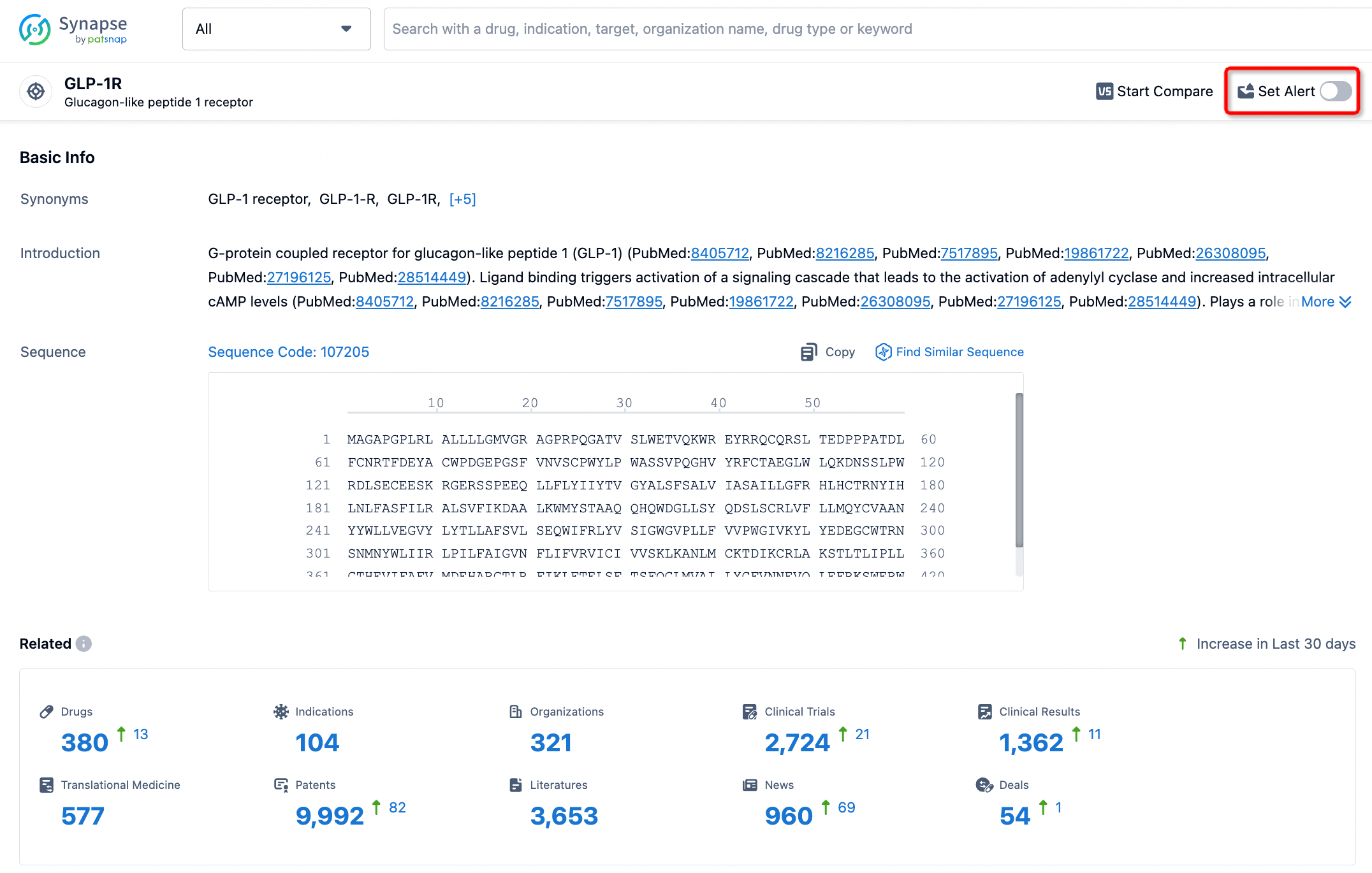
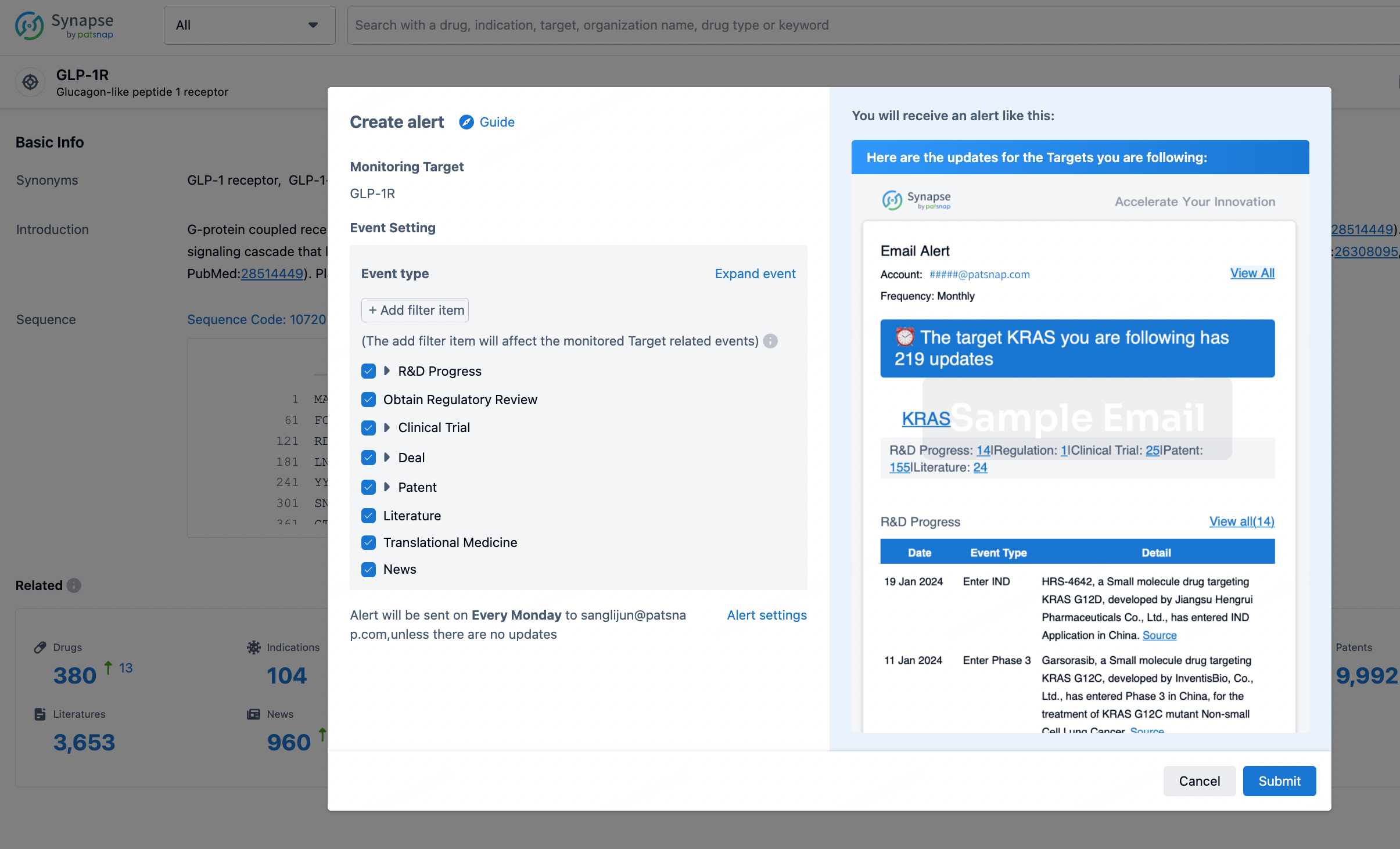
In the Synapse database, you can stay updated on the latest research and development advances of all targets. This service is accessible anytime and anywhere, with updates available daily or weekly. Use the "Set Alert" function to stay informed. Click on the image below to embark on a brand new journey of drug discovery!
AI Agents Built for Biopharma Breakthroughs
Accelerate discovery. Empower decisions. Transform outcomes.
Get started for free today!
Accelerate Strategic R&D decision making with Synapse, PatSnap’s AI-powered Connected Innovation Intelligence Platform Built for Life Sciences Professionals.
Start your data trial now!
Synapse data is also accessible to external entities via APIs or data packages. Empower better decisions with the latest in pharmaceutical intelligence.