Request Demo
What are CK1δ inhibitors and how do they work?
21 June 2024
CK1δ inhibitors are emerging as promising therapeutic agents in the realm of biomedical research. CK1δ, or Casein Kinase 1 delta, is a member of the casein kinase 1 family of serine/threonine-specific protein kinases, which are involved in regulating various cellular processes, including DNA repair, cell division, and circadian rhythms. Understanding the mechanisms and potential applications of CK1δ inhibitors could pave the way for novel treatments for a variety of diseases.
CK1δ inhibitors work by specifically targeting the CK1δ enzyme and blocking its activity. CK1δ plays a key role in several signaling pathways by phosphorylating various substrates. This phosphorylation can either activate or deactivate target proteins, thus influencing numerous cellular functions. By inhibiting CK1δ, these compounds can modulate the activity of these signaling pathways, leading to changes in cellular processes that can be beneficial in the context of disease.
One of the primary pathways influenced by CK1δ is the Wnt signaling pathway, which plays a crucial role in cell proliferation and differentiation. Aberrant Wnt signaling is a hallmark of many cancers, and CK1δ inhibitors have shown potential in disrupting this pathway to prevent uncontrolled cell growth. Additionally, CK1δ is involved in the regulation of circadian rhythms through its role in the phosphorylation of proteins involved in the circadian clock. By inhibiting CK1δ, it may be possible to correct disruptions in circadian rhythms, which are linked to various health issues, including sleep disorders and metabolic diseases.
CK1δ inhibitors are being explored for a range of potential therapeutic applications. One of the most promising areas of research is cancer treatment. Given CK1δ's role in the Wnt signaling pathway, CK1δ inhibitors have been investigated for their ability to hinder the growth of cancer cells and tumors. Preclinical studies have demonstrated that CK1δ inhibitors can reduce tumor growth in various cancer models, including colorectal, breast, and pancreatic cancers. These findings suggest that CK1δ inhibitors could be developed into effective anticancer agents.
In addition to cancer, CK1δ inhibitors are being studied for their potential in treating neurodegenerative diseases. CK1δ is implicated in the regulation of tau protein phosphorylation, which is associated with tauopathies such as Alzheimer's disease. Inhibiting CK1δ could potentially reduce tau hyperphosphorylation and aggregation, slowing the progression of these diseases. Early research in cellular and animal models has shown promising results, providing a basis for further investigation.
Circadian rhythm disorders represent another significant area where CK1δ inhibitors may prove beneficial. Given CK1δ's involvement in the molecular mechanisms governing circadian rhythms, inhibitors targeting this kinase could help realign disrupted circadian clocks. This has implications not only for sleep disorders but also for metabolic diseases, mood disorders, and even some types of cancer, as circadian rhythms influence a wide array of physiological processes.
Researchers are also exploring the potential of CK1δ inhibitors in inflammatory diseases. CK1δ has been shown to participate in the regulation of inflammatory responses, and its inhibition could help modulate excessive inflammation seen in conditions such as rheumatoid arthritis and inflammatory bowel disease. By dampening the inflammatory response, CK1δ inhibitors could provide relief from the symptoms and progression of these chronic conditions.
In conclusion, CK1δ inhibitors represent a versatile and promising class of therapeutic agents with potential applications across a broad spectrum of diseases. By targeting a key enzyme involved in multiple critical signaling pathways, these inhibitors offer a novel approach to modulating cellular processes that are dysregulated in disease states. Continued research and development in this field could lead to significant advancements in the treatment of cancer, neurodegenerative diseases, circadian rhythm disorders, and inflammatory conditions, ultimately improving patient outcomes and quality of life. As we deepen our understanding of CK1δ and its inhibitors, the future looks bright for these innovative therapeutic strategies.
CK1δ inhibitors work by specifically targeting the CK1δ enzyme and blocking its activity. CK1δ plays a key role in several signaling pathways by phosphorylating various substrates. This phosphorylation can either activate or deactivate target proteins, thus influencing numerous cellular functions. By inhibiting CK1δ, these compounds can modulate the activity of these signaling pathways, leading to changes in cellular processes that can be beneficial in the context of disease.
One of the primary pathways influenced by CK1δ is the Wnt signaling pathway, which plays a crucial role in cell proliferation and differentiation. Aberrant Wnt signaling is a hallmark of many cancers, and CK1δ inhibitors have shown potential in disrupting this pathway to prevent uncontrolled cell growth. Additionally, CK1δ is involved in the regulation of circadian rhythms through its role in the phosphorylation of proteins involved in the circadian clock. By inhibiting CK1δ, it may be possible to correct disruptions in circadian rhythms, which are linked to various health issues, including sleep disorders and metabolic diseases.
CK1δ inhibitors are being explored for a range of potential therapeutic applications. One of the most promising areas of research is cancer treatment. Given CK1δ's role in the Wnt signaling pathway, CK1δ inhibitors have been investigated for their ability to hinder the growth of cancer cells and tumors. Preclinical studies have demonstrated that CK1δ inhibitors can reduce tumor growth in various cancer models, including colorectal, breast, and pancreatic cancers. These findings suggest that CK1δ inhibitors could be developed into effective anticancer agents.
In addition to cancer, CK1δ inhibitors are being studied for their potential in treating neurodegenerative diseases. CK1δ is implicated in the regulation of tau protein phosphorylation, which is associated with tauopathies such as Alzheimer's disease. Inhibiting CK1δ could potentially reduce tau hyperphosphorylation and aggregation, slowing the progression of these diseases. Early research in cellular and animal models has shown promising results, providing a basis for further investigation.
Circadian rhythm disorders represent another significant area where CK1δ inhibitors may prove beneficial. Given CK1δ's involvement in the molecular mechanisms governing circadian rhythms, inhibitors targeting this kinase could help realign disrupted circadian clocks. This has implications not only for sleep disorders but also for metabolic diseases, mood disorders, and even some types of cancer, as circadian rhythms influence a wide array of physiological processes.
Researchers are also exploring the potential of CK1δ inhibitors in inflammatory diseases. CK1δ has been shown to participate in the regulation of inflammatory responses, and its inhibition could help modulate excessive inflammation seen in conditions such as rheumatoid arthritis and inflammatory bowel disease. By dampening the inflammatory response, CK1δ inhibitors could provide relief from the symptoms and progression of these chronic conditions.
In conclusion, CK1δ inhibitors represent a versatile and promising class of therapeutic agents with potential applications across a broad spectrum of diseases. By targeting a key enzyme involved in multiple critical signaling pathways, these inhibitors offer a novel approach to modulating cellular processes that are dysregulated in disease states. Continued research and development in this field could lead to significant advancements in the treatment of cancer, neurodegenerative diseases, circadian rhythm disorders, and inflammatory conditions, ultimately improving patient outcomes and quality of life. As we deepen our understanding of CK1δ and its inhibitors, the future looks bright for these innovative therapeutic strategies.
How to obtain the latest development progress of all targets?
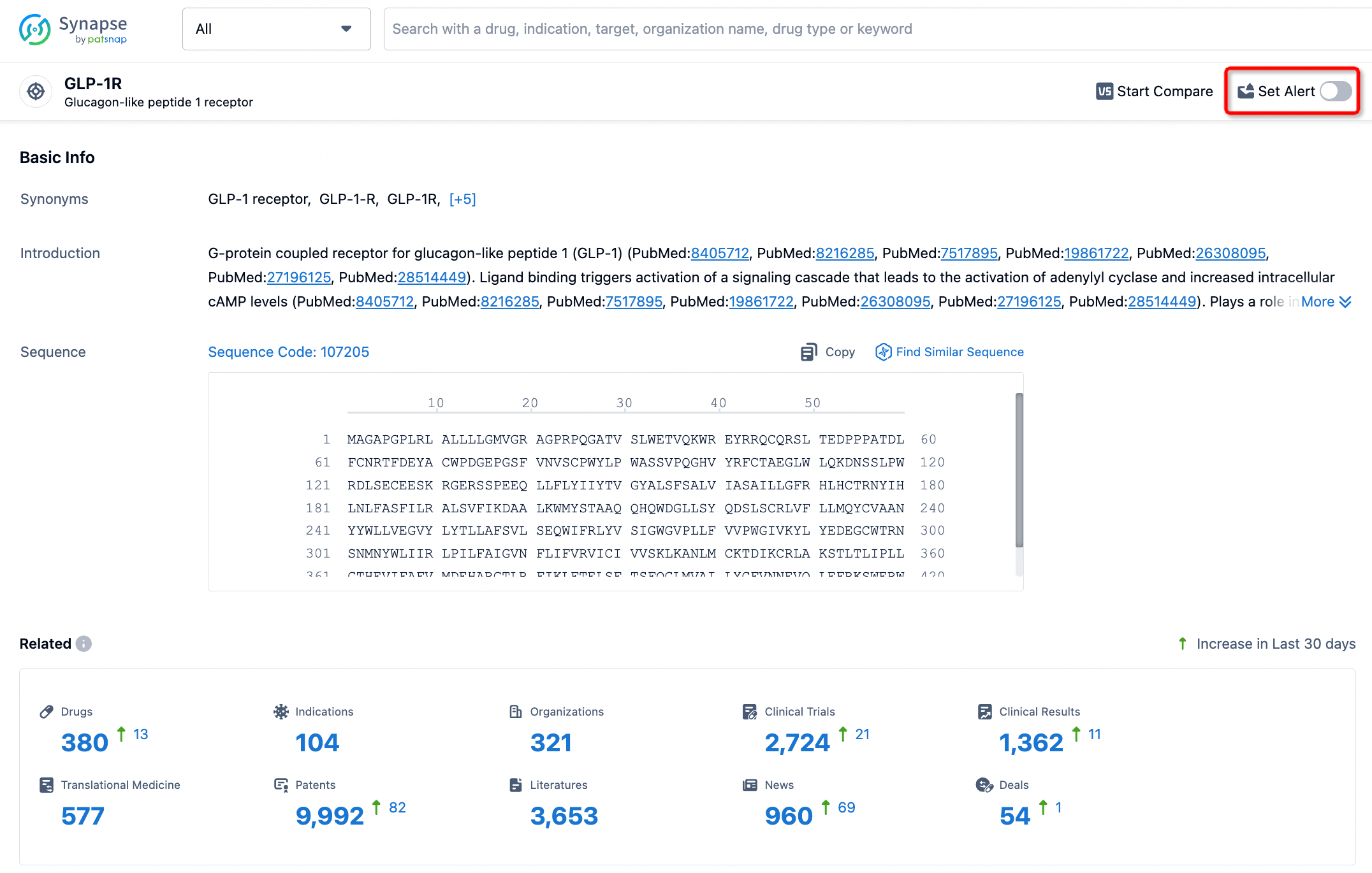
In the Synapse database, you can stay updated on the latest research and development advances of all targets. This service is accessible anytime and anywhere, with updates available daily or weekly. Use the "Set Alert" function to stay informed. Click on the image below to embark on a brand new journey of drug discovery!


AI Agents Built for Biopharma Breakthroughs
Accelerate discovery. Empower decisions. Transform outcomes.
Get started for free today!
Accelerate Strategic R&D decision making with Synapse, PatSnap’s AI-powered Connected Innovation Intelligence Platform Built for Life Sciences Professionals.
Start your data trial now!
Synapse data is also accessible to external entities via APIs or data packages. Empower better decisions with the latest in pharmaceutical intelligence.