Request Demo
What are CNGB1 modulators and how do they work?
25 June 2024
CNGB1 modulators represent a promising frontier in biomedical research, particularly in the context of vision disorders. CNGB1, or Cyclic Nucleotide-Gated Channel Beta 1, is a crucial component of the cyclic nucleotide-gated (CNG) channels found in photoreceptor cells of the retina. These channels play an essential role in the phototransduction pathway, which is the process by which light is converted into electrical signals in the eye. Understanding and targeting CNGB1 with specific modulators can provide novel therapeutic avenues for treating various vision impairments, including inherited retinal diseases like retinitis pigmentosa.
To appreciate how CNGB1 modulators work, it is essential to first understand the function of CNG channels in photoreceptor cells. These channels are responsible for controlling the influx of cations, mainly calcium and sodium ions, in response to changes in intracellular cyclic nucleotide levels, such as cyclic GMP (cGMP). In the dark, high levels of cGMP keep CNG channels open, allowing the influx of ions that maintain the cell in a depolarized state, ready to respond to light. When light hits the photoreceptor cells, cGMP levels drop, causing the CNG channels to close, leading to hyperpolarization of the cell and the transmission of a signal to the brain.
CNGB1 is a subunit of the CNG channels and plays a supportive role in their function. It helps to regulate the proper assembly and trafficking of the channels to the cell membrane and modulates their sensitivity to cyclic nucleotides. Dysfunction or mutations in the CNGB1 gene can disrupt this delicate balance, leading to impaired phototransduction and subsequent vision loss. CNGB1 modulators are designed to either enhance or inhibit the function of this subunit, thereby restoring normal channel function or compensating for its loss.
CNGB1 modulators can work in several ways. For instance, some modulators aim to stabilize the structure of CNG channels, ensuring they remain functional even in the presence of genetic mutations. Others may enhance the sensitivity of these channels to cyclic nucleotides or mimic the action of cGMP, thereby compensating for its reduced levels in diseased states. Additionally, some modulators might work by preventing the aggregation of misfolded proteins, a common issue in many genetic disorders.
The potential uses of CNGB1 modulators are vast, particularly in the realm of ocular diseases. One of the most significant applications is in the treatment of retinitis pigmentosa (RP), a group of genetic disorders that lead to the progressive degeneration of the retina and severe vision loss. Mutations in the CNGB1 gene are one of the many genetic defects that cause RP. By targeting these mutations with specific modulators, it may be possible to slow or even halt the progression of the disease, preserving vision for a longer period.
Moreover, CNGB1 modulators could also be beneficial in other retinal dystrophies and conditions characterized by photoreceptor dysfunction. For example, congenital stationary night blindness, another disorder linked to impaired CNG channel function, might also benefit from these modulators. Beyond genetic disorders, there is potential for CNGB1 modulators to be used in age-related macular degeneration (AMD) and other acquired retinal diseases where photoreceptor health and function are compromised.
In addition to their therapeutic potential, CNGB1 modulators also hold value as research tools. By selectively modulating the function of CNG channels, researchers can gain deeper insights into the molecular mechanisms underlying phototransduction and retinal biology. This knowledge can inform the development of new treatments and interventions for a wide range of vision-related conditions.
In conclusion, CNGB1 modulators represent a cutting-edge approach in the field of ophthalmology, offering hope for individuals affected by various retinal diseases. By understanding how these modulators work and their potential applications, we can pave the way for innovative treatments that have the power to transform the lives of those suffering from vision impairments. As research in this area progresses, we anticipate that CNGB1 modulators will become an integral part of the therapeutic arsenal against retinal diseases, providing new avenues for preserving and restoring sight.
To appreciate how CNGB1 modulators work, it is essential to first understand the function of CNG channels in photoreceptor cells. These channels are responsible for controlling the influx of cations, mainly calcium and sodium ions, in response to changes in intracellular cyclic nucleotide levels, such as cyclic GMP (cGMP). In the dark, high levels of cGMP keep CNG channels open, allowing the influx of ions that maintain the cell in a depolarized state, ready to respond to light. When light hits the photoreceptor cells, cGMP levels drop, causing the CNG channels to close, leading to hyperpolarization of the cell and the transmission of a signal to the brain.
CNGB1 is a subunit of the CNG channels and plays a supportive role in their function. It helps to regulate the proper assembly and trafficking of the channels to the cell membrane and modulates their sensitivity to cyclic nucleotides. Dysfunction or mutations in the CNGB1 gene can disrupt this delicate balance, leading to impaired phototransduction and subsequent vision loss. CNGB1 modulators are designed to either enhance or inhibit the function of this subunit, thereby restoring normal channel function or compensating for its loss.
CNGB1 modulators can work in several ways. For instance, some modulators aim to stabilize the structure of CNG channels, ensuring they remain functional even in the presence of genetic mutations. Others may enhance the sensitivity of these channels to cyclic nucleotides or mimic the action of cGMP, thereby compensating for its reduced levels in diseased states. Additionally, some modulators might work by preventing the aggregation of misfolded proteins, a common issue in many genetic disorders.
The potential uses of CNGB1 modulators are vast, particularly in the realm of ocular diseases. One of the most significant applications is in the treatment of retinitis pigmentosa (RP), a group of genetic disorders that lead to the progressive degeneration of the retina and severe vision loss. Mutations in the CNGB1 gene are one of the many genetic defects that cause RP. By targeting these mutations with specific modulators, it may be possible to slow or even halt the progression of the disease, preserving vision for a longer period.
Moreover, CNGB1 modulators could also be beneficial in other retinal dystrophies and conditions characterized by photoreceptor dysfunction. For example, congenital stationary night blindness, another disorder linked to impaired CNG channel function, might also benefit from these modulators. Beyond genetic disorders, there is potential for CNGB1 modulators to be used in age-related macular degeneration (AMD) and other acquired retinal diseases where photoreceptor health and function are compromised.
In addition to their therapeutic potential, CNGB1 modulators also hold value as research tools. By selectively modulating the function of CNG channels, researchers can gain deeper insights into the molecular mechanisms underlying phototransduction and retinal biology. This knowledge can inform the development of new treatments and interventions for a wide range of vision-related conditions.
In conclusion, CNGB1 modulators represent a cutting-edge approach in the field of ophthalmology, offering hope for individuals affected by various retinal diseases. By understanding how these modulators work and their potential applications, we can pave the way for innovative treatments that have the power to transform the lives of those suffering from vision impairments. As research in this area progresses, we anticipate that CNGB1 modulators will become an integral part of the therapeutic arsenal against retinal diseases, providing new avenues for preserving and restoring sight.
How to obtain the latest development progress of all targets?
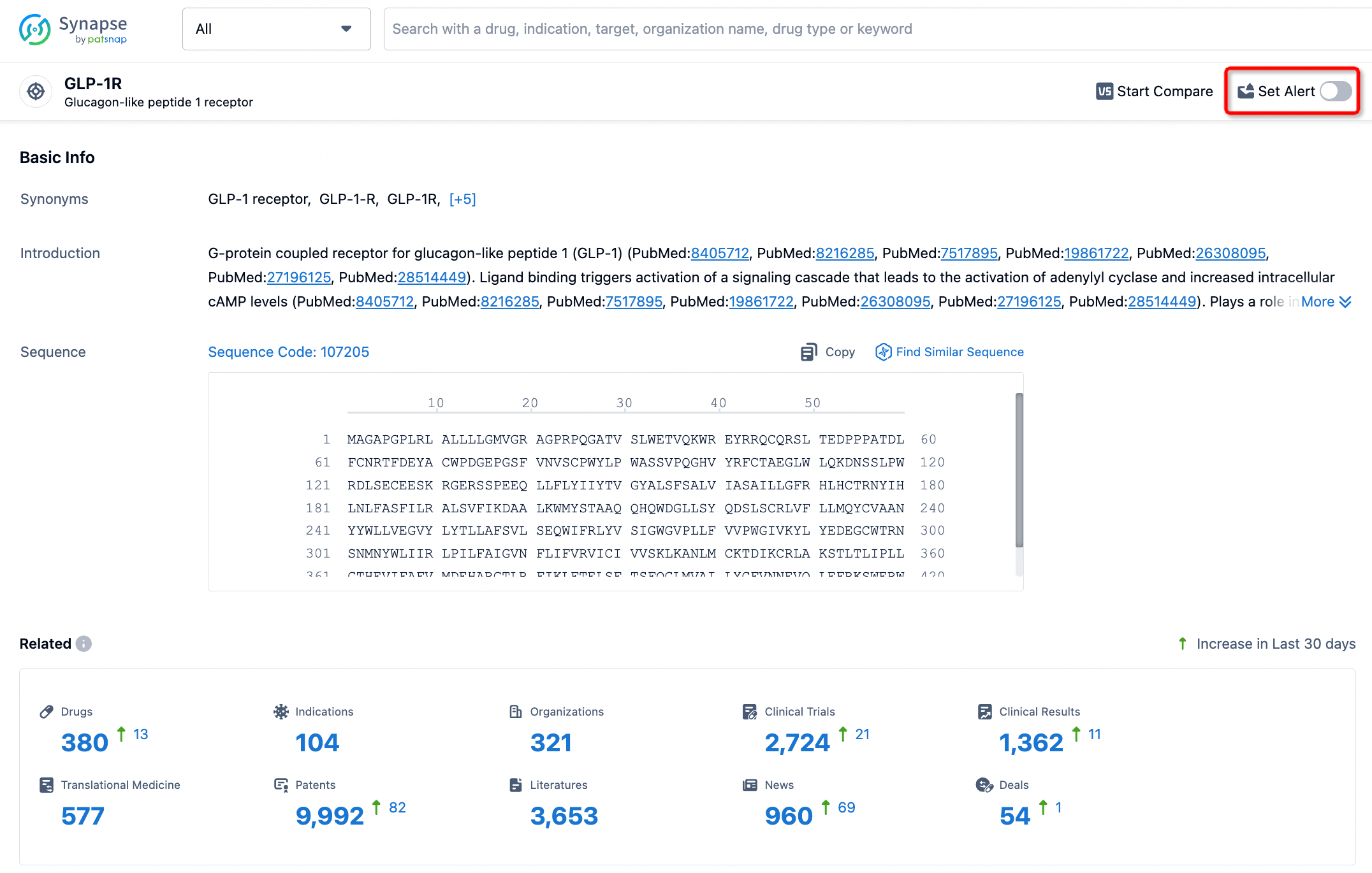
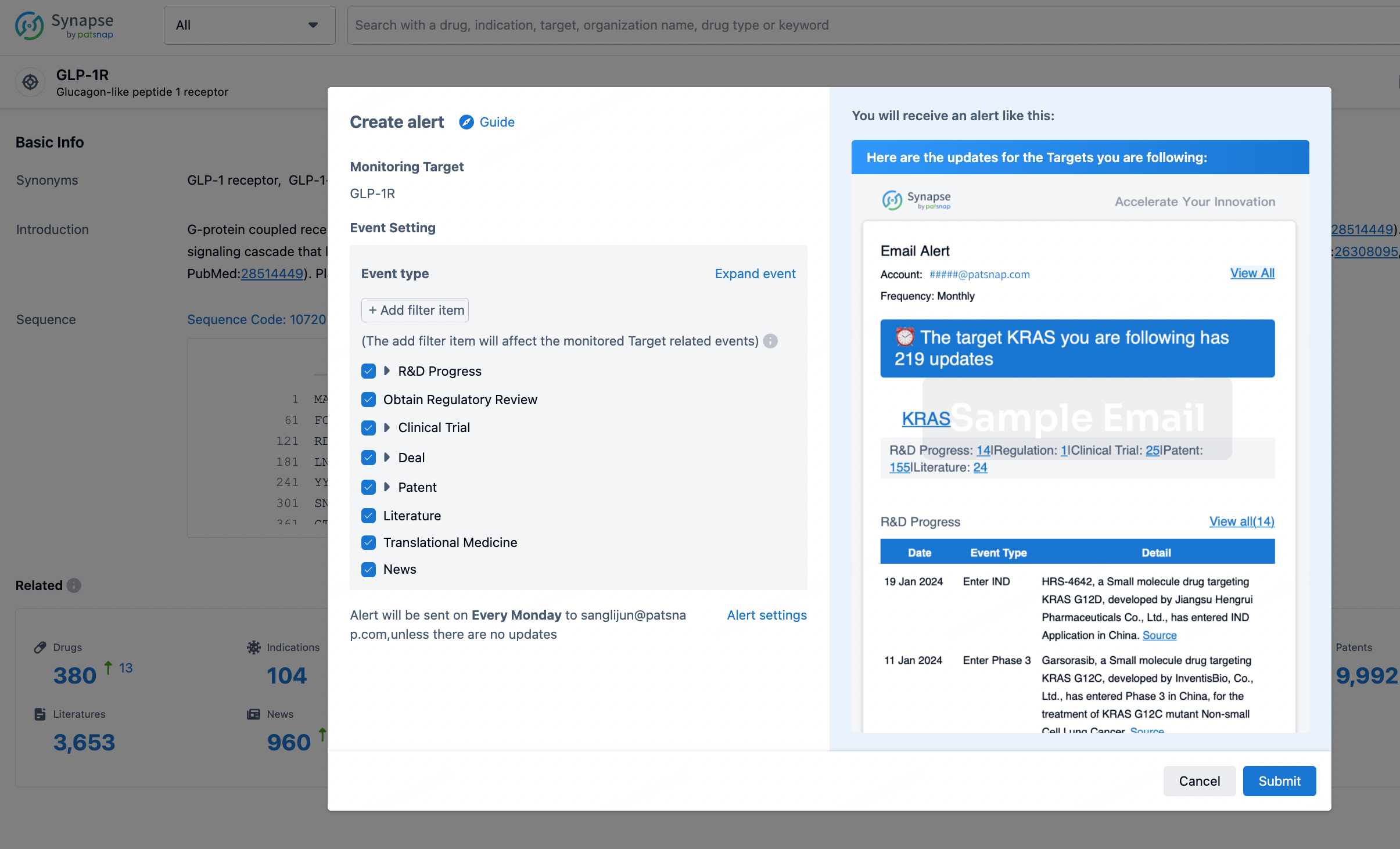
In the Synapse database, you can stay updated on the latest research and development advances of all targets. This service is accessible anytime and anywhere, with updates available daily or weekly. Use the "Set Alert" function to stay informed. Click on the image below to embark on a brand new journey of drug discovery!

AI Agents Built for Biopharma Breakthroughs
Accelerate discovery. Empower decisions. Transform outcomes.
Get started for free today!
Accelerate Strategic R&D decision making with Synapse, PatSnap’s AI-powered Connected Innovation Intelligence Platform Built for Life Sciences Professionals.
Start your data trial now!
Synapse data is also accessible to external entities via APIs or data packages. Empower better decisions with the latest in pharmaceutical intelligence.