What are common methods to study cell proliferation?
Compass Pathways has announced delays in the timelines for two pivotal Phase 3 studies related to its psilocybin program, a key initiative in psychedelic drug development. The first study, COMP005, was initially scheduled for data release in the fourth quarter of this year but is now expected to provide results in the second quarter of 2025. The second study, COMP006, involving two fixed doses of psilocybin, will now have its findings released in the second half of 2026, a year later than originally planned. This announcement led to a 15% drop in Compass Pathways' stock in premarket trading.
The reasons for the delays in these studies are varied, as explained by CEO Kabir Nath. The delay in the COMP005 study is primarily due to challenges in collecting data. Nath admitted that the company underestimated the logistical complexities involved, such as coordinating therapists for patient sessions and scheduling multiple dosing sessions. Despite planning for slower enrollment compared to Phase 2b, the adjustments were insufficient. Mike Gold, the chief of R&D at Compass, has been addressing issues on-site to facilitate trial progression.
The postponement of the COMP006 study is attributed to regulatory considerations. Nath indicated that the decision to delay this study was made to maintain the blinding of participants throughout the trial. This measure is particularly critical following feedback received by Lykos Therapeutics earlier in the year. In trials involving psychedelics, participants can often guess whether they have received the treatment, leading to functional unblinding. In Lykos' Phase 3 trials, most participants could accurately guess if they had received MDMA, highlighting the importance of maintaining blinding in such studies.
To manage financial resources in light of these delays, Compass Pathways is reducing its workforce by 30%, including senior management and members of the preclinical team. As of December 31, the company employed 186 people. Among those departing are chief communications officer Christopher Williams and chief legal officer Matthew Owens. Nath mentioned that the preclinical team had been working on developing a library of compounds, which will now be shelved as a result of the downsizing.
CFO Teri Loxam emphasized that the decision to reduce staff was aimed at preserving cash rather than extending it. The delay in the COMP005 readout necessitated the downsizing to ensure the company could fund operations until that milestone. This readout could potentially attract new funding or a commercial partner. Compass Pathways currently has $207 million, sufficient to last into 2026.
Nath and Loxam both stated that the logistical challenges faced in the trials, particularly with COMP005, should not impact commercial uptake if the treatment is approved. They do not foresee the need for therapists to monitor patients, instead advocating for licensed psychiatric nurses or nurse practitioners to administer psilocybin. They argue that healthcare professionals would be providing psychological support rather than therapy, which is distinct from Lykos' MDMA-assisted therapy program.
Researching Inositol polyphosphate-5-phosphatase stimulants beyond the basics?
Synapse Hiro LS Researcher, the Synapse AI Insight Engine, is built to accelerate biopharma decisions. Search across billion-scale life sciences data to uncover signals, validate evidence, and act with confidence. Explore Inositol polyphosphate-5-phosphatase stimulants with Hiro LS Researcher →

Continue your Inositol polyphosphate-5-phosphatase stimulants research with Synapse Hiro LS Researcher
This article provides an overview. For a broader research view, use Synapse Hiro LS Researcher—the Synapse AI Insight Engine—to search across drugs, targets, indications, clinical trials, literature, organizations, news, deals, and competitor signals. Ask any biopharma research question in natural language.

Questions to explore:
- What approved and investigational uses have been reported for Inositol polyphosphate-5-phosphatase stimulants?
- What is the mechanism of action of Inositol polyphosphate-5-phosphatase stimulants, and which targets or pathways are involved?
- Which clinical trials are evaluating Inositol polyphosphate-5-phosphatase stimulants, and what outcomes have been reported?
- What patents, publications, and regulatory sources provide the latest evidence on Inositol polyphosphate-5-phosphatase stimulants?
Ask Synapse Hiro LS Researcher →
AI may make mistakes. Check important info.
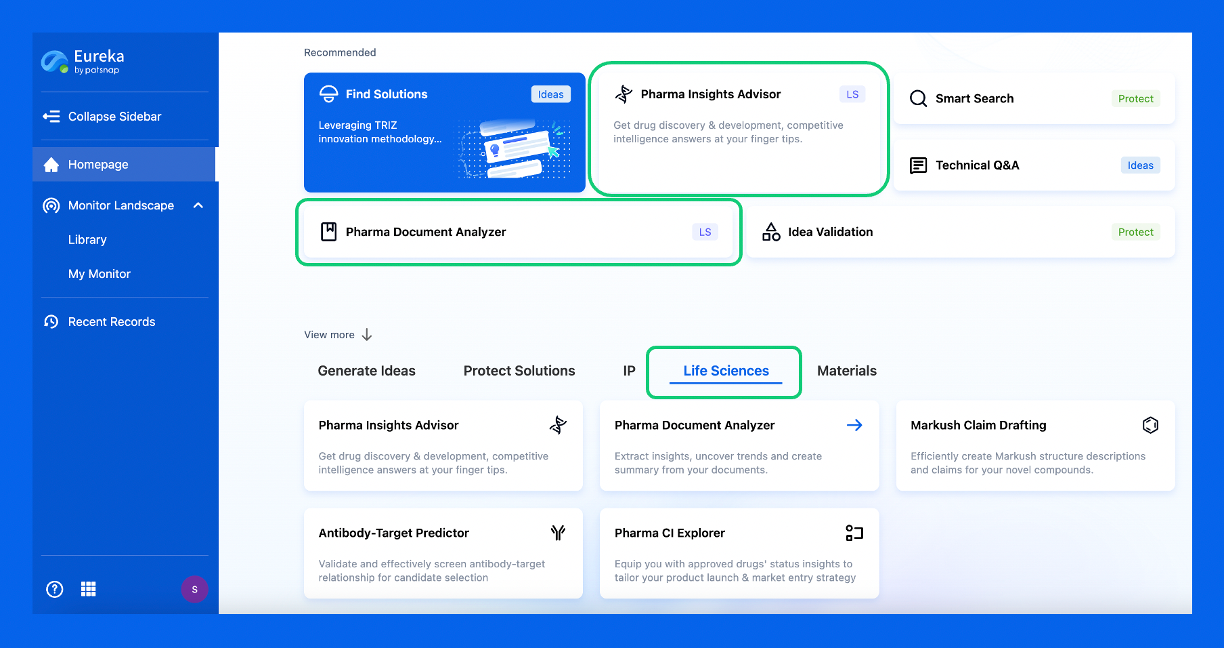
Discover Eureka LS: AI Agents Built for Biopharma Efficiency
Stop wasting time on biopharma busywork. Meet Eureka LS - your AI agent squad for drug discovery.
▶ See how 50+ research teams saved 300+ hours/month
From reducing screening time to simplifying Markush drafting, our AI Agents are ready to deliver immediate value. Explore Eureka LS today and unlock powerful capabilities that help you innovate with confidence.