Request Demo
What are CREBBP inhibitors and how do they work?
21 June 2024
CREBBP inhibitors represent a promising frontier in the realm of targeted cancer therapies and other disease treatments. CREBBP, or CREB-binding protein, is a critical transcriptional coactivator involved in numerous cellular processes, including gene expression, cell growth, and differentiation. Abnormalities in CREBBP function have been implicated in various diseases, most notably cancer. Inhibitors targeting CREBBP are being studied intensively for their potential to modulate these processes and offer a novel therapeutic approach.
How do CREBBP inhibitors work?
To understand how CREBBP inhibitors function, it's essential to first grasp the role of CREBBP in the cell. CREBBP, along with its closely related twin protein p300, acts as a transcriptional coactivator. It is involved in the acetylation of histones and other proteins, a process that regulates gene expression by modifying chromatin structure and making DNA more accessible to the transcriptional machinery. This activity is crucial for the proper regulation of various genes involved in cell cycle control, apoptosis, and differentiation.
CREBBP inhibitors work by blocking the acetyltransferase activity of the CREBBP protein. This inhibition can lead to altered gene expression patterns and disrupted cellular processes that are typically governed by CREBBP. For instance, in cancer cells, CREBBP inhibitors may interfere with the expression of genes that promote cell proliferation and survival, thereby inhibiting tumor growth. By specifically targeting the acetyltransferase activity of CREBBP, these inhibitors can provide a more focused approach to treatment, potentially reducing the side effects associated with broader-acting chemotherapeutic agents.
What are CREBBP inhibitors used for?
The primary focus of CREBBP inhibitors has been in the field of oncology, given the role of CREBBP in the regulation of genes involved in cancer progression. These inhibitors have shown promise in preclinical studies for a variety of cancers, including lymphoma, leukemia, and solid tumors such as breast and prostate cancer. In particular, mutations in the CREBBP gene have been identified in several types of cancer, making it an attractive target for drug development.
In hematologic malignancies like acute lymphoblastic leukemia (ALL) and diffuse large B-cell lymphoma (DLBCL), CREBBP mutations can lead to uncontrolled proliferation and survival of cancer cells. CREBBP inhibitors can potentially restore normal regulatory mechanisms in these cells, promoting apoptosis and inhibiting tumor growth. Clinical trials are currently underway to evaluate the efficacy and safety of these inhibitors in patients with such cancers.
Beyond oncology, CREBBP inhibitors are also being explored for their potential in treating neurological disorders and inflammatory diseases. CREBBP is known to play a role in neuronal development and function, and alterations in its activity have been associated with neurodevelopmental disorders. Researchers are investigating whether CREBBP inhibitors could modulate these pathways to provide therapeutic benefits in conditions such as autism spectrum disorders and intellectual disabilities.
In the context of inflammatory diseases, CREBBP's role in regulating immune responses presents another potential therapeutic avenue. Inhibiting CREBBP could help modulate the expression of pro-inflammatory cytokines and other mediators, offering a new strategy for treating autoimmune conditions like rheumatoid arthritis and inflammatory bowel disease.
In summary, CREBBP inhibitors represent a cutting-edge approach to targeted therapy with applications spanning oncology, neurology, and immunology. By selectively interfering with the acetyltransferase activity of CREBBP, these inhibitors offer the potential for more precise and effective treatment options. While much of the current research is still in the preclinical and early clinical stages, the promise of CREBBP inhibitors continues to generate excitement and hope for new, innovative therapies for a variety of challenging diseases.
How do CREBBP inhibitors work?
To understand how CREBBP inhibitors function, it's essential to first grasp the role of CREBBP in the cell. CREBBP, along with its closely related twin protein p300, acts as a transcriptional coactivator. It is involved in the acetylation of histones and other proteins, a process that regulates gene expression by modifying chromatin structure and making DNA more accessible to the transcriptional machinery. This activity is crucial for the proper regulation of various genes involved in cell cycle control, apoptosis, and differentiation.
CREBBP inhibitors work by blocking the acetyltransferase activity of the CREBBP protein. This inhibition can lead to altered gene expression patterns and disrupted cellular processes that are typically governed by CREBBP. For instance, in cancer cells, CREBBP inhibitors may interfere with the expression of genes that promote cell proliferation and survival, thereby inhibiting tumor growth. By specifically targeting the acetyltransferase activity of CREBBP, these inhibitors can provide a more focused approach to treatment, potentially reducing the side effects associated with broader-acting chemotherapeutic agents.
What are CREBBP inhibitors used for?
The primary focus of CREBBP inhibitors has been in the field of oncology, given the role of CREBBP in the regulation of genes involved in cancer progression. These inhibitors have shown promise in preclinical studies for a variety of cancers, including lymphoma, leukemia, and solid tumors such as breast and prostate cancer. In particular, mutations in the CREBBP gene have been identified in several types of cancer, making it an attractive target for drug development.
In hematologic malignancies like acute lymphoblastic leukemia (ALL) and diffuse large B-cell lymphoma (DLBCL), CREBBP mutations can lead to uncontrolled proliferation and survival of cancer cells. CREBBP inhibitors can potentially restore normal regulatory mechanisms in these cells, promoting apoptosis and inhibiting tumor growth. Clinical trials are currently underway to evaluate the efficacy and safety of these inhibitors in patients with such cancers.
Beyond oncology, CREBBP inhibitors are also being explored for their potential in treating neurological disorders and inflammatory diseases. CREBBP is known to play a role in neuronal development and function, and alterations in its activity have been associated with neurodevelopmental disorders. Researchers are investigating whether CREBBP inhibitors could modulate these pathways to provide therapeutic benefits in conditions such as autism spectrum disorders and intellectual disabilities.
In the context of inflammatory diseases, CREBBP's role in regulating immune responses presents another potential therapeutic avenue. Inhibiting CREBBP could help modulate the expression of pro-inflammatory cytokines and other mediators, offering a new strategy for treating autoimmune conditions like rheumatoid arthritis and inflammatory bowel disease.
In summary, CREBBP inhibitors represent a cutting-edge approach to targeted therapy with applications spanning oncology, neurology, and immunology. By selectively interfering with the acetyltransferase activity of CREBBP, these inhibitors offer the potential for more precise and effective treatment options. While much of the current research is still in the preclinical and early clinical stages, the promise of CREBBP inhibitors continues to generate excitement and hope for new, innovative therapies for a variety of challenging diseases.
How to obtain the latest development progress of all targets?
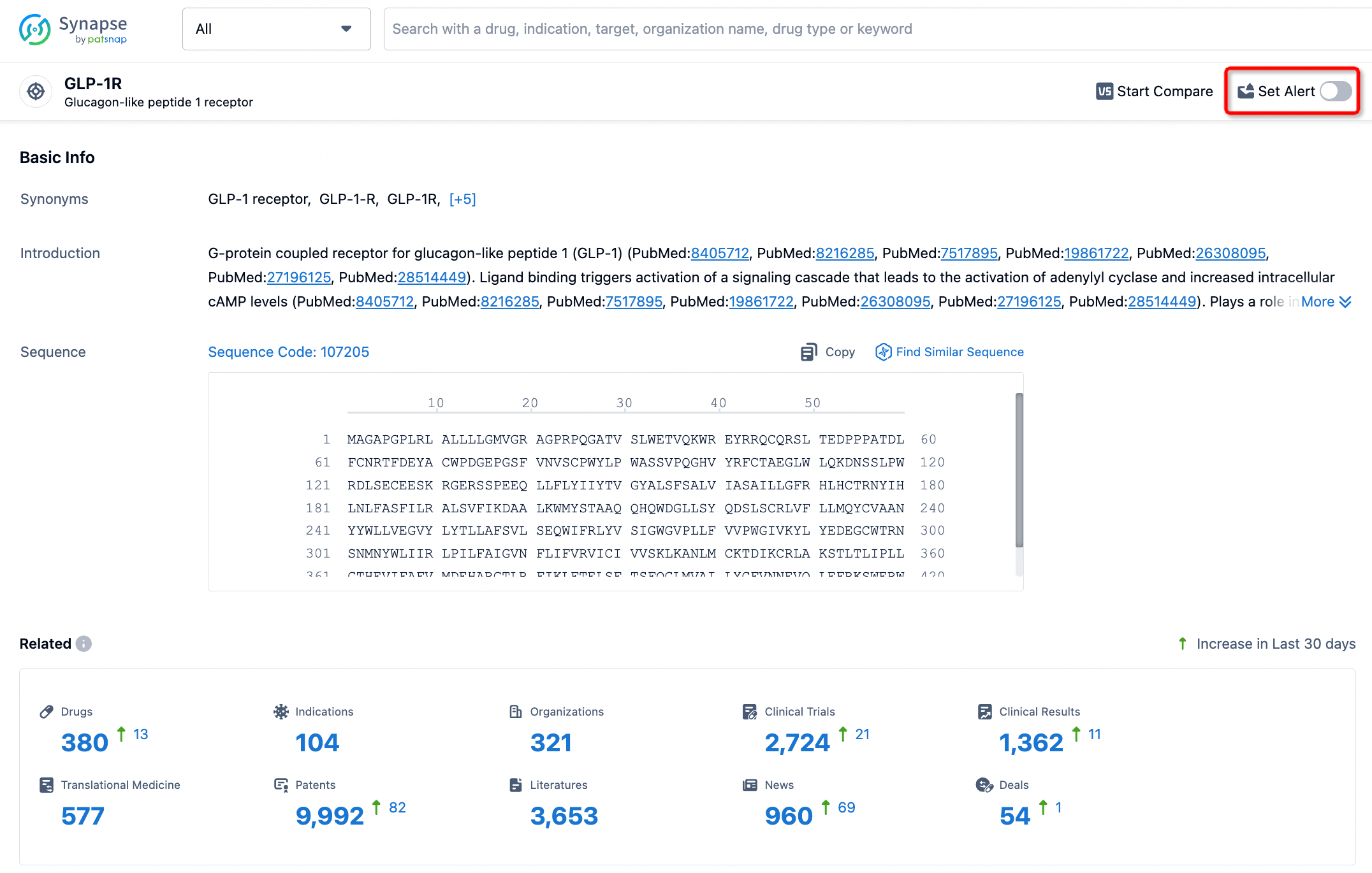
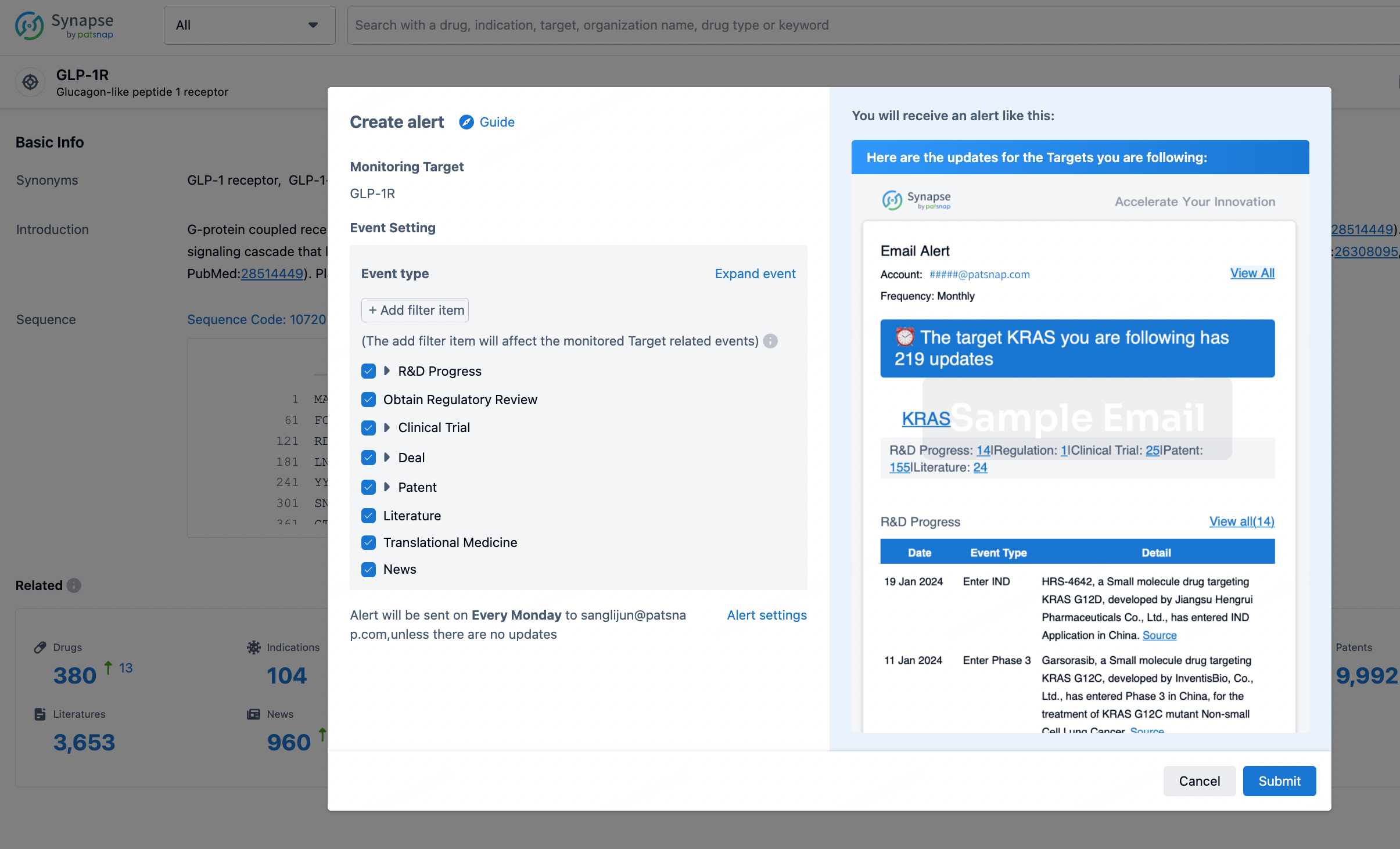
In the Synapse database, you can stay updated on the latest research and development advances of all targets. This service is accessible anytime and anywhere, with updates available daily or weekly. Use the "Set Alert" function to stay informed. Click on the image below to embark on a brand new journey of drug discovery!

AI Agents Built for Biopharma Breakthroughs
Accelerate discovery. Empower decisions. Transform outcomes.
Get started for free today!
Accelerate Strategic R&D decision making with Synapse, PatSnap’s AI-powered Connected Innovation Intelligence Platform Built for Life Sciences Professionals.
Start your data trial now!
Synapse data is also accessible to external entities via APIs or data packages. Empower better decisions with the latest in pharmaceutical intelligence.