Request Demo
What are DAB2IP inhibitors and how do they work?
25 June 2024
DAB2IP inhibitors are an emerging class of therapeutic agents that have garnered significant interest in the field of cancer research. DAB2IP, which stands for Disabled Homolog 2 Interacting Protein, is a tumor suppressor gene that plays a crucial role in regulating various cellular processes, including apoptosis, cell cycle progression, and metastasis. The inhibition of DAB2IP presents a novel approach to cancer treatment by manipulating these cellular pathways to combat tumor growth and proliferation.
How do DAB2IP inhibitors work? Understanding the mechanism of action of DAB2IP inhibitors requires a closer look at the biological function of DAB2IP itself. DAB2IP is a Ras-GTPase-activating protein that negatively regulates the Ras signaling pathway, which is often aberrantly activated in various cancers. By inhibiting the Ras pathway, DAB2IP helps to control cell proliferation and survival. When DAB2IP function is lost or diminished, which is common in many cancers, the unchecked Ras pathway leads to increased tumor growth and resistance to apoptosis.
DAB2IP inhibitors are designed to restore the normal function of this tumor suppressor gene. They achieve this by either enhancing the expression of DAB2IP or mimicking its biological activity. This restoration disrupts the aberrant signaling pathways that contribute to cancer cell survival and proliferation. For example, DAB2IP inhibitors can reactivate the apoptotic pathways, making cancer cells more susceptible to programmed cell death. Additionally, these inhibitors can interfere with the epithelial-mesenchymal transition (EMT), a process that enables cancer cells to metastasize to other parts of the body.
The development of DAB2IP inhibitors involves sophisticated techniques, including small molecule inhibitors, peptides, and gene therapy approaches. Small molecule inhibitors are particularly promising due to their ability to penetrate cells easily and modulate intracellular pathways effectively. These molecules are designed to specifically target the proteins and enzymes that interact with DAB2IP, thereby enhancing its tumor-suppressive functions.
What are DAB2IP inhibitors used for? The primary application of DAB2IP inhibitors is in cancer therapy. They hold potential in treating a wide range of cancers, including prostate, breast, lung, and colorectal cancers, where DAB2IP expression is frequently downregulated. By restoring the activity of this tumor suppressor gene, DAB2IP inhibitors can slow down tumor growth, reduce metastasis, and enhance the sensitivity of cancer cells to conventional treatments like chemotherapy and radiation therapy.
In prostate cancer, for instance, DAB2IP expression is often lost, leading to aggressive tumor behavior and resistance to treatment. Preclinical studies have demonstrated that DAB2IP inhibitors can significantly reduce tumor growth and increase the efficacy of existing therapeutic regimens. Similarly, in breast cancer, reactivation of DAB2IP can inhibit the proliferation of cancer cells and reduce their metastatic potential.
Beyond cancer, there is potential for DAB2IP inhibitors in other diseases characterized by abnormal cell growth and survival. Research is still in its early stages, but the modulation of DAB2IP pathways could offer therapeutic benefits in diseases such as fibrosis and certain autoimmune disorders.
The versatility of DAB2IP inhibitors lies in their ability to target fundamental cellular mechanisms that are dysregulated in various diseases. However, their development and clinical application are not without challenges. Ensuring specificity and minimizing off-target effects are critical for the safe and effective use of these inhibitors. Additionally, understanding the complex interactions between DAB2IP and other cellular pathways is essential for optimizing therapeutic strategies and preventing resistance.
In conclusion, DAB2IP inhibitors represent a promising frontier in the fight against cancer and potentially other diseases. By leveraging the tumor-suppressive properties of DAB2IP, these inhibitors offer a novel approach to targeting the underlying mechanisms of disease progression. As research continues to advance, DAB2IP inhibitors may become a vital component of personalized medicine, providing new hope for patients with hard-to-treat conditions.
How do DAB2IP inhibitors work? Understanding the mechanism of action of DAB2IP inhibitors requires a closer look at the biological function of DAB2IP itself. DAB2IP is a Ras-GTPase-activating protein that negatively regulates the Ras signaling pathway, which is often aberrantly activated in various cancers. By inhibiting the Ras pathway, DAB2IP helps to control cell proliferation and survival. When DAB2IP function is lost or diminished, which is common in many cancers, the unchecked Ras pathway leads to increased tumor growth and resistance to apoptosis.
DAB2IP inhibitors are designed to restore the normal function of this tumor suppressor gene. They achieve this by either enhancing the expression of DAB2IP or mimicking its biological activity. This restoration disrupts the aberrant signaling pathways that contribute to cancer cell survival and proliferation. For example, DAB2IP inhibitors can reactivate the apoptotic pathways, making cancer cells more susceptible to programmed cell death. Additionally, these inhibitors can interfere with the epithelial-mesenchymal transition (EMT), a process that enables cancer cells to metastasize to other parts of the body.
The development of DAB2IP inhibitors involves sophisticated techniques, including small molecule inhibitors, peptides, and gene therapy approaches. Small molecule inhibitors are particularly promising due to their ability to penetrate cells easily and modulate intracellular pathways effectively. These molecules are designed to specifically target the proteins and enzymes that interact with DAB2IP, thereby enhancing its tumor-suppressive functions.
What are DAB2IP inhibitors used for? The primary application of DAB2IP inhibitors is in cancer therapy. They hold potential in treating a wide range of cancers, including prostate, breast, lung, and colorectal cancers, where DAB2IP expression is frequently downregulated. By restoring the activity of this tumor suppressor gene, DAB2IP inhibitors can slow down tumor growth, reduce metastasis, and enhance the sensitivity of cancer cells to conventional treatments like chemotherapy and radiation therapy.
In prostate cancer, for instance, DAB2IP expression is often lost, leading to aggressive tumor behavior and resistance to treatment. Preclinical studies have demonstrated that DAB2IP inhibitors can significantly reduce tumor growth and increase the efficacy of existing therapeutic regimens. Similarly, in breast cancer, reactivation of DAB2IP can inhibit the proliferation of cancer cells and reduce their metastatic potential.
Beyond cancer, there is potential for DAB2IP inhibitors in other diseases characterized by abnormal cell growth and survival. Research is still in its early stages, but the modulation of DAB2IP pathways could offer therapeutic benefits in diseases such as fibrosis and certain autoimmune disorders.
The versatility of DAB2IP inhibitors lies in their ability to target fundamental cellular mechanisms that are dysregulated in various diseases. However, their development and clinical application are not without challenges. Ensuring specificity and minimizing off-target effects are critical for the safe and effective use of these inhibitors. Additionally, understanding the complex interactions between DAB2IP and other cellular pathways is essential for optimizing therapeutic strategies and preventing resistance.
In conclusion, DAB2IP inhibitors represent a promising frontier in the fight against cancer and potentially other diseases. By leveraging the tumor-suppressive properties of DAB2IP, these inhibitors offer a novel approach to targeting the underlying mechanisms of disease progression. As research continues to advance, DAB2IP inhibitors may become a vital component of personalized medicine, providing new hope for patients with hard-to-treat conditions.
How to obtain the latest development progress of all targets?
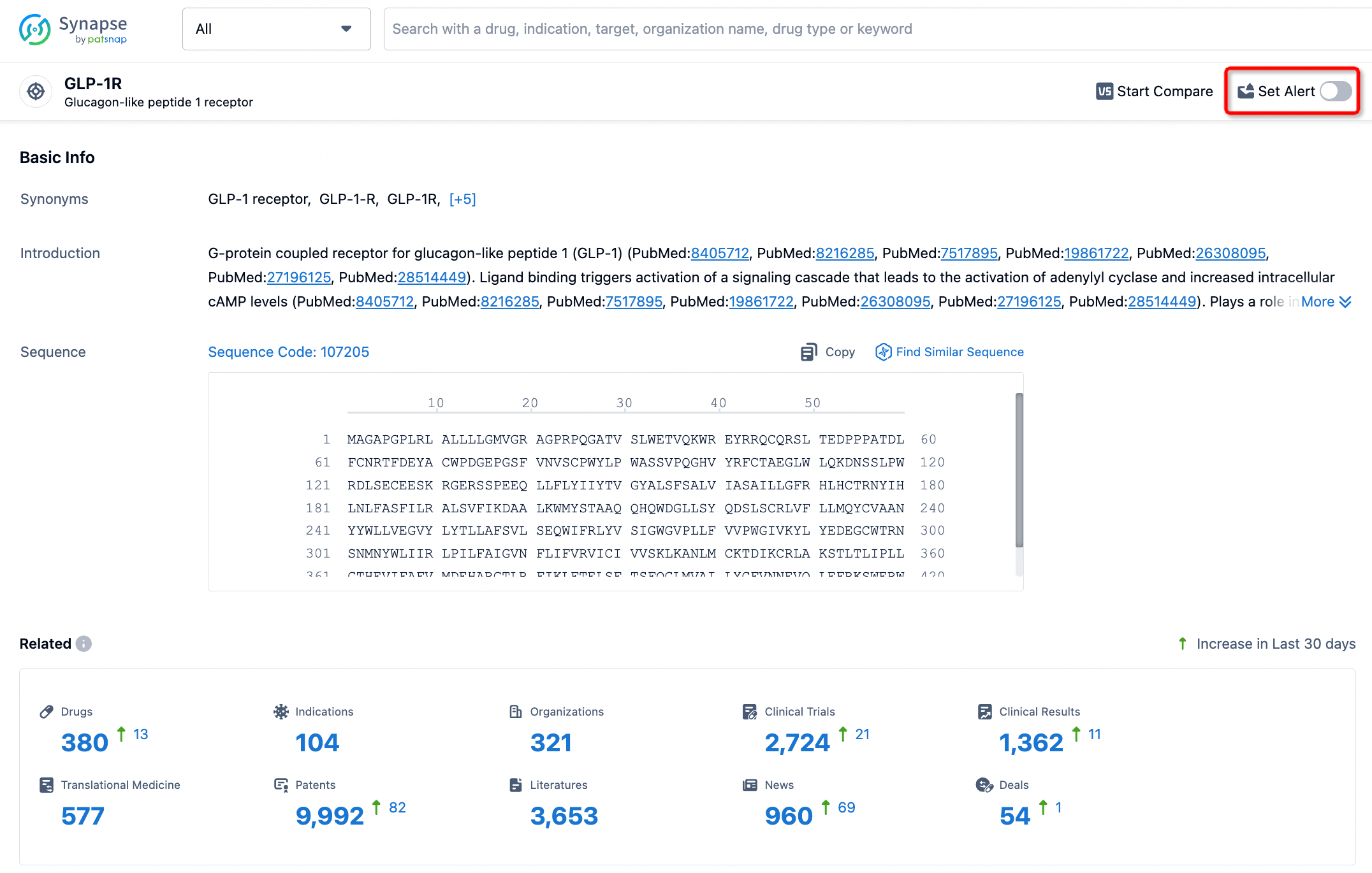
In the Synapse database, you can stay updated on the latest research and development advances of all targets. This service is accessible anytime and anywhere, with updates available daily or weekly. Use the "Set Alert" function to stay informed. Click on the image below to embark on a brand new journey of drug discovery!


AI Agents Built for Biopharma Breakthroughs
Accelerate discovery. Empower decisions. Transform outcomes.
Get started for free today!
Accelerate Strategic R&D decision making with Synapse, PatSnap’s AI-powered Connected Innovation Intelligence Platform Built for Life Sciences Professionals.
Start your data trial now!
Synapse data is also accessible to external entities via APIs or data packages. Empower better decisions with the latest in pharmaceutical intelligence.