Request Demo
What are DCAF15 inhibitors and how do they work?
25 June 2024
DCAF15 inhibitors have emerged as a significant topic of interest in the realms of medicinal chemistry and drug discovery. These inhibitors target the DCAF15 protein, an adapter protein that plays a critical role in the ubiquitin-proteasome system. This system is essential for protein degradation and cellular homeostasis. Understanding the function and potential applications of DCAF15 inhibitors opens up new avenues for therapeutic interventions, particularly in cancer treatment.
DCAF15, which stands for DDB1 and CUL4 associated factor 15, is part of the CUL4-DDB1 E3 ubiquitin ligase complex. This complex is responsible for tagging proteins with ubiquitin, marking them for degradation by the proteasome. In simpler terms, DCAF15 helps to identify and label proteins that need to be broken down. This process is crucial for maintaining cellular health and function. When this system is disrupted, it can lead to the accumulation of damaged or misfolded proteins, contributing to various diseases, including cancers.
DCAF15 inhibitors work by interfering with the function of the DCAF15 protein within the ubiquitin-proteasome system. By inhibiting DCAF15, these compounds prevent the proper tagging of proteins with ubiquitin. This, in turn, hinders the degradation of certain proteins that might otherwise be marked for breakdown. The result is an accumulation of these proteins within the cell.
Interestingly, the inhibition of DCAF15 can have selective effects on cancer cells. Many cancer cells rely on the ubiquitin-proteasome system to degrade tumor suppressor proteins and other regulatory molecules that would otherwise inhibit their growth. By blocking DCAF15, these inhibitors can restore the levels of these critical proteins, effectively putting a brake on the uncontrolled proliferation of cancer cells. This selective targeting makes DCAF15 inhibitors a promising candidate for anti-cancer therapies.
DCAF15 inhibitors are primarily being investigated for their anti-cancer properties. Research has shown that these inhibitors can induce cell death in various cancer cell lines, including those resistant to other forms of chemotherapy. This is particularly significant because drug resistance is a major challenge in cancer treatment. By offering a new mechanism of action, DCAF15 inhibitors have the potential to overcome some forms of resistance and provide a new line of defense against cancer.
In addition to their direct anti-cancer effects, DCAF15 inhibitors are also being studied for their role in sensitizing cancer cells to other treatments. For example, combining DCAF15 inhibitors with traditional chemotherapies or targeted therapies could enhance the overall effectiveness of these treatments. This combination approach could lead to more effective treatment regimens and better patient outcomes.
Beyond cancer, the potential applications of DCAF15 inhibitors are still being explored. Given their role in the ubiquitin-proteasome system, these inhibitors could theoretically be used to treat other diseases characterized by protein dysregulation, such as neurodegenerative disorders. However, this area of research is still in its early stages, and more studies are needed to fully understand the broader implications of DCAF15 inhibition.
In conclusion, DCAF15 inhibitors represent an exciting frontier in the field of drug discovery. By targeting a critical component of the ubiquitin-proteasome system, these inhibitors offer a novel and selective approach to cancer treatment. While much of the current research is focused on their anti-cancer properties, the potential applications of DCAF15 inhibitors could extend to other areas, opening up new possibilities for treating a range of diseases. As research continues to advance, we can look forward to a deeper understanding of these compounds and their potential to revolutionize modern medicine.
DCAF15, which stands for DDB1 and CUL4 associated factor 15, is part of the CUL4-DDB1 E3 ubiquitin ligase complex. This complex is responsible for tagging proteins with ubiquitin, marking them for degradation by the proteasome. In simpler terms, DCAF15 helps to identify and label proteins that need to be broken down. This process is crucial for maintaining cellular health and function. When this system is disrupted, it can lead to the accumulation of damaged or misfolded proteins, contributing to various diseases, including cancers.
DCAF15 inhibitors work by interfering with the function of the DCAF15 protein within the ubiquitin-proteasome system. By inhibiting DCAF15, these compounds prevent the proper tagging of proteins with ubiquitin. This, in turn, hinders the degradation of certain proteins that might otherwise be marked for breakdown. The result is an accumulation of these proteins within the cell.
Interestingly, the inhibition of DCAF15 can have selective effects on cancer cells. Many cancer cells rely on the ubiquitin-proteasome system to degrade tumor suppressor proteins and other regulatory molecules that would otherwise inhibit their growth. By blocking DCAF15, these inhibitors can restore the levels of these critical proteins, effectively putting a brake on the uncontrolled proliferation of cancer cells. This selective targeting makes DCAF15 inhibitors a promising candidate for anti-cancer therapies.
DCAF15 inhibitors are primarily being investigated for their anti-cancer properties. Research has shown that these inhibitors can induce cell death in various cancer cell lines, including those resistant to other forms of chemotherapy. This is particularly significant because drug resistance is a major challenge in cancer treatment. By offering a new mechanism of action, DCAF15 inhibitors have the potential to overcome some forms of resistance and provide a new line of defense against cancer.
In addition to their direct anti-cancer effects, DCAF15 inhibitors are also being studied for their role in sensitizing cancer cells to other treatments. For example, combining DCAF15 inhibitors with traditional chemotherapies or targeted therapies could enhance the overall effectiveness of these treatments. This combination approach could lead to more effective treatment regimens and better patient outcomes.
Beyond cancer, the potential applications of DCAF15 inhibitors are still being explored. Given their role in the ubiquitin-proteasome system, these inhibitors could theoretically be used to treat other diseases characterized by protein dysregulation, such as neurodegenerative disorders. However, this area of research is still in its early stages, and more studies are needed to fully understand the broader implications of DCAF15 inhibition.
In conclusion, DCAF15 inhibitors represent an exciting frontier in the field of drug discovery. By targeting a critical component of the ubiquitin-proteasome system, these inhibitors offer a novel and selective approach to cancer treatment. While much of the current research is focused on their anti-cancer properties, the potential applications of DCAF15 inhibitors could extend to other areas, opening up new possibilities for treating a range of diseases. As research continues to advance, we can look forward to a deeper understanding of these compounds and their potential to revolutionize modern medicine.
How to obtain the latest development progress of all targets?
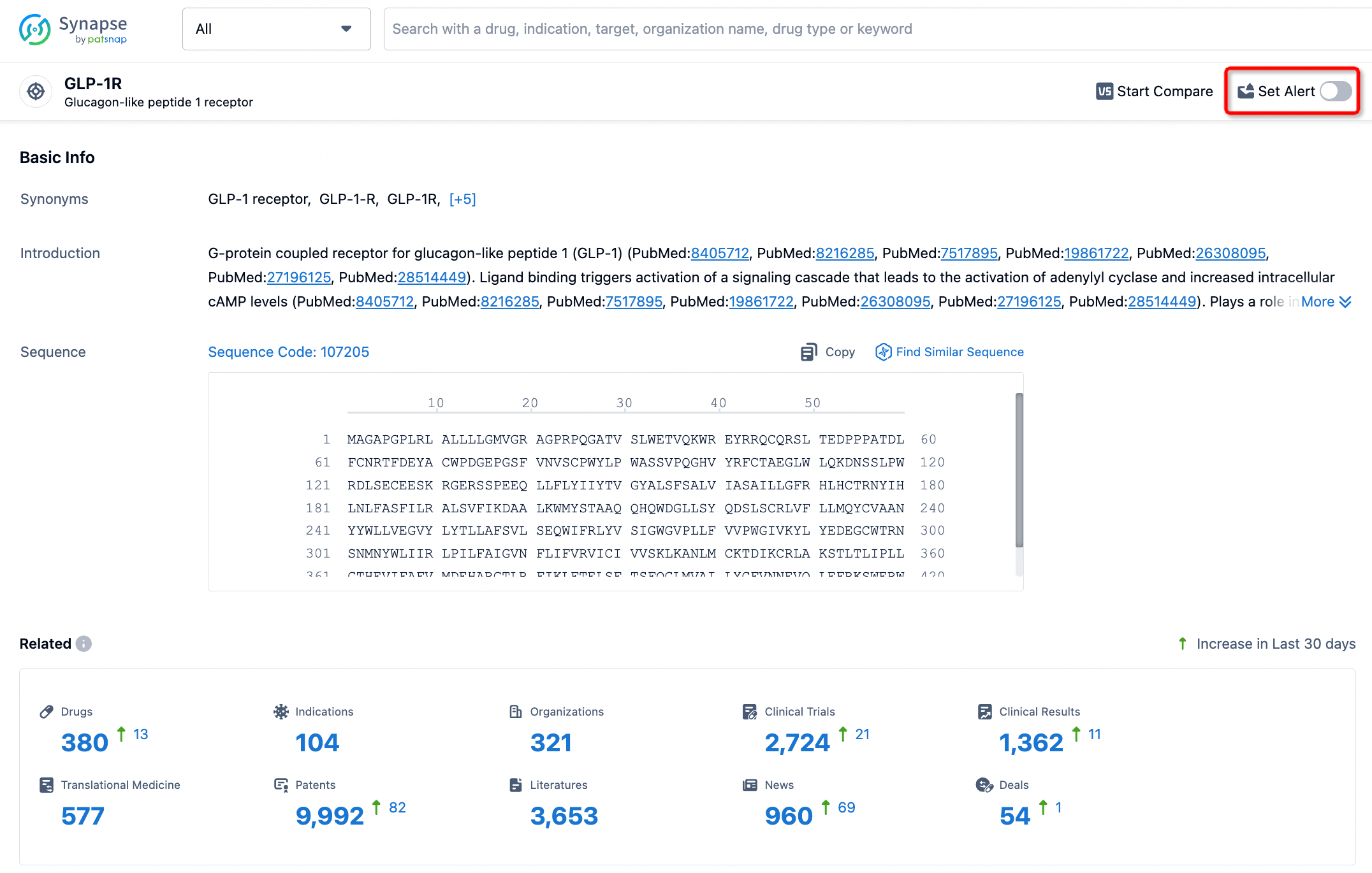
In the Synapse database, you can stay updated on the latest research and development advances of all targets. This service is accessible anytime and anywhere, with updates available daily or weekly. Use the "Set Alert" function to stay informed. Click on the image below to embark on a brand new journey of drug discovery!

AI Agents Built for Biopharma Breakthroughs
Accelerate discovery. Empower decisions. Transform outcomes.
Get started for free today!
Accelerate Strategic R&D decision making with Synapse, PatSnap’s AI-powered Connected Innovation Intelligence Platform Built for Life Sciences Professionals.
Start your data trial now!
Synapse data is also accessible to external entities via APIs or data packages. Empower better decisions with the latest in pharmaceutical intelligence.