Request Demo
What are decorin modulators and how do they work?
25 June 2024
Decorin is a small leucine-rich proteoglycan that plays a crucial role in the regulation of various cellular processes. It is primarily known for its role in modulating the extracellular matrix, influencing cell growth, and maintaining the structural integrity of tissues. Decorin binds to collagen fibrils, regulating their assembly and spacing, which in turn affects tissue mechanics and cell behavior. Decorin modulators, as the name suggests, are substances that can enhance or inhibit the activity of decorin, providing a valuable tool for therapeutic purposes.
The primary mechanism through which decorin modulators work involves their interaction with key signaling pathways and extracellular matrix components. Decorin interacts with multiple receptors on the cell surface, including the epidermal growth factor receptor (EGFR) and insulin-like growth factor receptor (IGFR). By binding to these receptors, decorin can inhibit their activity and downstream signaling, which is often associated with cell proliferation and survival. Consequently, decorin modulators can either mimic or enhance these inhibitory effects, thereby controlling excessive cell growth and promoting apoptosis in certain cell types.
Another critical aspect of decorin modulators is their ability to influence the assembly and organization of the extracellular matrix. Decorin binds directly to collagen and other matrix components, regulating their synthesis and deposition. Modulators that enhance decorin activity can strengthen the extracellular matrix, improving tissue structure and function. Conversely, inhibitors of decorin can be used to reduce excessive matrix deposition, which is often associated with fibrotic diseases.
Decorin modulators are employed for a variety of therapeutic purposes due to their multifaceted role in cellular regulation. One of the most extensively studied applications is in the field of oncology. Cancer cells often exhibit dysregulated growth factor signaling and altered extracellular matrix composition. By modulating decorin activity, researchers aim to restore normal signaling pathways and inhibit tumor growth. Decorin has been shown to suppress the activity of EGFR and other tyrosine kinase receptors that are commonly overexpressed in tumors. Additionally, decorin can induce apoptosis in cancer cells, making it a promising candidate for cancer therapy.
Beyond oncology, decorin modulators are also explored for their potential in treating fibrotic diseases. Fibrosis is characterized by excessive deposition of extracellular matrix components, leading to tissue scarring and organ dysfunction. Decorin’s ability to regulate collagen synthesis and deposition makes it an attractive target for anti-fibrotic therapies. By enhancing decorin activity, it is possible to reduce collagen accumulation and ameliorate fibrosis in tissues such as the liver, lungs, and kidneys.
Another promising area of research involves the use of decorin modulators in regenerative medicine. Decorin plays a critical role in wound healing and tissue repair by regulating matrix assembly and cellular responses to injury. Enhancing decorin activity can accelerate tissue regeneration and improve healing outcomes. For instance, decorin modulators are being investigated for their potential to improve the healing of chronic wounds, which are often characterized by impaired matrix remodeling and prolonged inflammation.
Moreover, decorin’s anti-inflammatory properties add another layer of therapeutic potential. By inhibiting pro-inflammatory cytokines and signaling pathways, decorin modulators can reduce inflammation and tissue damage in various inflammatory diseases. This makes them a potential therapeutic option for conditions such as rheumatoid arthritis and inflammatory bowel disease.
In conclusion, decorin modulators represent a promising avenue for therapeutic intervention in a variety of diseases. By influencing key signaling pathways and extracellular matrix components, these modulators can regulate cell growth, inhibit tumor progression, reduce fibrosis, and promote tissue regeneration. As research continues to unravel the complexities of decorin’s functions and interactions, the development of targeted decorin modulators is likely to open new frontiers in medicine, offering hope for more effective treatments for cancer, fibrotic diseases, and beyond.
The primary mechanism through which decorin modulators work involves their interaction with key signaling pathways and extracellular matrix components. Decorin interacts with multiple receptors on the cell surface, including the epidermal growth factor receptor (EGFR) and insulin-like growth factor receptor (IGFR). By binding to these receptors, decorin can inhibit their activity and downstream signaling, which is often associated with cell proliferation and survival. Consequently, decorin modulators can either mimic or enhance these inhibitory effects, thereby controlling excessive cell growth and promoting apoptosis in certain cell types.
Another critical aspect of decorin modulators is their ability to influence the assembly and organization of the extracellular matrix. Decorin binds directly to collagen and other matrix components, regulating their synthesis and deposition. Modulators that enhance decorin activity can strengthen the extracellular matrix, improving tissue structure and function. Conversely, inhibitors of decorin can be used to reduce excessive matrix deposition, which is often associated with fibrotic diseases.
Decorin modulators are employed for a variety of therapeutic purposes due to their multifaceted role in cellular regulation. One of the most extensively studied applications is in the field of oncology. Cancer cells often exhibit dysregulated growth factor signaling and altered extracellular matrix composition. By modulating decorin activity, researchers aim to restore normal signaling pathways and inhibit tumor growth. Decorin has been shown to suppress the activity of EGFR and other tyrosine kinase receptors that are commonly overexpressed in tumors. Additionally, decorin can induce apoptosis in cancer cells, making it a promising candidate for cancer therapy.
Beyond oncology, decorin modulators are also explored for their potential in treating fibrotic diseases. Fibrosis is characterized by excessive deposition of extracellular matrix components, leading to tissue scarring and organ dysfunction. Decorin’s ability to regulate collagen synthesis and deposition makes it an attractive target for anti-fibrotic therapies. By enhancing decorin activity, it is possible to reduce collagen accumulation and ameliorate fibrosis in tissues such as the liver, lungs, and kidneys.
Another promising area of research involves the use of decorin modulators in regenerative medicine. Decorin plays a critical role in wound healing and tissue repair by regulating matrix assembly and cellular responses to injury. Enhancing decorin activity can accelerate tissue regeneration and improve healing outcomes. For instance, decorin modulators are being investigated for their potential to improve the healing of chronic wounds, which are often characterized by impaired matrix remodeling and prolonged inflammation.
Moreover, decorin’s anti-inflammatory properties add another layer of therapeutic potential. By inhibiting pro-inflammatory cytokines and signaling pathways, decorin modulators can reduce inflammation and tissue damage in various inflammatory diseases. This makes them a potential therapeutic option for conditions such as rheumatoid arthritis and inflammatory bowel disease.
In conclusion, decorin modulators represent a promising avenue for therapeutic intervention in a variety of diseases. By influencing key signaling pathways and extracellular matrix components, these modulators can regulate cell growth, inhibit tumor progression, reduce fibrosis, and promote tissue regeneration. As research continues to unravel the complexities of decorin’s functions and interactions, the development of targeted decorin modulators is likely to open new frontiers in medicine, offering hope for more effective treatments for cancer, fibrotic diseases, and beyond.
How to obtain the latest development progress of all targets?
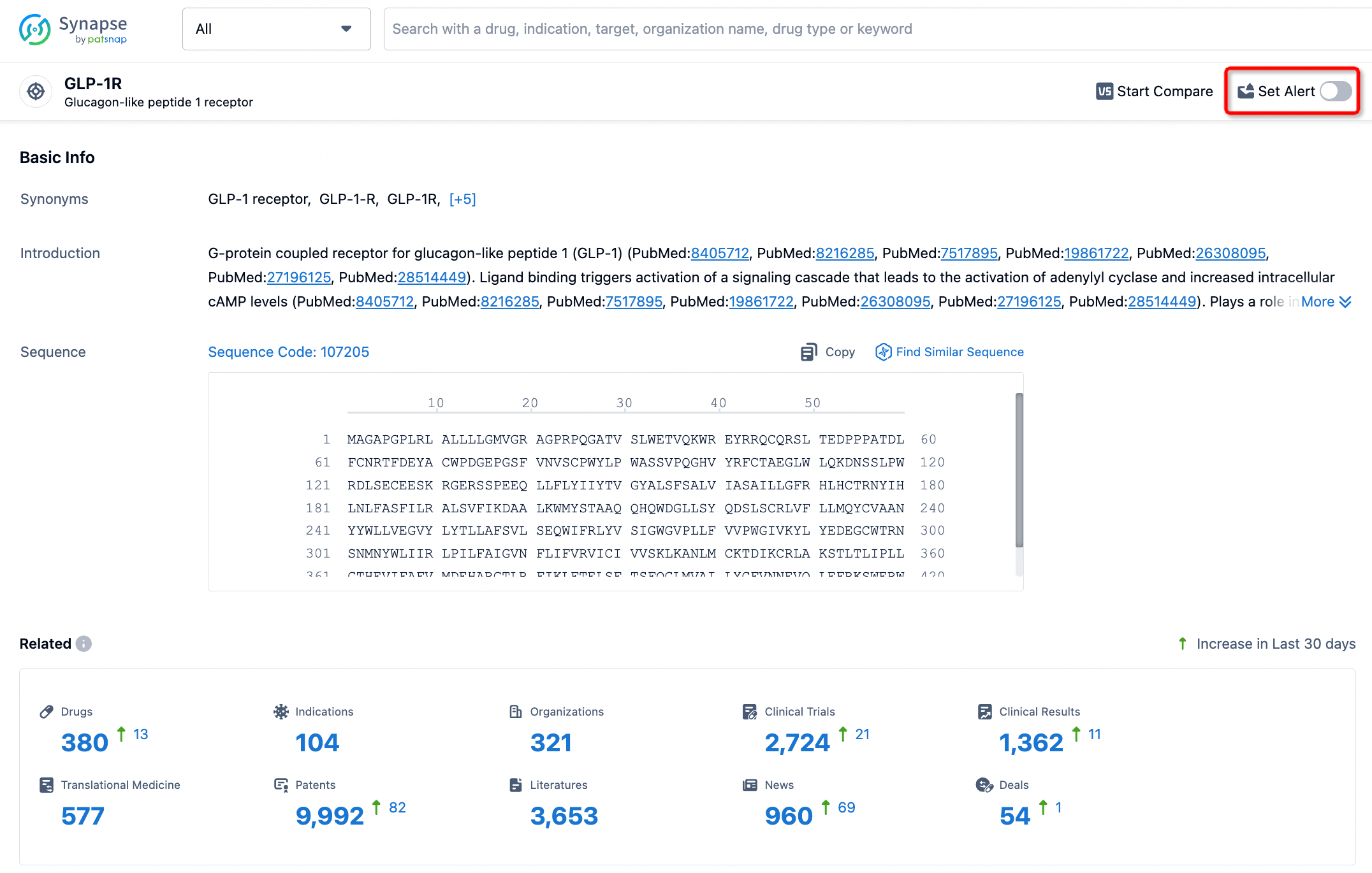
In the Synapse database, you can stay updated on the latest research and development advances of all targets. This service is accessible anytime and anywhere, with updates available daily or weekly. Use the "Set Alert" function to stay informed. Click on the image below to embark on a brand new journey of drug discovery!


AI Agents Built for Biopharma Breakthroughs
Accelerate discovery. Empower decisions. Transform outcomes.
Get started for free today!
Accelerate Strategic R&D decision making with Synapse, PatSnap’s AI-powered Connected Innovation Intelligence Platform Built for Life Sciences Professionals.
Start your data trial now!
Synapse data is also accessible to external entities via APIs or data packages. Empower better decisions with the latest in pharmaceutical intelligence.