Request Demo
What are DKK3 gene transference and how do they work?
26 June 2024
The DKK3 gene, or Dickkopf-related protein 3, is a member of the Dickkopf family involved in various cellular processes, including cell signaling, differentiation, proliferation, and apoptosis. The gene is gaining considerable attention in the field of genetic research and therapy due to its significant role in modulating the Wnt signaling pathway, which is critical in embryonic development and cancer progression. Understanding DKK3 gene transference can open new avenues for therapeutic interventions and disease modeling.
Gene transference techniques involve transferring specific genes into cells to study their function, correct genetic defects, or introduce new properties. For the DKK3 gene, this process usually involves inserting a functional copy of DKK3 into target cells using vectors—vehicles that can deliver genetic material into cells. The most common vectors used are viruses, such as adenoviruses, lentiviruses, and retroviruses, which have been engineered to safely and effectively deliver the DKK3 gene without causing disease.
Once the DKK3 gene is successfully inserted into the vector, the vector is introduced to the target cells. This can be done in vitro (in a controlled environment outside a living organism) or in vivo (within a living organism). In vitro transference typically involves culturing cells in a laboratory and introducing the vector directly to the cell culture. This method is often used for basic research and disease modeling. In vivo transference, on the other hand, involves delivering the vector into the organism's tissues, which is more commonly associated with gene therapy for treating diseases.
After the DKK3 gene is delivered into the cells, it is integrated into the host genome, or it remains as an episome, a piece of genetic material that exists independently of the chromosomal DNA. The introduced DKK3 gene can then be transcribed and translated into the DKK3 protein, which can exert its biological effects on the target cells.
The applications of DKK3 gene transference are wide-ranging and impactful across several fields of medicine and research. One of the most promising uses is in cancer therapy. Aberrant Wnt signaling is implicated in the development and progression of various cancers, including colorectal, breast, and prostate cancers. Since DKK3 can act as a tumor suppressor by inhibiting the Wnt signaling pathway, transferring the DKK3 gene into cancer cells can potentially slow down or halt the progression of the tumor. Several studies have shown that DKK3 can induce apoptosis in cancer cells, making it a potential candidate for gene therapy-based cancer treatments.
DKK3 gene transference is also being explored for its therapeutic potential in cardiovascular diseases. Research indicates that DKK3 can promote angiogenesis, the process of new blood vessel formation, which is crucial for tissue repair and regeneration. By transferring the DKK3 gene into damaged tissues, it may be possible to enhance the natural repair mechanisms and improve outcomes after events like heart attacks or ischemic injuries.
In addition to therapeutic applications, DKK3 gene transference is a valuable tool in basic research. By introducing the DKK3 gene into various cell types, researchers can study its specific roles in cellular processes and better understand how dysregulation of this gene contributes to diseases. This can help identify new targets for drug development and provide insights into the mechanisms underlying various health conditions.
Finally, DKK3 gene transference has potential applications in regenerative medicine and tissue engineering. By modulating the Wnt signaling pathway through DKK3, scientists can influence stem cell differentiation and tissue regeneration. This could lead to advanced treatments for degenerative diseases and improved methods for tissue repair and replacement.
In conclusion, DKK3 gene transference represents a powerful and versatile tool in modern biomedical research and therapy. By harnessing the unique properties of the DKK3 gene, scientists and clinicians can develop innovative treatments for cancer, cardiovascular diseases, and other conditions, while also advancing our fundamental understanding of cellular processes and disease mechanisms. As research progresses, the potential applications of DKK3 gene transference are likely to expand, offering new hope for patients and transforming the landscape of medical science.
Gene transference techniques involve transferring specific genes into cells to study their function, correct genetic defects, or introduce new properties. For the DKK3 gene, this process usually involves inserting a functional copy of DKK3 into target cells using vectors—vehicles that can deliver genetic material into cells. The most common vectors used are viruses, such as adenoviruses, lentiviruses, and retroviruses, which have been engineered to safely and effectively deliver the DKK3 gene without causing disease.
Once the DKK3 gene is successfully inserted into the vector, the vector is introduced to the target cells. This can be done in vitro (in a controlled environment outside a living organism) or in vivo (within a living organism). In vitro transference typically involves culturing cells in a laboratory and introducing the vector directly to the cell culture. This method is often used for basic research and disease modeling. In vivo transference, on the other hand, involves delivering the vector into the organism's tissues, which is more commonly associated with gene therapy for treating diseases.
After the DKK3 gene is delivered into the cells, it is integrated into the host genome, or it remains as an episome, a piece of genetic material that exists independently of the chromosomal DNA. The introduced DKK3 gene can then be transcribed and translated into the DKK3 protein, which can exert its biological effects on the target cells.
The applications of DKK3 gene transference are wide-ranging and impactful across several fields of medicine and research. One of the most promising uses is in cancer therapy. Aberrant Wnt signaling is implicated in the development and progression of various cancers, including colorectal, breast, and prostate cancers. Since DKK3 can act as a tumor suppressor by inhibiting the Wnt signaling pathway, transferring the DKK3 gene into cancer cells can potentially slow down or halt the progression of the tumor. Several studies have shown that DKK3 can induce apoptosis in cancer cells, making it a potential candidate for gene therapy-based cancer treatments.
DKK3 gene transference is also being explored for its therapeutic potential in cardiovascular diseases. Research indicates that DKK3 can promote angiogenesis, the process of new blood vessel formation, which is crucial for tissue repair and regeneration. By transferring the DKK3 gene into damaged tissues, it may be possible to enhance the natural repair mechanisms and improve outcomes after events like heart attacks or ischemic injuries.
In addition to therapeutic applications, DKK3 gene transference is a valuable tool in basic research. By introducing the DKK3 gene into various cell types, researchers can study its specific roles in cellular processes and better understand how dysregulation of this gene contributes to diseases. This can help identify new targets for drug development and provide insights into the mechanisms underlying various health conditions.
Finally, DKK3 gene transference has potential applications in regenerative medicine and tissue engineering. By modulating the Wnt signaling pathway through DKK3, scientists can influence stem cell differentiation and tissue regeneration. This could lead to advanced treatments for degenerative diseases and improved methods for tissue repair and replacement.
In conclusion, DKK3 gene transference represents a powerful and versatile tool in modern biomedical research and therapy. By harnessing the unique properties of the DKK3 gene, scientists and clinicians can develop innovative treatments for cancer, cardiovascular diseases, and other conditions, while also advancing our fundamental understanding of cellular processes and disease mechanisms. As research progresses, the potential applications of DKK3 gene transference are likely to expand, offering new hope for patients and transforming the landscape of medical science.
How to obtain the latest development progress of all targets?
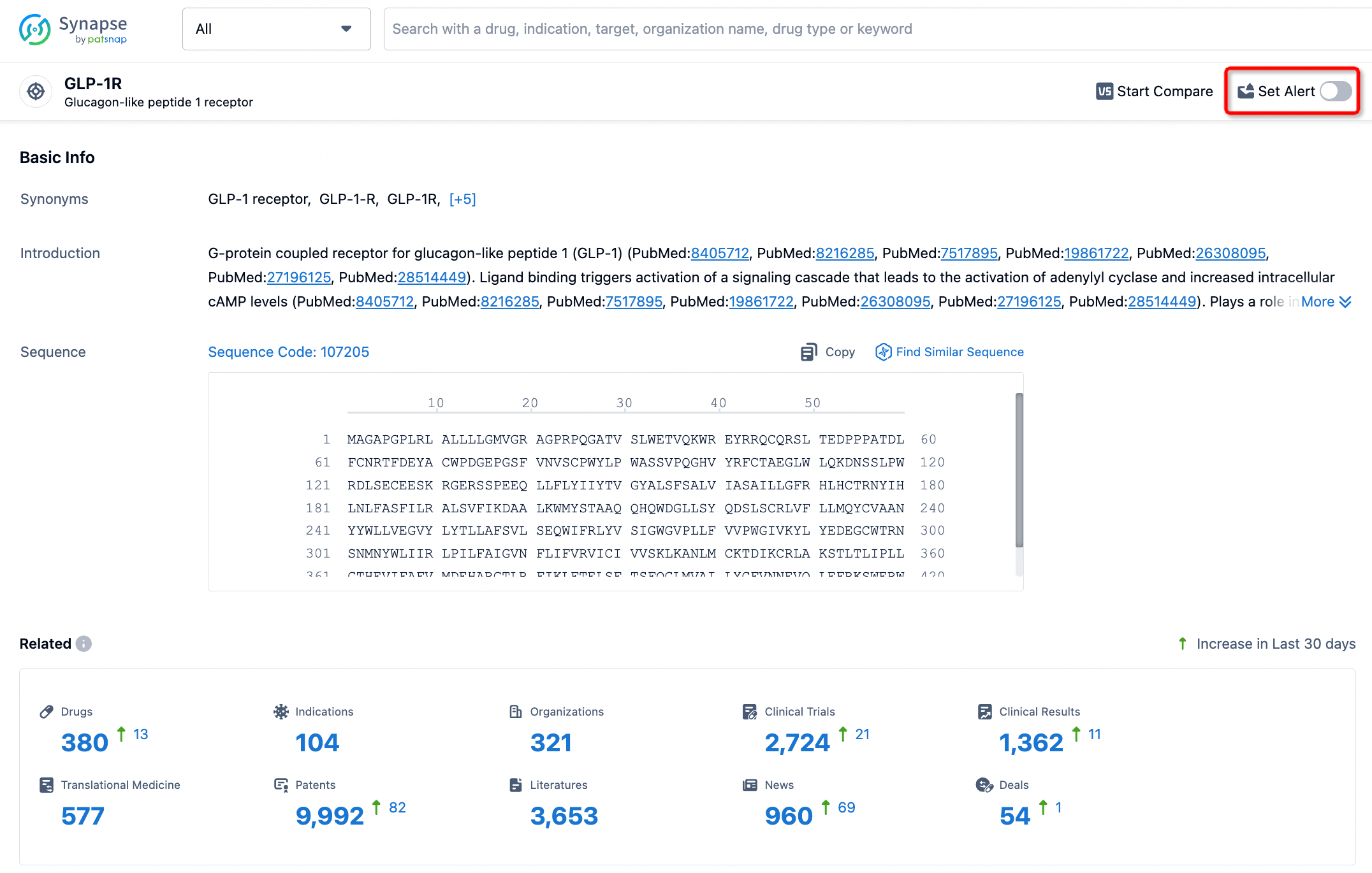
In the Synapse database, you can stay updated on the latest research and development advances of all targets. This service is accessible anytime and anywhere, with updates available daily or weekly. Use the "Set Alert" function to stay informed. Click on the image below to embark on a brand new journey of drug discovery!


AI Agents Built for Biopharma Breakthroughs
Accelerate discovery. Empower decisions. Transform outcomes.
Get started for free today!
Accelerate Strategic R&D decision making with Synapse, PatSnap’s AI-powered Connected Innovation Intelligence Platform Built for Life Sciences Professionals.
Start your data trial now!
Synapse data is also accessible to external entities via APIs or data packages. Empower better decisions with the latest in pharmaceutical intelligence.