Request Demo
What are DNM1L modulators and how do they work?
25 June 2024
Dynamin-related protein 1 (DNM1L), also known as DRP1, is a key player in mitochondrial fission, a process crucial for maintaining mitochondrial function and cellular health. DNM1L modulators are compounds or molecules that influence the activity of this protein, and they have gained considerable attention in recent years for their potential therapeutic benefits. Understanding how these modulators work and their applications in various diseases can provide valuable insights into their importance in modern medicine.
DNM1L is a GTPase enzyme that mediates the division of mitochondria, thereby ensuring proper distribution and quality control of these vital organelles. This process is essential for cellular energy production, calcium homeostasis, and apoptosis. DNM1L modulators can either enhance or inhibit the function of DNM1L, thereby affecting the balance of mitochondrial fission and fusion within cells.
The mechanism of action of DNM1L modulators involves their interaction with the DNM1L protein, influencing its ability to hydrolyze GTP. This hydrolysis provides the energy required for the conformational changes necessary for mitochondrial fission. Modulators can bind to different sites on the DNM1L protein, either stabilizing its active form or preventing its interaction with other mitochondrial fission machinery components such as mitochondrial fission factor (MFF) and mitochondrial dynamics protein 49 (MiD49).
Positive modulators of DNM1L enhance its activity, leading to increased mitochondrial fission. This can be beneficial in situations where excessive mitochondrial fusion leads to the accumulation of damaged mitochondria, such as in neurodegenerative diseases. By promoting the division and removal of dysfunctional mitochondria, these modulators help maintain mitochondrial quality and prevent cellular damage.
Conversely, negative modulators of DNM1L inhibit its activity, reducing mitochondrial fission. This can be advantageous in conditions characterized by excessive mitochondrial fragmentation, such as in certain types of heart disease or metabolic disorders. By reducing mitochondrial fission, these modulators help maintain mitochondrial integrity and function, thereby protecting cells from damage.
DNM1L modulators have shown promise in a variety of therapeutic applications. One of the most well-studied areas is neurodegenerative diseases, including Alzheimer's and Parkinson's disease. In these conditions, dysfunctional mitochondria accumulate due to impaired mitochondrial dynamics, leading to neuronal damage and cell death. Positive modulators of DNM1L can enhance mitochondrial fission, promoting the removal of damaged mitochondria and protecting neurons from degeneration.
In cardiovascular diseases, such as ischemia-reperfusion injury, DNM1L modulators have also shown potential benefits. Excessive mitochondrial fission during ischemic events can lead to cell death and tissue damage. Negative modulators of DNM1L can reduce mitochondrial fragmentation, preserving mitochondrial function and protecting cardiac cells from injury.
Metabolic disorders, including diabetes and obesity, have also been linked to impaired mitochondrial dynamics. In these conditions, modulating DNM1L activity can help restore the balance between mitochondrial fission and fusion, improving mitochondrial function and metabolic health.
Furthermore, DNM1L modulators are being investigated for their potential in cancer therapy. Some cancer cells exhibit altered mitochondrial dynamics that support their rapid growth and survival. By targeting DNM1L, it may be possible to disrupt these dynamics and selectively kill cancer cells.
The development of DNM1L modulators represents a promising avenue for therapeutic intervention in a wide range of diseases. However, it is important to note that the regulation of mitochondrial dynamics is complex and context-dependent. Therefore, further research is needed to fully understand the mechanisms of action of these modulators and their potential side effects.
In conclusion, DNM1L modulators offer a novel approach to manipulating mitochondrial dynamics for therapeutic benefit. By either enhancing or inhibiting the activity of DNM1L, these modulators can help restore normal mitochondrial function and protect cells from damage in various diseases. As research in this field continues to advance, DNM1L modulators hold great promise for the development of new treatments for neurodegenerative diseases, cardiovascular disorders, metabolic conditions, and cancer.
DNM1L is a GTPase enzyme that mediates the division of mitochondria, thereby ensuring proper distribution and quality control of these vital organelles. This process is essential for cellular energy production, calcium homeostasis, and apoptosis. DNM1L modulators can either enhance or inhibit the function of DNM1L, thereby affecting the balance of mitochondrial fission and fusion within cells.
The mechanism of action of DNM1L modulators involves their interaction with the DNM1L protein, influencing its ability to hydrolyze GTP. This hydrolysis provides the energy required for the conformational changes necessary for mitochondrial fission. Modulators can bind to different sites on the DNM1L protein, either stabilizing its active form or preventing its interaction with other mitochondrial fission machinery components such as mitochondrial fission factor (MFF) and mitochondrial dynamics protein 49 (MiD49).
Positive modulators of DNM1L enhance its activity, leading to increased mitochondrial fission. This can be beneficial in situations where excessive mitochondrial fusion leads to the accumulation of damaged mitochondria, such as in neurodegenerative diseases. By promoting the division and removal of dysfunctional mitochondria, these modulators help maintain mitochondrial quality and prevent cellular damage.
Conversely, negative modulators of DNM1L inhibit its activity, reducing mitochondrial fission. This can be advantageous in conditions characterized by excessive mitochondrial fragmentation, such as in certain types of heart disease or metabolic disorders. By reducing mitochondrial fission, these modulators help maintain mitochondrial integrity and function, thereby protecting cells from damage.
DNM1L modulators have shown promise in a variety of therapeutic applications. One of the most well-studied areas is neurodegenerative diseases, including Alzheimer's and Parkinson's disease. In these conditions, dysfunctional mitochondria accumulate due to impaired mitochondrial dynamics, leading to neuronal damage and cell death. Positive modulators of DNM1L can enhance mitochondrial fission, promoting the removal of damaged mitochondria and protecting neurons from degeneration.
In cardiovascular diseases, such as ischemia-reperfusion injury, DNM1L modulators have also shown potential benefits. Excessive mitochondrial fission during ischemic events can lead to cell death and tissue damage. Negative modulators of DNM1L can reduce mitochondrial fragmentation, preserving mitochondrial function and protecting cardiac cells from injury.
Metabolic disorders, including diabetes and obesity, have also been linked to impaired mitochondrial dynamics. In these conditions, modulating DNM1L activity can help restore the balance between mitochondrial fission and fusion, improving mitochondrial function and metabolic health.
Furthermore, DNM1L modulators are being investigated for their potential in cancer therapy. Some cancer cells exhibit altered mitochondrial dynamics that support their rapid growth and survival. By targeting DNM1L, it may be possible to disrupt these dynamics and selectively kill cancer cells.
The development of DNM1L modulators represents a promising avenue for therapeutic intervention in a wide range of diseases. However, it is important to note that the regulation of mitochondrial dynamics is complex and context-dependent. Therefore, further research is needed to fully understand the mechanisms of action of these modulators and their potential side effects.
In conclusion, DNM1L modulators offer a novel approach to manipulating mitochondrial dynamics for therapeutic benefit. By either enhancing or inhibiting the activity of DNM1L, these modulators can help restore normal mitochondrial function and protect cells from damage in various diseases. As research in this field continues to advance, DNM1L modulators hold great promise for the development of new treatments for neurodegenerative diseases, cardiovascular disorders, metabolic conditions, and cancer.
How to obtain the latest development progress of all targets?
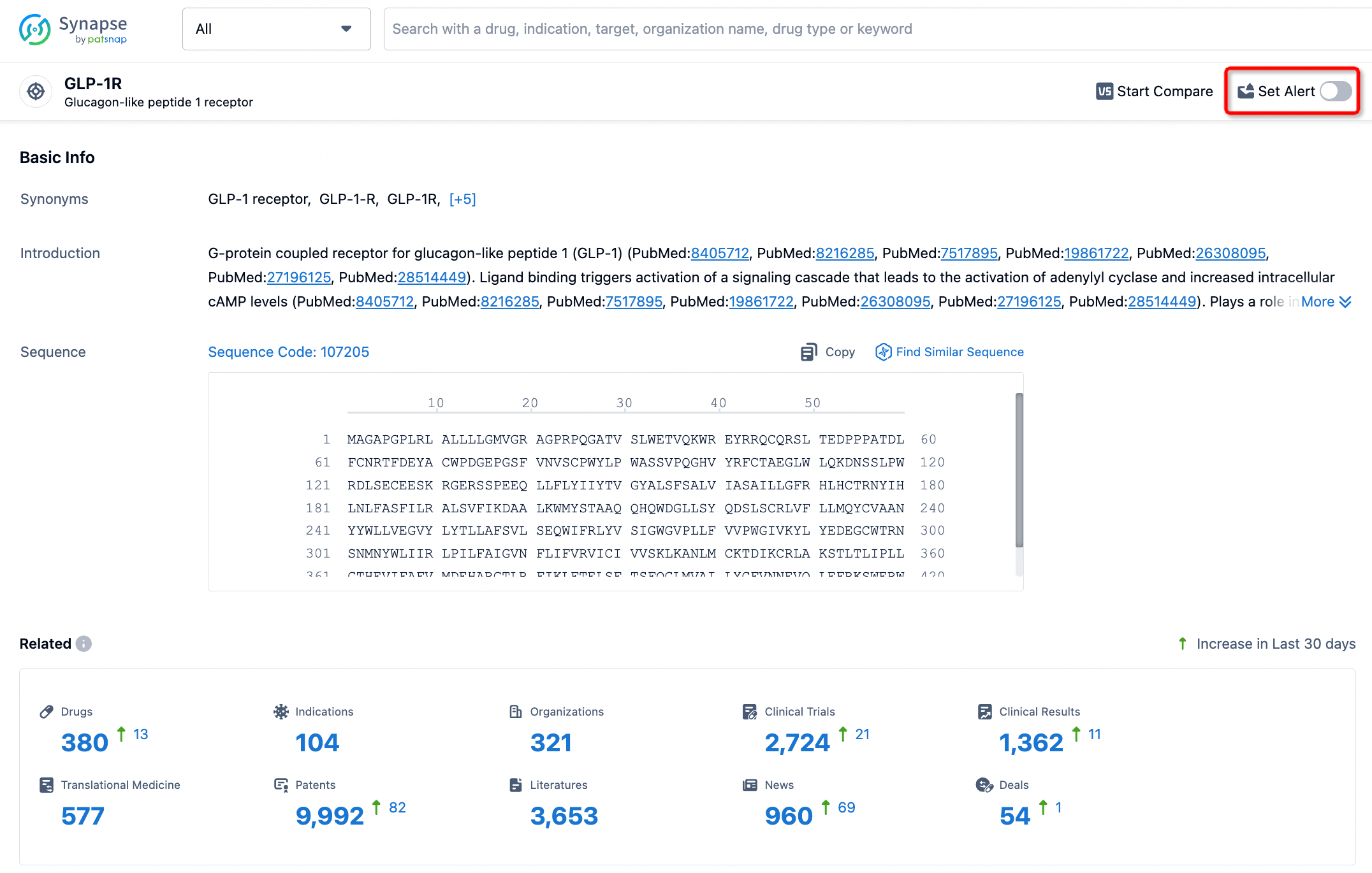
In the Synapse database, you can stay updated on the latest research and development advances of all targets. This service is accessible anytime and anywhere, with updates available daily or weekly. Use the "Set Alert" function to stay informed. Click on the image below to embark on a brand new journey of drug discovery!


AI Agents Built for Biopharma Breakthroughs
Accelerate discovery. Empower decisions. Transform outcomes.
Get started for free today!
Accelerate Strategic R&D decision making with Synapse, PatSnap’s AI-powered Connected Innovation Intelligence Platform Built for Life Sciences Professionals.
Start your data trial now!
Synapse data is also accessible to external entities via APIs or data packages. Empower better decisions with the latest in pharmaceutical intelligence.