Request Demo
What are enkephalinase stimulators and how do they work?
25 June 2024
Enkephalinase stimulators are an emerging class of compounds that have garnered significant attention in the field of neuropharmacology. These agents hold the promise of modulating pain, mood, and various physiological functions by influencing the endogenous opioid system. In this blog post, we will delve into what enkephalinase stimulators are, how they operate on a biochemical level, and the potential applications they have in medicine.
So, what exactly are enkephalinase stimulators? To understand this, one must first grasp the concept of enkephalins. Enkephalins are endogenous opioid peptides that play a crucial role in regulating pain and emotion. They function by binding to opioid receptors in the brain, thus modulating various neurological processes. Enkephalinase, on the other hand, is an enzyme that breaks down these peptides, effectively terminating their action. Enkephalinase stimulators are compounds that inhibit this enzyme, thereby prolonging the activity of enkephalins. This prolonged activity can lead to enhanced pain relief and improved mood stabilization.
The mechanism by which enkephalinase stimulators work is both fascinating and complex. When enkephalins are released in the brain, they bind to opioid receptors and initiate a cascade of intracellular events that culminate in reduced pain perception and a sense of well-being. However, enkephalinase enzymes rapidly degrade these peptides, limiting their efficacy and duration of action. By inhibiting enkephalinase, these stimulators effectively extend the half-life of enkephalins. This means that the enkephalins can continue to activate opioid receptors for a longer period, thereby amplifying their therapeutic effects.
Enkephalinase stimulators can exert their effects in various ways. Some directly inhibit the catalytic activity of enkephalinase, while others may interfere with the enzyme's ability to bind to enkephalins. Regardless of the method, the result is a sustained presence of enkephalins in the synaptic cleft, leading to prolonged signaling through opioid receptors. Interestingly, this approach offers a targeted way to modulate the endogenous opioid system without the need for exogenous opioid drugs, which come with a plethora of side effects and addiction risks.
Now that we understand how enkephalinase stimulators work, let’s explore their potential applications. One of the most promising areas is pain management. Chronic pain conditions such as neuropathy, arthritis, and fibromyalgia are notoriously difficult to treat with conventional analgesics. Opioid medications, while effective, carry substantial risks of addiction and other adverse effects. Enkephalinase stimulators offer a novel approach by enhancing the body’s own pain relief mechanisms, potentially providing effective analgesia with a lower risk profile.
Beyond pain management, enkephalinase stimulators are also being investigated for their potential in treating mood disorders. Depression and anxiety disorders are often linked to dysregulation in the endogenous opioid system. By prolonging the action of enkephalins, these stimulators may help to stabilize mood and improve emotional well-being. Preliminary studies have shown promise, although more extensive clinical trials are needed to fully elucidate their efficacy and safety in this context.
In addition to their applications in pain and mood disorders, enkephalinase stimulators may also have potential in treating neurodegenerative diseases. Conditions like Alzheimer’s and Parkinson’s disease involve complex pathophysiological processes, including inflammation and neurodegeneration, where enkephalins are thought to play a protective role. By inhibiting enkephalinase, these stimulators may help to mitigate some of the neurodegenerative processes, offering a new avenue for therapeutic intervention.
In conclusion, enkephalinase stimulators represent a promising frontier in neuropharmacology. By modulating the endogenous opioid system, they offer a novel approach to treating a range of conditions from chronic pain to mood disorders and potentially even neurodegenerative diseases. While research is still in its early stages, the potential benefits of these compounds are substantial, making them an exciting area of study for the future.
So, what exactly are enkephalinase stimulators? To understand this, one must first grasp the concept of enkephalins. Enkephalins are endogenous opioid peptides that play a crucial role in regulating pain and emotion. They function by binding to opioid receptors in the brain, thus modulating various neurological processes. Enkephalinase, on the other hand, is an enzyme that breaks down these peptides, effectively terminating their action. Enkephalinase stimulators are compounds that inhibit this enzyme, thereby prolonging the activity of enkephalins. This prolonged activity can lead to enhanced pain relief and improved mood stabilization.
The mechanism by which enkephalinase stimulators work is both fascinating and complex. When enkephalins are released in the brain, they bind to opioid receptors and initiate a cascade of intracellular events that culminate in reduced pain perception and a sense of well-being. However, enkephalinase enzymes rapidly degrade these peptides, limiting their efficacy and duration of action. By inhibiting enkephalinase, these stimulators effectively extend the half-life of enkephalins. This means that the enkephalins can continue to activate opioid receptors for a longer period, thereby amplifying their therapeutic effects.
Enkephalinase stimulators can exert their effects in various ways. Some directly inhibit the catalytic activity of enkephalinase, while others may interfere with the enzyme's ability to bind to enkephalins. Regardless of the method, the result is a sustained presence of enkephalins in the synaptic cleft, leading to prolonged signaling through opioid receptors. Interestingly, this approach offers a targeted way to modulate the endogenous opioid system without the need for exogenous opioid drugs, which come with a plethora of side effects and addiction risks.
Now that we understand how enkephalinase stimulators work, let’s explore their potential applications. One of the most promising areas is pain management. Chronic pain conditions such as neuropathy, arthritis, and fibromyalgia are notoriously difficult to treat with conventional analgesics. Opioid medications, while effective, carry substantial risks of addiction and other adverse effects. Enkephalinase stimulators offer a novel approach by enhancing the body’s own pain relief mechanisms, potentially providing effective analgesia with a lower risk profile.
Beyond pain management, enkephalinase stimulators are also being investigated for their potential in treating mood disorders. Depression and anxiety disorders are often linked to dysregulation in the endogenous opioid system. By prolonging the action of enkephalins, these stimulators may help to stabilize mood and improve emotional well-being. Preliminary studies have shown promise, although more extensive clinical trials are needed to fully elucidate their efficacy and safety in this context.
In addition to their applications in pain and mood disorders, enkephalinase stimulators may also have potential in treating neurodegenerative diseases. Conditions like Alzheimer’s and Parkinson’s disease involve complex pathophysiological processes, including inflammation and neurodegeneration, where enkephalins are thought to play a protective role. By inhibiting enkephalinase, these stimulators may help to mitigate some of the neurodegenerative processes, offering a new avenue for therapeutic intervention.
In conclusion, enkephalinase stimulators represent a promising frontier in neuropharmacology. By modulating the endogenous opioid system, they offer a novel approach to treating a range of conditions from chronic pain to mood disorders and potentially even neurodegenerative diseases. While research is still in its early stages, the potential benefits of these compounds are substantial, making them an exciting area of study for the future.
How to obtain the latest development progress of all targets?
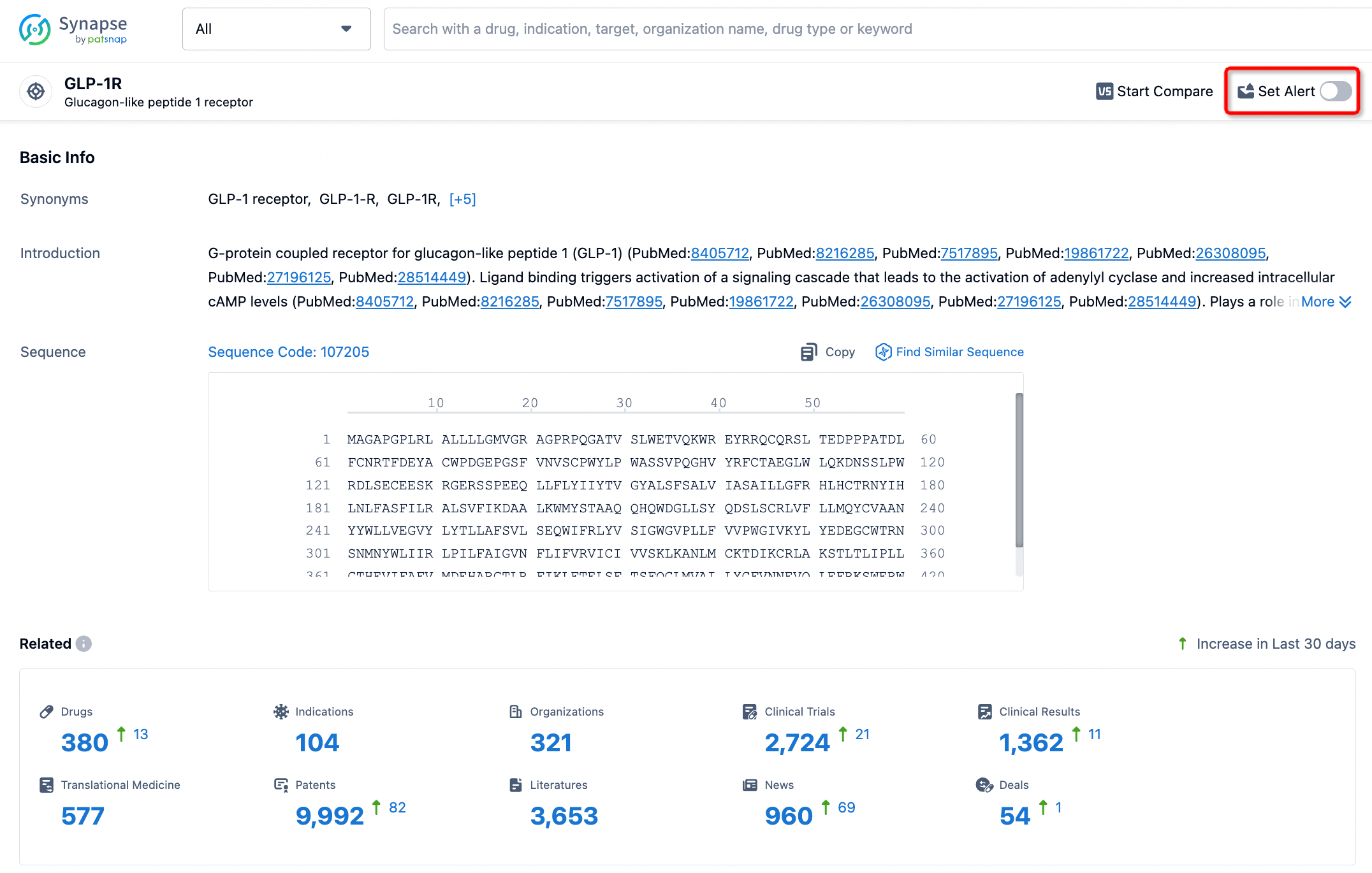
In the Synapse database, you can stay updated on the latest research and development advances of all targets. This service is accessible anytime and anywhere, with updates available daily or weekly. Use the "Set Alert" function to stay informed. Click on the image below to embark on a brand new journey of drug discovery!


Hiro LS Researcher
The AI Search Engine Built to Accelerate Biopharma Decisions
Search across billion-scale life sciences data to uncover signals, validate evidence, and act with confidence.
Ask any biopharma research question→
Get started for free today!
Accelerate Strategic R&D decision making with Synapse, Patsnap’s AI-powered Connected Innovation Intelligence Platform Built for Life Sciences Professionals.
Discover Synapse Data Servers
Synapse data is now integrated into the PatSnap LS Model Context Protocol (MCP) service. Customize your LLM agent now using our MCP server!