Request Demo
What are ESM1 inhibitors and how do they work?
25 June 2024
Endothelial cell-specific molecule 1 (ESM1), also known as endocan, is a dermatan sulfate proteoglycan predominantly expressed by endothelial cells. It plays a significant role in various physiological and pathological processes, including inflammation, angiogenesis, and tumor progression. Recently, the development and use of ESM1 inhibitors have garnered attention in the medical and scientific communities due to their potential therapeutic benefits. In this blog post, we will explore what ESM1 inhibitors are, how they work, and what they are used for.
ESM1 inhibitors are compounds designed to inhibit the activity of ESM1. These inhibitors can be small molecules, antibodies, or other agents that specifically target ESM1 to block its function. The objective behind developing ESM1 inhibitors is to modulate the various pathological processes in which ESM1 is involved, thereby providing therapeutic benefits in diseases such as cancer, chronic inflammatory conditions, and cardiovascular disorders.
How do ESM1 inhibitors work? To understand the mechanism of action of ESM1 inhibitors, it is essential to first comprehend the function of ESM1 itself. ESM1 is involved in the regulation of several key biological processes. It interacts with a variety of signaling molecules and receptors, thereby influencing cell signaling pathways related to inflammation, angiogenesis, and cell proliferation.
In the context of inflammation, ESM1 serves as a mediator that can either promote or inhibit inflammatory responses depending on the specific conditions. By binding to specific receptors on immune cells, ESM1 modulates the immune response, which can lead to either the exacerbation or resolution of inflammation.
In angiogenesis, the process of forming new blood vessels, ESM1 is crucial. It interacts with vascular endothelial growth factor (VEGF) and its receptors, enhancing the angiogenic signaling pathways. This makes ESM1 a significant player in both physiological and pathological angiogenesis, such as in wound healing and tumor growth.
As for tumor progression, ESM1 is often overexpressed in various types of cancer. It supports tumor growth and metastasis by promoting angiogenesis and altering the tumor microenvironment. This makes ESM1 an attractive target for cancer therapy.
ESM1 inhibitors work by blocking these interactions and downstream signaling pathways. For instance, small-molecule inhibitors may bind to the active site of ESM1 or its receptor, preventing ESM1 from exerting its biological effects. Antibodies against ESM1 can neutralize the molecule, thereby inhibiting its function. By disrupting the ESM1 signaling pathways, these inhibitors can reduce inflammation, inhibit unwanted angiogenesis, and slow down tumor progression.
What are ESM1 inhibitors used for? Given the diverse roles of ESM1 in various biological processes, ESM1 inhibitors have the potential to be used in a range of therapeutic applications.
In cancer therapy, ESM1 inhibitors are being investigated for their ability to halt tumor growth and metastasis. By inhibiting ESM1, these agents can interfere with the angiogenic processes that supply tumors with the necessary nutrients and oxygen, thereby starving the tumor and preventing its growth. Additionally, ESM1 inhibitors can alter the tumor microenvironment, making it less conducive to cancer cell survival and spread.
In the realm of inflammatory diseases, ESM1 inhibitors offer promise as well. Conditions such as rheumatoid arthritis, inflammatory bowel disease, and other chronic inflammatory disorders could potentially benefit from therapies targeting ESM1. By modulating the inflammatory response, ESM1 inhibitors can help in reducing the symptoms and progression of these diseases.
ESM1 inhibitors may also have applications in cardiovascular diseases. Given ESM1's role in endothelial function and angiogenesis, targeting this molecule could help in managing conditions such as atherosclerosis, hypertension, and ischemic heart disease.
In conclusion, ESM1 inhibitors represent a promising area of research with potential therapeutic applications in cancer, inflammatory diseases, and cardiovascular disorders. By targeting the multifaceted roles of ESM1, these inhibitors offer a novel approach to modulating disease processes and improving patient outcomes. As research progresses, we can expect to see further developments in the use of ESM1 inhibitors, potentially leading to new and effective treatments for a variety of serious health conditions.
ESM1 inhibitors are compounds designed to inhibit the activity of ESM1. These inhibitors can be small molecules, antibodies, or other agents that specifically target ESM1 to block its function. The objective behind developing ESM1 inhibitors is to modulate the various pathological processes in which ESM1 is involved, thereby providing therapeutic benefits in diseases such as cancer, chronic inflammatory conditions, and cardiovascular disorders.
How do ESM1 inhibitors work? To understand the mechanism of action of ESM1 inhibitors, it is essential to first comprehend the function of ESM1 itself. ESM1 is involved in the regulation of several key biological processes. It interacts with a variety of signaling molecules and receptors, thereby influencing cell signaling pathways related to inflammation, angiogenesis, and cell proliferation.
In the context of inflammation, ESM1 serves as a mediator that can either promote or inhibit inflammatory responses depending on the specific conditions. By binding to specific receptors on immune cells, ESM1 modulates the immune response, which can lead to either the exacerbation or resolution of inflammation.
In angiogenesis, the process of forming new blood vessels, ESM1 is crucial. It interacts with vascular endothelial growth factor (VEGF) and its receptors, enhancing the angiogenic signaling pathways. This makes ESM1 a significant player in both physiological and pathological angiogenesis, such as in wound healing and tumor growth.
As for tumor progression, ESM1 is often overexpressed in various types of cancer. It supports tumor growth and metastasis by promoting angiogenesis and altering the tumor microenvironment. This makes ESM1 an attractive target for cancer therapy.
ESM1 inhibitors work by blocking these interactions and downstream signaling pathways. For instance, small-molecule inhibitors may bind to the active site of ESM1 or its receptor, preventing ESM1 from exerting its biological effects. Antibodies against ESM1 can neutralize the molecule, thereby inhibiting its function. By disrupting the ESM1 signaling pathways, these inhibitors can reduce inflammation, inhibit unwanted angiogenesis, and slow down tumor progression.
What are ESM1 inhibitors used for? Given the diverse roles of ESM1 in various biological processes, ESM1 inhibitors have the potential to be used in a range of therapeutic applications.
In cancer therapy, ESM1 inhibitors are being investigated for their ability to halt tumor growth and metastasis. By inhibiting ESM1, these agents can interfere with the angiogenic processes that supply tumors with the necessary nutrients and oxygen, thereby starving the tumor and preventing its growth. Additionally, ESM1 inhibitors can alter the tumor microenvironment, making it less conducive to cancer cell survival and spread.
In the realm of inflammatory diseases, ESM1 inhibitors offer promise as well. Conditions such as rheumatoid arthritis, inflammatory bowel disease, and other chronic inflammatory disorders could potentially benefit from therapies targeting ESM1. By modulating the inflammatory response, ESM1 inhibitors can help in reducing the symptoms and progression of these diseases.
ESM1 inhibitors may also have applications in cardiovascular diseases. Given ESM1's role in endothelial function and angiogenesis, targeting this molecule could help in managing conditions such as atherosclerosis, hypertension, and ischemic heart disease.
In conclusion, ESM1 inhibitors represent a promising area of research with potential therapeutic applications in cancer, inflammatory diseases, and cardiovascular disorders. By targeting the multifaceted roles of ESM1, these inhibitors offer a novel approach to modulating disease processes and improving patient outcomes. As research progresses, we can expect to see further developments in the use of ESM1 inhibitors, potentially leading to new and effective treatments for a variety of serious health conditions.
How to obtain the latest development progress of all targets?
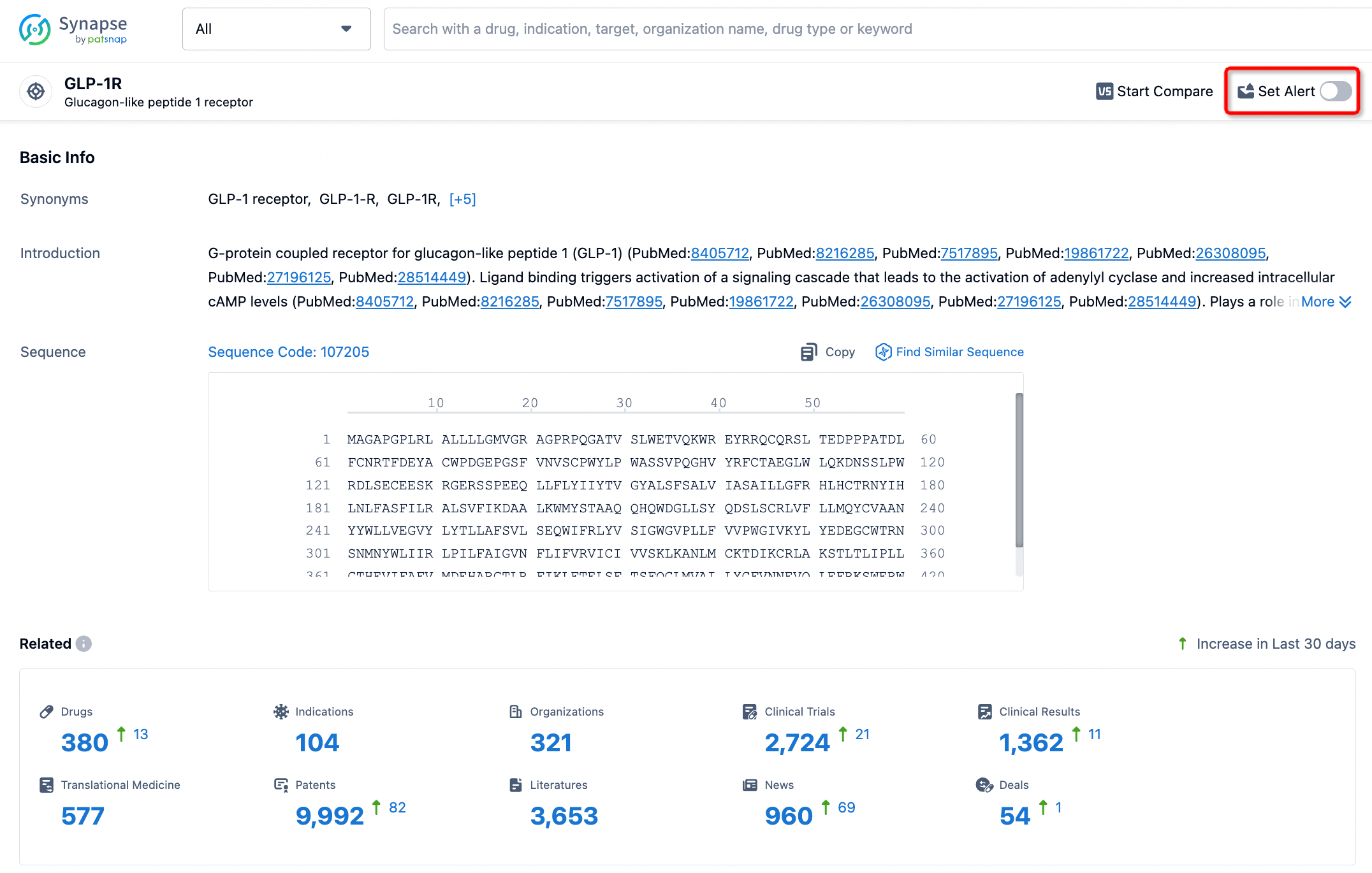
In the Synapse database, you can stay updated on the latest research and development advances of all targets. This service is accessible anytime and anywhere, with updates available daily or weekly. Use the "Set Alert" function to stay informed. Click on the image below to embark on a brand new journey of drug discovery!


AI Agents Built for Biopharma Breakthroughs
Accelerate discovery. Empower decisions. Transform outcomes.
Get started for free today!
Accelerate Strategic R&D decision making with Synapse, PatSnap’s AI-powered Connected Innovation Intelligence Platform Built for Life Sciences Professionals.
Start your data trial now!
Synapse data is also accessible to external entities via APIs or data packages. Empower better decisions with the latest in pharmaceutical intelligence.