Request Demo
What are FAH modulators and how do they work?
25 June 2024
Introduction to FAH modulators
FAH modulators, or Fumarate Hydratase (FH) modulators, represent an exciting frontier in biochemical research and therapeutic development. Fumarate Hydratase is an essential enzyme in the Krebs cycle, responsible for the reversible hydration of fumarate to malate. This enzyme plays a crucial role in cellular respiration and energy production. Modulating the activity of FAH can have significant implications for various metabolic processes and diseases, making FAH modulators a subject of keen interest in both clinical and research settings.
How do FAH modulators work?
To understand how FAH modulators work, it's essential to first grasp the function of Fumarate Hydratase within the cell. This enzyme catalyzes the conversion of fumarate, a four-carbon molecule, into malate, a pivotal step in the Krebs cycle. The Krebs cycle, also known as the citric acid cycle, is a series of chemical reactions used by all aerobic organisms to generate energy through the oxidation of acetate derived from carbohydrates, fats, and proteins into carbon dioxide and water.
FAH modulators interact with the Fumarate Hydratase enzyme to either enhance or inhibit its activity. The modulators can be small molecules, peptides, or other compounds that bind to the active or allosteric sites of the enzyme. By doing so, they can induce conformational changes that either facilitate or hinder the enzyme's ability to convert fumarate to malate. Enhancers of FAH activity can boost the Krebs cycle's efficiency, thereby increasing the cell's energy output. Inhibitors, on the other hand, can slow down the cycle, which might be beneficial in conditions where reducing cellular energy production is desirable.
What are FAH modulators used for?
FAH modulators have a wide range of potential applications, both in research and in therapeutic contexts. In research, these modulators are invaluable tools for studying metabolic pathways and understanding the intricacies of cellular respiration. By selectively increasing or decreasing the activity of Fumarate Hydratase, scientists can observe the downstream effects on the Krebs cycle and overall cellular metabolism. This can lead to insights into how cells respond to changes in energy production and how metabolic disorders develop.
In the realm of therapeutics, FAH modulators hold promise for several medical conditions. One of the most significant areas of interest is cancer treatment. Certain types of cancer cells rely heavily on glycolysis and have altered metabolic pathways that make them more dependent on the Krebs cycle. Inhibiting FAH in these cells can disrupt their energy production, leading to cell death or increased sensitivity to other treatments like chemotherapy or radiation.
FAH modulators are also being explored for their potential in treating metabolic disorders. For instance, enhancing FAH activity can be beneficial in conditions where there's an accumulation of fumarate, such as in fumarase deficiency. This rare genetic disorder leads to severe neurological impairment and other systemic issues. By increasing the activity of FAH, it may be possible to reduce the buildup of fumarate and alleviate some of the symptoms associated with this condition.
Moreover, FAH modulators could have a role in neurodegenerative diseases. Mitochondrial dysfunction is a hallmark of many neurodegenerative disorders, including Parkinson's and Alzheimer's disease. By modulating FAH and thus influencing mitochondrial function and energy production, there may be potential to slow disease progression or improve symptoms.
In summary, FAH modulators represent a versatile and promising tool in both research and clinical settings. By understanding and manipulating the activity of Fumarate Hydratase, scientists and clinicians can explore new avenues for treating a variety of diseases and gain deeper insights into the fundamental processes of cellular metabolism. As research continues to advance, the full potential of FAH modulators remains an exciting and unfolding prospect.
FAH modulators, or Fumarate Hydratase (FH) modulators, represent an exciting frontier in biochemical research and therapeutic development. Fumarate Hydratase is an essential enzyme in the Krebs cycle, responsible for the reversible hydration of fumarate to malate. This enzyme plays a crucial role in cellular respiration and energy production. Modulating the activity of FAH can have significant implications for various metabolic processes and diseases, making FAH modulators a subject of keen interest in both clinical and research settings.
How do FAH modulators work?
To understand how FAH modulators work, it's essential to first grasp the function of Fumarate Hydratase within the cell. This enzyme catalyzes the conversion of fumarate, a four-carbon molecule, into malate, a pivotal step in the Krebs cycle. The Krebs cycle, also known as the citric acid cycle, is a series of chemical reactions used by all aerobic organisms to generate energy through the oxidation of acetate derived from carbohydrates, fats, and proteins into carbon dioxide and water.
FAH modulators interact with the Fumarate Hydratase enzyme to either enhance or inhibit its activity. The modulators can be small molecules, peptides, or other compounds that bind to the active or allosteric sites of the enzyme. By doing so, they can induce conformational changes that either facilitate or hinder the enzyme's ability to convert fumarate to malate. Enhancers of FAH activity can boost the Krebs cycle's efficiency, thereby increasing the cell's energy output. Inhibitors, on the other hand, can slow down the cycle, which might be beneficial in conditions where reducing cellular energy production is desirable.
What are FAH modulators used for?
FAH modulators have a wide range of potential applications, both in research and in therapeutic contexts. In research, these modulators are invaluable tools for studying metabolic pathways and understanding the intricacies of cellular respiration. By selectively increasing or decreasing the activity of Fumarate Hydratase, scientists can observe the downstream effects on the Krebs cycle and overall cellular metabolism. This can lead to insights into how cells respond to changes in energy production and how metabolic disorders develop.
In the realm of therapeutics, FAH modulators hold promise for several medical conditions. One of the most significant areas of interest is cancer treatment. Certain types of cancer cells rely heavily on glycolysis and have altered metabolic pathways that make them more dependent on the Krebs cycle. Inhibiting FAH in these cells can disrupt their energy production, leading to cell death or increased sensitivity to other treatments like chemotherapy or radiation.
FAH modulators are also being explored for their potential in treating metabolic disorders. For instance, enhancing FAH activity can be beneficial in conditions where there's an accumulation of fumarate, such as in fumarase deficiency. This rare genetic disorder leads to severe neurological impairment and other systemic issues. By increasing the activity of FAH, it may be possible to reduce the buildup of fumarate and alleviate some of the symptoms associated with this condition.
Moreover, FAH modulators could have a role in neurodegenerative diseases. Mitochondrial dysfunction is a hallmark of many neurodegenerative disorders, including Parkinson's and Alzheimer's disease. By modulating FAH and thus influencing mitochondrial function and energy production, there may be potential to slow disease progression or improve symptoms.
In summary, FAH modulators represent a versatile and promising tool in both research and clinical settings. By understanding and manipulating the activity of Fumarate Hydratase, scientists and clinicians can explore new avenues for treating a variety of diseases and gain deeper insights into the fundamental processes of cellular metabolism. As research continues to advance, the full potential of FAH modulators remains an exciting and unfolding prospect.
How to obtain the latest development progress of all targets?
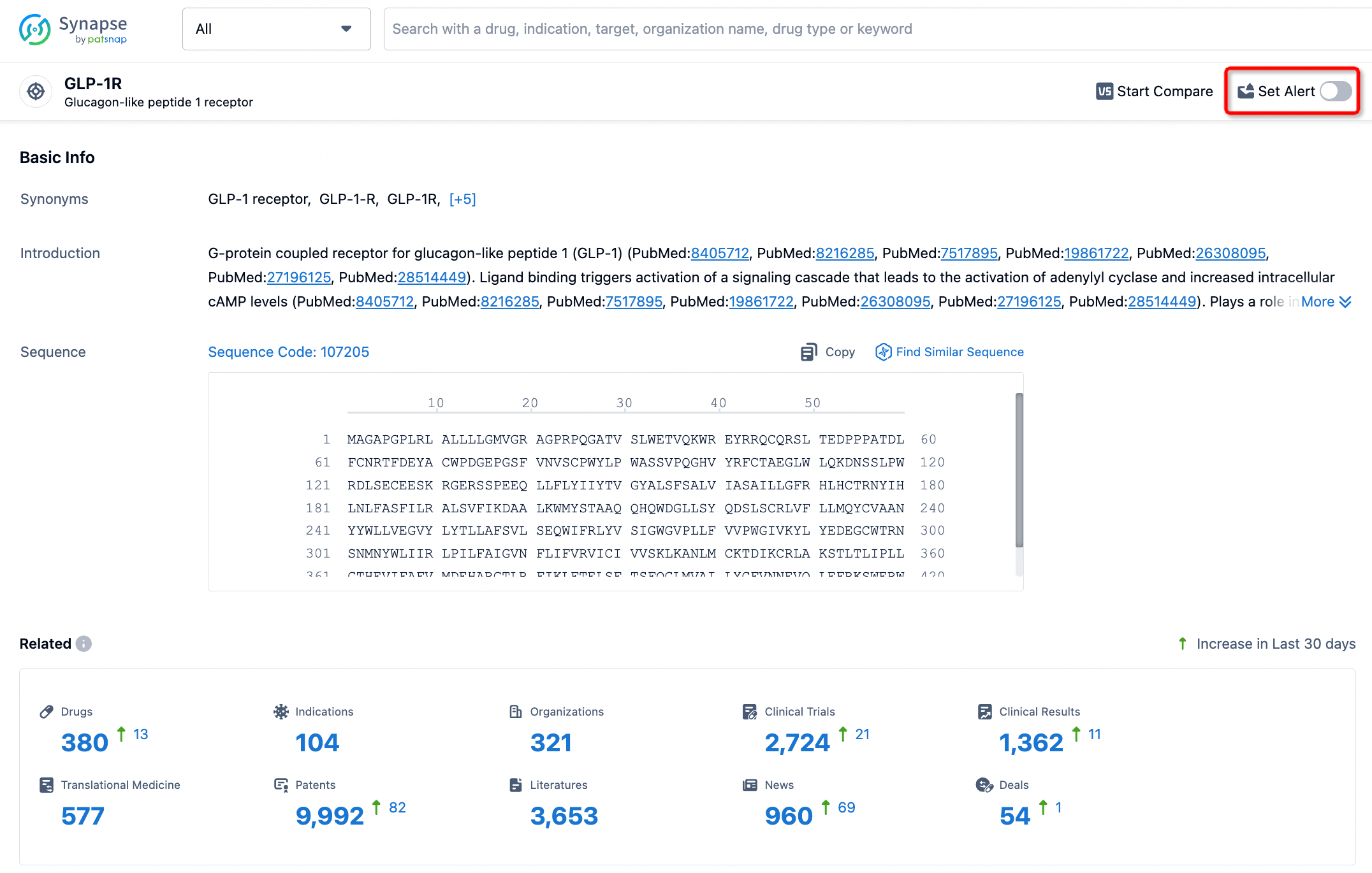
In the Synapse database, you can stay updated on the latest research and development advances of all targets. This service is accessible anytime and anywhere, with updates available daily or weekly. Use the "Set Alert" function to stay informed. Click on the image below to embark on a brand new journey of drug discovery!


AI Agents Built for Biopharma Breakthroughs
Accelerate discovery. Empower decisions. Transform outcomes.
Get started for free today!
Accelerate Strategic R&D decision making with Synapse, PatSnap’s AI-powered Connected Innovation Intelligence Platform Built for Life Sciences Professionals.
Start your data trial now!
Synapse data is also accessible to external entities via APIs or data packages. Empower better decisions with the latest in pharmaceutical intelligence.