Request Demo
What are FGF11 modulators and how do they work?
25 June 2024
Fibroblast Growth Factor 11 (FGF11) has emerged as a significant protein within the expansive FGF family, which collectively plays critical roles in various physiological processes, including cell growth, development, and tissue repair. However, FGF11 is somewhat unique among its relatives due to its distinct functions and mechanisms. This blog post delves into the world of FGF11 modulators—compounds that influence the activity of FGF11—shedding light on their mechanisms of action and their potential therapeutic applications.
FGF11 belongs to the intracellular FGF subfamily, which, unlike other FGFs that function through extracellular signaling, operates within cells. FGF11 is heavily involved in neuronal functioning, particularly in modulating electrical excitability and synaptic activity. This characteristic has made FGF11 a focal point of research in neurobiology and a promising target for pharmacological intervention.
FGF11 modulators are compounds designed to interact with and regulate the activity of FGF11. These modulators can either enhance (agonists) or inhibit (antagonists) the function of FGF11, facilitating a fine-tuned approach to therapeutic interventions. The action of these modulators typically hinges on their ability to influence the protein-protein interactions and intracellular signaling pathways associated with FGF11.
FGF11 primarily exerts its effects by modulating voltage-gated sodium channels (VGSCs) in neurons. These channels are crucial for the initiation and propagation of action potentials, which are the electrical impulses that neurons use to communicate. By influencing VGSCs, FGF11 effectively alters neuronal excitability and synaptic transmission, thus impacting a wide array of neurological processes.
FGF11 modulators often work by binding to specific regions of the FGF11 protein or its associated VGSCs, thereby altering their functional state. Agonists may promote the stabilization or activation of VGSCs, enhancing neuronal excitability, while antagonists typically aim to inhibit these channels, reducing excitability. This ability to modulate VGSCs makes FGF11 modulators particularly valuable in conditions characterized by dysregulated neuronal activity.
The potential applications of FGF11 modulators are diverse, primarily within the realm of neurological and psychiatric disorders. Given FGF11's role in modulating neuronal excitability, these modulators hold promise in treating conditions where abnormal electrical activity in the brain is a hallmark.
One of the most prominent potential applications is in the treatment of epilepsy. Epilepsy is characterized by recurrent, unprovoked seizures resulting from excessive neuronal excitability. FGF11 antagonists, by dampening this excitability, could offer a novel therapeutic avenue for managing seizure activity and improving the quality of life for individuals with epilepsy.
In addition to epilepsy, FGF11 modulators may have therapeutic potential in neurodegenerative diseases such as Alzheimer's and Parkinson's disease. These conditions often involve disruptions in neuronal communication and excitability. By fine-tuning the activity of VGSCs, FGF11 modulators could help restore more normal neuronal function and slow the progression of these debilitating diseases.
Another area of interest is in the treatment of chronic pain. Abnormal VGSC activity is implicated in various pain disorders, and FGF11 modulators could potentially alleviate pain by normalizing the activity of these channels. This approach could provide an alternative to traditional pain medications, which often come with significant side effects and the risk of dependency.
Moreover, FGF11 modulators may also prove beneficial in psychiatric conditions such as depression and anxiety. These disorders are increasingly understood to involve disruptions in neural circuits and synaptic activity. By modulating neuronal excitability, FGF11 modulators could help rebalance these circuits and offer new avenues for treatment.
In conclusion, FGF11 modulators represent a promising frontier in neuropharmacology, with the potential to impact a wide range of neurological and psychiatric disorders. By specifically targeting the intricate mechanisms of neuronal excitability, these modulators could pave the way for more precise and effective treatments, ultimately improving patient outcomes and advancing our understanding of brain health. As research continues to unravel the complexities of FGF11 and its modulators, we can look forward to new insights and therapeutic breakthroughs in the years to come.
FGF11 belongs to the intracellular FGF subfamily, which, unlike other FGFs that function through extracellular signaling, operates within cells. FGF11 is heavily involved in neuronal functioning, particularly in modulating electrical excitability and synaptic activity. This characteristic has made FGF11 a focal point of research in neurobiology and a promising target for pharmacological intervention.
FGF11 modulators are compounds designed to interact with and regulate the activity of FGF11. These modulators can either enhance (agonists) or inhibit (antagonists) the function of FGF11, facilitating a fine-tuned approach to therapeutic interventions. The action of these modulators typically hinges on their ability to influence the protein-protein interactions and intracellular signaling pathways associated with FGF11.
FGF11 primarily exerts its effects by modulating voltage-gated sodium channels (VGSCs) in neurons. These channels are crucial for the initiation and propagation of action potentials, which are the electrical impulses that neurons use to communicate. By influencing VGSCs, FGF11 effectively alters neuronal excitability and synaptic transmission, thus impacting a wide array of neurological processes.
FGF11 modulators often work by binding to specific regions of the FGF11 protein or its associated VGSCs, thereby altering their functional state. Agonists may promote the stabilization or activation of VGSCs, enhancing neuronal excitability, while antagonists typically aim to inhibit these channels, reducing excitability. This ability to modulate VGSCs makes FGF11 modulators particularly valuable in conditions characterized by dysregulated neuronal activity.
The potential applications of FGF11 modulators are diverse, primarily within the realm of neurological and psychiatric disorders. Given FGF11's role in modulating neuronal excitability, these modulators hold promise in treating conditions where abnormal electrical activity in the brain is a hallmark.
One of the most prominent potential applications is in the treatment of epilepsy. Epilepsy is characterized by recurrent, unprovoked seizures resulting from excessive neuronal excitability. FGF11 antagonists, by dampening this excitability, could offer a novel therapeutic avenue for managing seizure activity and improving the quality of life for individuals with epilepsy.
In addition to epilepsy, FGF11 modulators may have therapeutic potential in neurodegenerative diseases such as Alzheimer's and Parkinson's disease. These conditions often involve disruptions in neuronal communication and excitability. By fine-tuning the activity of VGSCs, FGF11 modulators could help restore more normal neuronal function and slow the progression of these debilitating diseases.
Another area of interest is in the treatment of chronic pain. Abnormal VGSC activity is implicated in various pain disorders, and FGF11 modulators could potentially alleviate pain by normalizing the activity of these channels. This approach could provide an alternative to traditional pain medications, which often come with significant side effects and the risk of dependency.
Moreover, FGF11 modulators may also prove beneficial in psychiatric conditions such as depression and anxiety. These disorders are increasingly understood to involve disruptions in neural circuits and synaptic activity. By modulating neuronal excitability, FGF11 modulators could help rebalance these circuits and offer new avenues for treatment.
In conclusion, FGF11 modulators represent a promising frontier in neuropharmacology, with the potential to impact a wide range of neurological and psychiatric disorders. By specifically targeting the intricate mechanisms of neuronal excitability, these modulators could pave the way for more precise and effective treatments, ultimately improving patient outcomes and advancing our understanding of brain health. As research continues to unravel the complexities of FGF11 and its modulators, we can look forward to new insights and therapeutic breakthroughs in the years to come.
How to obtain the latest development progress of all targets?
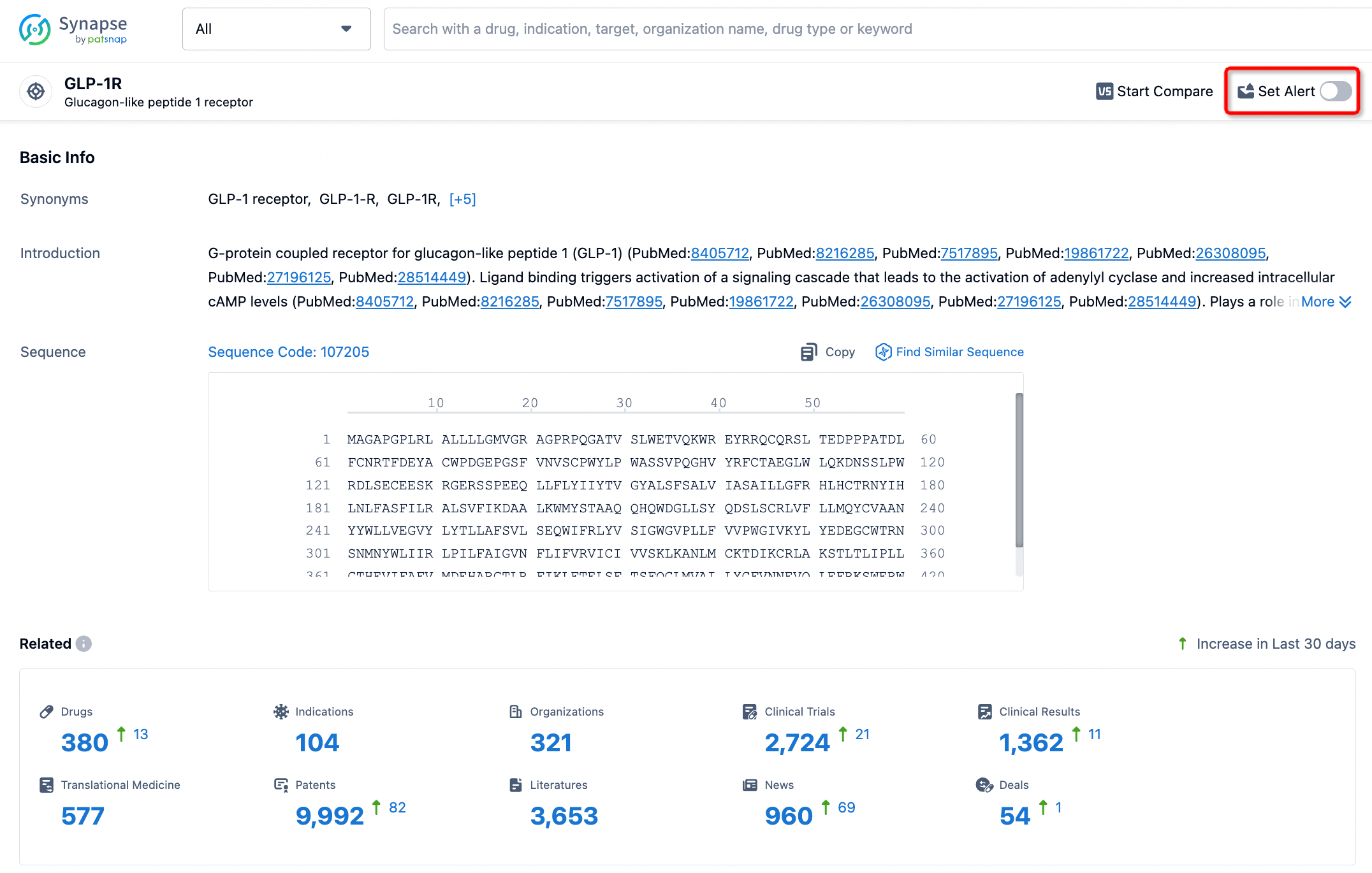
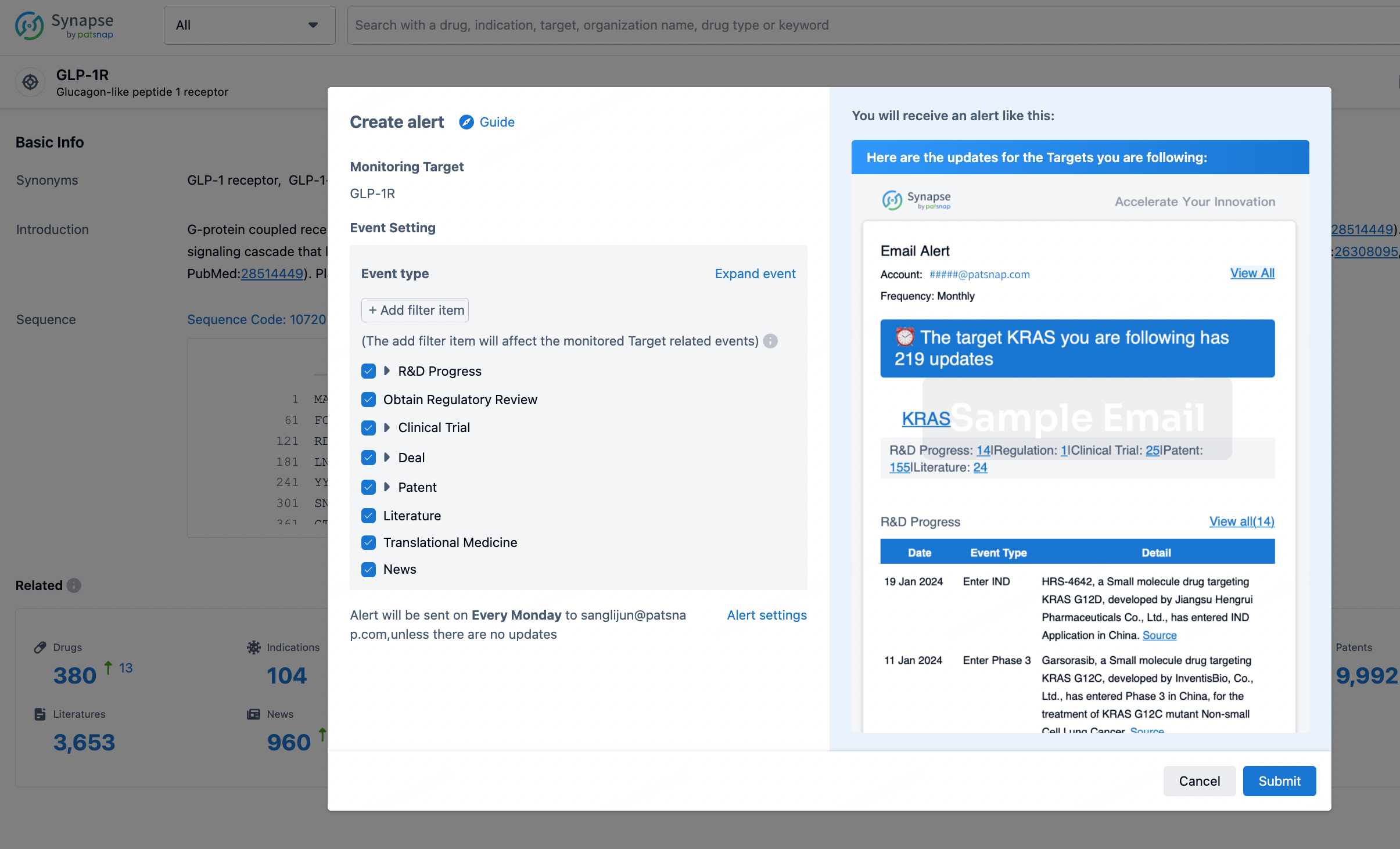
In the Synapse database, you can stay updated on the latest research and development advances of all targets. This service is accessible anytime and anywhere, with updates available daily or weekly. Use the "Set Alert" function to stay informed. Click on the image below to embark on a brand new journey of drug discovery!
AI Agents Built for Biopharma Breakthroughs
Accelerate discovery. Empower decisions. Transform outcomes.
Get started for free today!
Accelerate Strategic R&D decision making with Synapse, PatSnap’s AI-powered Connected Innovation Intelligence Platform Built for Life Sciences Professionals.
Start your data trial now!
Synapse data is also accessible to external entities via APIs or data packages. Empower better decisions with the latest in pharmaceutical intelligence.