Request Demo
What are FGF14 modulators and how do they work?
25 June 2024
Fibroblast Growth Factor 14 (FGF14) has been gaining significant attention in the realm of neurological research, particularly concerning its role in modulating neural functions and its potential therapeutic applications. Understanding how FGF14 modulators work, their mechanisms, and potential uses can provide valuable insights into future treatments for various neurological conditions. This blog post delves into the fascinating world of FGF14 modulators, their workings, and their diverse applications.
FGF14 is a member of the fibroblast growth factor (FGF) family, a group of proteins known for their roles in cell growth, development, and tissue repair. Specifically, FGF14 is primarily expressed in the central nervous system and is involved in the regulation of neuronal excitability and synaptic transmission. Researchers have discovered that dysregulation in FGF14 can lead to several neurological disorders, making it a critical target for therapeutic intervention. FGF14 modulators, therefore, are compounds or agents that can influence the activity of FGF14, potentially restoring normal function or alleviating symptoms associated with its dysfunction.
FGF14 modulators work by influencing the activity of FGF14 proteins either by enhancing or inhibiting their function. They can achieve this through various mechanisms, such as altering the expression levels of FGF14, modulating its interaction with other proteins, or affecting the signaling pathways in which FGF14 is involved. One primary way FGF14 modulators exert their effects is by regulating the activity of voltage-gated sodium channels (Nav). FGF14 has been shown to interact with Nav channels, particularly Nav1.6, and modulate their activity. By doing so, FGF14 modulators can influence neuronal excitability, impacting processes such as action potential generation and propagation.
There are different types of FGF14 modulators, including small molecules, peptides, and genetic interventions like RNA interference (RNAi) or CRISPR/Cas9. Small molecule modulators often act by binding directly to FGF14 or its associated proteins, thereby altering their function or stability. Peptide-based modulators, on the other hand, can mimic or inhibit the interaction between FGF14 and its binding partners. Genetic interventions aim to correct or modify the expression of FGF14 at the DNA or RNA level, offering a more targeted approach to modulating its activity.
The therapeutic potential of FGF14 modulators is vast, given the critical role that FGF14 plays in the nervous system. One of the primary areas of interest is in the treatment of neurological disorders such as epilepsy, ataxia, and neuropathic pain. For instance, in epilepsy, dysregulated neuronal excitability leads to abnormal, excessive electrical activity in the brain, resulting in seizures. By modulating the activity of FGF14 and its interaction with sodium channels, FGF14 modulators could provide a novel approach to controlling seizure activity.
Ataxia, a condition characterized by impaired coordination and balance, is another area where FGF14 modulators show promise. Research has indicated that mutations in the FGF14 gene can lead to spinocerebellar ataxia, a degenerative disease affecting the cerebellum. FGF14 modulators could potentially correct the dysfunctional protein interactions or signaling pathways involved, thereby alleviating the symptoms or slowing the progression of the disease.
Neuropathic pain, often resulting from nerve injury or chronic conditions like diabetes, is another target for FGF14 modulators. By influencing the excitability of neurons responsible for pain transmission, these modulators could help reduce pain perception in affected individuals.
Moreover, beyond these specific conditions, FGF14 modulators hold promise in broader neurological research and treatment applications. They could be instrumental in studying the fundamental mechanisms of neuronal function and synaptic plasticity, paving the way for new discoveries and therapeutic strategies for a wide range of neurological diseases.
In conclusion, FGF14 modulators represent a promising frontier in neurological research and therapy. By understanding and influencing the activity of FGF14, these modulators offer potential new avenues for treating various debilitating neurological conditions. As research progresses, the hope is that these insights will translate into effective treatments, improving the quality of life for individuals affected by these disorders.
FGF14 is a member of the fibroblast growth factor (FGF) family, a group of proteins known for their roles in cell growth, development, and tissue repair. Specifically, FGF14 is primarily expressed in the central nervous system and is involved in the regulation of neuronal excitability and synaptic transmission. Researchers have discovered that dysregulation in FGF14 can lead to several neurological disorders, making it a critical target for therapeutic intervention. FGF14 modulators, therefore, are compounds or agents that can influence the activity of FGF14, potentially restoring normal function or alleviating symptoms associated with its dysfunction.
FGF14 modulators work by influencing the activity of FGF14 proteins either by enhancing or inhibiting their function. They can achieve this through various mechanisms, such as altering the expression levels of FGF14, modulating its interaction with other proteins, or affecting the signaling pathways in which FGF14 is involved. One primary way FGF14 modulators exert their effects is by regulating the activity of voltage-gated sodium channels (Nav). FGF14 has been shown to interact with Nav channels, particularly Nav1.6, and modulate their activity. By doing so, FGF14 modulators can influence neuronal excitability, impacting processes such as action potential generation and propagation.
There are different types of FGF14 modulators, including small molecules, peptides, and genetic interventions like RNA interference (RNAi) or CRISPR/Cas9. Small molecule modulators often act by binding directly to FGF14 or its associated proteins, thereby altering their function or stability. Peptide-based modulators, on the other hand, can mimic or inhibit the interaction between FGF14 and its binding partners. Genetic interventions aim to correct or modify the expression of FGF14 at the DNA or RNA level, offering a more targeted approach to modulating its activity.
The therapeutic potential of FGF14 modulators is vast, given the critical role that FGF14 plays in the nervous system. One of the primary areas of interest is in the treatment of neurological disorders such as epilepsy, ataxia, and neuropathic pain. For instance, in epilepsy, dysregulated neuronal excitability leads to abnormal, excessive electrical activity in the brain, resulting in seizures. By modulating the activity of FGF14 and its interaction with sodium channels, FGF14 modulators could provide a novel approach to controlling seizure activity.
Ataxia, a condition characterized by impaired coordination and balance, is another area where FGF14 modulators show promise. Research has indicated that mutations in the FGF14 gene can lead to spinocerebellar ataxia, a degenerative disease affecting the cerebellum. FGF14 modulators could potentially correct the dysfunctional protein interactions or signaling pathways involved, thereby alleviating the symptoms or slowing the progression of the disease.
Neuropathic pain, often resulting from nerve injury or chronic conditions like diabetes, is another target for FGF14 modulators. By influencing the excitability of neurons responsible for pain transmission, these modulators could help reduce pain perception in affected individuals.
Moreover, beyond these specific conditions, FGF14 modulators hold promise in broader neurological research and treatment applications. They could be instrumental in studying the fundamental mechanisms of neuronal function and synaptic plasticity, paving the way for new discoveries and therapeutic strategies for a wide range of neurological diseases.
In conclusion, FGF14 modulators represent a promising frontier in neurological research and therapy. By understanding and influencing the activity of FGF14, these modulators offer potential new avenues for treating various debilitating neurological conditions. As research progresses, the hope is that these insights will translate into effective treatments, improving the quality of life for individuals affected by these disorders.
How to obtain the latest development progress of all targets?
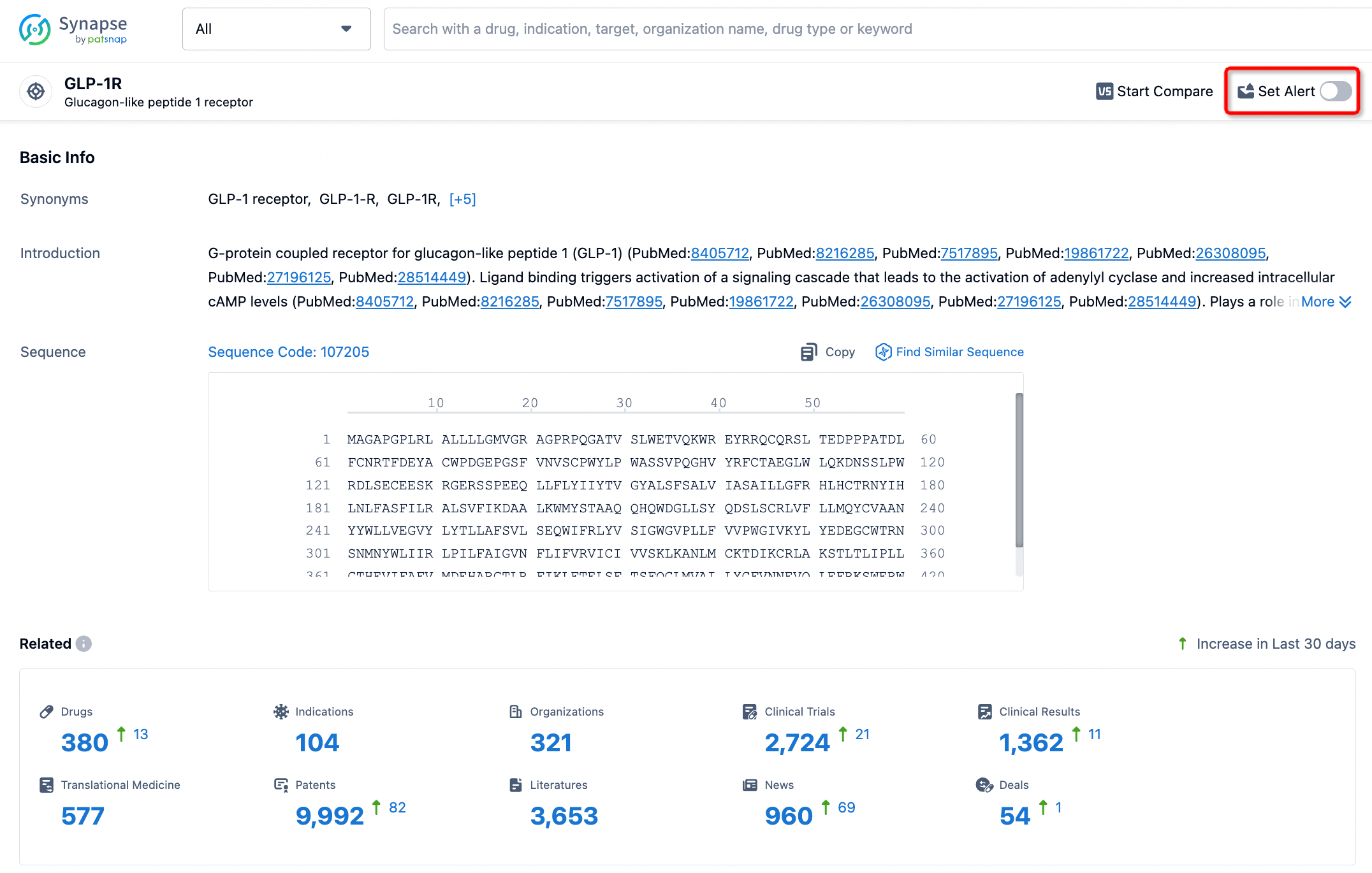
In the Synapse database, you can stay updated on the latest research and development advances of all targets. This service is accessible anytime and anywhere, with updates available daily or weekly. Use the "Set Alert" function to stay informed. Click on the image below to embark on a brand new journey of drug discovery!


AI Agents Built for Biopharma Breakthroughs
Accelerate discovery. Empower decisions. Transform outcomes.
Get started for free today!
Accelerate Strategic R&D decision making with Synapse, PatSnap’s AI-powered Connected Innovation Intelligence Platform Built for Life Sciences Professionals.
Start your data trial now!
Synapse data is also accessible to external entities via APIs or data packages. Empower better decisions with the latest in pharmaceutical intelligence.