Request Demo
What are FGF21 modulators and how do they work?
21 June 2024
Fibroblast Growth Factor 21 (FGF21) is a hormone that has garnered significant attention in recent years due to its multifaceted roles in regulating metabolism. It is predominantly produced in the liver and plays a crucial role in maintaining energy homeostasis, enhancing insulin sensitivity, and promoting weight loss. FGF21 modulators, which are agents that can influence the activity of FGF21, have emerged as promising therapeutic candidates for a variety of metabolic diseases. In this post, we will explore what FGF21 modulators are, how they work, and what they are used for.
FGF21 modulators are agents designed to either mimic the action of FGF21, enhance its activity, or modulate its levels in the body. These modulators can be small molecules, peptides, or even biologics like monoclonal antibodies. The goal is to harness the beneficial effects of FGF21 to treat a range of metabolic disorders, such as obesity, type 2 diabetes, and non-alcoholic steatohepatitis (NASH).
FGF21 itself is a powerful metabolic regulator. When released into the bloodstream, it interacts with specific receptors located primarily in adipose tissue, liver, and the central nervous system. These receptors are typically composed of FGFR1c or FGFR3c paired with the co-receptor β-Klotho. The binding of FGF21 to these receptors initiates a cascade of signaling events that lead to increased insulin sensitivity, enhanced glucose uptake, and promotion of fat oxidation. Additionally, FGF21 has been shown to influence circadian rhythms and reduce inflammation, further contributing to its beneficial metabolic effects.
One of the key actions of FGF21 is its ability to activate the AMPK (AMP-activated protein kinase) pathway, which is a critical energy sensor in cells. Activation of AMPK leads to a host of downstream effects that collectively enhance metabolic efficiency and energy expenditure. Furthermore, FGF21 can also activate other signaling pathways such as PPARα (Peroxisome proliferator-activated receptor alpha), which plays a vital role in lipid metabolism.
The therapeutic potential of FGF21 modulators is vast. Their primary application has been in the treatment of metabolic disorders. For instance, in the context of obesity, FGF21 modulators can help promote weight loss by increasing energy expenditure and reducing adiposity. Clinical studies have shown that FGF21 analogs can significantly reduce body weight and improve lipid profiles in obese individuals, making them a promising option for obesity management.
In type 2 diabetes, FGF21 modulators have demonstrated the ability to enhance insulin sensitivity and improve glycemic control. By doing so, they offer a potential new avenue for patients who are not adequately managed by existing therapies. This is particularly important given the global rise in diabetes prevalence and the need for more effective treatment options.
Non-alcoholic steatohepatitis (NASH), a severe form of non-alcoholic fatty liver disease (NAFLD), is another condition where FGF21 modulators show promise. NASH is characterized by liver inflammation and fibrosis, and it can progress to cirrhosis and liver cancer. FGF21 has been shown to reduce liver fat accumulation and inflammation, making FGF21 modulators a compelling option for NASH treatment.
Beyond these primary applications, there is growing interest in exploring the role of FGF21 modulators in other conditions. For example, they may have potential in treating cardiovascular diseases by improving lipid profiles and reducing inflammation. There is also ongoing research into their potential neuroprotective effects, particularly in the context of neurodegenerative diseases like Alzheimer's.
In summary, FGF21 modulators represent a promising frontier in the treatment of various metabolic disorders. By leveraging the beneficial effects of FGF21, these agents offer a novel approach to managing conditions such as obesity, type 2 diabetes, and NASH. As research continues to evolve, the full therapeutic potential of FGF21 modulators will become increasingly clear, potentially transforming the landscape of metabolic disease treatment.
FGF21 modulators are agents designed to either mimic the action of FGF21, enhance its activity, or modulate its levels in the body. These modulators can be small molecules, peptides, or even biologics like monoclonal antibodies. The goal is to harness the beneficial effects of FGF21 to treat a range of metabolic disorders, such as obesity, type 2 diabetes, and non-alcoholic steatohepatitis (NASH).
FGF21 itself is a powerful metabolic regulator. When released into the bloodstream, it interacts with specific receptors located primarily in adipose tissue, liver, and the central nervous system. These receptors are typically composed of FGFR1c or FGFR3c paired with the co-receptor β-Klotho. The binding of FGF21 to these receptors initiates a cascade of signaling events that lead to increased insulin sensitivity, enhanced glucose uptake, and promotion of fat oxidation. Additionally, FGF21 has been shown to influence circadian rhythms and reduce inflammation, further contributing to its beneficial metabolic effects.
One of the key actions of FGF21 is its ability to activate the AMPK (AMP-activated protein kinase) pathway, which is a critical energy sensor in cells. Activation of AMPK leads to a host of downstream effects that collectively enhance metabolic efficiency and energy expenditure. Furthermore, FGF21 can also activate other signaling pathways such as PPARα (Peroxisome proliferator-activated receptor alpha), which plays a vital role in lipid metabolism.
The therapeutic potential of FGF21 modulators is vast. Their primary application has been in the treatment of metabolic disorders. For instance, in the context of obesity, FGF21 modulators can help promote weight loss by increasing energy expenditure and reducing adiposity. Clinical studies have shown that FGF21 analogs can significantly reduce body weight and improve lipid profiles in obese individuals, making them a promising option for obesity management.
In type 2 diabetes, FGF21 modulators have demonstrated the ability to enhance insulin sensitivity and improve glycemic control. By doing so, they offer a potential new avenue for patients who are not adequately managed by existing therapies. This is particularly important given the global rise in diabetes prevalence and the need for more effective treatment options.
Non-alcoholic steatohepatitis (NASH), a severe form of non-alcoholic fatty liver disease (NAFLD), is another condition where FGF21 modulators show promise. NASH is characterized by liver inflammation and fibrosis, and it can progress to cirrhosis and liver cancer. FGF21 has been shown to reduce liver fat accumulation and inflammation, making FGF21 modulators a compelling option for NASH treatment.
Beyond these primary applications, there is growing interest in exploring the role of FGF21 modulators in other conditions. For example, they may have potential in treating cardiovascular diseases by improving lipid profiles and reducing inflammation. There is also ongoing research into their potential neuroprotective effects, particularly in the context of neurodegenerative diseases like Alzheimer's.
In summary, FGF21 modulators represent a promising frontier in the treatment of various metabolic disorders. By leveraging the beneficial effects of FGF21, these agents offer a novel approach to managing conditions such as obesity, type 2 diabetes, and NASH. As research continues to evolve, the full therapeutic potential of FGF21 modulators will become increasingly clear, potentially transforming the landscape of metabolic disease treatment.
How to obtain the latest development progress of all targets?
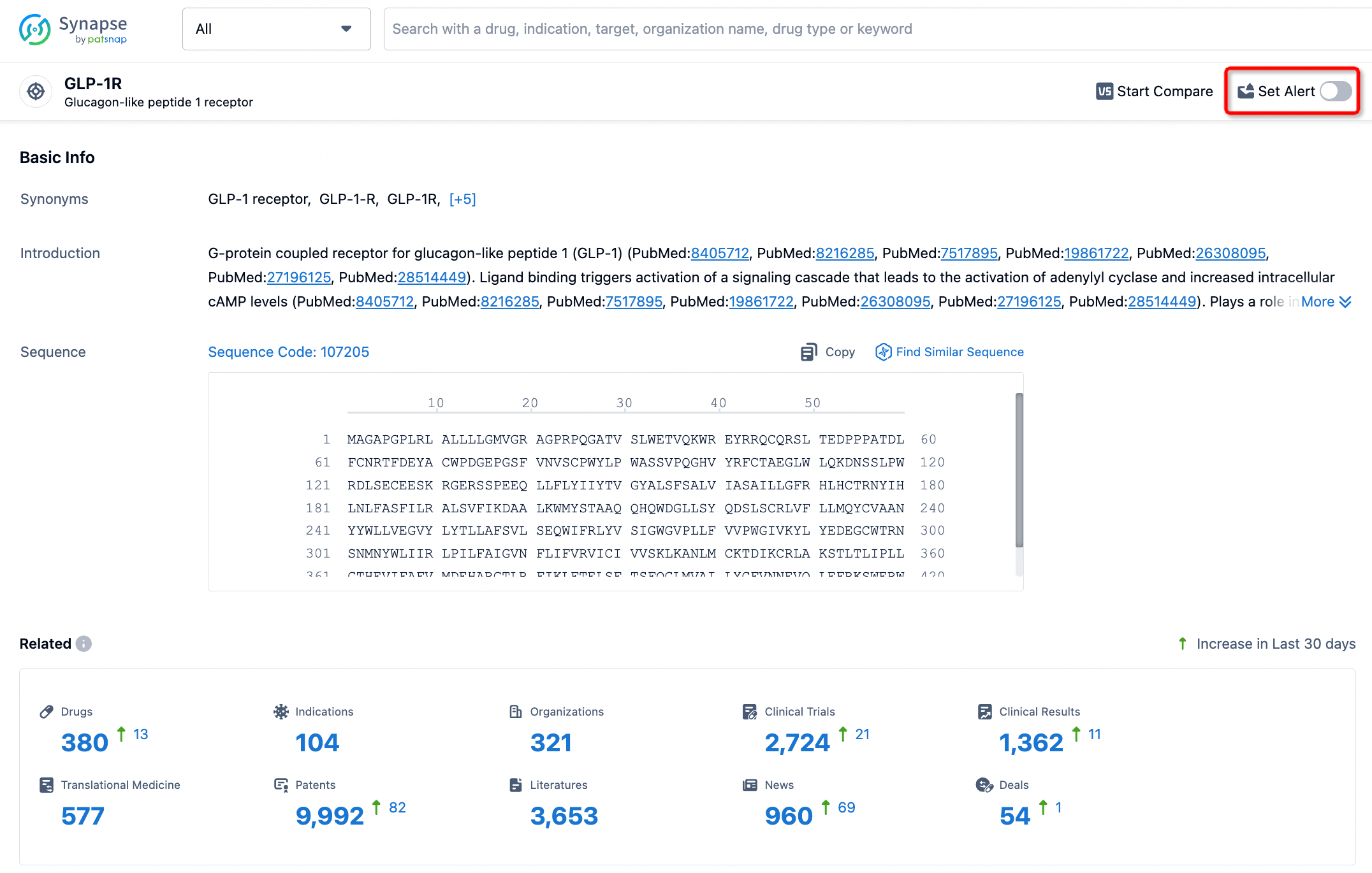
In the Synapse database, you can stay updated on the latest research and development advances of all targets. This service is accessible anytime and anywhere, with updates available daily or weekly. Use the "Set Alert" function to stay informed. Click on the image below to embark on a brand new journey of drug discovery!

AI Agents Built for Biopharma Breakthroughs
Accelerate discovery. Empower decisions. Transform outcomes.
Get started for free today!
Accelerate Strategic R&D decision making with Synapse, PatSnap’s AI-powered Connected Innovation Intelligence Platform Built for Life Sciences Professionals.
Start your data trial now!
Synapse data is also accessible to external entities via APIs or data packages. Empower better decisions with the latest in pharmaceutical intelligence.