Request Demo
What are FGFR1 modulators and how do they work?
25 June 2024
In the ever-evolving landscape of medical science, the quest for novel therapeutic targets remains a cornerstone of advancements in treatment strategies. One such target that has garnered significant interest in recent years is the Fibroblast Growth Factor Receptor 1 (FGFR1). FGFR1 modulators are emerging as promising candidates for a range of medical applications, offering new hope for patients with various conditions. This blog post delves into the fundamentals of FGFR1 modulators, elucidating their mechanisms of action and potential therapeutic uses.
FGFR1 modulators represent a fascinating class of compounds designed to interact specifically with the FGFR1 protein, a member of the fibroblast growth factor receptor family. These receptors are integral to numerous physiological processes, including cell growth, differentiation, and repair. FGFR1, in particular, plays a pivotal role in these processes, making it an attractive target for therapeutic intervention.
FGFR1 modulators work by either enhancing or inhibiting the activity of the FGFR1 receptor. This modulation can occur through various mechanisms, including the binding of small molecules, monoclonal antibodies, or even peptide-based ligands to the receptor. By modulating FGFR1 activity, these compounds can influence downstream signaling pathways that are critical for cell proliferation, survival, and differentiation.
When FGFR1 is overactive, it can lead to uncontrolled cell growth and contribute to the development of cancers and other proliferative disorders. In such cases, FGFR1 inhibitors are employed to downregulate the receptor's activity, thereby curbing the aberrant cell proliferation. Conversely, in scenarios where FGFR1 activity is insufficient, such as in certain degenerative diseases, FGFR1 agonists may be used to enhance receptor function and promote tissue repair and regeneration.
The versatility of FGFR1 modulators makes them applicable to a wide range of medical conditions. One of the most thoroughly explored areas is oncology. Aberrant FGFR1 signaling has been implicated in various cancers, including breast, lung, and bladder cancers. FGFR1 inhibitors have shown promise in preclinical and clinical studies, demonstrating the potential to slow tumor growth and, in some cases, shrink existing tumors. These modulators work by interfering with the signaling pathways that drive cancer cell proliferation, thereby offering a targeted approach to cancer therapy.
Beyond oncology, FGFR1 modulators are being investigated for their potential in treating metabolic disorders. For instance, FGFR1 has been found to play a role in the regulation of glucose and lipid metabolism. Modulating FGFR1 activity could, therefore, offer new avenues for managing conditions such as type 2 diabetes and obesity. Early studies suggest that FGFR1 agonists may improve insulin sensitivity and promote weight loss, although more research is needed to fully understand these effects.
Another exciting application of FGFR1 modulators is in the field of regenerative medicine. Given FGFR1's role in cell growth and repair, modulators that enhance its activity could aid in the regeneration of damaged tissues. This has significant implications for conditions such as spinal cord injuries, where promoting nerve growth and repair is crucial. Similarly, FGFR1 agonists could be beneficial in treating degenerative diseases like osteoarthritis by promoting cartilage repair and regeneration.
In addition to these areas, FGFR1 modulators are also being explored for their potential in treating neurological disorders. FGFR1 signaling is involved in the development and maintenance of the nervous system, and dysregulation of this pathway has been linked to conditions such as Alzheimer's disease and depression. While research in this area is still in its early stages, there is growing interest in the potential of FGFR1 modulators to offer new treatment options for these challenging conditions.
In summary, FGFR1 modulators represent a promising frontier in medical science, with potential applications spanning oncology, metabolic disorders, regenerative medicine, and neurology. By targeting the FGFR1 receptor, these modulators offer a new level of precision in therapy, paving the way for more effective and tailored treatments. As research continues to advance, we can expect to see FGFR1 modulators playing an increasingly prominent role in the treatment landscape, offering new hope for patients across a range of conditions.
FGFR1 modulators represent a fascinating class of compounds designed to interact specifically with the FGFR1 protein, a member of the fibroblast growth factor receptor family. These receptors are integral to numerous physiological processes, including cell growth, differentiation, and repair. FGFR1, in particular, plays a pivotal role in these processes, making it an attractive target for therapeutic intervention.
FGFR1 modulators work by either enhancing or inhibiting the activity of the FGFR1 receptor. This modulation can occur through various mechanisms, including the binding of small molecules, monoclonal antibodies, or even peptide-based ligands to the receptor. By modulating FGFR1 activity, these compounds can influence downstream signaling pathways that are critical for cell proliferation, survival, and differentiation.
When FGFR1 is overactive, it can lead to uncontrolled cell growth and contribute to the development of cancers and other proliferative disorders. In such cases, FGFR1 inhibitors are employed to downregulate the receptor's activity, thereby curbing the aberrant cell proliferation. Conversely, in scenarios where FGFR1 activity is insufficient, such as in certain degenerative diseases, FGFR1 agonists may be used to enhance receptor function and promote tissue repair and regeneration.
The versatility of FGFR1 modulators makes them applicable to a wide range of medical conditions. One of the most thoroughly explored areas is oncology. Aberrant FGFR1 signaling has been implicated in various cancers, including breast, lung, and bladder cancers. FGFR1 inhibitors have shown promise in preclinical and clinical studies, demonstrating the potential to slow tumor growth and, in some cases, shrink existing tumors. These modulators work by interfering with the signaling pathways that drive cancer cell proliferation, thereby offering a targeted approach to cancer therapy.
Beyond oncology, FGFR1 modulators are being investigated for their potential in treating metabolic disorders. For instance, FGFR1 has been found to play a role in the regulation of glucose and lipid metabolism. Modulating FGFR1 activity could, therefore, offer new avenues for managing conditions such as type 2 diabetes and obesity. Early studies suggest that FGFR1 agonists may improve insulin sensitivity and promote weight loss, although more research is needed to fully understand these effects.
Another exciting application of FGFR1 modulators is in the field of regenerative medicine. Given FGFR1's role in cell growth and repair, modulators that enhance its activity could aid in the regeneration of damaged tissues. This has significant implications for conditions such as spinal cord injuries, where promoting nerve growth and repair is crucial. Similarly, FGFR1 agonists could be beneficial in treating degenerative diseases like osteoarthritis by promoting cartilage repair and regeneration.
In addition to these areas, FGFR1 modulators are also being explored for their potential in treating neurological disorders. FGFR1 signaling is involved in the development and maintenance of the nervous system, and dysregulation of this pathway has been linked to conditions such as Alzheimer's disease and depression. While research in this area is still in its early stages, there is growing interest in the potential of FGFR1 modulators to offer new treatment options for these challenging conditions.
In summary, FGFR1 modulators represent a promising frontier in medical science, with potential applications spanning oncology, metabolic disorders, regenerative medicine, and neurology. By targeting the FGFR1 receptor, these modulators offer a new level of precision in therapy, paving the way for more effective and tailored treatments. As research continues to advance, we can expect to see FGFR1 modulators playing an increasingly prominent role in the treatment landscape, offering new hope for patients across a range of conditions.
How to obtain the latest development progress of all targets?
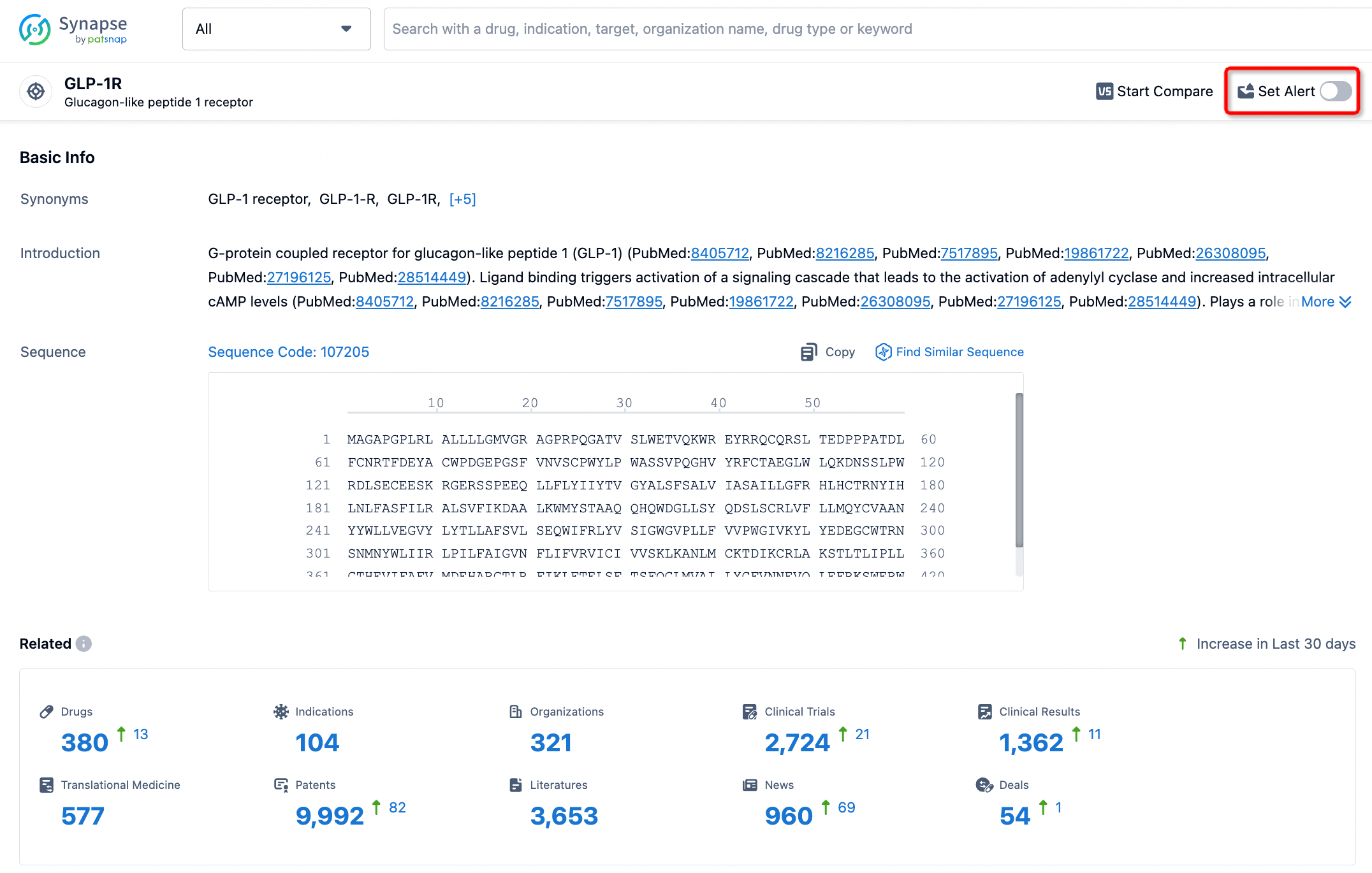
In the Synapse database, you can stay updated on the latest research and development advances of all targets. This service is accessible anytime and anywhere, with updates available daily or weekly. Use the "Set Alert" function to stay informed. Click on the image below to embark on a brand new journey of drug discovery!

Hiro LS Researcher
The AI Search Engine Built to Accelerate Biopharma Decisions
Search across billion-scale life sciences data to uncover signals, validate evidence, and act with confidence.
Ask any biopharma research question→
Get started for free today!
Accelerate Strategic R&D decision making with Synapse, Patsnap’s AI-powered Connected Innovation Intelligence Platform Built for Life Sciences Professionals.
Discover Synapse Data Servers
Synapse data is now integrated into the PatSnap LS Model Context Protocol (MCP) service. Customize your LLM agent now using our MCP server!