Request Demo
What are GABRD modulators and how do they work?
25 June 2024
Introduction to GABRD modulators
GABRD modulators are a class of compounds that target the delta subunit of the gamma-aminobutyric acid type A (GABA_A) receptor. The GABA_A receptor is a crucial element in the central nervous system, responsible for mediating inhibitory neurotransmission by allowing chloride ions to enter the neuron, thereby hyperpolarizing the cell and reducing neuronal excitability. The delta subunit, encoded by the GABRD gene, is predominantly expressed in extrasynaptic locations and contributes to tonic inhibition, which is essential for maintaining the balance between neuronal excitation and inhibition. This post delves into how GABRD modulators work, their mechanisms of action, and their potential therapeutic applications.
How do GABRD modulators work?
To understand how GABRD modulators work, it's necessary to first grasp the structure and function of the GABA_A receptor. The receptor is a pentameric complex composed of various subunits, including alpha, beta, and gamma/delta/epsilon types, among others. The delta subunit, in particular, forms part of receptors that are located extrasynaptically and are highly sensitive to GABA. These receptors are instrumental in mediating tonic inhibition, a continuous form of inhibitory control that stabilizes neuronal activity and prevents runaway excitability.
GABRD modulators primarily function by binding to the delta subunit of the GABA_A receptor, enhancing its response to GABA and thereby amplifying tonic inhibition. The action of these modulators can either be positive or negative. Positive allosteric modulators (PAMs) increase the receptor's sensitivity to GABA, thereby enhancing inhibitory signaling. Negative allosteric modulators (NAMs), on the other hand, reduce the receptor's sensitivity to GABA, diminishing inhibitory signaling. This fine-tuning of the GABA_A receptor's function allows for precise control over neuronal excitability and offers therapeutic potential for various neurological and psychiatric disorders.
What are GABRD modulators used for?
The therapeutic applications of GABRD modulators are diverse and promising, given their unique role in modulating tonic inhibition. Here are some conditions that could potentially benefit from these modulators:
1. **Epilepsy and Seizure Disorders:**
One of the most promising applications of GABRD modulators is in the treatment of epilepsy and seizure disorders. By enhancing tonic inhibition, positive allosteric modulators of the delta subunit can help to stabilize neuronal firing patterns and prevent the excessive excitability that leads to seizures. This approach offers a novel mechanism compared to traditional antiepileptic drugs, which often target synaptic GABA_A receptors.
2. **Anxiety Disorders:**
Anxiety disorders are often characterized by an imbalance between excitatory and inhibitory neurotransmission. By amplifying tonic inhibition, GABRD modulators can help to restore this balance, thereby alleviating symptoms of anxiety. Studies have shown that individuals with certain anxiety disorders may have dysregulated extrasynaptic GABA_A receptor function, making GABRD modulators a particularly attractive therapeutic option.
3. **Sleep Disorders:**
The delta subunit of the GABA_A receptor is also implicated in the regulation of sleep. Enhancing tonic inhibition through GABRD modulators can promote more stable sleep patterns and improve sleep quality. Unlike some traditional sleep agents that can cause next-day sedation or disrupt sleep architecture, GABRD modulators offer a potentially more naturalistic approach to managing sleep disorders.
4. **Neurodevelopmental and Neurodegenerative Disorders:**
Conditions such as autism spectrum disorder (ASD) and Alzheimer's disease often involve imbalances in excitatory and inhibitory neurotransmission. By modulating the function of extrasynaptic GABA_A receptors, GABRD modulators can help to correct these imbalances and improve cognitive and behavioral outcomes. Research in animal models has shown promising results, paving the way for potential clinical applications.
In conclusion, GABRD modulators represent a fascinating and promising avenue for therapeutic intervention across a range of neurological and psychiatric disorders. By targeting the delta subunit of the GABA_A receptor and enhancing tonic inhibition, these modulators offer a unique mechanism of action that could complement existing treatments and provide new hope for patients. As research continues to advance, the full therapeutic potential of GABRD modulators will become increasingly apparent, offering new strategies for managing some of the most challenging medical conditions.
GABRD modulators are a class of compounds that target the delta subunit of the gamma-aminobutyric acid type A (GABA_A) receptor. The GABA_A receptor is a crucial element in the central nervous system, responsible for mediating inhibitory neurotransmission by allowing chloride ions to enter the neuron, thereby hyperpolarizing the cell and reducing neuronal excitability. The delta subunit, encoded by the GABRD gene, is predominantly expressed in extrasynaptic locations and contributes to tonic inhibition, which is essential for maintaining the balance between neuronal excitation and inhibition. This post delves into how GABRD modulators work, their mechanisms of action, and their potential therapeutic applications.
How do GABRD modulators work?
To understand how GABRD modulators work, it's necessary to first grasp the structure and function of the GABA_A receptor. The receptor is a pentameric complex composed of various subunits, including alpha, beta, and gamma/delta/epsilon types, among others. The delta subunit, in particular, forms part of receptors that are located extrasynaptically and are highly sensitive to GABA. These receptors are instrumental in mediating tonic inhibition, a continuous form of inhibitory control that stabilizes neuronal activity and prevents runaway excitability.
GABRD modulators primarily function by binding to the delta subunit of the GABA_A receptor, enhancing its response to GABA and thereby amplifying tonic inhibition. The action of these modulators can either be positive or negative. Positive allosteric modulators (PAMs) increase the receptor's sensitivity to GABA, thereby enhancing inhibitory signaling. Negative allosteric modulators (NAMs), on the other hand, reduce the receptor's sensitivity to GABA, diminishing inhibitory signaling. This fine-tuning of the GABA_A receptor's function allows for precise control over neuronal excitability and offers therapeutic potential for various neurological and psychiatric disorders.
What are GABRD modulators used for?
The therapeutic applications of GABRD modulators are diverse and promising, given their unique role in modulating tonic inhibition. Here are some conditions that could potentially benefit from these modulators:
1. **Epilepsy and Seizure Disorders:**
One of the most promising applications of GABRD modulators is in the treatment of epilepsy and seizure disorders. By enhancing tonic inhibition, positive allosteric modulators of the delta subunit can help to stabilize neuronal firing patterns and prevent the excessive excitability that leads to seizures. This approach offers a novel mechanism compared to traditional antiepileptic drugs, which often target synaptic GABA_A receptors.
2. **Anxiety Disorders:**
Anxiety disorders are often characterized by an imbalance between excitatory and inhibitory neurotransmission. By amplifying tonic inhibition, GABRD modulators can help to restore this balance, thereby alleviating symptoms of anxiety. Studies have shown that individuals with certain anxiety disorders may have dysregulated extrasynaptic GABA_A receptor function, making GABRD modulators a particularly attractive therapeutic option.
3. **Sleep Disorders:**
The delta subunit of the GABA_A receptor is also implicated in the regulation of sleep. Enhancing tonic inhibition through GABRD modulators can promote more stable sleep patterns and improve sleep quality. Unlike some traditional sleep agents that can cause next-day sedation or disrupt sleep architecture, GABRD modulators offer a potentially more naturalistic approach to managing sleep disorders.
4. **Neurodevelopmental and Neurodegenerative Disorders:**
Conditions such as autism spectrum disorder (ASD) and Alzheimer's disease often involve imbalances in excitatory and inhibitory neurotransmission. By modulating the function of extrasynaptic GABA_A receptors, GABRD modulators can help to correct these imbalances and improve cognitive and behavioral outcomes. Research in animal models has shown promising results, paving the way for potential clinical applications.
In conclusion, GABRD modulators represent a fascinating and promising avenue for therapeutic intervention across a range of neurological and psychiatric disorders. By targeting the delta subunit of the GABA_A receptor and enhancing tonic inhibition, these modulators offer a unique mechanism of action that could complement existing treatments and provide new hope for patients. As research continues to advance, the full therapeutic potential of GABRD modulators will become increasingly apparent, offering new strategies for managing some of the most challenging medical conditions.
How to obtain the latest development progress of all targets?
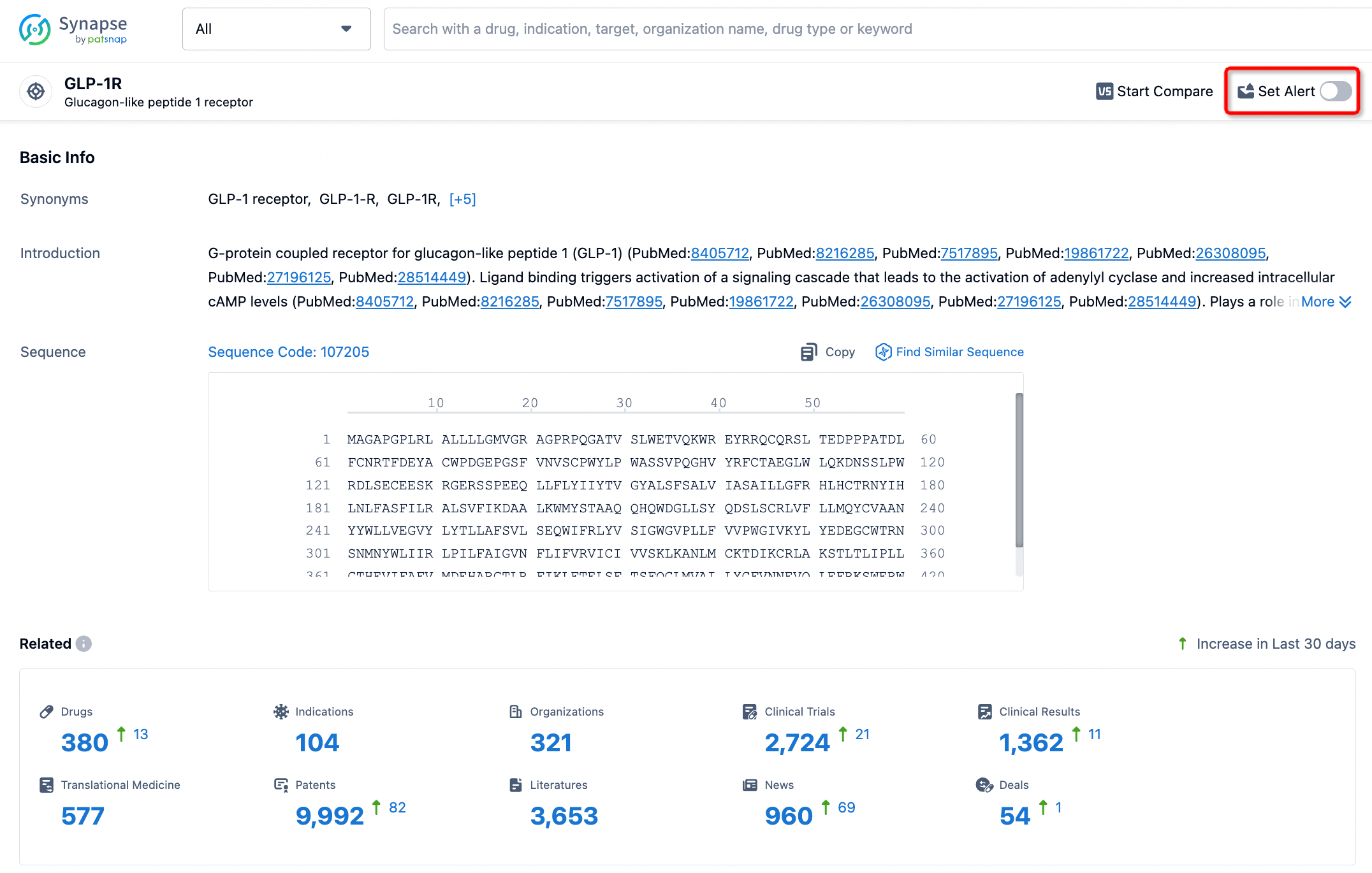
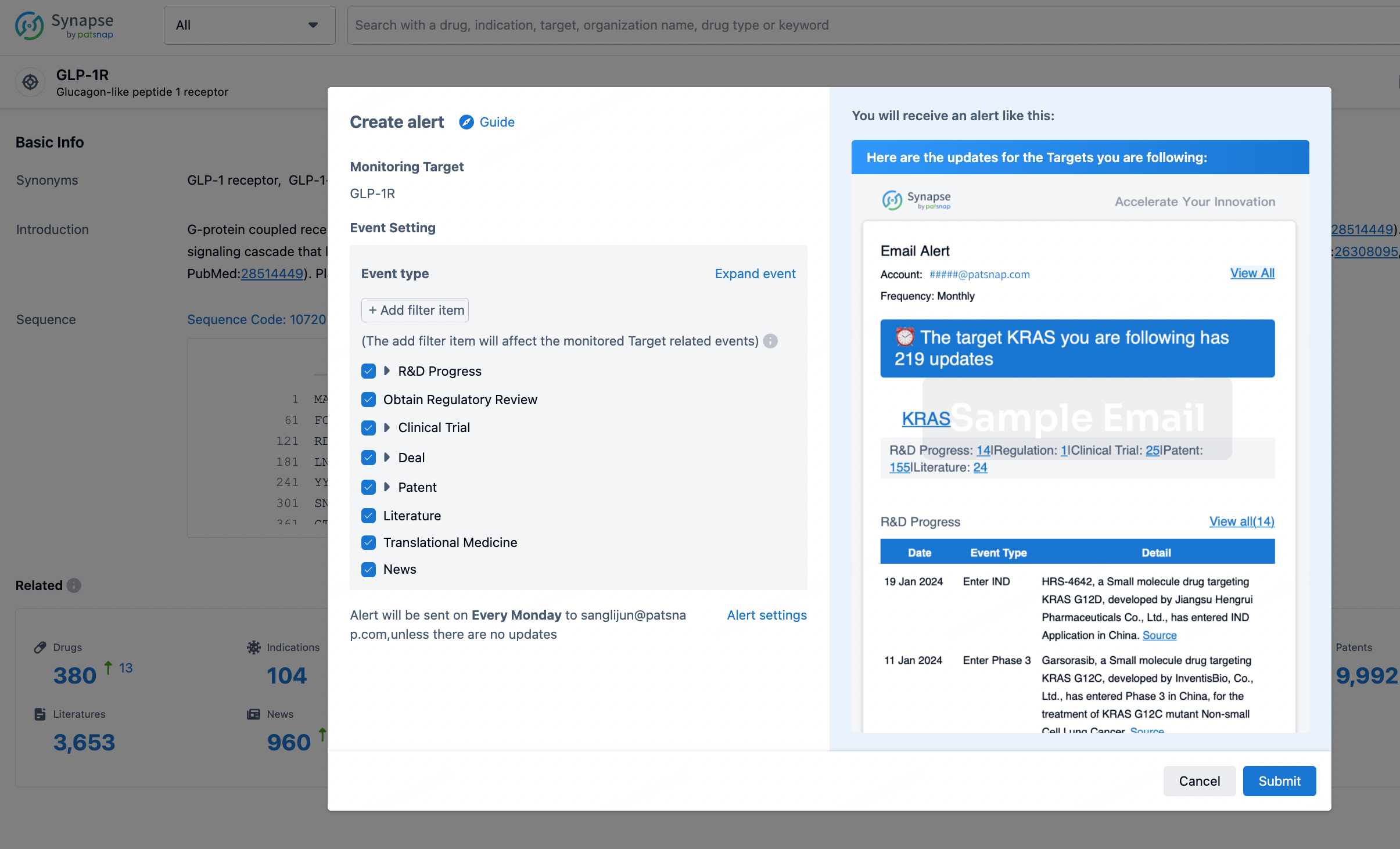
In the Synapse database, you can stay updated on the latest research and development advances of all targets. This service is accessible anytime and anywhere, with updates available daily or weekly. Use the "Set Alert" function to stay informed. Click on the image below to embark on a brand new journey of drug discovery!

AI Agents Built for Biopharma Breakthroughs
Accelerate discovery. Empower decisions. Transform outcomes.
Get started for free today!
Accelerate Strategic R&D decision making with Synapse, PatSnap’s AI-powered Connected Innovation Intelligence Platform Built for Life Sciences Professionals.
Start your data trial now!
Synapse data is also accessible to external entities via APIs or data packages. Empower better decisions with the latest in pharmaceutical intelligence.