Request Demo
What are Growth differentiation factor 2 replacements and how do they work?
26 June 2024
Growth differentiation factor 2 (GDF-2), also known as bone morphogenetic protein 9 (BMP-9), is a member of the transforming growth factor-beta (TGF-β) superfamily. This protein plays a crucial role in various biological processes, including bone formation, angiogenesis, and liver function. With advancing research, scientists have been exploring GDF-2 replacements as potential therapeutic agents for a variety of medical conditions. This article delves into the mechanisms and uses of these GDF-2 replacements, shedding light on their promising future in medical science.
GDF-2 replacements work by mimicking the natural actions of GDF-2 in the body. GDF-2 is a vital cytokine involved in numerous cellular processes, primarily through the Smad signaling pathway. When GDF-2 binds to its receptors on the cell surface, it triggers a cascade of intracellular events leading to the activation of Smad proteins. These proteins then translocate to the nucleus, where they regulate the transcription of target genes involved in cell growth, differentiation, and apoptosis.
GDF-2 replacements are typically engineered peptides or recombinant proteins that can effectively bind to GDF-2 receptors and initiate similar signaling pathways. In some cases, small molecules or gene therapy vectors are designed to enhance or mimic the expression of GDF-2. The ultimate goal is to restore or enhance the functions regulated by GDF-2, providing therapeutic benefits for conditions where the natural protein is deficient or dysfunctional.
GDF-2 replacements have diverse applications in medicine, thanks to the wide-ranging roles of GDF-2 in the body. Here are some of the most notable uses:
1. **Bone Regeneration and Repair**: One of the primary functions of GDF-2 is to promote osteogenesis, the process of bone formation. GDF-2 replacements can be used to enhance bone healing in cases of fractures or bone defects. They have shown promise in treating osteoporosis and other bone-related conditions by stimulating bone growth and increasing bone density.
2. **Cardiovascular Disease**: GDF-2 is involved in angiogenesis, the formation of new blood vessels. GDF-2 replacements can aid in the treatment of cardiovascular diseases by promoting the growth of blood vessels in ischemic tissues. This can improve blood flow and oxygen delivery to damaged areas, potentially reducing the risk of heart attacks and strokes.
3. **Liver Regeneration**: The liver has a remarkable capacity for regeneration, and GDF-2 plays a significant role in this process. GDF-2 replacements could be used to enhance liver regeneration in patients with liver injuries or diseases such as cirrhosis. By promoting the proliferation of hepatocytes, the main functional cells of the liver, GDF-2 replacements can aid in restoring liver function.
4. **Cancer Therapy**: Interestingly, GDF-2 has been found to have anti-tumorigenic properties. GDF-2 replacements might be explored as potential cancer therapies, particularly for certain types of tumors where GDF-2 signaling is disrupted. By restoring normal GDF-2 activity, these replacements may inhibit tumor growth and spread.
5. **Neurological Disorders**: Research has indicated that GDF-2 may have neuroprotective effects. GDF-2 replacements could potentially be used to treat neurodegenerative diseases such as Alzheimer's and Parkinson's. By promoting the survival and growth of neurons, GDF-2 replacements could help mitigate the progression of these debilitating conditions.
The development of GDF-2 replacements represents a promising frontier in medical science. By harnessing the power of this versatile protein, researchers are paving the way for innovative treatments for a variety of conditions. While more research is needed to fully understand the mechanisms and optimize the applications of GDF-2 replacements, the potential benefits are undeniable. As the field progresses, GDF-2 replacements could become a cornerstone in regenerative medicine and therapeutic interventions, offering hope to countless patients worldwide.
GDF-2 replacements work by mimicking the natural actions of GDF-2 in the body. GDF-2 is a vital cytokine involved in numerous cellular processes, primarily through the Smad signaling pathway. When GDF-2 binds to its receptors on the cell surface, it triggers a cascade of intracellular events leading to the activation of Smad proteins. These proteins then translocate to the nucleus, where they regulate the transcription of target genes involved in cell growth, differentiation, and apoptosis.
GDF-2 replacements are typically engineered peptides or recombinant proteins that can effectively bind to GDF-2 receptors and initiate similar signaling pathways. In some cases, small molecules or gene therapy vectors are designed to enhance or mimic the expression of GDF-2. The ultimate goal is to restore or enhance the functions regulated by GDF-2, providing therapeutic benefits for conditions where the natural protein is deficient or dysfunctional.
GDF-2 replacements have diverse applications in medicine, thanks to the wide-ranging roles of GDF-2 in the body. Here are some of the most notable uses:
1. **Bone Regeneration and Repair**: One of the primary functions of GDF-2 is to promote osteogenesis, the process of bone formation. GDF-2 replacements can be used to enhance bone healing in cases of fractures or bone defects. They have shown promise in treating osteoporosis and other bone-related conditions by stimulating bone growth and increasing bone density.
2. **Cardiovascular Disease**: GDF-2 is involved in angiogenesis, the formation of new blood vessels. GDF-2 replacements can aid in the treatment of cardiovascular diseases by promoting the growth of blood vessels in ischemic tissues. This can improve blood flow and oxygen delivery to damaged areas, potentially reducing the risk of heart attacks and strokes.
3. **Liver Regeneration**: The liver has a remarkable capacity for regeneration, and GDF-2 plays a significant role in this process. GDF-2 replacements could be used to enhance liver regeneration in patients with liver injuries or diseases such as cirrhosis. By promoting the proliferation of hepatocytes, the main functional cells of the liver, GDF-2 replacements can aid in restoring liver function.
4. **Cancer Therapy**: Interestingly, GDF-2 has been found to have anti-tumorigenic properties. GDF-2 replacements might be explored as potential cancer therapies, particularly for certain types of tumors where GDF-2 signaling is disrupted. By restoring normal GDF-2 activity, these replacements may inhibit tumor growth and spread.
5. **Neurological Disorders**: Research has indicated that GDF-2 may have neuroprotective effects. GDF-2 replacements could potentially be used to treat neurodegenerative diseases such as Alzheimer's and Parkinson's. By promoting the survival and growth of neurons, GDF-2 replacements could help mitigate the progression of these debilitating conditions.
The development of GDF-2 replacements represents a promising frontier in medical science. By harnessing the power of this versatile protein, researchers are paving the way for innovative treatments for a variety of conditions. While more research is needed to fully understand the mechanisms and optimize the applications of GDF-2 replacements, the potential benefits are undeniable. As the field progresses, GDF-2 replacements could become a cornerstone in regenerative medicine and therapeutic interventions, offering hope to countless patients worldwide.
How to obtain the latest development progress of all targets?
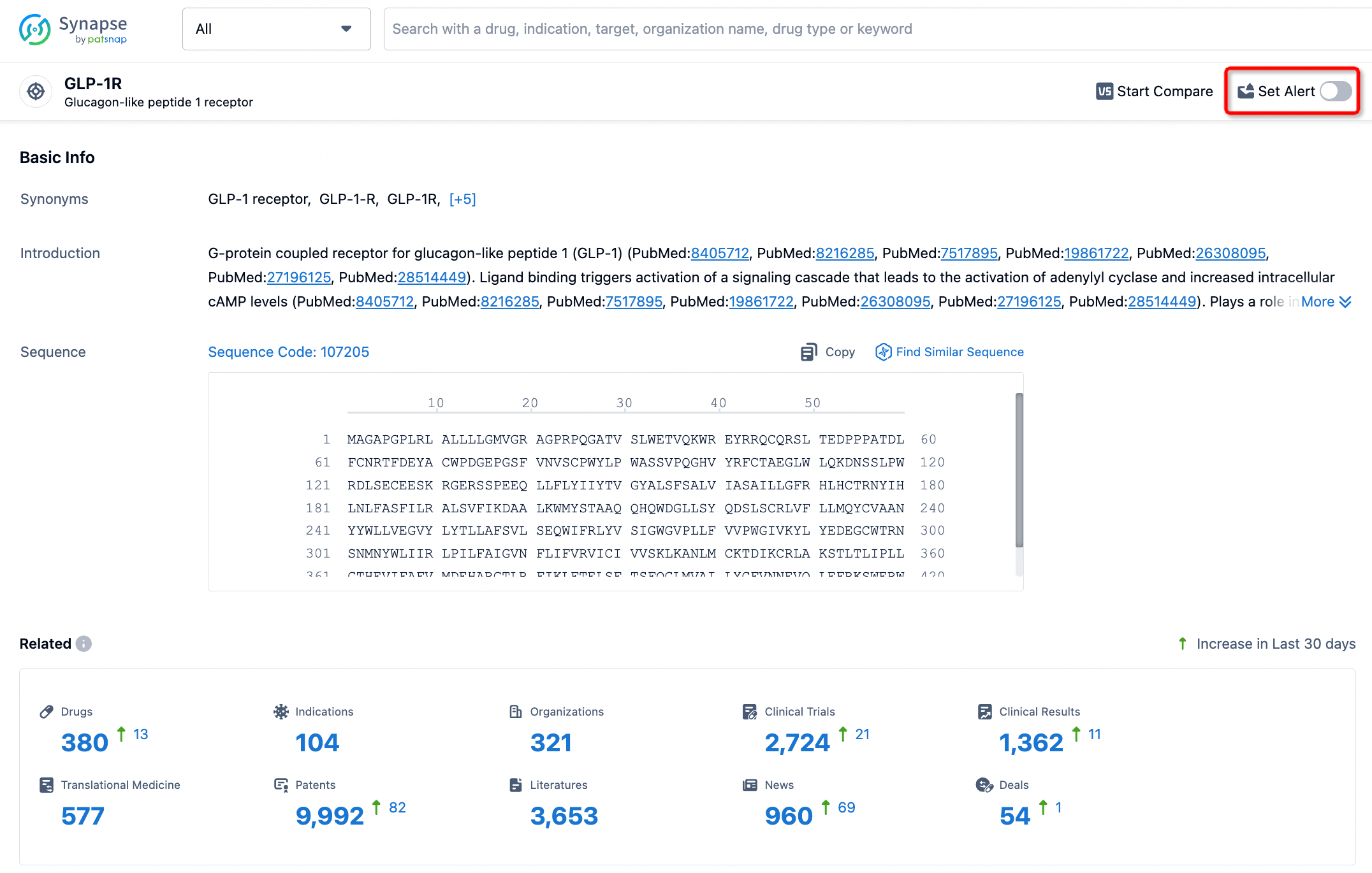
In the Synapse database, you can stay updated on the latest research and development advances of all targets. This service is accessible anytime and anywhere, with updates available daily or weekly. Use the "Set Alert" function to stay informed. Click on the image below to embark on a brand new journey of drug discovery!

AI Agents Built for Biopharma Breakthroughs
Accelerate discovery. Empower decisions. Transform outcomes.
Get started for free today!
Accelerate Strategic R&D decision making with Synapse, PatSnap’s AI-powered Connected Innovation Intelligence Platform Built for Life Sciences Professionals.
Start your data trial now!
Synapse data is also accessible to external entities via APIs or data packages. Empower better decisions with the latest in pharmaceutical intelligence.