Request Demo
What are HBX inhibitors and how do they work?
25 June 2024
Introduction to HBX inhibitors
HBX inhibitors have recently emerged as a promising class of therapeutic agents in the field of medical research. With the increasing prevalence of diseases caused by viral infections, there is a continual need for innovative treatments that can effectively combat these pathogens. HBX inhibitors specifically target the HBX protein, which plays a crucial role in the lifecycle of certain viruses, particularly the Hepatitis B virus (HBV). This novel approach has opened the door to potentially more effective treatments for viral infections that have long plagued the global population. This blog post aims to explore the mechanisms, uses, and potential impact of HBX inhibitors on modern medicine.
How do HBX inhibitors work?
To understand how HBX inhibitors work, it’s essential to first comprehend the role of the HBX protein in viral infections. The HBX protein is a multifunctional regulatory protein encoded by the HBV genome. It is involved in various aspects of the viral lifecycle, including viral replication, transcription, and protein synthesis. The HBX protein also interferes with different cellular processes, which helps the virus evade the host's immune response and establish a chronic infection.
HBX inhibitors are designed to specifically target and block the activity of the HBX protein. By inhibiting the function of HBX, these inhibitors disrupt the viral replication process, thereby preventing the virus from multiplying and spreading within the host. The blockade of HBX activity also helps restore normal cellular processes that were disrupted by the viral infection, enhancing the host's ability to mount an effective immune response against the virus.
One of the key mechanisms by which HBX inhibitors achieve this is through direct binding to the HBX protein, altering its conformation and rendering it inactive. Some HBX inhibitors may also work by interfering with the interaction between HBX and other cellular proteins, further reducing the protein's ability to facilitate viral replication. Through these mechanisms, HBX inhibitors offer a targeted approach to combatting viral infections, potentially leading to more effective and less toxic treatments compared to traditional antiviral therapies.
What are HBX inhibitors used for?
The primary use of HBX inhibitors is in the treatment of Hepatitis B virus infections. Hepatitis B is a significant global health concern, affecting millions of people worldwide and leading to chronic liver diseases such as cirrhosis and liver cancer. Current treatments for HBV infection, including nucleoside analogs and interferon therapy, have limitations in terms of efficacy and side effects, and many patients do not achieve a complete cure. HBX inhibitors present a novel therapeutic option that specifically targets the HBX protein, addressing a critical aspect of the viral lifecycle that other treatments do not directly affect.
By inhibiting HBX, these agents can potentially reduce viral load more effectively and with fewer side effects. Additionally, because HBX inhibitors target a specific viral protein, they might also help in reducing the risk of drug resistance, a common issue with broader-spectrum antiviral drugs. This targeted approach could result in improved patient outcomes and a higher likelihood of achieving sustained viral suppression or even a functional cure.
Beyond HBV, there is growing interest in exploring the application of HBX inhibitors for other viral infections where similar regulatory proteins play a role. Research is ongoing to determine the broader applicability of this class of inhibitors, and early results are promising. Investigators are also examining the potential of combining HBX inhibitors with other antiviral agents to achieve synergistic effects, which could further enhance their therapeutic efficacy.
In conclusion, HBX inhibitors represent a cutting-edge advancement in antiviral therapy. By specifically targeting the HBX protein, these inhibitors offer a novel mechanism of action that holds promise for more effective and safer treatments for HBV and potentially other viral infections. Continued research and clinical trials will be crucial in fully realizing the potential of HBX inhibitors and bringing these innovative therapies to patients in need. As our understanding of viral biology and host-pathogen interactions deepens, HBX inhibitors may well become a cornerstone in the fight against chronic viral diseases.
HBX inhibitors have recently emerged as a promising class of therapeutic agents in the field of medical research. With the increasing prevalence of diseases caused by viral infections, there is a continual need for innovative treatments that can effectively combat these pathogens. HBX inhibitors specifically target the HBX protein, which plays a crucial role in the lifecycle of certain viruses, particularly the Hepatitis B virus (HBV). This novel approach has opened the door to potentially more effective treatments for viral infections that have long plagued the global population. This blog post aims to explore the mechanisms, uses, and potential impact of HBX inhibitors on modern medicine.
How do HBX inhibitors work?
To understand how HBX inhibitors work, it’s essential to first comprehend the role of the HBX protein in viral infections. The HBX protein is a multifunctional regulatory protein encoded by the HBV genome. It is involved in various aspects of the viral lifecycle, including viral replication, transcription, and protein synthesis. The HBX protein also interferes with different cellular processes, which helps the virus evade the host's immune response and establish a chronic infection.
HBX inhibitors are designed to specifically target and block the activity of the HBX protein. By inhibiting the function of HBX, these inhibitors disrupt the viral replication process, thereby preventing the virus from multiplying and spreading within the host. The blockade of HBX activity also helps restore normal cellular processes that were disrupted by the viral infection, enhancing the host's ability to mount an effective immune response against the virus.
One of the key mechanisms by which HBX inhibitors achieve this is through direct binding to the HBX protein, altering its conformation and rendering it inactive. Some HBX inhibitors may also work by interfering with the interaction between HBX and other cellular proteins, further reducing the protein's ability to facilitate viral replication. Through these mechanisms, HBX inhibitors offer a targeted approach to combatting viral infections, potentially leading to more effective and less toxic treatments compared to traditional antiviral therapies.
What are HBX inhibitors used for?
The primary use of HBX inhibitors is in the treatment of Hepatitis B virus infections. Hepatitis B is a significant global health concern, affecting millions of people worldwide and leading to chronic liver diseases such as cirrhosis and liver cancer. Current treatments for HBV infection, including nucleoside analogs and interferon therapy, have limitations in terms of efficacy and side effects, and many patients do not achieve a complete cure. HBX inhibitors present a novel therapeutic option that specifically targets the HBX protein, addressing a critical aspect of the viral lifecycle that other treatments do not directly affect.
By inhibiting HBX, these agents can potentially reduce viral load more effectively and with fewer side effects. Additionally, because HBX inhibitors target a specific viral protein, they might also help in reducing the risk of drug resistance, a common issue with broader-spectrum antiviral drugs. This targeted approach could result in improved patient outcomes and a higher likelihood of achieving sustained viral suppression or even a functional cure.
Beyond HBV, there is growing interest in exploring the application of HBX inhibitors for other viral infections where similar regulatory proteins play a role. Research is ongoing to determine the broader applicability of this class of inhibitors, and early results are promising. Investigators are also examining the potential of combining HBX inhibitors with other antiviral agents to achieve synergistic effects, which could further enhance their therapeutic efficacy.
In conclusion, HBX inhibitors represent a cutting-edge advancement in antiviral therapy. By specifically targeting the HBX protein, these inhibitors offer a novel mechanism of action that holds promise for more effective and safer treatments for HBV and potentially other viral infections. Continued research and clinical trials will be crucial in fully realizing the potential of HBX inhibitors and bringing these innovative therapies to patients in need. As our understanding of viral biology and host-pathogen interactions deepens, HBX inhibitors may well become a cornerstone in the fight against chronic viral diseases.
How to obtain the latest development progress of all targets?
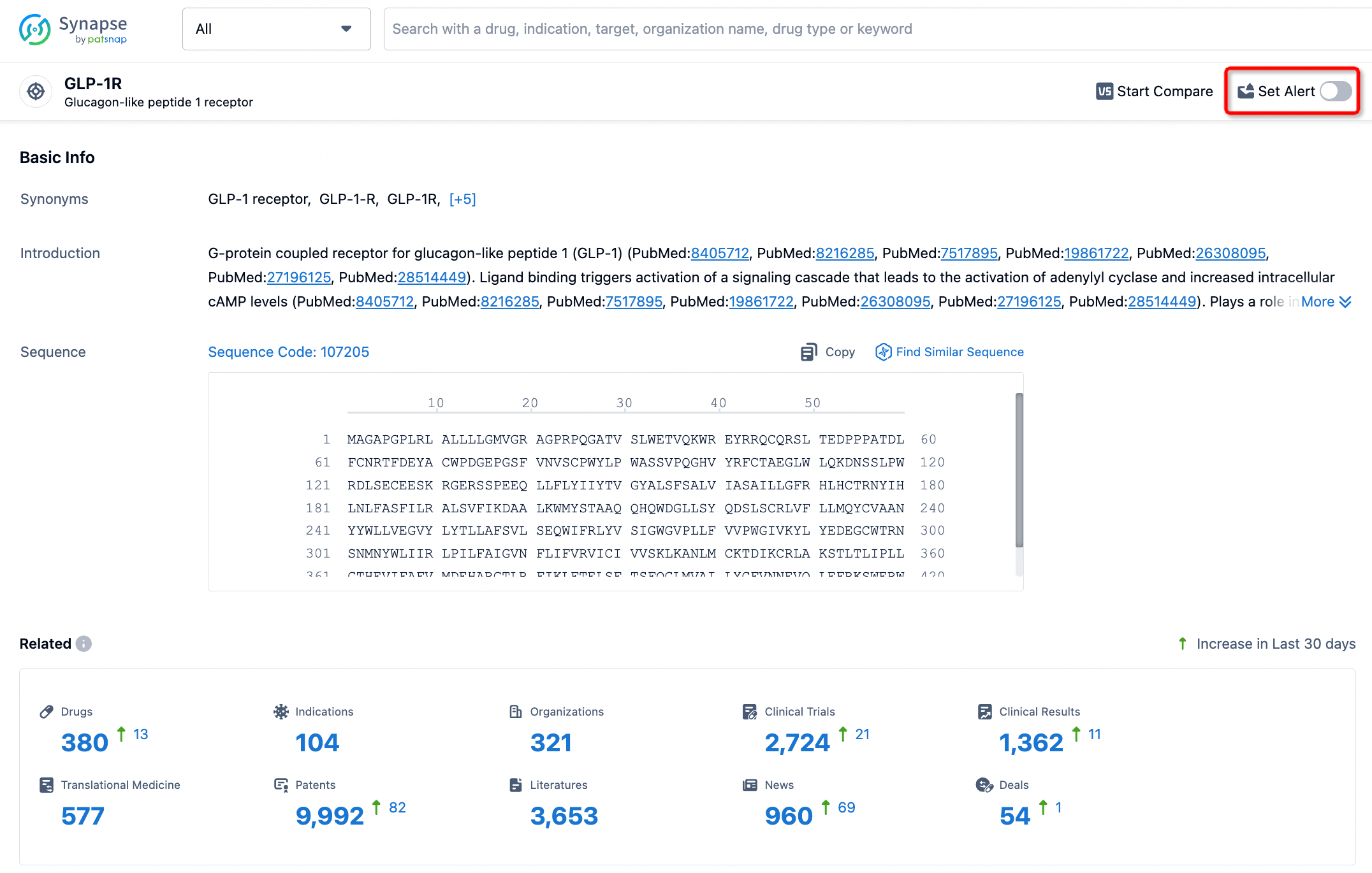
In the Synapse database, you can stay updated on the latest research and development advances of all targets. This service is accessible anytime and anywhere, with updates available daily or weekly. Use the "Set Alert" function to stay informed. Click on the image below to embark on a brand new journey of drug discovery!


AI Agents Built for Biopharma Breakthroughs
Accelerate discovery. Empower decisions. Transform outcomes.
Get started for free today!
Accelerate Strategic R&D decision making with Synapse, PatSnap’s AI-powered Connected Innovation Intelligence Platform Built for Life Sciences Professionals.
Start your data trial now!
Synapse data is also accessible to external entities via APIs or data packages. Empower better decisions with the latest in pharmaceutical intelligence.