Request Demo
What are HIV-1 pol inhibitors and how do they work?
21 June 2024
HIV-1 pol inhibitors are a fascinating and vital component in the fight against HIV/AIDS. These inhibitors specifically target the HIV-1 pol gene, which encodes critical enzymes for the replication of the virus. Understanding how these inhibitors work and their applications can provide significant insights into HIV treatment strategies.
HIV, or human immunodeficiency virus, is a retrovirus that attacks the immune system, particularly the CD4 cells, which are crucial for a healthy immune response. When left untreated, HIV can lead to the development of AIDS (acquired immunodeficiency syndrome). The pol gene in HIV-1 encodes for three key enzymes: reverse transcriptase, protease, and integrase. These enzymes are essential for the virus to replicate and infect new cells. Inhibitors targeting these enzymes can effectively interrupt the life cycle of the virus, thereby hindering its ability to multiply and spread within the host.
Reverse transcriptase inhibitors (RTIs) are one category of HIV-1 pol inhibitors. Reverse transcriptase is the enzyme responsible for converting viral RNA into DNA, a crucial step for the integration of the virus into the host's genome. There are two types of RTIs: nucleoside reverse transcriptase inhibitors (NRTIs) and non-nucleoside reverse transcriptase inhibitors (NNRTIs). NRTIs resemble the natural building blocks of DNA and get incorporated into the viral DNA, leading to termination of the DNA chain. NNRTIs, on the other hand, bind to the reverse transcriptase enzyme at a different site, causing a conformational change that inhibits its activity. Both types of RTIs have been instrumental in managing HIV infection and preventing the progression to AIDS.
Protease inhibitors (PIs) are another critical class of HIV-1 pol inhibitors. After the HIV virus replicates its genetic material, it needs to cut newly synthesized polyproteins into functional, smaller proteins essential for assembling new viral particles. The protease enzyme facilitates this cutting process. Protease inhibitors bind to the active site of the protease enzyme, preventing it from cleaving the polyproteins, which results in the production of immature, non-infectious viral particles. This class of inhibitors has been highly effective in reducing viral loads and improving the immune function of individuals infected with HIV.
Integrase inhibitors are the most recent addition to the arsenal of HIV-1 pol inhibitors. Integrase is the enzyme responsible for integrating viral DNA into the host's genome, a critical step for establishing a productive infection. Integrase inhibitors block this process, thereby preventing the viral DNA from becoming a permanent part of the host's DNA. This class of inhibitors has shown high efficacy and a favorable safety profile, making them an important component of modern antiretroviral therapy (ART).
HIV-1 pol inhibitors are used primarily in the treatment of HIV infection. The goal of HIV treatment is to achieve and maintain an undetectable viral load, which means the amount of virus in the blood is so low that it cannot be measured by standard tests. Achieving an undetectable viral load not only helps to preserve the immune system function but also reduces the risk of transmitting the virus to others.
Combination antiretroviral therapy (cART) is the standard treatment regimen for HIV and typically includes a combination of HIV-1 pol inhibitors from different classes. This approach helps to prevent the development of drug resistance, which can occur when the virus mutates and becomes less susceptible to a particular drug. By using multiple inhibitors that target different stages of the viral life cycle, cART can effectively suppress the virus and improve clinical outcomes.
In addition to their primary use in treating active HIV infection, HIV-1 pol inhibitors are also employed in pre-exposure prophylaxis (PrEP) and post-exposure prophylaxis (PEP). PrEP involves taking antiretroviral drugs by individuals who are at high risk of HIV infection to prevent the virus from establishing an infection if they are exposed. PEP, on the other hand, involves taking antiretroviral drugs after a potential exposure to the virus to prevent infection.
In conclusion, HIV-1 pol inhibitors have revolutionized the management of HIV/AIDS. By targeting critical enzymes in the viral replication process, these inhibitors have significantly improved the prognosis for individuals living with HIV. As research continues, it is hoped that new and more effective inhibitors will be developed, bringing us closer to the ultimate goal of eradicating HIV/AIDS.
HIV, or human immunodeficiency virus, is a retrovirus that attacks the immune system, particularly the CD4 cells, which are crucial for a healthy immune response. When left untreated, HIV can lead to the development of AIDS (acquired immunodeficiency syndrome). The pol gene in HIV-1 encodes for three key enzymes: reverse transcriptase, protease, and integrase. These enzymes are essential for the virus to replicate and infect new cells. Inhibitors targeting these enzymes can effectively interrupt the life cycle of the virus, thereby hindering its ability to multiply and spread within the host.
Reverse transcriptase inhibitors (RTIs) are one category of HIV-1 pol inhibitors. Reverse transcriptase is the enzyme responsible for converting viral RNA into DNA, a crucial step for the integration of the virus into the host's genome. There are two types of RTIs: nucleoside reverse transcriptase inhibitors (NRTIs) and non-nucleoside reverse transcriptase inhibitors (NNRTIs). NRTIs resemble the natural building blocks of DNA and get incorporated into the viral DNA, leading to termination of the DNA chain. NNRTIs, on the other hand, bind to the reverse transcriptase enzyme at a different site, causing a conformational change that inhibits its activity. Both types of RTIs have been instrumental in managing HIV infection and preventing the progression to AIDS.
Protease inhibitors (PIs) are another critical class of HIV-1 pol inhibitors. After the HIV virus replicates its genetic material, it needs to cut newly synthesized polyproteins into functional, smaller proteins essential for assembling new viral particles. The protease enzyme facilitates this cutting process. Protease inhibitors bind to the active site of the protease enzyme, preventing it from cleaving the polyproteins, which results in the production of immature, non-infectious viral particles. This class of inhibitors has been highly effective in reducing viral loads and improving the immune function of individuals infected with HIV.
Integrase inhibitors are the most recent addition to the arsenal of HIV-1 pol inhibitors. Integrase is the enzyme responsible for integrating viral DNA into the host's genome, a critical step for establishing a productive infection. Integrase inhibitors block this process, thereby preventing the viral DNA from becoming a permanent part of the host's DNA. This class of inhibitors has shown high efficacy and a favorable safety profile, making them an important component of modern antiretroviral therapy (ART).
HIV-1 pol inhibitors are used primarily in the treatment of HIV infection. The goal of HIV treatment is to achieve and maintain an undetectable viral load, which means the amount of virus in the blood is so low that it cannot be measured by standard tests. Achieving an undetectable viral load not only helps to preserve the immune system function but also reduces the risk of transmitting the virus to others.
Combination antiretroviral therapy (cART) is the standard treatment regimen for HIV and typically includes a combination of HIV-1 pol inhibitors from different classes. This approach helps to prevent the development of drug resistance, which can occur when the virus mutates and becomes less susceptible to a particular drug. By using multiple inhibitors that target different stages of the viral life cycle, cART can effectively suppress the virus and improve clinical outcomes.
In addition to their primary use in treating active HIV infection, HIV-1 pol inhibitors are also employed in pre-exposure prophylaxis (PrEP) and post-exposure prophylaxis (PEP). PrEP involves taking antiretroviral drugs by individuals who are at high risk of HIV infection to prevent the virus from establishing an infection if they are exposed. PEP, on the other hand, involves taking antiretroviral drugs after a potential exposure to the virus to prevent infection.
In conclusion, HIV-1 pol inhibitors have revolutionized the management of HIV/AIDS. By targeting critical enzymes in the viral replication process, these inhibitors have significantly improved the prognosis for individuals living with HIV. As research continues, it is hoped that new and more effective inhibitors will be developed, bringing us closer to the ultimate goal of eradicating HIV/AIDS.
How to obtain the latest development progress of all targets?
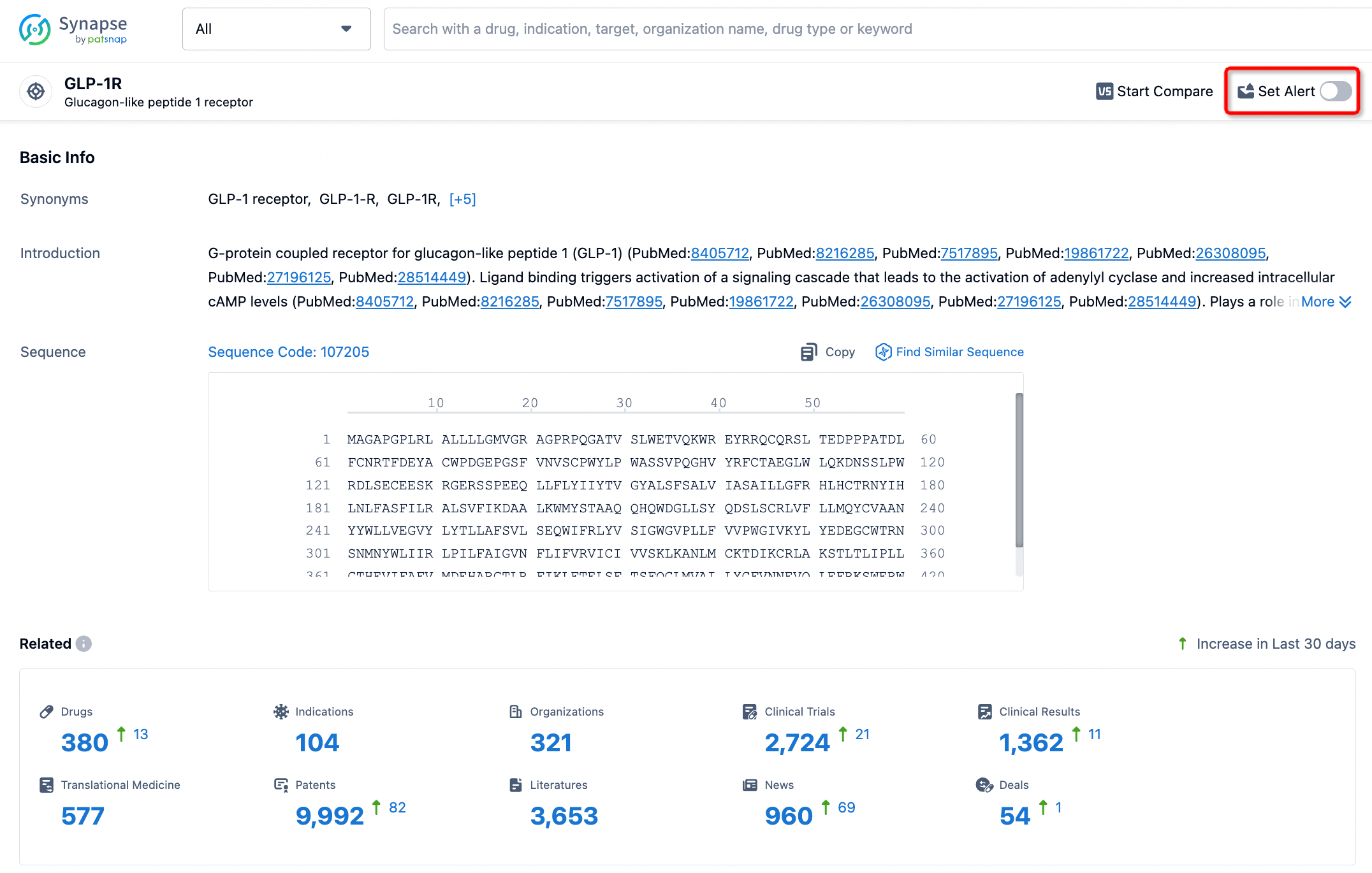
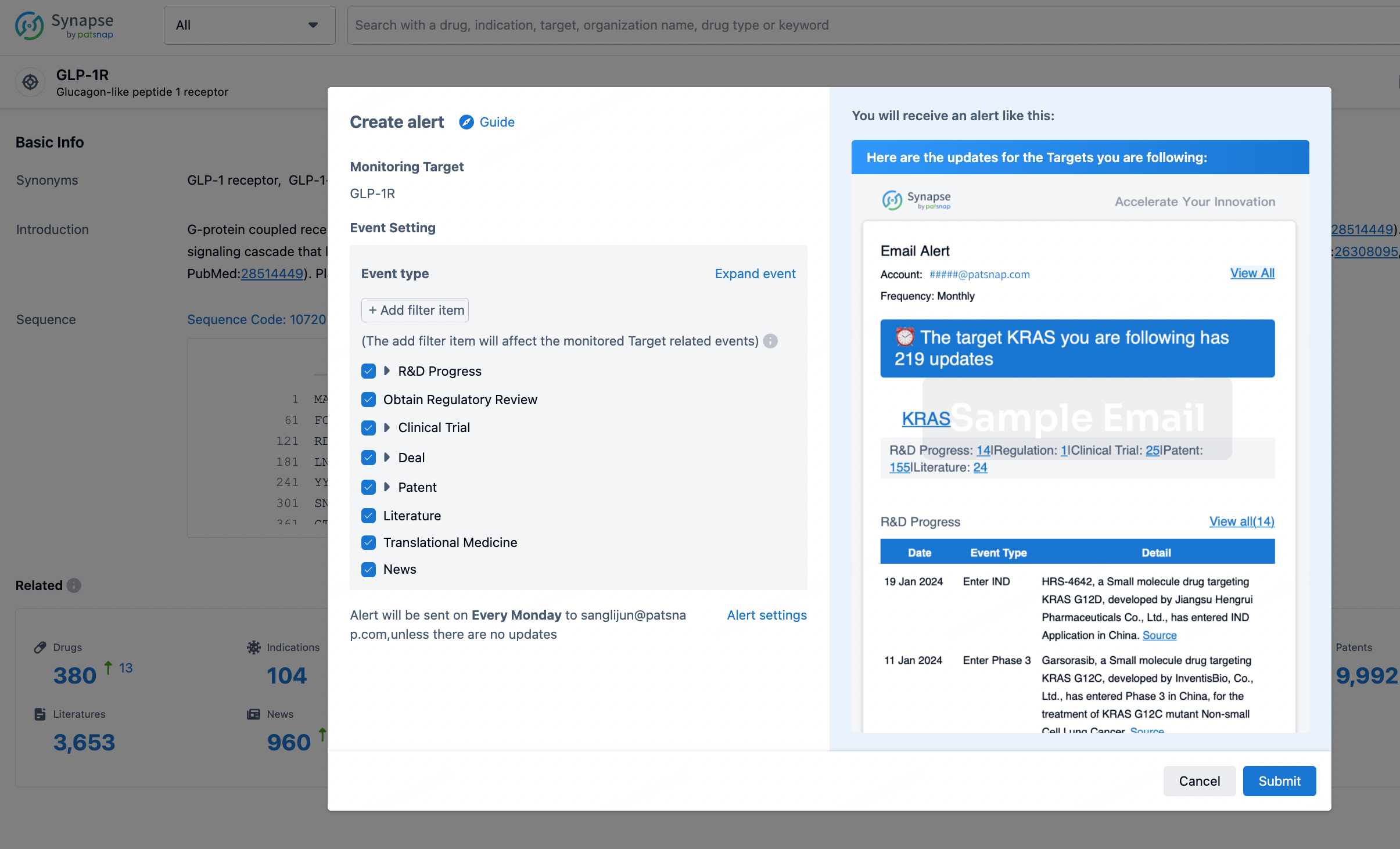
In the Synapse database, you can stay updated on the latest research and development advances of all targets. This service is accessible anytime and anywhere, with updates available daily or weekly. Use the "Set Alert" function to stay informed. Click on the image below to embark on a brand new journey of drug discovery!

AI Agents Built for Biopharma Breakthroughs
Accelerate discovery. Empower decisions. Transform outcomes.
Get started for free today!
Accelerate Strategic R&D decision making with Synapse, PatSnap’s AI-powered Connected Innovation Intelligence Platform Built for Life Sciences Professionals.
Start your data trial now!
Synapse data is also accessible to external entities via APIs or data packages. Empower better decisions with the latest in pharmaceutical intelligence.