Request Demo
What are IFNAR modulators and how do they work?
21 June 2024
Interferons are a group of signaling proteins made and released by host cells in response to the presence of several viruses. They play an essential role in the defense mechanism of the body against infections. A critical component in the interferon signaling pathway is the Interferon Alpha/Beta Receptor (IFNAR). Modulators of IFNAR have emerged as significant tools in both research and therapeutic applications. To appreciate their value, it’s important to first understand what IFNAR modulators are, how they work, and what they are used for.
IFNAR modulators are agents that can either enhance or inhibit the function of the IFNAR, thereby influencing the interferon signaling pathway. The IFNAR is a receptor complex composed of two subunits, IFNAR1 and IFNAR2, which transmits signals from type I interferons (such as IFN-α and IFN-β) into the cell, leading to an antiviral state. By modulating this receptor, researchers can either boost the body's natural defense mechanisms against pathogens or dampen it to treat diseases that are exacerbated by excessive interferon activity.
How do IFNAR modulators work? These agents work by either mimicking the natural ligands (agonists) or by blocking the receptor (antagonists).
Agonists bind to the IFNAR receptor and activate it, thereby mimicking the effect of natural interferons. This leads to the activation of the JAK-STAT signaling pathway, which in turn induces the expression of interferon-stimulated genes (ISGs). These genes produce proteins that are involved in antiviral responses, immune modulation, and cell growth regulation. By using IFNAR agonists, researchers can potentiate the body's antiviral response and enhance immune function.
On the other hand, antagonists block the receptor and prevent its activation by natural interferons. This can be useful in conditions where the interferon response is contributing to disease pathology. For instance, in autoimmune diseases, excessive interferon signaling can lead to chronic inflammation and tissue damage. By using IFNAR antagonists, it is possible to dampen this overactive immune response and alleviate symptoms.
What are IFNAR modulators used for? The applications of these modulators are diverse, ranging from antiviral therapies to treatments for autoimmune diseases and even cancer.
In antiviral therapies, IFNAR agonists are particularly valuable. By enhancing the body's natural defense mechanisms, these drugs can help in the treatment of viral infections. For example, pegylated interferon, a long-acting form of IFN-α, is used in the treatment of chronic hepatitis B and C infections. By activating IFNAR, pegylated interferon induces an antiviral state in the infected cells, helping to control the viral load and improve patient outcomes.
In the realm of autoimmune diseases, IFNAR antagonists show great promise. Autoimmune conditions like systemic lupus erythematosus (SLE) and multiple sclerosis (MS) are characterized by an overactive interferon response. By inhibiting IFNAR, these antagonists can reduce the pathological immune activation and mitigate disease symptoms. For example, anifrolumab, a monoclonal antibody that blocks the type I interferon receptor, has shown efficacy in clinical trials for the treatment of SLE.
Cancer is another area where IFNAR modulators are being explored. Some tumors exploit the interferon signaling pathway to evade the immune system. By using IFNAR agonists, it might be possible to boost the immune response against the tumor, thereby enhancing the efficacy of immunotherapies. Conversely, in some cancers where interferon signaling promotes tumor growth, IFNAR antagonists could be used to inhibit this pathway and slow down tumor progression.
In summary, IFNAR modulators are powerful tools in the biomedical arsenal, offering the potential to enhance antiviral defenses, modulate immune responses in autoimmune diseases, and improve cancer therapies. As research progresses, the development of more specific and effective IFNAR modulators will likely expand their therapeutic applications, offering new hope for patients with a variety of challenging conditions.
IFNAR modulators are agents that can either enhance or inhibit the function of the IFNAR, thereby influencing the interferon signaling pathway. The IFNAR is a receptor complex composed of two subunits, IFNAR1 and IFNAR2, which transmits signals from type I interferons (such as IFN-α and IFN-β) into the cell, leading to an antiviral state. By modulating this receptor, researchers can either boost the body's natural defense mechanisms against pathogens or dampen it to treat diseases that are exacerbated by excessive interferon activity.
How do IFNAR modulators work? These agents work by either mimicking the natural ligands (agonists) or by blocking the receptor (antagonists).
Agonists bind to the IFNAR receptor and activate it, thereby mimicking the effect of natural interferons. This leads to the activation of the JAK-STAT signaling pathway, which in turn induces the expression of interferon-stimulated genes (ISGs). These genes produce proteins that are involved in antiviral responses, immune modulation, and cell growth regulation. By using IFNAR agonists, researchers can potentiate the body's antiviral response and enhance immune function.
On the other hand, antagonists block the receptor and prevent its activation by natural interferons. This can be useful in conditions where the interferon response is contributing to disease pathology. For instance, in autoimmune diseases, excessive interferon signaling can lead to chronic inflammation and tissue damage. By using IFNAR antagonists, it is possible to dampen this overactive immune response and alleviate symptoms.
What are IFNAR modulators used for? The applications of these modulators are diverse, ranging from antiviral therapies to treatments for autoimmune diseases and even cancer.
In antiviral therapies, IFNAR agonists are particularly valuable. By enhancing the body's natural defense mechanisms, these drugs can help in the treatment of viral infections. For example, pegylated interferon, a long-acting form of IFN-α, is used in the treatment of chronic hepatitis B and C infections. By activating IFNAR, pegylated interferon induces an antiviral state in the infected cells, helping to control the viral load and improve patient outcomes.
In the realm of autoimmune diseases, IFNAR antagonists show great promise. Autoimmune conditions like systemic lupus erythematosus (SLE) and multiple sclerosis (MS) are characterized by an overactive interferon response. By inhibiting IFNAR, these antagonists can reduce the pathological immune activation and mitigate disease symptoms. For example, anifrolumab, a monoclonal antibody that blocks the type I interferon receptor, has shown efficacy in clinical trials for the treatment of SLE.
Cancer is another area where IFNAR modulators are being explored. Some tumors exploit the interferon signaling pathway to evade the immune system. By using IFNAR agonists, it might be possible to boost the immune response against the tumor, thereby enhancing the efficacy of immunotherapies. Conversely, in some cancers where interferon signaling promotes tumor growth, IFNAR antagonists could be used to inhibit this pathway and slow down tumor progression.
In summary, IFNAR modulators are powerful tools in the biomedical arsenal, offering the potential to enhance antiviral defenses, modulate immune responses in autoimmune diseases, and improve cancer therapies. As research progresses, the development of more specific and effective IFNAR modulators will likely expand their therapeutic applications, offering new hope for patients with a variety of challenging conditions.
How to obtain the latest development progress of all targets?
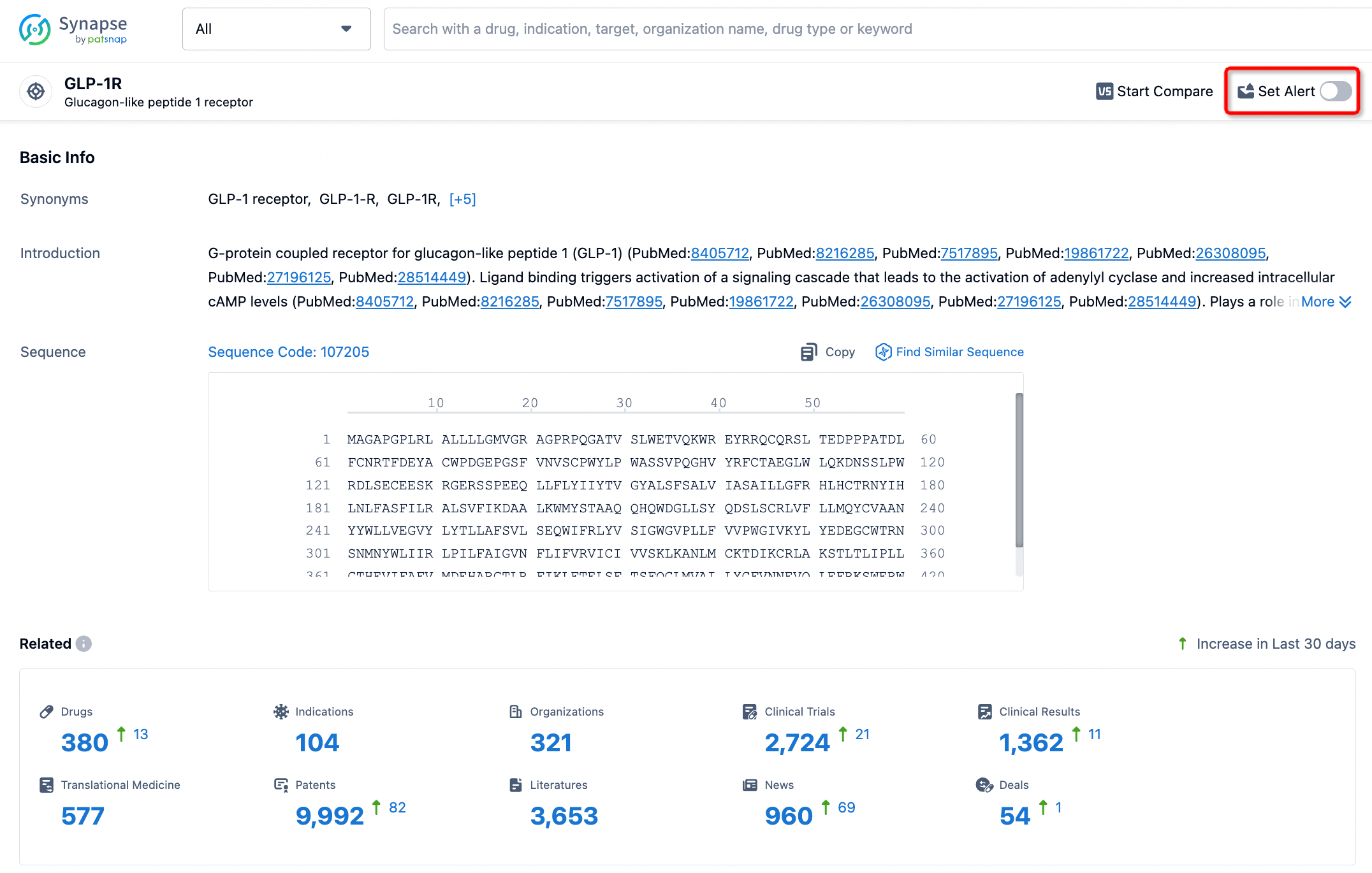
In the Synapse database, you can stay updated on the latest research and development advances of all targets. This service is accessible anytime and anywhere, with updates available daily or weekly. Use the "Set Alert" function to stay informed. Click on the image below to embark on a brand new journey of drug discovery!


AI Agents Built for Biopharma Breakthroughs
Accelerate discovery. Empower decisions. Transform outcomes.
Get started for free today!
Accelerate Strategic R&D decision making with Synapse, PatSnap’s AI-powered Connected Innovation Intelligence Platform Built for Life Sciences Professionals.
Start your data trial now!
Synapse data is also accessible to external entities via APIs or data packages. Empower better decisions with the latest in pharmaceutical intelligence.