Request Demo
What are IKZF2 degraders and how do they work?
21 June 2024
In the rapidly evolving field of targeted protein degradation, IKZF2 degraders have emerged as a promising therapeutic strategy. This novel approach encompasses a unique mechanism of action, offering new possibilities for treating various diseases. In this blog post, we will delve into the intricacies of IKZF2 degraders, exploring their working mechanism and potential applications.
IKZF2, also known as Helios, is a member of the Ikaros family of transcription factors, which play crucial roles in immune cell development and function. Aberrations in IKZF2 expression or activity have been implicated in several diseases, including autoimmune disorders and cancers. Traditional therapeutic strategies often involve inhibiting the function of pathogenic proteins. However, IKZF2 degraders take a different approach by targeting the protein for degradation, thereby removing it from the cellular environment altogether.
IKZF2 degraders harness the cell's natural protein degradation machinery, the ubiquitin-proteasome system (UPS). This system is responsible for maintaining cellular protein homeostasis by selectively degrading misfolded, damaged, or unneeded proteins. The degraders are bifunctional molecules that consist of two key components: a ligand that binds to IKZF2 and a ligand that recruits an E3 ubiquitin ligase. By simultaneously binding to IKZF2 and the E3 ligase, these degraders facilitate the ubiquitination of IKZF2. Ubiquitination marks the protein for degradation by the proteasome, effectively reducing its levels within the cell.
The specificity and efficiency of IKZF2 degraders hinge on their ability to precisely target the protein of interest. This is achieved by designing small molecules that can selectively bind to IKZF2 with high affinity, ensuring that only the desired protein is degraded. This targeted approach minimizes off-target effects and enhances therapeutic efficacy, setting IKZF2 degraders apart from conventional therapies that often affect multiple proteins and pathways.
The therapeutic potential of IKZF2 degraders is vast and varied, with applications spanning multiple disease areas. In oncology, for instance, IKZF2 has been identified as a critical player in certain types of cancers, including leukemia and lymphoma. By degrading IKZF2, these degraders can disrupt the transcriptional programs that drive cancer cell proliferation and survival, offering a new avenue for treatment. Preclinical studies have shown promising results, demonstrating the ability of IKZF2 degraders to induce cancer cell death and inhibit tumor growth.
Beyond cancer, IKZF2 degraders hold promise for treating autoimmune diseases. IKZF2 is known to be involved in the regulation of immune cell differentiation and function. Aberrant IKZF2 activity can lead to immune dysregulation, contributing to the pathogenesis of autoimmune conditions such as systemic lupus erythematosus (SLE) and multiple sclerosis (MS). By degrading IKZF2, these degraders have the potential to restore normal immune function and alleviate disease symptoms. Research in this area is still in its early stages, but the initial findings are encouraging.
Moreover, the flexibility of the degrader technology allows for the development of IKZF2 degraders with tailored properties to address specific therapeutic needs. This includes optimizing the pharmacokinetic and pharmacodynamic profiles of the degraders to ensure adequate bioavailability and sustained target engagement in vivo. As our understanding of IKZF2 biology and protein degradation mechanisms continues to evolve, the design and optimization of IKZF2 degraders are expected to advance, further enhancing their therapeutic potential.
In conclusion, IKZF2 degraders represent a cutting-edge approach in targeted protein degradation, offering new hope for the treatment of diverse diseases. By harnessing the cell's natural ubiquitin-proteasome system, these degraders achieve specific and efficient degradation of IKZF2, paving the way for novel therapeutic interventions. As research progresses, IKZF2 degraders may become a valuable addition to the arsenal of targeted therapies, providing patients with more effective and personalized treatment options.
IKZF2, also known as Helios, is a member of the Ikaros family of transcription factors, which play crucial roles in immune cell development and function. Aberrations in IKZF2 expression or activity have been implicated in several diseases, including autoimmune disorders and cancers. Traditional therapeutic strategies often involve inhibiting the function of pathogenic proteins. However, IKZF2 degraders take a different approach by targeting the protein for degradation, thereby removing it from the cellular environment altogether.
IKZF2 degraders harness the cell's natural protein degradation machinery, the ubiquitin-proteasome system (UPS). This system is responsible for maintaining cellular protein homeostasis by selectively degrading misfolded, damaged, or unneeded proteins. The degraders are bifunctional molecules that consist of two key components: a ligand that binds to IKZF2 and a ligand that recruits an E3 ubiquitin ligase. By simultaneously binding to IKZF2 and the E3 ligase, these degraders facilitate the ubiquitination of IKZF2. Ubiquitination marks the protein for degradation by the proteasome, effectively reducing its levels within the cell.
The specificity and efficiency of IKZF2 degraders hinge on their ability to precisely target the protein of interest. This is achieved by designing small molecules that can selectively bind to IKZF2 with high affinity, ensuring that only the desired protein is degraded. This targeted approach minimizes off-target effects and enhances therapeutic efficacy, setting IKZF2 degraders apart from conventional therapies that often affect multiple proteins and pathways.
The therapeutic potential of IKZF2 degraders is vast and varied, with applications spanning multiple disease areas. In oncology, for instance, IKZF2 has been identified as a critical player in certain types of cancers, including leukemia and lymphoma. By degrading IKZF2, these degraders can disrupt the transcriptional programs that drive cancer cell proliferation and survival, offering a new avenue for treatment. Preclinical studies have shown promising results, demonstrating the ability of IKZF2 degraders to induce cancer cell death and inhibit tumor growth.
Beyond cancer, IKZF2 degraders hold promise for treating autoimmune diseases. IKZF2 is known to be involved in the regulation of immune cell differentiation and function. Aberrant IKZF2 activity can lead to immune dysregulation, contributing to the pathogenesis of autoimmune conditions such as systemic lupus erythematosus (SLE) and multiple sclerosis (MS). By degrading IKZF2, these degraders have the potential to restore normal immune function and alleviate disease symptoms. Research in this area is still in its early stages, but the initial findings are encouraging.
Moreover, the flexibility of the degrader technology allows for the development of IKZF2 degraders with tailored properties to address specific therapeutic needs. This includes optimizing the pharmacokinetic and pharmacodynamic profiles of the degraders to ensure adequate bioavailability and sustained target engagement in vivo. As our understanding of IKZF2 biology and protein degradation mechanisms continues to evolve, the design and optimization of IKZF2 degraders are expected to advance, further enhancing their therapeutic potential.
In conclusion, IKZF2 degraders represent a cutting-edge approach in targeted protein degradation, offering new hope for the treatment of diverse diseases. By harnessing the cell's natural ubiquitin-proteasome system, these degraders achieve specific and efficient degradation of IKZF2, paving the way for novel therapeutic interventions. As research progresses, IKZF2 degraders may become a valuable addition to the arsenal of targeted therapies, providing patients with more effective and personalized treatment options.
How to obtain the latest development progress of all targets?
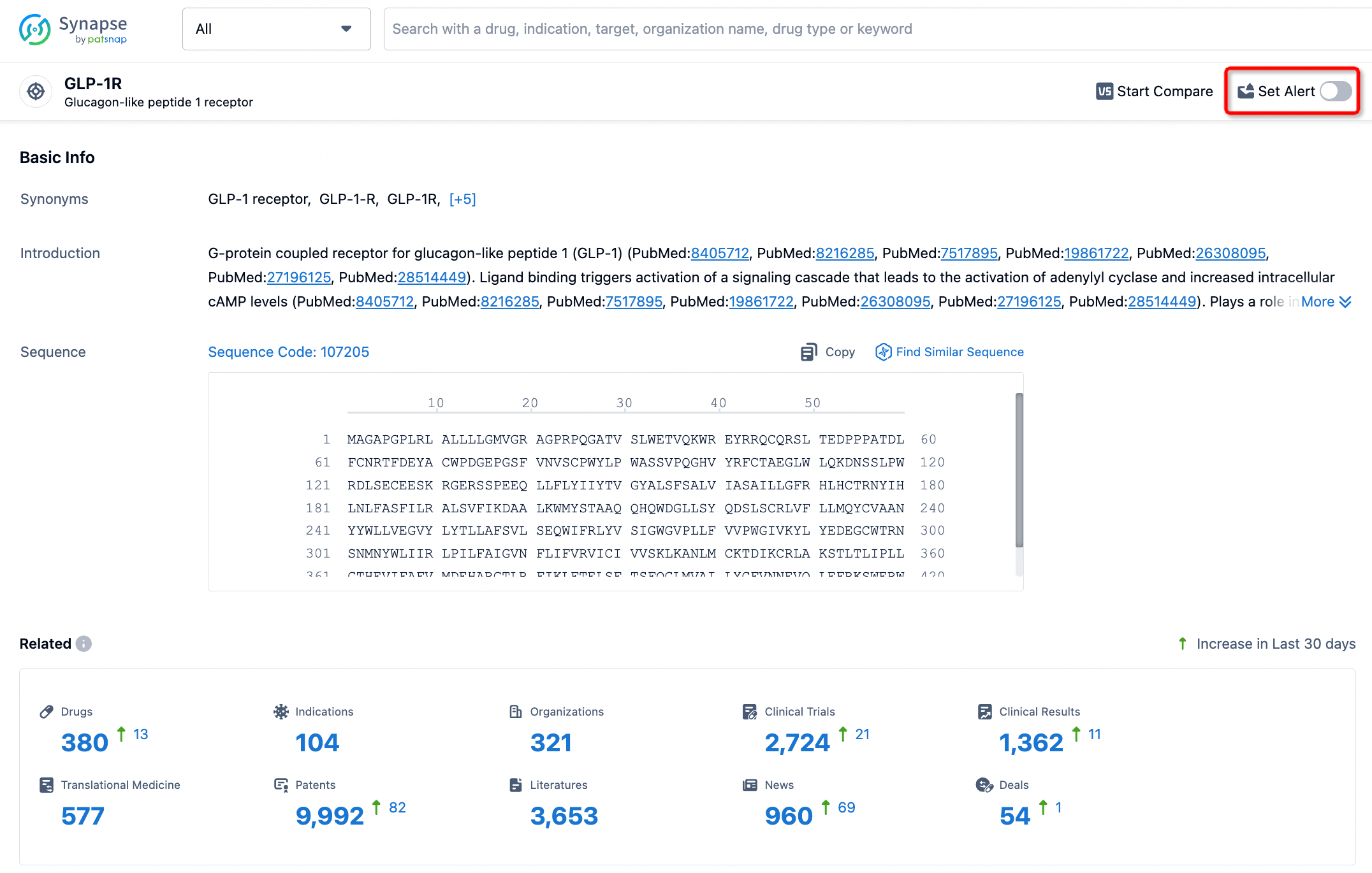
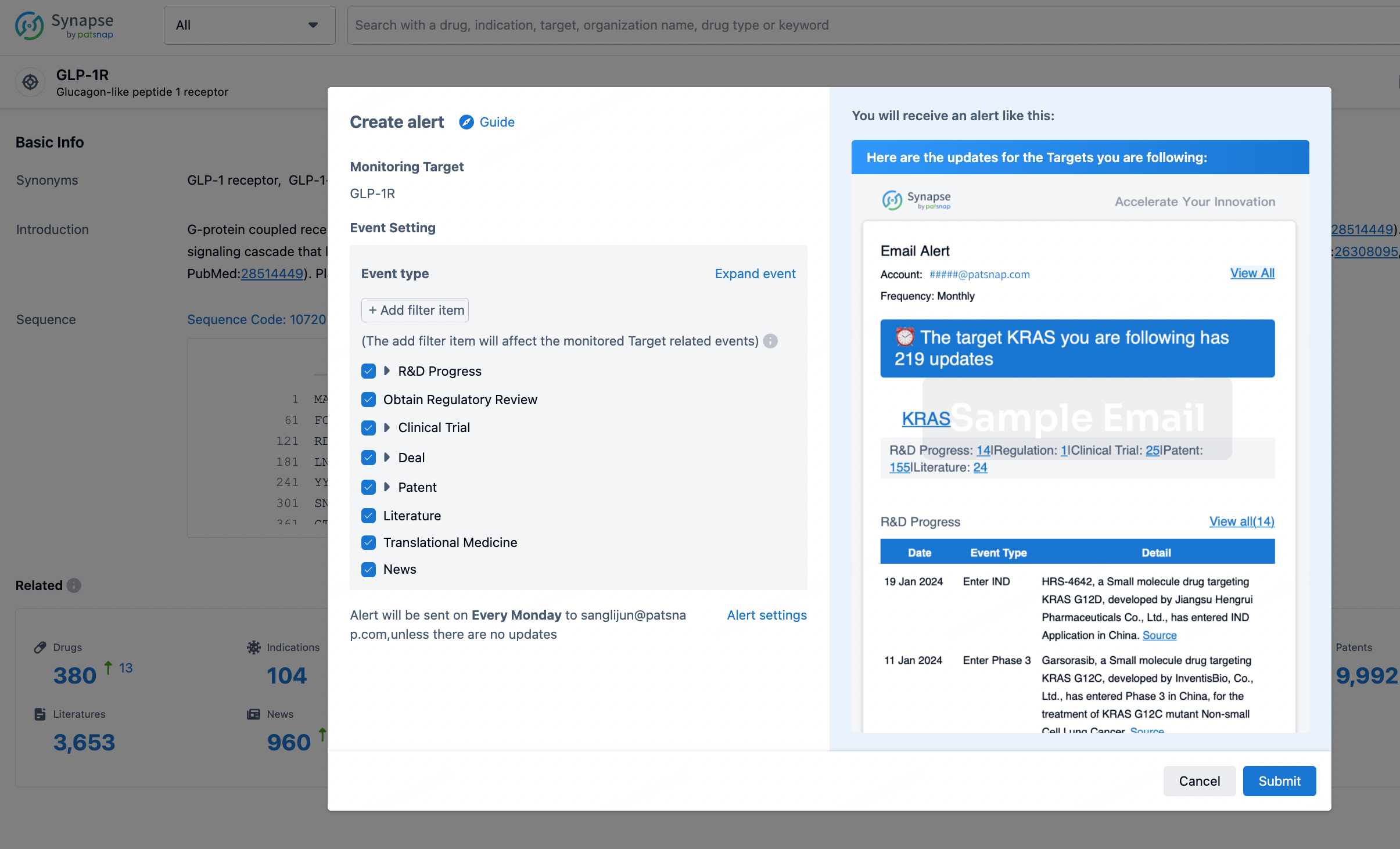
In the Synapse database, you can stay updated on the latest research and development advances of all targets. This service is accessible anytime and anywhere, with updates available daily or weekly. Use the "Set Alert" function to stay informed. Click on the image below to embark on a brand new journey of drug discovery!
AI Agents Built for Biopharma Breakthroughs
Accelerate discovery. Empower decisions. Transform outcomes.
Get started for free today!
Accelerate Strategic R&D decision making with Synapse, PatSnap’s AI-powered Connected Innovation Intelligence Platform Built for Life Sciences Professionals.
Start your data trial now!
Synapse data is also accessible to external entities via APIs or data packages. Empower better decisions with the latest in pharmaceutical intelligence.