Request Demo
What are IL-4Rα agonists and how do they work?
21 June 2024
In recent years, the field of immunotherapy has experienced significant advancements, particularly with the development of cytokine receptor agonists. One such promising area of research involves IL-4Rα agonists. These molecules target the interleukin-4 receptor alpha (IL-4Rα) and have shown potential in treating a variety of diseases characterized by immune dysregulation. This blog post explores the mechanisms, applications, and future potential of IL-4Rα agonists.
IL-4Rα agonists are a class of therapeutic agents designed to modulate the immune system by targeting the IL-4Rα component of the interleukin-4 (IL-4) and interleukin-13 (IL-13) signaling pathways. IL-4 and IL-13 are cytokines that play crucial roles in regulating immune responses, particularly in the context of allergic reactions and chronic inflammatory conditions. By binding to IL-4Rα, these agonists can alter the downstream signaling events, potentially restoring balance to an overactive immune system.
To understand the workings of IL-4Rα agonists, it is essential to delve into the IL-4 and IL-13 signaling pathways. IL-4 and IL-13 are produced by a subset of T-helper cells known as Th2 cells. These cytokines bind to receptors on the surface of target cells, which typically consist of a shared IL-4Rα chain and a secondary chain that varies depending on the specific cytokine (IL-13Rα1 or the common gamma chain, γc). Upon binding, a signaling cascade is initiated that involves the activation of several key molecules, including Janus kinases (JAKs) and signal transducer and activator of transcription 6 (STAT6).
IL-4Rα agonists work by either mimicking the action of IL-4 and IL-13 or by enhancing their effects on the receptor. In doing so, these agonists can modulate several cellular processes such as cell proliferation, differentiation, and survival. For instance, in the context of allergic diseases, an overactive Th2 response can lead to excessive production of IgE antibodies by B cells, promoting inflammation and hypersensitivity reactions. By targeting IL-4Rα, these agonists can help attenuate the hyperactive Th2 response, thereby reducing the severity of allergic symptoms.
IL-4Rα agonists have shown promise in several therapeutic areas, particularly in the treatment of allergic diseases and asthma. Allergic asthma, characterized by chronic inflammation of the airways, is a condition where the Th2 response plays a pivotal role. Standard treatments, such as corticosteroids, can be effective but often come with significant side effects. IL-4Rα agonists offer a targeted approach to modulating the immune response, potentially providing relief with fewer adverse effects.
Beyond allergic diseases, IL-4Rα agonists are also being investigated for their potential in treating autoimmune disorders. Conditions like rheumatoid arthritis and multiple sclerosis involve an imbalance between different subsets of T-helper cells, leading to chronic inflammation and tissue damage. By modulating IL-4Rα signaling, these agonists could help restore immune balance and reduce disease activity.
Another exciting area of research involves the use of IL-4Rα agonists in cancer immunotherapy. Some tumors exploit the IL-4/IL-13 signaling pathways to create an immunosuppressive microenvironment that allows them to evade immune detection. By disrupting these pathways, IL-4Rα agonists could enhance the anti-tumor immune response, potentially improving outcomes in patients with certain types of cancer.
In conclusion, IL-4Rα agonists represent a promising class of therapeutics with the potential to modulate immune responses in a targeted and effective manner. By understanding the mechanisms of IL-4 and IL-13 signaling, researchers are uncovering new ways to treat a variety of conditions characterized by immune dysregulation, from allergic diseases to autoimmune disorders and even cancer. As research continues to advance, IL-4Rα agonists may soon become an integral part of the therapeutic arsenal against these challenging conditions.
IL-4Rα agonists are a class of therapeutic agents designed to modulate the immune system by targeting the IL-4Rα component of the interleukin-4 (IL-4) and interleukin-13 (IL-13) signaling pathways. IL-4 and IL-13 are cytokines that play crucial roles in regulating immune responses, particularly in the context of allergic reactions and chronic inflammatory conditions. By binding to IL-4Rα, these agonists can alter the downstream signaling events, potentially restoring balance to an overactive immune system.
To understand the workings of IL-4Rα agonists, it is essential to delve into the IL-4 and IL-13 signaling pathways. IL-4 and IL-13 are produced by a subset of T-helper cells known as Th2 cells. These cytokines bind to receptors on the surface of target cells, which typically consist of a shared IL-4Rα chain and a secondary chain that varies depending on the specific cytokine (IL-13Rα1 or the common gamma chain, γc). Upon binding, a signaling cascade is initiated that involves the activation of several key molecules, including Janus kinases (JAKs) and signal transducer and activator of transcription 6 (STAT6).
IL-4Rα agonists work by either mimicking the action of IL-4 and IL-13 or by enhancing their effects on the receptor. In doing so, these agonists can modulate several cellular processes such as cell proliferation, differentiation, and survival. For instance, in the context of allergic diseases, an overactive Th2 response can lead to excessive production of IgE antibodies by B cells, promoting inflammation and hypersensitivity reactions. By targeting IL-4Rα, these agonists can help attenuate the hyperactive Th2 response, thereby reducing the severity of allergic symptoms.
IL-4Rα agonists have shown promise in several therapeutic areas, particularly in the treatment of allergic diseases and asthma. Allergic asthma, characterized by chronic inflammation of the airways, is a condition where the Th2 response plays a pivotal role. Standard treatments, such as corticosteroids, can be effective but often come with significant side effects. IL-4Rα agonists offer a targeted approach to modulating the immune response, potentially providing relief with fewer adverse effects.
Beyond allergic diseases, IL-4Rα agonists are also being investigated for their potential in treating autoimmune disorders. Conditions like rheumatoid arthritis and multiple sclerosis involve an imbalance between different subsets of T-helper cells, leading to chronic inflammation and tissue damage. By modulating IL-4Rα signaling, these agonists could help restore immune balance and reduce disease activity.
Another exciting area of research involves the use of IL-4Rα agonists in cancer immunotherapy. Some tumors exploit the IL-4/IL-13 signaling pathways to create an immunosuppressive microenvironment that allows them to evade immune detection. By disrupting these pathways, IL-4Rα agonists could enhance the anti-tumor immune response, potentially improving outcomes in patients with certain types of cancer.
In conclusion, IL-4Rα agonists represent a promising class of therapeutics with the potential to modulate immune responses in a targeted and effective manner. By understanding the mechanisms of IL-4 and IL-13 signaling, researchers are uncovering new ways to treat a variety of conditions characterized by immune dysregulation, from allergic diseases to autoimmune disorders and even cancer. As research continues to advance, IL-4Rα agonists may soon become an integral part of the therapeutic arsenal against these challenging conditions.
How to obtain the latest development progress of all targets?
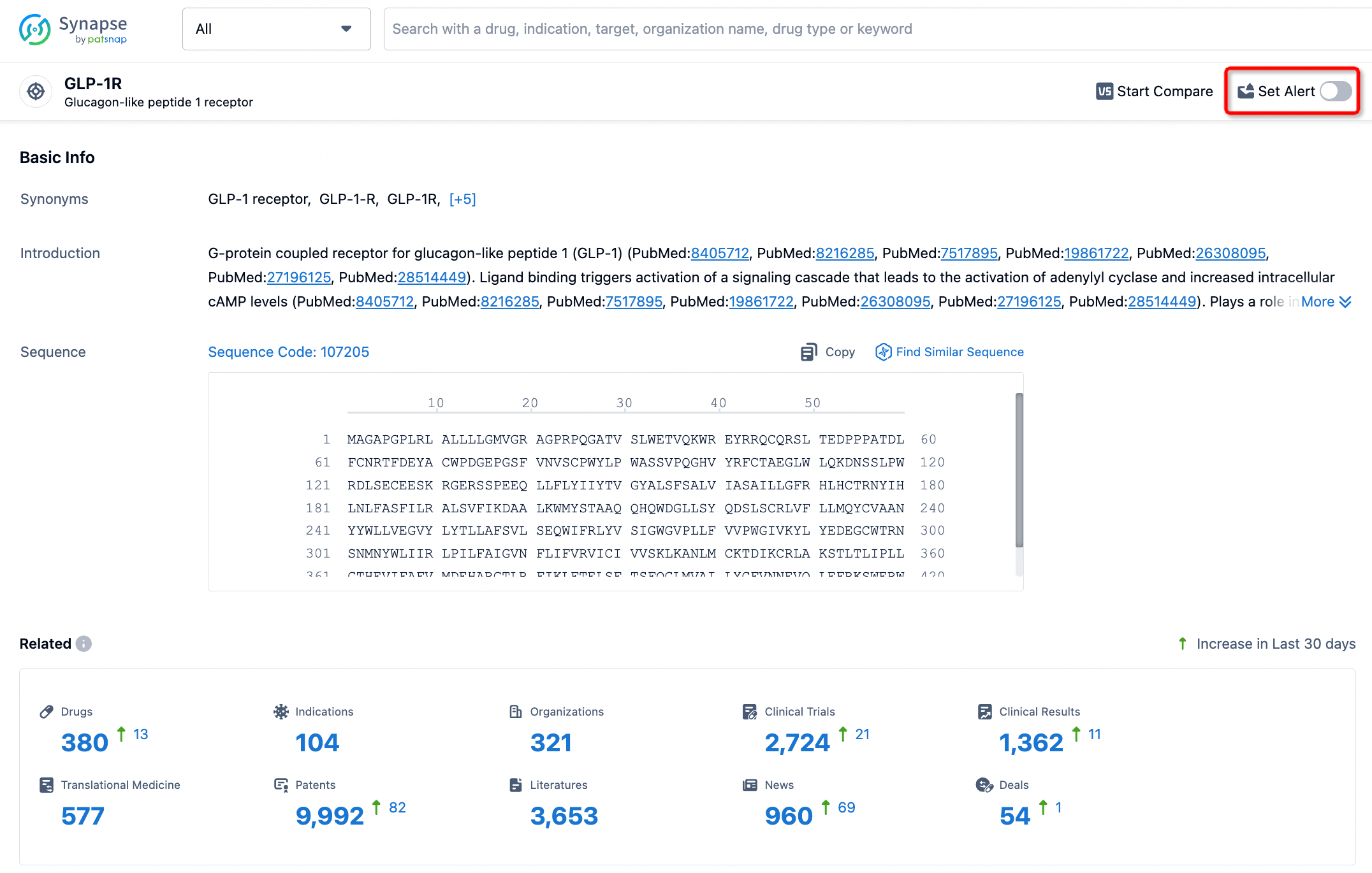
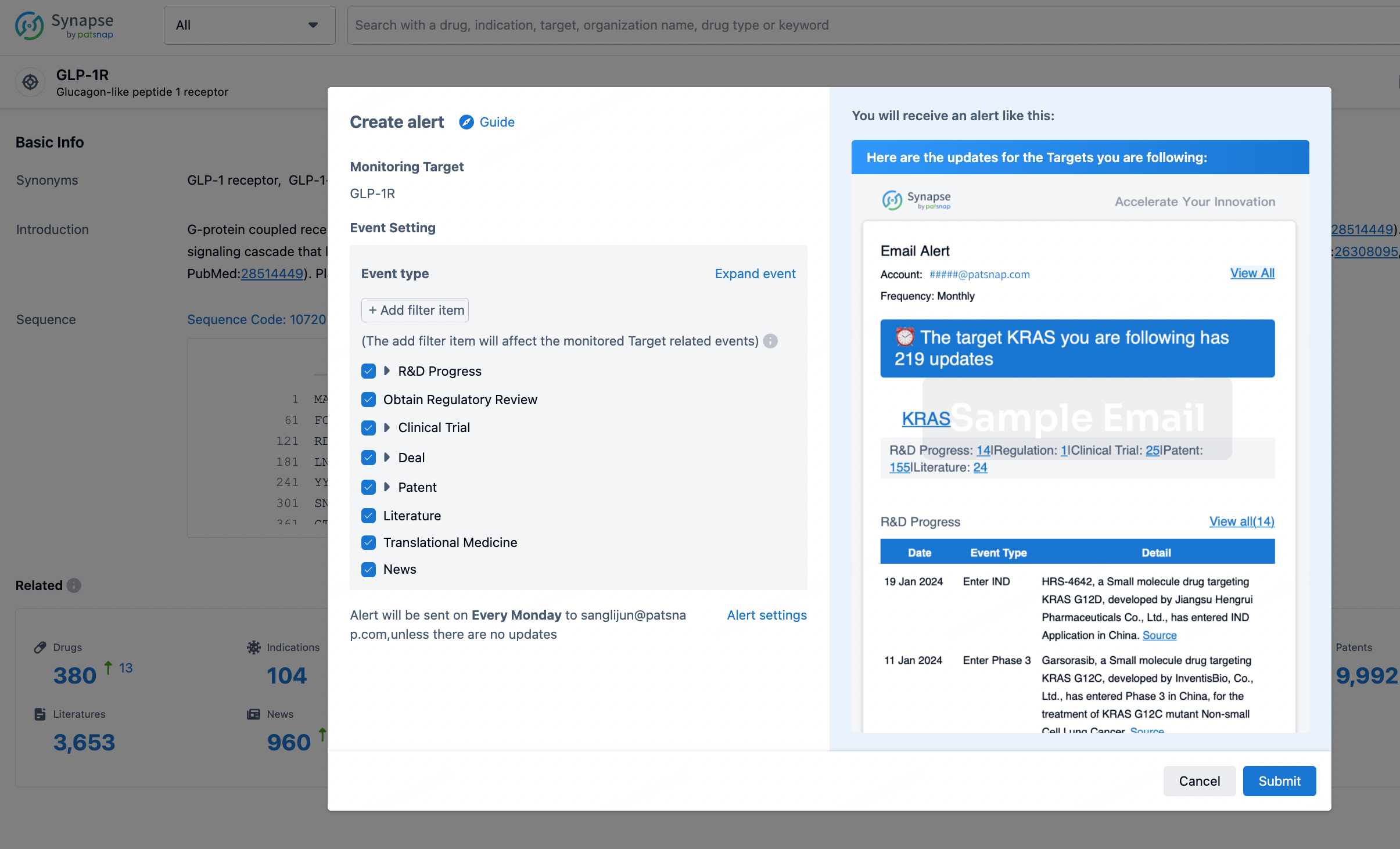
In the Synapse database, you can stay updated on the latest research and development advances of all targets. This service is accessible anytime and anywhere, with updates available daily or weekly. Use the "Set Alert" function to stay informed. Click on the image below to embark on a brand new journey of drug discovery!

AI Agents Built for Biopharma Breakthroughs
Accelerate discovery. Empower decisions. Transform outcomes.
Get started for free today!
Accelerate Strategic R&D decision making with Synapse, PatSnap’s AI-powered Connected Innovation Intelligence Platform Built for Life Sciences Professionals.
Start your data trial now!
Synapse data is also accessible to external entities via APIs or data packages. Empower better decisions with the latest in pharmaceutical intelligence.