Request Demo
What are Immunoglobulin agonists and how do they work?
21 June 2024
Immunoglobulin agonists represent a burgeoning area of interest within the field of immunology and therapeutic medicine. These agents are designed to interact with immunoglobulins, which are critical components of the immune system. Immunoglobulins, commonly known as antibodies, play a vital role in identifying and neutralizing pathogens such as bacteria and viruses. Immunoglobulin agonists aim to modulate the immune response in a way that can be beneficial for treating various diseases, particularly those where the immune system is implicated. In this blog post, we will explore what immunoglobulin agonists are, how they function, and the diverse applications they may have in clinical settings.
Immunoglobulin agonists operate by binding to immunoglobulins and influencing their activity. Immunoglobulins are proteins produced by B cells that recognize specific antigens. Upon binding to their target antigen, they elicit a series of immune responses, including the activation of other immune cells, neutralization of pathogens, and marking pathogens for destruction by other elements of the immune system.
The concept of an immunoglobulin agonist involves creating molecules that can selectively bind to antibodies and either enhance or inhibit their activity. This modulation can occur through various mechanisms. For example, an immunoglobulin agonist might increase the affinity of an antibody for its antigen, thereby amplifying the immune response. Conversely, an agonist could block the interaction between an antibody and its target, thereby dampening an overly aggressive immune response. This dual capability makes immunoglobulin agonists versatile tools in managing immune-related conditions.
One approach involves using synthetic molecules or engineered proteins that mimic natural antibodies. These can be designed to target specific immunoglobulin isotypes or subsets, allowing for precise control over the immune response. Another strategy utilizes small molecules that interact with the antibody-antigen complex, modifying its behavior. Advances in biotechnology and molecular engineering have enabled the development of immunoglobulin agonists with high specificity and potency, paving the way for their use in therapeutic applications.
Immunoglobulin agonists have a wide range of potential uses, given their capacity to modulate immune activity. One of the most promising areas is in the treatment of autoimmune diseases. In conditions like rheumatoid arthritis, lupus, and multiple sclerosis, the immune system mistakenly attacks the body’s own tissues. Immunoglobulin agonists can be employed to downregulate this inappropriate immune response, providing relief from symptoms and halting disease progression.
In addition to autoimmune diseases, immunoglobulin agonists hold potential in treating allergic conditions. Allergies arise from an exaggerated immune response to harmless substances, such as pollen or food proteins. By modulating the activity of specific immunoglobulins involved in allergic reactions, these agonists could reduce the severity of allergic symptoms and improve the quality of life for sufferers.
Cancer therapy is another frontier where immunoglobulin agonists could play a crucial role. The immune system’s ability to recognize and destroy cancer cells can be harnessed and enhanced by these agents. For instance, immunoglobulin agonists might be used to boost the activity of antibodies that target tumor-associated antigens, thereby enhancing the immune system’s capacity to combat cancer. This could be particularly valuable in combination with other immunotherapies, such as checkpoint inhibitors and CAR-T cell therapy.
Furthermore, infectious diseases represent a compelling application for immunoglobulin agonists. During infections, the body’s natural antibody response can be suboptimal or inadequate. Immunoglobulin agonists can enhance the efficacy of existing antibodies or supplement the immune response, providing an additional layer of defense against pathogens. This could be especially beneficial in the context of emerging infectious diseases and antibiotic-resistant bacteria.
As research progresses, the scope of immunoglobulin agonists is likely to expand, potentially encompassing a broader array of diseases and conditions. The precision with which these agents can be designed and utilized offers a promising avenue for developing targeted therapies that modulate the immune system with minimal side effects. In the ever-evolving landscape of medical science, immunoglobulin agonists stand out as a versatile and potent tool with the potential to revolutionize the treatment of many immune-related disorders.
Immunoglobulin agonists operate by binding to immunoglobulins and influencing their activity. Immunoglobulins are proteins produced by B cells that recognize specific antigens. Upon binding to their target antigen, they elicit a series of immune responses, including the activation of other immune cells, neutralization of pathogens, and marking pathogens for destruction by other elements of the immune system.
The concept of an immunoglobulin agonist involves creating molecules that can selectively bind to antibodies and either enhance or inhibit their activity. This modulation can occur through various mechanisms. For example, an immunoglobulin agonist might increase the affinity of an antibody for its antigen, thereby amplifying the immune response. Conversely, an agonist could block the interaction between an antibody and its target, thereby dampening an overly aggressive immune response. This dual capability makes immunoglobulin agonists versatile tools in managing immune-related conditions.
One approach involves using synthetic molecules or engineered proteins that mimic natural antibodies. These can be designed to target specific immunoglobulin isotypes or subsets, allowing for precise control over the immune response. Another strategy utilizes small molecules that interact with the antibody-antigen complex, modifying its behavior. Advances in biotechnology and molecular engineering have enabled the development of immunoglobulin agonists with high specificity and potency, paving the way for their use in therapeutic applications.
Immunoglobulin agonists have a wide range of potential uses, given their capacity to modulate immune activity. One of the most promising areas is in the treatment of autoimmune diseases. In conditions like rheumatoid arthritis, lupus, and multiple sclerosis, the immune system mistakenly attacks the body’s own tissues. Immunoglobulin agonists can be employed to downregulate this inappropriate immune response, providing relief from symptoms and halting disease progression.
In addition to autoimmune diseases, immunoglobulin agonists hold potential in treating allergic conditions. Allergies arise from an exaggerated immune response to harmless substances, such as pollen or food proteins. By modulating the activity of specific immunoglobulins involved in allergic reactions, these agonists could reduce the severity of allergic symptoms and improve the quality of life for sufferers.
Cancer therapy is another frontier where immunoglobulin agonists could play a crucial role. The immune system’s ability to recognize and destroy cancer cells can be harnessed and enhanced by these agents. For instance, immunoglobulin agonists might be used to boost the activity of antibodies that target tumor-associated antigens, thereby enhancing the immune system’s capacity to combat cancer. This could be particularly valuable in combination with other immunotherapies, such as checkpoint inhibitors and CAR-T cell therapy.
Furthermore, infectious diseases represent a compelling application for immunoglobulin agonists. During infections, the body’s natural antibody response can be suboptimal or inadequate. Immunoglobulin agonists can enhance the efficacy of existing antibodies or supplement the immune response, providing an additional layer of defense against pathogens. This could be especially beneficial in the context of emerging infectious diseases and antibiotic-resistant bacteria.
As research progresses, the scope of immunoglobulin agonists is likely to expand, potentially encompassing a broader array of diseases and conditions. The precision with which these agents can be designed and utilized offers a promising avenue for developing targeted therapies that modulate the immune system with minimal side effects. In the ever-evolving landscape of medical science, immunoglobulin agonists stand out as a versatile and potent tool with the potential to revolutionize the treatment of many immune-related disorders.
How to obtain the latest development progress of all targets?
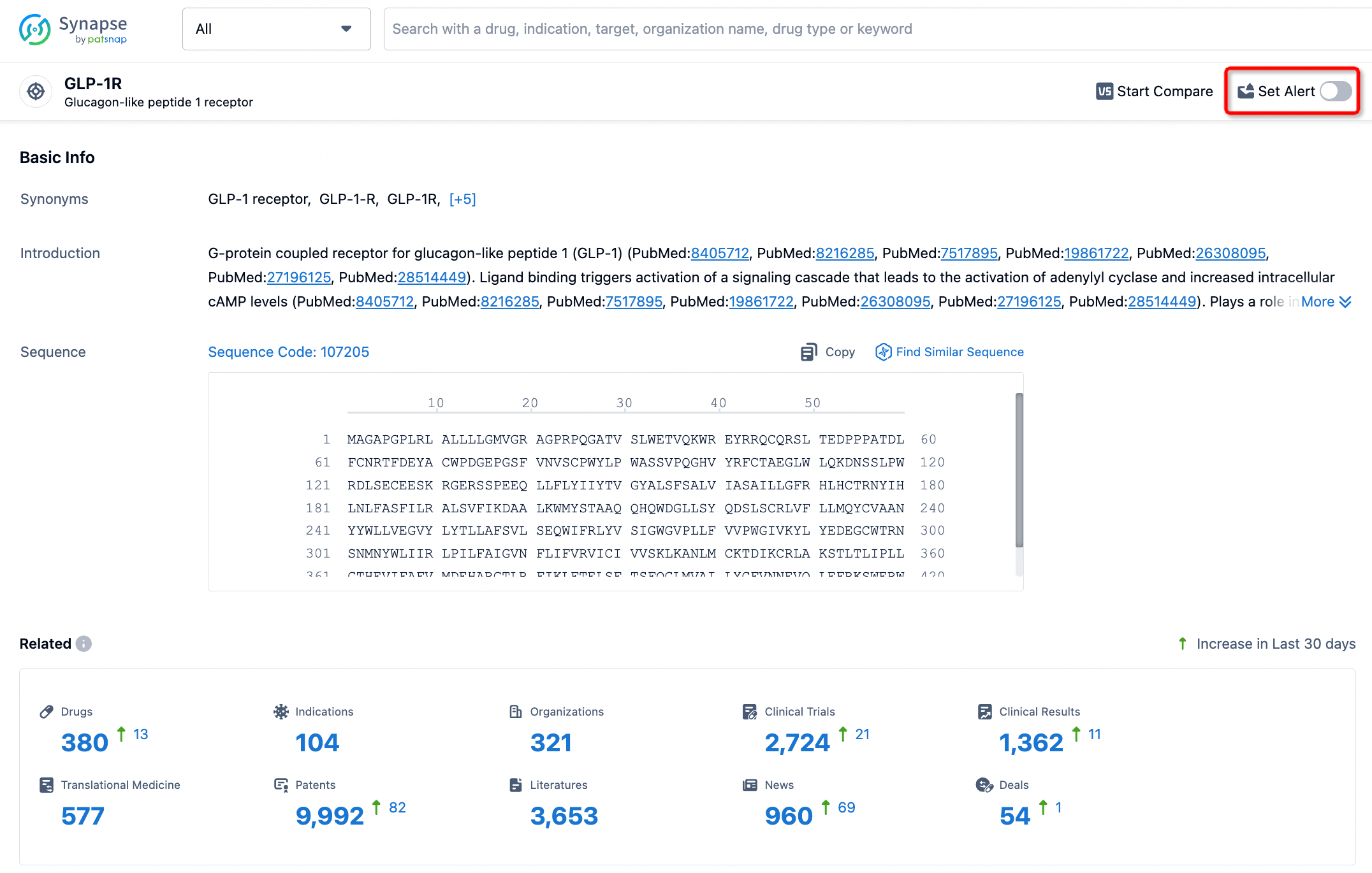
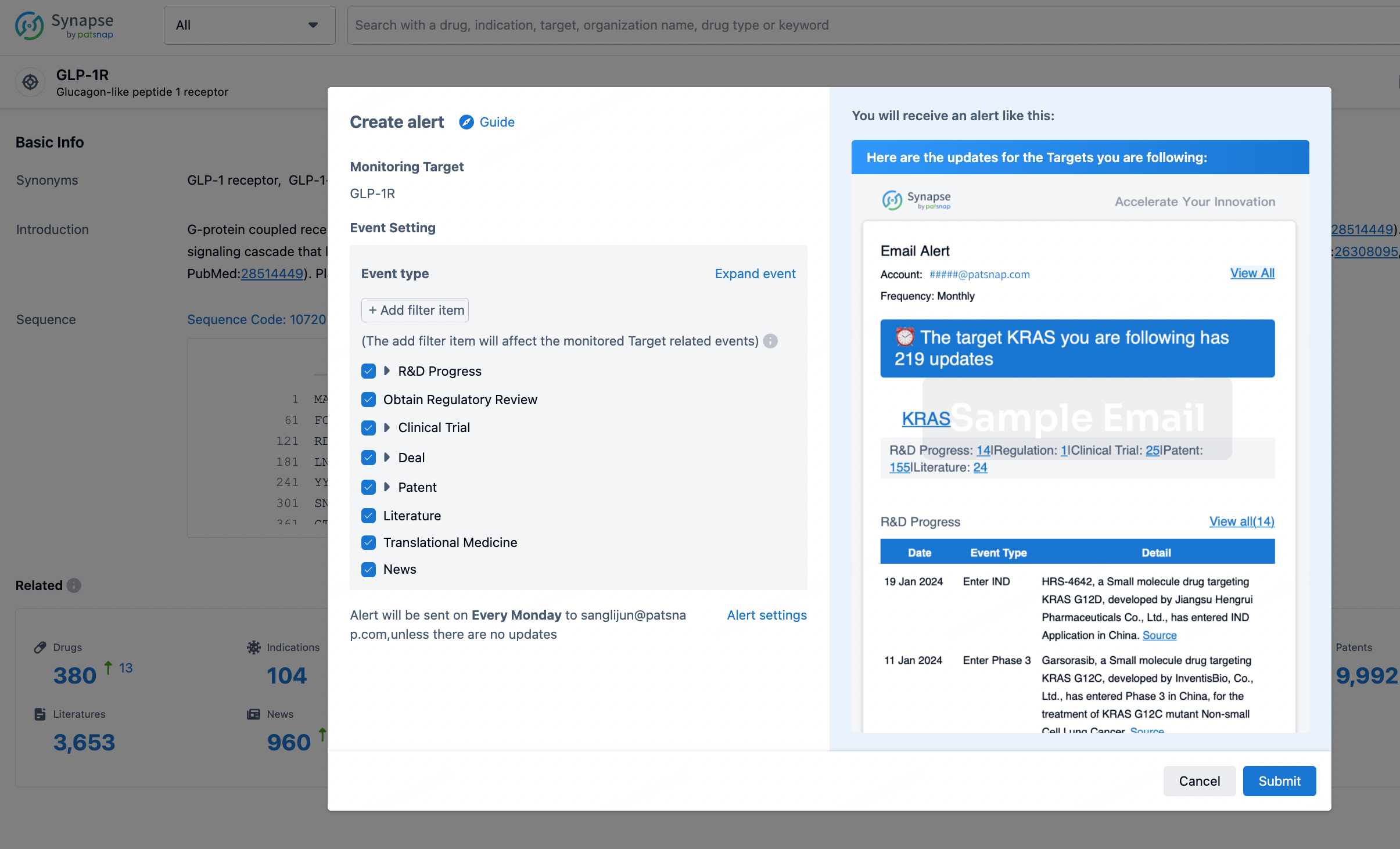
In the Synapse database, you can stay updated on the latest research and development advances of all targets. This service is accessible anytime and anywhere, with updates available daily or weekly. Use the "Set Alert" function to stay informed. Click on the image below to embark on a brand new journey of drug discovery!

AI Agents Built for Biopharma Breakthroughs
Accelerate discovery. Empower decisions. Transform outcomes.
Get started for free today!
Accelerate Strategic R&D decision making with Synapse, PatSnap’s AI-powered Connected Innovation Intelligence Platform Built for Life Sciences Professionals.
Start your data trial now!
Synapse data is also accessible to external entities via APIs or data packages. Empower better decisions with the latest in pharmaceutical intelligence.