Request Demo
What are ITGA2&ITGB1 antagonists and how do they work?
25 June 2024
Integrins are a family of cell surface receptors that play crucial roles in cell adhesion, migration, and signaling. Among the various integrins, ITGA2 and ITGB1 have garnered significant attention due to their involvement in numerous physiological and pathological processes. This blog post delves into the world of ITGA2&ITGB1 antagonists, exploring their mechanisms of action and therapeutic applications.
### Introduction to ITGA2&ITGB1 Antagonists
Integrins are heterodimeric proteins composed of alpha (α) and beta (β) subunits, which bind to extracellular matrix (ECM) proteins and mediate cell-ECM interactions. ITGA2 (integrin alpha 2) and ITGB1 (integrin beta 1) form a specific receptor that binds to collagen and laminin in the ECM. This binding facilitates various cellular functions, including cell adhesion, migration, proliferation, and differentiation.
ITGA2&ITGB1 antagonists are molecules designed to inhibit the interaction between these integrins and their ligands. By blocking this interaction, these antagonists can modulate cellular behavior and have potential therapeutic implications in various diseases, including cancer, fibrosis, and inflammatory disorders.
### How Do ITGA2&ITGB1 Antagonists Work?
The primary mechanism of action of ITGA2&ITGB1 antagonists involves the disruption of integrin-ligand interactions. Integrins undergo conformational changes that enable high-affinity binding to their ligands. Antagonists can prevent these conformational changes or directly compete with ligands for binding sites, thereby inhibiting integrin function.
1. **Competitive Inhibition**: Some antagonists bind to the same site on the integrin as the natural ligand, effectively blocking the binding of the ligand. This prevents the activation of downstream signaling pathways that are initiated upon ligand binding.
2. **Allosteric Inhibition**: These antagonists bind to a different site on the integrin, inducing conformational changes that reduce the integrin's affinity for its ligand. This type of inhibition can be highly specific and effective.
3. **Intracellular Pathway Modulation**: Certain antagonists may interfere with intracellular signaling pathways activated by integrins. By targeting these downstream pathways, these antagonists can reduce the cellular responses mediated by ITGA2&ITGB1 integrins.
### What Are ITGA2&ITGB1 Antagonists Used For?
The therapeutic potential of ITGA2&ITGB1 antagonists is vast, with applications spanning multiple disease states. Here are some key areas where these antagonists are being explored:
1. **Cancer**: Integrins play a critical role in tumor progression, angiogenesis, and metastasis. ITGA2&ITGB1 integrins are often overexpressed in various cancers, facilitating tumor cell invasion and dissemination. Antagonists targeting these integrins can inhibit tumor growth and metastasis by disrupting cancer cell-ECM interactions and reducing angiogenesis. Preclinical studies have shown promising results, and clinical trials are underway to evaluate their efficacy in cancer patients.
2. **Fibrosis**: Fibrotic diseases are characterized by excessive ECM deposition and tissue stiffening, leading to organ dysfunction. ITGA2&ITGB1 integrins are implicated in the activation of fibroblasts and the progression of fibrosis. By inhibiting these integrins, antagonists can mitigate fibrotic processes and preserve organ function. Research is ongoing to develop these antagonists for conditions like liver fibrosis, pulmonary fibrosis, and cardiac fibrosis.
3. **Inflammatory Disorders**: Integrins are involved in leukocyte adhesion and migration, key steps in the inflammatory response. In conditions such as inflammatory bowel disease (IBD) and rheumatoid arthritis, dysregulated integrin activity contributes to chronic inflammation and tissue damage. ITGA2&ITGB1 antagonists can reduce leukocyte infiltration and inflammation, offering potential therapeutic benefits for these disorders.
4. **Thrombosis and Cardiovascular Diseases**: Integrins play a role in platelet aggregation and vascular integrity. Antagonists targeting ITGA2&ITGB1 integrins can inhibit platelet adhesion and thrombus formation, providing a therapeutic strategy for preventing thrombosis and managing cardiovascular diseases.
In conclusion, ITGA2&ITGB1 antagonists represent a promising class of therapeutic agents with the potential to address a wide range of diseases. By targeting the fundamental processes of cell adhesion and signaling, these antagonists offer novel approaches to modulate cellular behavior and treat complex pathological conditions. As research continues to advance, we can anticipate the development of effective and targeted therapies that harness the potential of ITGA2&ITGB1 antagonists.
### Introduction to ITGA2&ITGB1 Antagonists
Integrins are heterodimeric proteins composed of alpha (α) and beta (β) subunits, which bind to extracellular matrix (ECM) proteins and mediate cell-ECM interactions. ITGA2 (integrin alpha 2) and ITGB1 (integrin beta 1) form a specific receptor that binds to collagen and laminin in the ECM. This binding facilitates various cellular functions, including cell adhesion, migration, proliferation, and differentiation.
ITGA2&ITGB1 antagonists are molecules designed to inhibit the interaction between these integrins and their ligands. By blocking this interaction, these antagonists can modulate cellular behavior and have potential therapeutic implications in various diseases, including cancer, fibrosis, and inflammatory disorders.
### How Do ITGA2&ITGB1 Antagonists Work?
The primary mechanism of action of ITGA2&ITGB1 antagonists involves the disruption of integrin-ligand interactions. Integrins undergo conformational changes that enable high-affinity binding to their ligands. Antagonists can prevent these conformational changes or directly compete with ligands for binding sites, thereby inhibiting integrin function.
1. **Competitive Inhibition**: Some antagonists bind to the same site on the integrin as the natural ligand, effectively blocking the binding of the ligand. This prevents the activation of downstream signaling pathways that are initiated upon ligand binding.
2. **Allosteric Inhibition**: These antagonists bind to a different site on the integrin, inducing conformational changes that reduce the integrin's affinity for its ligand. This type of inhibition can be highly specific and effective.
3. **Intracellular Pathway Modulation**: Certain antagonists may interfere with intracellular signaling pathways activated by integrins. By targeting these downstream pathways, these antagonists can reduce the cellular responses mediated by ITGA2&ITGB1 integrins.
### What Are ITGA2&ITGB1 Antagonists Used For?
The therapeutic potential of ITGA2&ITGB1 antagonists is vast, with applications spanning multiple disease states. Here are some key areas where these antagonists are being explored:
1. **Cancer**: Integrins play a critical role in tumor progression, angiogenesis, and metastasis. ITGA2&ITGB1 integrins are often overexpressed in various cancers, facilitating tumor cell invasion and dissemination. Antagonists targeting these integrins can inhibit tumor growth and metastasis by disrupting cancer cell-ECM interactions and reducing angiogenesis. Preclinical studies have shown promising results, and clinical trials are underway to evaluate their efficacy in cancer patients.
2. **Fibrosis**: Fibrotic diseases are characterized by excessive ECM deposition and tissue stiffening, leading to organ dysfunction. ITGA2&ITGB1 integrins are implicated in the activation of fibroblasts and the progression of fibrosis. By inhibiting these integrins, antagonists can mitigate fibrotic processes and preserve organ function. Research is ongoing to develop these antagonists for conditions like liver fibrosis, pulmonary fibrosis, and cardiac fibrosis.
3. **Inflammatory Disorders**: Integrins are involved in leukocyte adhesion and migration, key steps in the inflammatory response. In conditions such as inflammatory bowel disease (IBD) and rheumatoid arthritis, dysregulated integrin activity contributes to chronic inflammation and tissue damage. ITGA2&ITGB1 antagonists can reduce leukocyte infiltration and inflammation, offering potential therapeutic benefits for these disorders.
4. **Thrombosis and Cardiovascular Diseases**: Integrins play a role in platelet aggregation and vascular integrity. Antagonists targeting ITGA2&ITGB1 integrins can inhibit platelet adhesion and thrombus formation, providing a therapeutic strategy for preventing thrombosis and managing cardiovascular diseases.
In conclusion, ITGA2&ITGB1 antagonists represent a promising class of therapeutic agents with the potential to address a wide range of diseases. By targeting the fundamental processes of cell adhesion and signaling, these antagonists offer novel approaches to modulate cellular behavior and treat complex pathological conditions. As research continues to advance, we can anticipate the development of effective and targeted therapies that harness the potential of ITGA2&ITGB1 antagonists.
How to obtain the latest development progress of all targets?
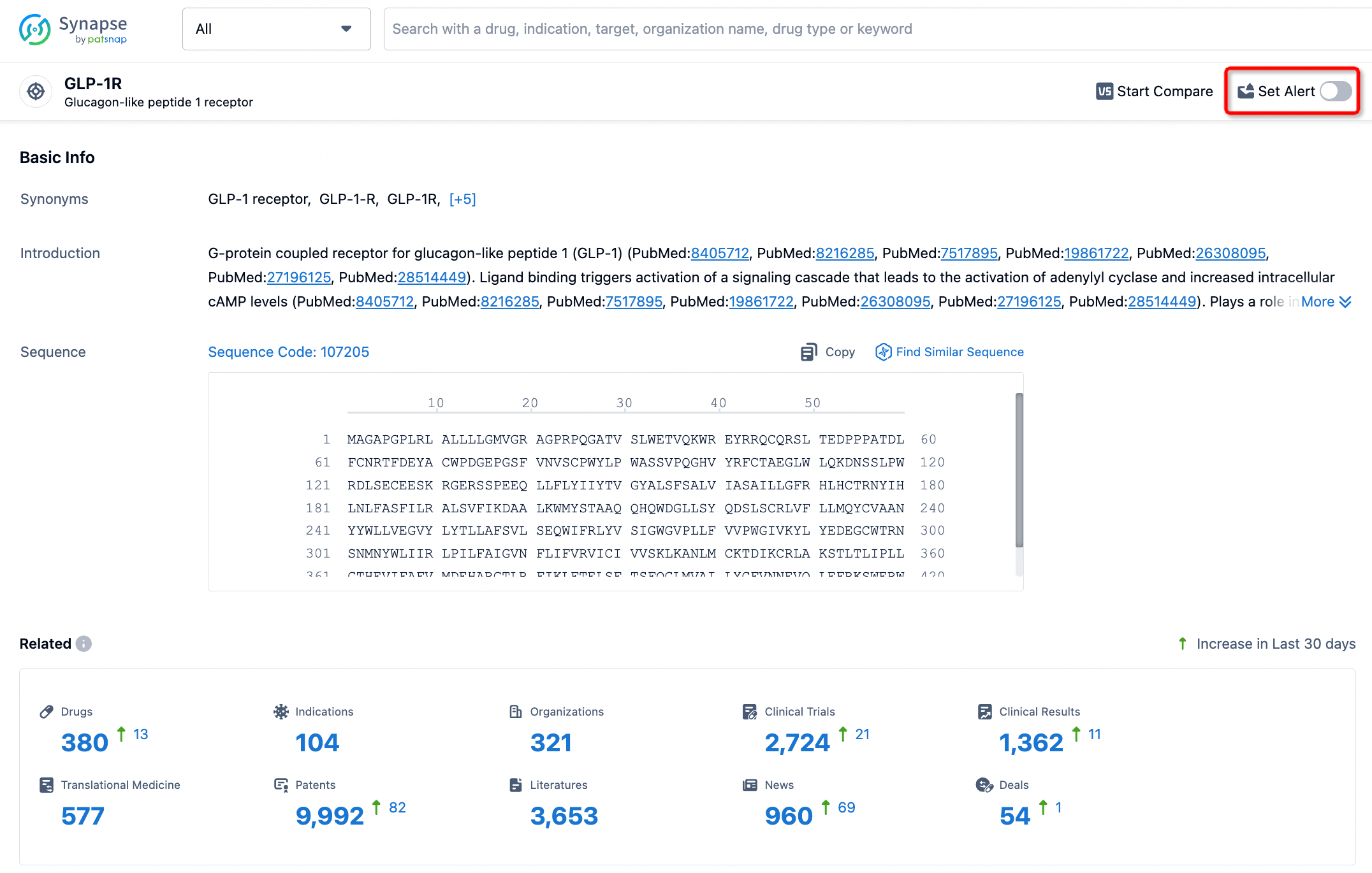
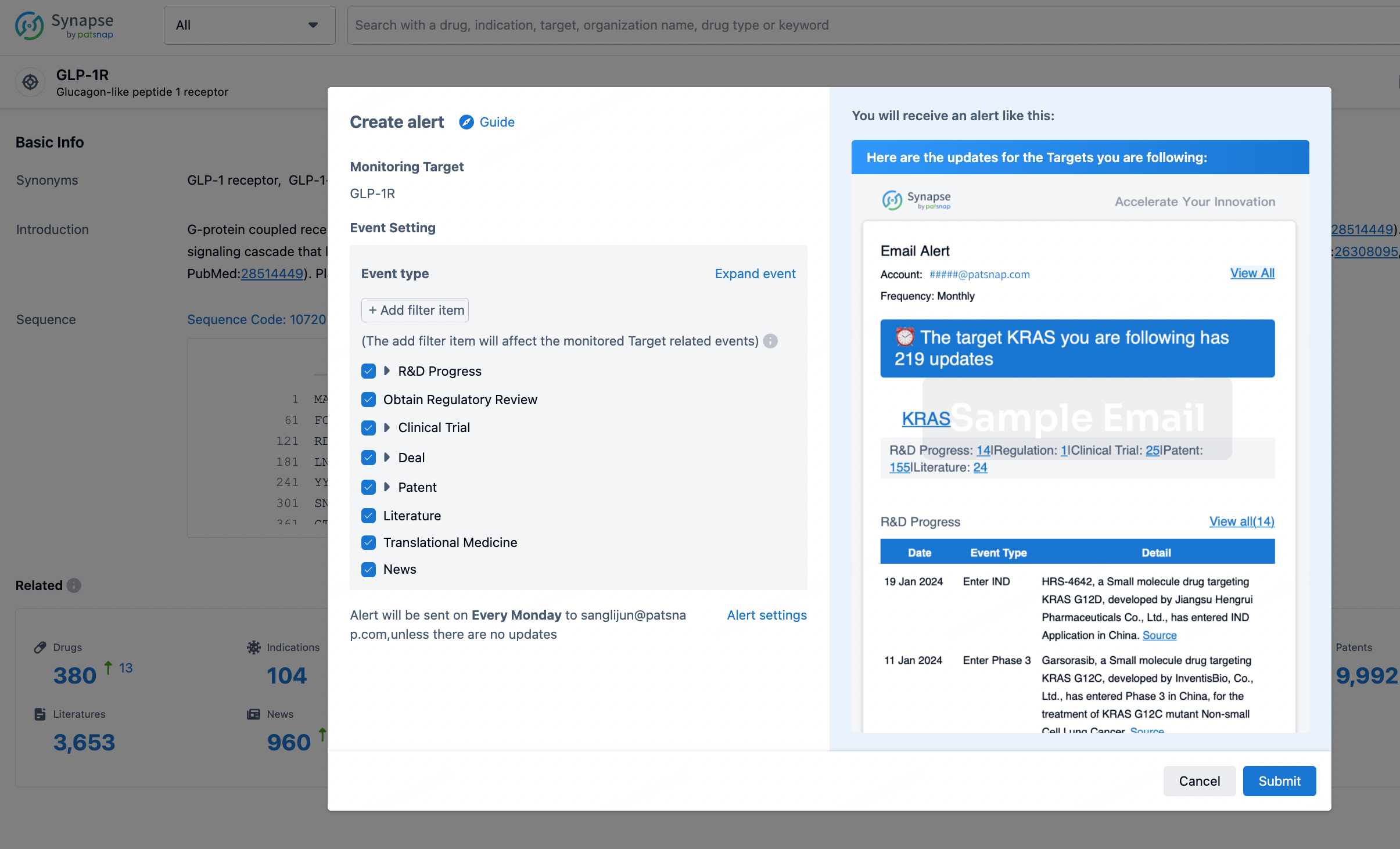
In the Synapse database, you can stay updated on the latest research and development advances of all targets. This service is accessible anytime and anywhere, with updates available daily or weekly. Use the "Set Alert" function to stay informed. Click on the image below to embark on a brand new journey of drug discovery!
AI Agents Built for Biopharma Breakthroughs
Accelerate discovery. Empower decisions. Transform outcomes.
Get started for free today!
Accelerate Strategic R&D decision making with Synapse, PatSnap’s AI-powered Connected Innovation Intelligence Platform Built for Life Sciences Professionals.
Start your data trial now!
Synapse data is also accessible to external entities via APIs or data packages. Empower better decisions with the latest in pharmaceutical intelligence.