Request Demo
What are Kv1.1 modulators and how do they work?
25 June 2024
Introduction to Kv1.1 Modulators
Kv1.1 modulators are an exciting area of research within the field of neuropharmacology, offering potential therapeutic avenues for a range of neurological conditions. Kv1.1, a member of the voltage-gated potassium (Kv) channel family, plays a crucial role in the regulation of neuronal excitability and signal transduction. By modulating the activity of these channels, researchers hope to develop treatments for diseases characterized by dysfunctional neuronal activity, such as epilepsy, multiple sclerosis, and neuropathic pain.
Kv1.1 channels are widely expressed in the central nervous system, particularly in myelinated axons, where they contribute to the shaping of action potentials and the control of neurotransmitter release. The precise regulation of these channels is essential for maintaining proper neuronal function, and disruptions in Kv1.1 activity have been implicated in a variety of pathophysiological conditions. Kv1.1 modulators, whether they be inhibitors, activators, or more nuanced allosteric regulators, offer the possibility of restoring normal channel function and, by extension, normal neural activity.
How Do Kv1.1 Modulators Work?
The primary mechanism of action for Kv1.1 modulators centers on their ability to alter the gating properties of the Kv1.1 potassium channels. These channels are composed of four alpha subunits that form a pore through which potassium ions can flow. The flow of ions is regulated by changes in membrane potential, which causes the channel to open or close. Modulators can influence this gating mechanism in several ways.
Inhibitors of Kv1.1 channels, for example, bind to the channel and stabilize it in its closed state, preventing potassium ions from exiting the neuron. This leads to prolonged depolarization of the neuronal membrane, making the neuron more excitable. On the other hand, activators facilitate the opening of Kv1.1 channels, thereby increasing potassium efflux, hyperpolarizing the membrane, and reducing neuronal excitability. Allosteric modulators offer a more refined approach by binding to sites distinct from the primary gating apparatus, subtly altering channel activity without completely blocking or activating the channel.
Pharmacological specificity is a key concern in the development of Kv1.1 modulators. Given the extensive homology within the Kv channel family, achieving selectivity for Kv1.1 over other Kv subtypes is challenging but essential to minimize off-target effects. Advances in structural biology and high-throughput screening technologies have greatly aided the identification and optimization of selective Kv1.1 modulators.
What Are Kv1.1 Modulators Used For?
Kv1.1 modulators have shown promise in preclinical studies for a variety of neurological disorders. One of the most extensively studied applications is in the treatment of epilepsy. Certain forms of epilepsy are associated with mutations in the KCNA1 gene, which encodes the Kv1.1 channel. These mutations typically result in loss-of-function, leading to hyperexcitability of neurons. Kv1.1 activators could potentially counteract this hyperexcitability, restoring normal neuronal firing patterns and reducing the frequency of seizures.
Another area of interest is the use of Kv1.1 inhibitors in the management of multiple sclerosis (MS). MS is characterized by the demyelination of axons, which disrupts the normal propagation of action potentials. Kv1.1 channels become aberrantly active in demyelinated axons, contributing to conduction block. By inhibiting these channels, it may be possible to restore action potential propagation and improve neurological function in MS patients.
Kv1.1 modulators are also being investigated for their potential in treating neuropathic pain, a condition that arises from damage to the nervous system. In this context, the goal is to reduce the hyperexcitability of pain pathways. Kv1.1 activators could help to dampen the aberrant neuronal activity associated with neuropathic pain, providing relief to sufferers.
In conclusion, Kv1.1 modulators represent a promising class of therapeutic agents with the potential to address a variety of neurological disorders. By fine-tuning the activity of Kv1.1 channels, these modulators can help to restore normal neuronal function and ameliorate symptoms associated with channelopathies and other neurological conditions. Ongoing research and clinical trials will further elucidate their therapeutic potential and pave the way for new, targeted treatments.
Kv1.1 modulators are an exciting area of research within the field of neuropharmacology, offering potential therapeutic avenues for a range of neurological conditions. Kv1.1, a member of the voltage-gated potassium (Kv) channel family, plays a crucial role in the regulation of neuronal excitability and signal transduction. By modulating the activity of these channels, researchers hope to develop treatments for diseases characterized by dysfunctional neuronal activity, such as epilepsy, multiple sclerosis, and neuropathic pain.
Kv1.1 channels are widely expressed in the central nervous system, particularly in myelinated axons, where they contribute to the shaping of action potentials and the control of neurotransmitter release. The precise regulation of these channels is essential for maintaining proper neuronal function, and disruptions in Kv1.1 activity have been implicated in a variety of pathophysiological conditions. Kv1.1 modulators, whether they be inhibitors, activators, or more nuanced allosteric regulators, offer the possibility of restoring normal channel function and, by extension, normal neural activity.
How Do Kv1.1 Modulators Work?
The primary mechanism of action for Kv1.1 modulators centers on their ability to alter the gating properties of the Kv1.1 potassium channels. These channels are composed of four alpha subunits that form a pore through which potassium ions can flow. The flow of ions is regulated by changes in membrane potential, which causes the channel to open or close. Modulators can influence this gating mechanism in several ways.
Inhibitors of Kv1.1 channels, for example, bind to the channel and stabilize it in its closed state, preventing potassium ions from exiting the neuron. This leads to prolonged depolarization of the neuronal membrane, making the neuron more excitable. On the other hand, activators facilitate the opening of Kv1.1 channels, thereby increasing potassium efflux, hyperpolarizing the membrane, and reducing neuronal excitability. Allosteric modulators offer a more refined approach by binding to sites distinct from the primary gating apparatus, subtly altering channel activity without completely blocking or activating the channel.
Pharmacological specificity is a key concern in the development of Kv1.1 modulators. Given the extensive homology within the Kv channel family, achieving selectivity for Kv1.1 over other Kv subtypes is challenging but essential to minimize off-target effects. Advances in structural biology and high-throughput screening technologies have greatly aided the identification and optimization of selective Kv1.1 modulators.
What Are Kv1.1 Modulators Used For?
Kv1.1 modulators have shown promise in preclinical studies for a variety of neurological disorders. One of the most extensively studied applications is in the treatment of epilepsy. Certain forms of epilepsy are associated with mutations in the KCNA1 gene, which encodes the Kv1.1 channel. These mutations typically result in loss-of-function, leading to hyperexcitability of neurons. Kv1.1 activators could potentially counteract this hyperexcitability, restoring normal neuronal firing patterns and reducing the frequency of seizures.
Another area of interest is the use of Kv1.1 inhibitors in the management of multiple sclerosis (MS). MS is characterized by the demyelination of axons, which disrupts the normal propagation of action potentials. Kv1.1 channels become aberrantly active in demyelinated axons, contributing to conduction block. By inhibiting these channels, it may be possible to restore action potential propagation and improve neurological function in MS patients.
Kv1.1 modulators are also being investigated for their potential in treating neuropathic pain, a condition that arises from damage to the nervous system. In this context, the goal is to reduce the hyperexcitability of pain pathways. Kv1.1 activators could help to dampen the aberrant neuronal activity associated with neuropathic pain, providing relief to sufferers.
In conclusion, Kv1.1 modulators represent a promising class of therapeutic agents with the potential to address a variety of neurological disorders. By fine-tuning the activity of Kv1.1 channels, these modulators can help to restore normal neuronal function and ameliorate symptoms associated with channelopathies and other neurological conditions. Ongoing research and clinical trials will further elucidate their therapeutic potential and pave the way for new, targeted treatments.
How to obtain the latest development progress of all targets?
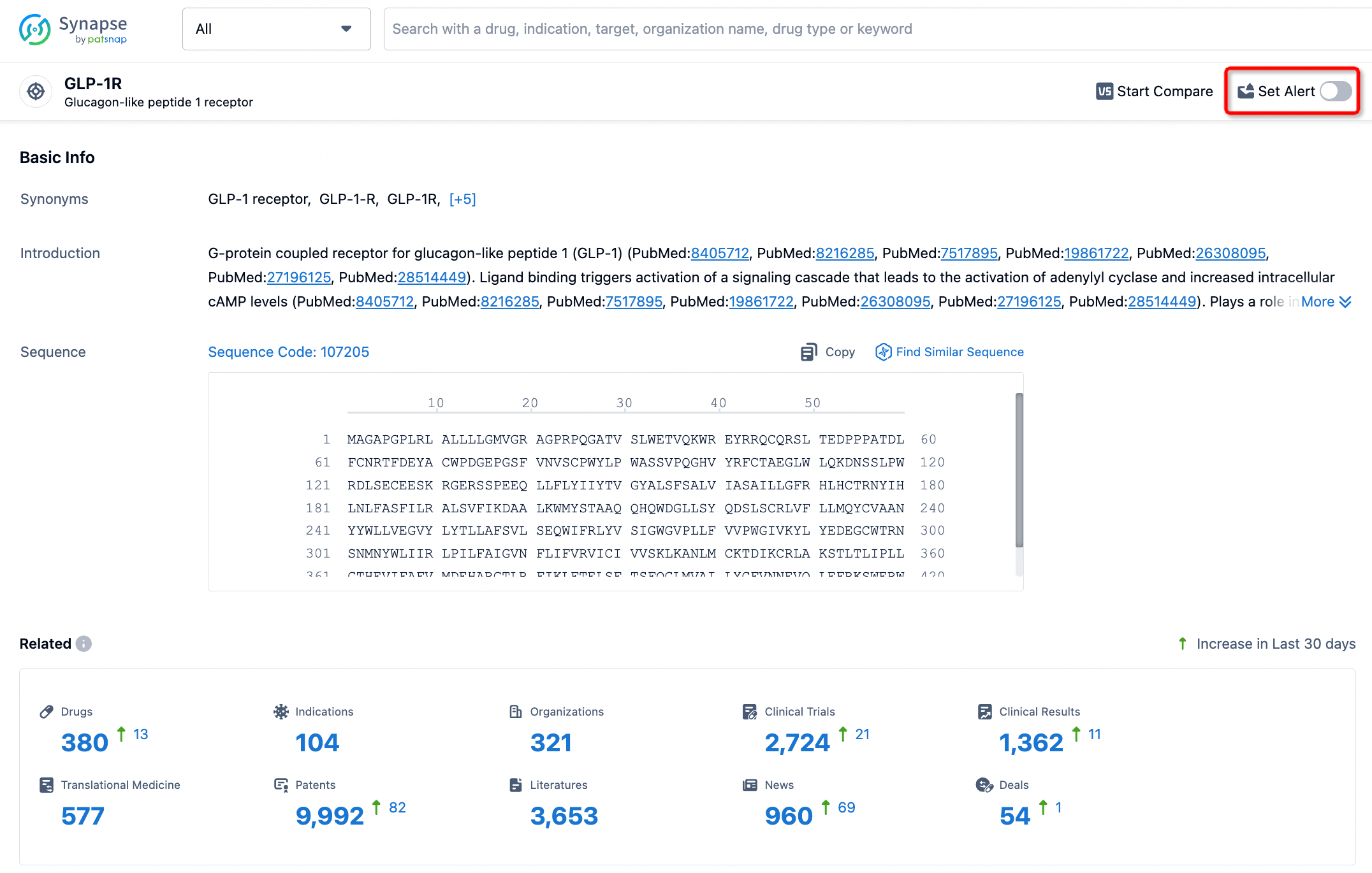
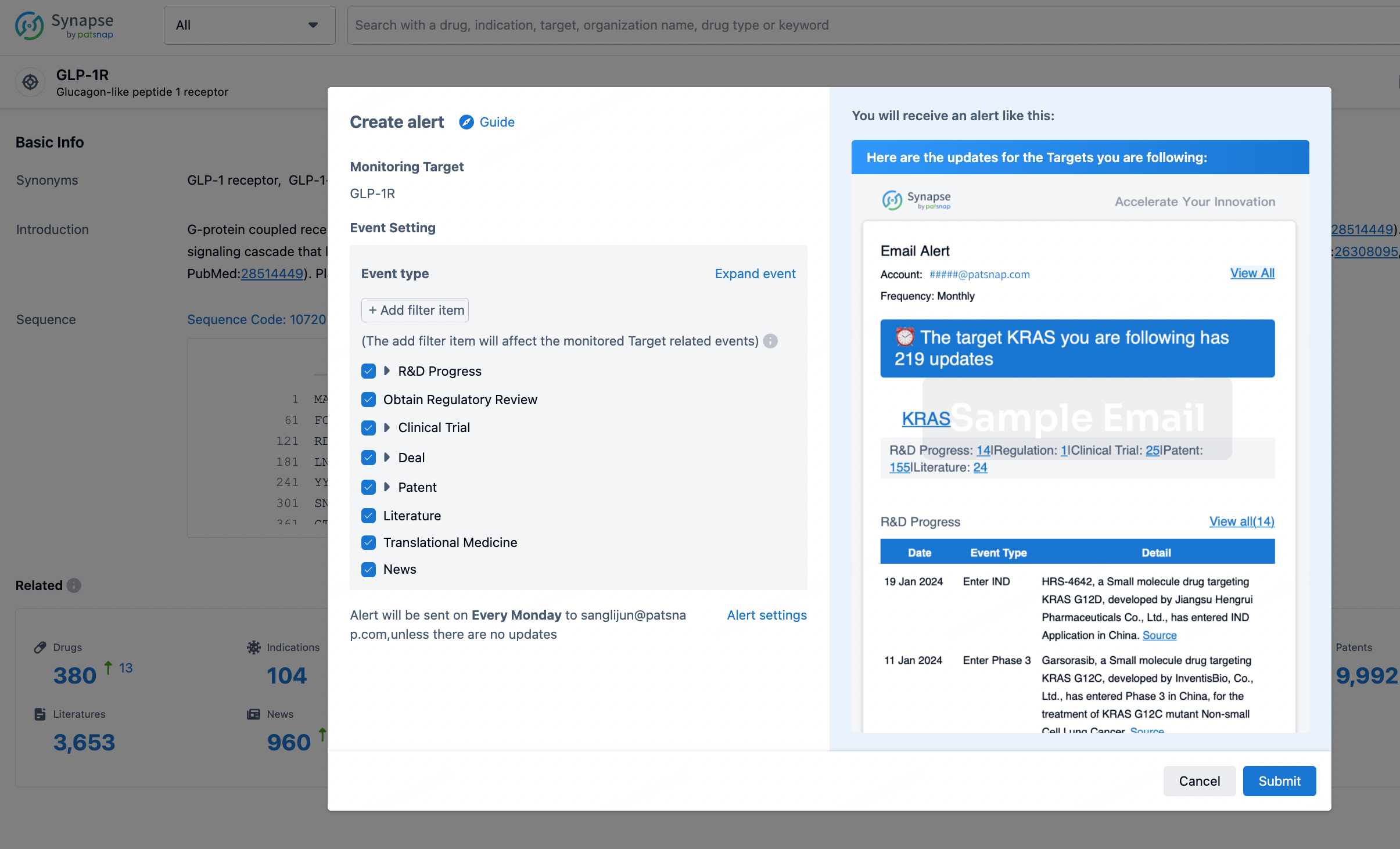
In the Synapse database, you can stay updated on the latest research and development advances of all targets. This service is accessible anytime and anywhere, with updates available daily or weekly. Use the "Set Alert" function to stay informed. Click on the image below to embark on a brand new journey of drug discovery!

Hiro LS Researcher
The AI Search Engine Built to Accelerate Biopharma Decisions
Search across billion-scale life sciences data to uncover signals, validate evidence, and act with confidence.
Ask any biopharma research question→
Get started for free today!
Accelerate Strategic R&D decision making with Synapse, Patsnap’s AI-powered Connected Innovation Intelligence Platform Built for Life Sciences Professionals.
Discover Synapse Data Servers
Synapse data is now integrated into the PatSnap LS Model Context Protocol (MCP) service. Customize your LLM agent now using our MCP server!