Request Demo
What are Kv7.3 stimulants and how do they work?
21 June 2024
In recent years, Kv7.3 stimulants have garnered significant attention in the field of neuropharmacology. These compounds have shown promise in modulating neuronal excitability and providing therapeutic benefits for a range of neurological disorders. Understanding how Kv7.3 stimulants work and their clinical applications is crucial for appreciating their potential impact on medical practice.
Kv7.3, also known as KCNQ3, is a subtype of voltage-gated potassium channels. These channels play a key role in regulating the electrical activity of neurons. Kv7.3 channels are particularly important in stabilizing the resting membrane potential and controlling the excitability of neurons. When these channels open, they allow potassium ions to flow out of the neuron, which hyperpolarizes the cell membrane and makes it less likely to fire an action potential. This mechanism is fundamental in maintaining neuronal stability and preventing excessive neuronal firing, which can lead to neurological disorders.
Kv7.3 stimulants work by enhancing the activity of these potassium channels. These stimulants bind to specific sites on the Kv7.3 channels and increase their probability of opening. By doing so, they promote the outflow of potassium ions, leading to hyperpolarization of the neuronal membrane. This hyperpolarization reduces neuronal excitability and helps to stabilize the overall electrical activity of the brain. The ability of Kv7.3 stimulants to modulate neuronal activity makes them a promising therapeutic option for conditions characterized by excessive neuronal excitability.
One of the primary uses of Kv7.3 stimulants is in the treatment of epilepsy. Epilepsy is a neurological disorder characterized by recurrent seizures, which result from abnormal, excessive electrical activity in the brain. Traditional antiepileptic drugs (AEDs) often target ion channels or neurotransmitter systems to reduce neuronal excitability. Kv7.3 stimulants offer a novel approach by directly targeting potassium channels. By enhancing the activity of Kv7.3 channels, these stimulants can help to prevent the hyperexcitability that leads to seizures. This makes them a valuable addition to the arsenal of treatments available for epilepsy, particularly for patients who do not respond well to conventional AEDs.
In addition to epilepsy, Kv7.3 stimulants have shown potential in the treatment of other neurological disorders characterized by hyperexcitability. One such condition is neuropathic pain, a chronic pain state resulting from damage to the nervous system. Neuropathic pain is often difficult to manage with traditional pain relievers, and patients frequently experience inadequate relief. By targeting Kv7.3 channels and reducing neuronal excitability, Kv7.3 stimulants may offer a novel approach to managing neuropathic pain. Preliminary studies have shown promising results, and further research is ongoing to explore their efficacy in this area.
Moreover, Kv7.3 stimulants are being investigated for their potential in treating mood disorders such as anxiety and bipolar disorder. These conditions are often associated with abnormal neuronal excitability and dysregulation of brain circuits. By modulating potassium channel activity, Kv7.3 stimulants may help to restore the balance of neuronal excitability and alleviate symptoms of mood disorders. While research in this area is still in its early stages, the potential for Kv7.3 stimulants to serve as a novel treatment option for these conditions is an exciting prospect.
In conclusion, Kv7.3 stimulants represent a promising class of compounds with the potential to modulate neuronal excitability and provide therapeutic benefits for a range of neurological disorders. By enhancing the activity of Kv7.3 channels, these stimulants can help to stabilize neuronal activity and prevent excessive excitability. Their applications in the treatment of epilepsy, neuropathic pain, and mood disorders highlight their potential to address unmet medical needs and improve the quality of life for patients suffering from these conditions. As research continues to advance, Kv7.3 stimulants may emerge as a valuable addition to the therapeutic landscape of neuropharmacology.
Kv7.3, also known as KCNQ3, is a subtype of voltage-gated potassium channels. These channels play a key role in regulating the electrical activity of neurons. Kv7.3 channels are particularly important in stabilizing the resting membrane potential and controlling the excitability of neurons. When these channels open, they allow potassium ions to flow out of the neuron, which hyperpolarizes the cell membrane and makes it less likely to fire an action potential. This mechanism is fundamental in maintaining neuronal stability and preventing excessive neuronal firing, which can lead to neurological disorders.
Kv7.3 stimulants work by enhancing the activity of these potassium channels. These stimulants bind to specific sites on the Kv7.3 channels and increase their probability of opening. By doing so, they promote the outflow of potassium ions, leading to hyperpolarization of the neuronal membrane. This hyperpolarization reduces neuronal excitability and helps to stabilize the overall electrical activity of the brain. The ability of Kv7.3 stimulants to modulate neuronal activity makes them a promising therapeutic option for conditions characterized by excessive neuronal excitability.
One of the primary uses of Kv7.3 stimulants is in the treatment of epilepsy. Epilepsy is a neurological disorder characterized by recurrent seizures, which result from abnormal, excessive electrical activity in the brain. Traditional antiepileptic drugs (AEDs) often target ion channels or neurotransmitter systems to reduce neuronal excitability. Kv7.3 stimulants offer a novel approach by directly targeting potassium channels. By enhancing the activity of Kv7.3 channels, these stimulants can help to prevent the hyperexcitability that leads to seizures. This makes them a valuable addition to the arsenal of treatments available for epilepsy, particularly for patients who do not respond well to conventional AEDs.
In addition to epilepsy, Kv7.3 stimulants have shown potential in the treatment of other neurological disorders characterized by hyperexcitability. One such condition is neuropathic pain, a chronic pain state resulting from damage to the nervous system. Neuropathic pain is often difficult to manage with traditional pain relievers, and patients frequently experience inadequate relief. By targeting Kv7.3 channels and reducing neuronal excitability, Kv7.3 stimulants may offer a novel approach to managing neuropathic pain. Preliminary studies have shown promising results, and further research is ongoing to explore their efficacy in this area.
Moreover, Kv7.3 stimulants are being investigated for their potential in treating mood disorders such as anxiety and bipolar disorder. These conditions are often associated with abnormal neuronal excitability and dysregulation of brain circuits. By modulating potassium channel activity, Kv7.3 stimulants may help to restore the balance of neuronal excitability and alleviate symptoms of mood disorders. While research in this area is still in its early stages, the potential for Kv7.3 stimulants to serve as a novel treatment option for these conditions is an exciting prospect.
In conclusion, Kv7.3 stimulants represent a promising class of compounds with the potential to modulate neuronal excitability and provide therapeutic benefits for a range of neurological disorders. By enhancing the activity of Kv7.3 channels, these stimulants can help to stabilize neuronal activity and prevent excessive excitability. Their applications in the treatment of epilepsy, neuropathic pain, and mood disorders highlight their potential to address unmet medical needs and improve the quality of life for patients suffering from these conditions. As research continues to advance, Kv7.3 stimulants may emerge as a valuable addition to the therapeutic landscape of neuropharmacology.
How to obtain the latest development progress of all targets?
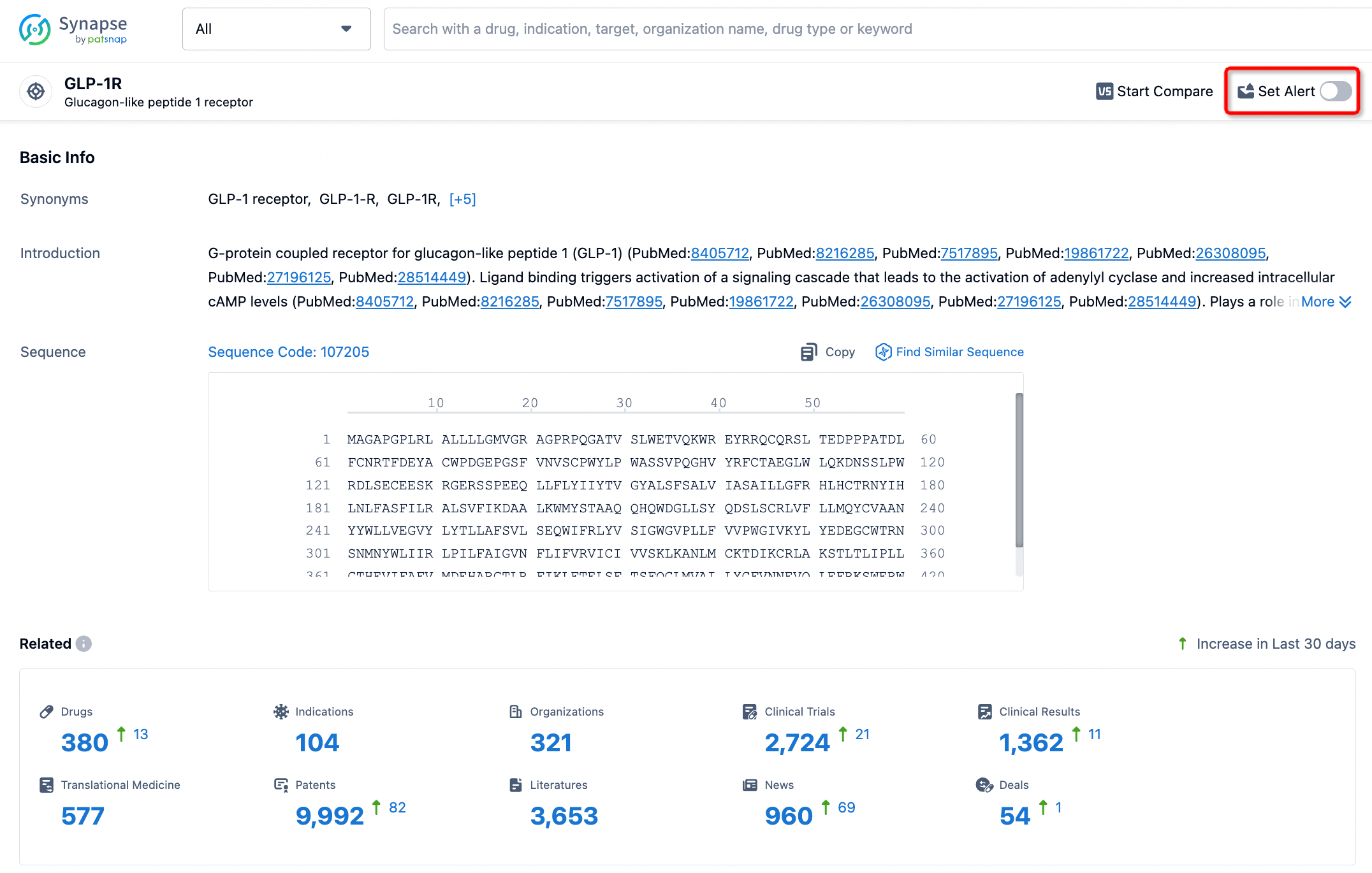
In the Synapse database, you can stay updated on the latest research and development advances of all targets. This service is accessible anytime and anywhere, with updates available daily or weekly. Use the "Set Alert" function to stay informed. Click on the image below to embark on a brand new journey of drug discovery!


AI Agents Built for Biopharma Breakthroughs
Accelerate discovery. Empower decisions. Transform outcomes.
Get started for free today!
Accelerate Strategic R&D decision making with Synapse, PatSnap’s AI-powered Connected Innovation Intelligence Platform Built for Life Sciences Professionals.
Start your data trial now!
Synapse data is also accessible to external entities via APIs or data packages. Empower better decisions with the latest in pharmaceutical intelligence.