Request Demo
What are lipoprotein(a) inhibitors and how do they work?
21 June 2024
Lipoprotein(a) inhibitors have recently emerged as promising agents in the management of cardiovascular diseases. These inhibitors target lipoprotein(a), a low-density lipoprotein (LDL) variant linked to an increased risk of atherosclerosis, myocardial infarction, and stroke. Elevated levels of lipoprotein(a), or Lp(a), have been recognized as a significant, independent risk factor for cardiovascular diseases, making the development of Lp(a) inhibitors a critical focus of contemporary medical research.
Lp(a) is a complex particle composed of an LDL-like particle attached to a unique protein called apolipoprotein(a). The structure of Lp(a) is crucial because apolipoprotein(a) is homologous to plasminogen—a key enzyme in the breakdown of blood clots. Unfortunately, this similarity interferes with the body's natural fibrinolytic processes, promoting thrombogenesis and increasing the risk of arterial blockages. Additionally, Lp(a) can deposit cholesterol in arterial walls, contributing to the formation of atherosclerotic plaques. Addressing elevated Lp(a) levels, therefore, holds great potential in reducing cardiovascular events.
Lipoprotein(a) inhibitors work through various mechanisms to reduce the levels of Lp(a) in the bloodstream. One prominent class of these inhibitors is antisense oligonucleotides (ASOs). ASOs are short, synthetic strands of nucleic acids designed to bind specifically to the messenger RNA (mRNA) that codes for apolipoprotein(a). By binding to this mRNA, ASOs prevent the translation of the apo(a) protein, effectively reducing the production of Lp(a) particles in the liver.
Inclisiran, a small interfering RNA (siRNA) molecule, is another innovative approach. It works by degrading the mRNA for proprotein convertase subtilisin/kexin type 9 (PCSK9), a protein that degrades LDL receptors. By inhibiting PCSK9, inclisiran allows for an increased number of LDL receptors on liver cells, enhancing the clearance of LDL particles, including Lp(a), from the bloodstream.
Monoclonal antibodies targeting Lp(a) are also under investigation. These antibodies bind directly to Lp(a) particles, facilitating their removal from the circulation. This approach capitalizes on the body's natural immune mechanisms to reduce Lp(a) levels.
The primary use of lipoprotein(a) inhibitors is to lower elevated Lp(a) levels, thereby reducing the risk of cardiovascular diseases. Patients with high Lp(a) levels are at a markedly increased risk for atherosclerotic cardiovascular diseases (ASCVD), including coronary artery disease (CAD), peripheral artery disease (PAD), and cerebrovascular disease. Given that Lp(a) levels are largely genetically determined and not significantly affected by lifestyle changes or conventional lipid-lowering therapies, targeted inhibition of Lp(a) offers a tailored approach for high-risk individuals.
Moreover, lipoprotein(a) inhibitors could play a role in secondary prevention. For patients who have already experienced cardiovascular events, reducing Lp(a) can help prevent recurrence. This is particularly important for those whose Lp(a) levels remain high despite optimal management of other cardiovascular risk factors, such as LDL cholesterol, hypertension, and diabetes.
In summary, while the field of lipoprotein(a) inhibitors is still in its relative infancy, the potential benefits are substantial. By specifically targeting and reducing Lp(a) levels, these inhibitors offer a novel approach to mitigating cardiovascular risk in patients with elevated Lp(a). Continued research and clinical trials are essential to fully establish the efficacy and safety of these therapies, but the initial data is promising. As our understanding of Lp(a) and its role in cardiovascular disease deepens, lipoprotein(a) inhibitors may become a cornerstone in the prevention and treatment of cardiovascular diseases, offering hope to millions at risk.
Lp(a) is a complex particle composed of an LDL-like particle attached to a unique protein called apolipoprotein(a). The structure of Lp(a) is crucial because apolipoprotein(a) is homologous to plasminogen—a key enzyme in the breakdown of blood clots. Unfortunately, this similarity interferes with the body's natural fibrinolytic processes, promoting thrombogenesis and increasing the risk of arterial blockages. Additionally, Lp(a) can deposit cholesterol in arterial walls, contributing to the formation of atherosclerotic plaques. Addressing elevated Lp(a) levels, therefore, holds great potential in reducing cardiovascular events.
Lipoprotein(a) inhibitors work through various mechanisms to reduce the levels of Lp(a) in the bloodstream. One prominent class of these inhibitors is antisense oligonucleotides (ASOs). ASOs are short, synthetic strands of nucleic acids designed to bind specifically to the messenger RNA (mRNA) that codes for apolipoprotein(a). By binding to this mRNA, ASOs prevent the translation of the apo(a) protein, effectively reducing the production of Lp(a) particles in the liver.
Inclisiran, a small interfering RNA (siRNA) molecule, is another innovative approach. It works by degrading the mRNA for proprotein convertase subtilisin/kexin type 9 (PCSK9), a protein that degrades LDL receptors. By inhibiting PCSK9, inclisiran allows for an increased number of LDL receptors on liver cells, enhancing the clearance of LDL particles, including Lp(a), from the bloodstream.
Monoclonal antibodies targeting Lp(a) are also under investigation. These antibodies bind directly to Lp(a) particles, facilitating their removal from the circulation. This approach capitalizes on the body's natural immune mechanisms to reduce Lp(a) levels.
The primary use of lipoprotein(a) inhibitors is to lower elevated Lp(a) levels, thereby reducing the risk of cardiovascular diseases. Patients with high Lp(a) levels are at a markedly increased risk for atherosclerotic cardiovascular diseases (ASCVD), including coronary artery disease (CAD), peripheral artery disease (PAD), and cerebrovascular disease. Given that Lp(a) levels are largely genetically determined and not significantly affected by lifestyle changes or conventional lipid-lowering therapies, targeted inhibition of Lp(a) offers a tailored approach for high-risk individuals.
Moreover, lipoprotein(a) inhibitors could play a role in secondary prevention. For patients who have already experienced cardiovascular events, reducing Lp(a) can help prevent recurrence. This is particularly important for those whose Lp(a) levels remain high despite optimal management of other cardiovascular risk factors, such as LDL cholesterol, hypertension, and diabetes.
In summary, while the field of lipoprotein(a) inhibitors is still in its relative infancy, the potential benefits are substantial. By specifically targeting and reducing Lp(a) levels, these inhibitors offer a novel approach to mitigating cardiovascular risk in patients with elevated Lp(a). Continued research and clinical trials are essential to fully establish the efficacy and safety of these therapies, but the initial data is promising. As our understanding of Lp(a) and its role in cardiovascular disease deepens, lipoprotein(a) inhibitors may become a cornerstone in the prevention and treatment of cardiovascular diseases, offering hope to millions at risk.
How to obtain the latest development progress of all targets?
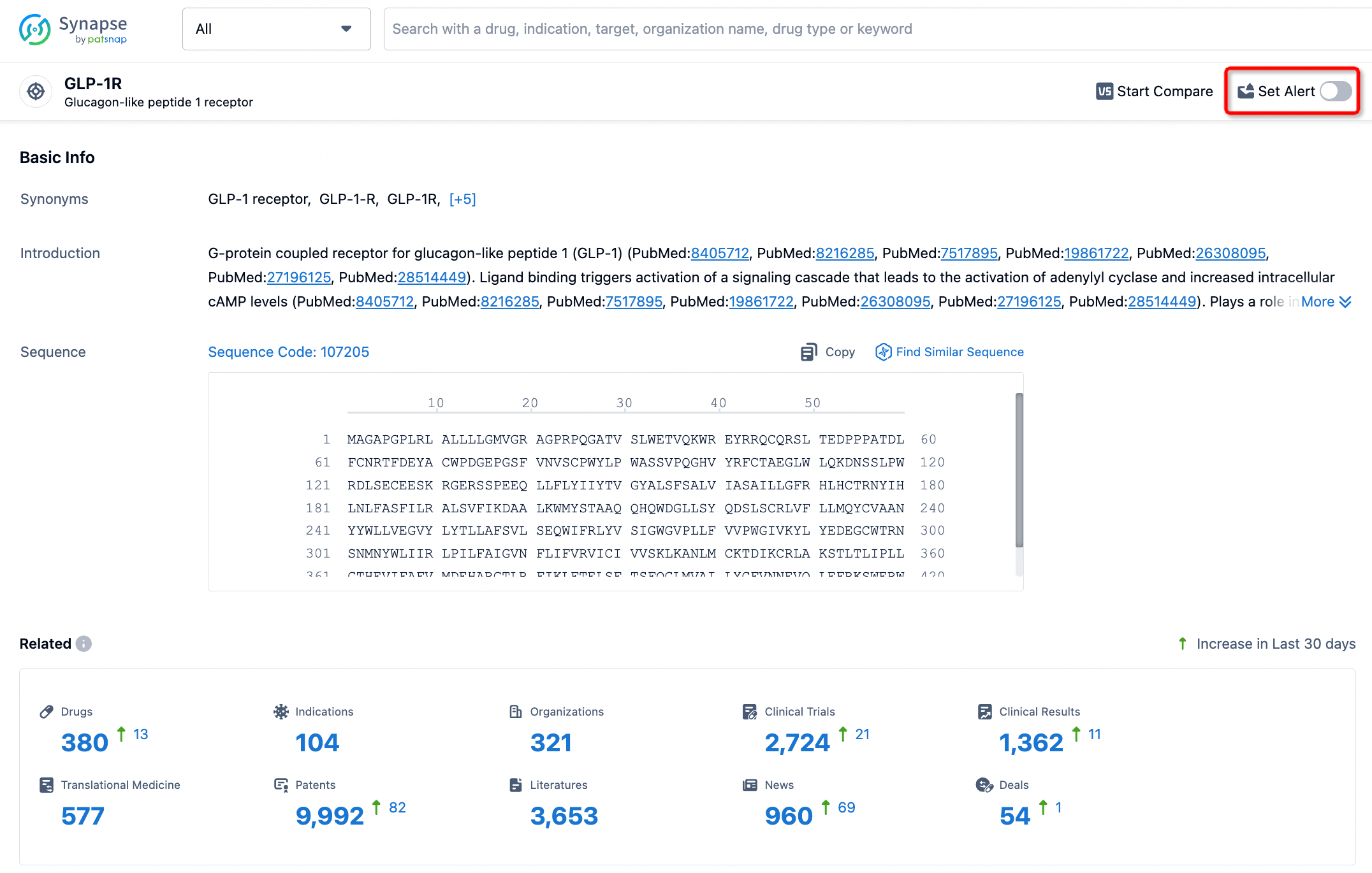
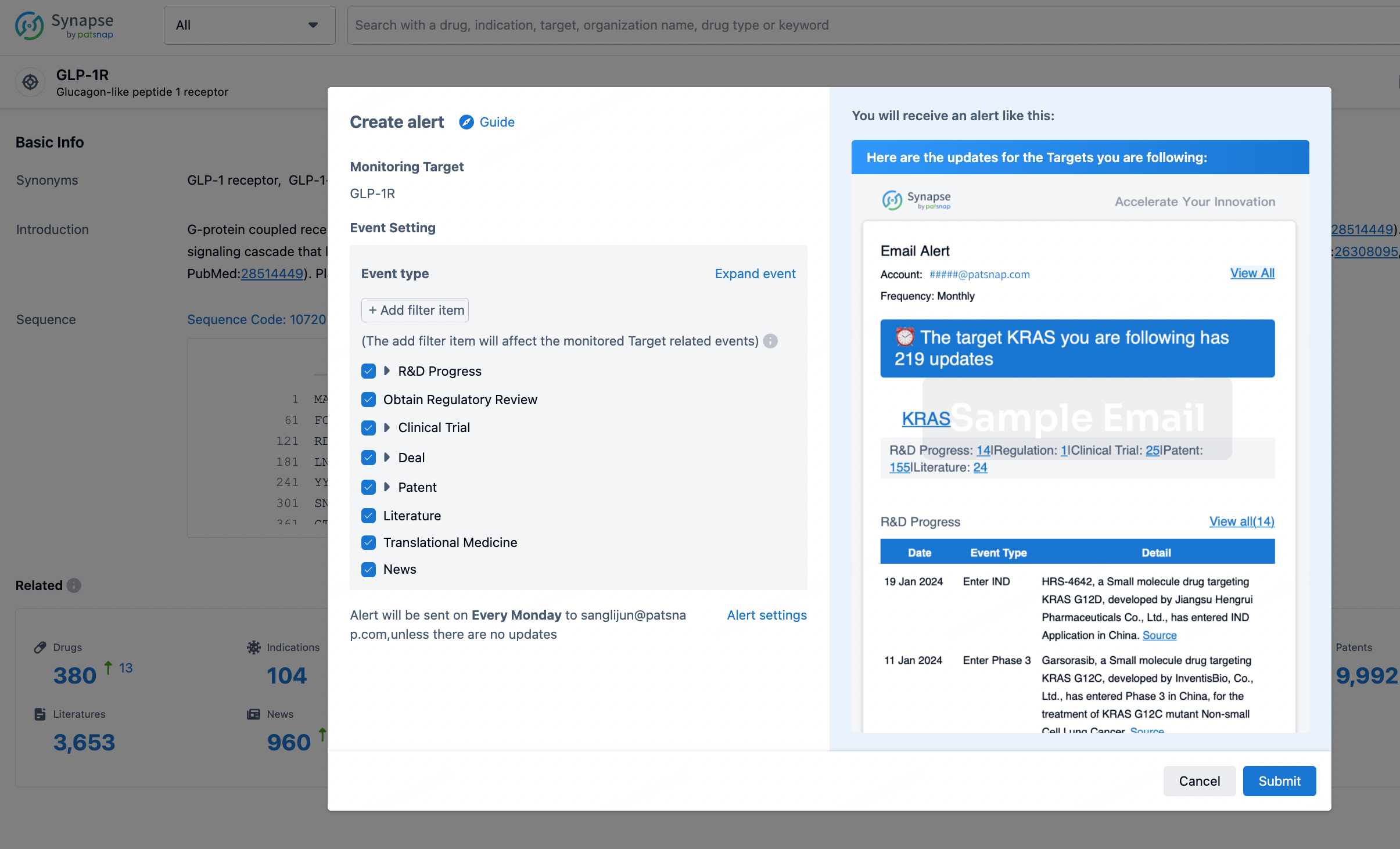
In the Synapse database, you can stay updated on the latest research and development advances of all targets. This service is accessible anytime and anywhere, with updates available daily or weekly. Use the "Set Alert" function to stay informed. Click on the image below to embark on a brand new journey of drug discovery!
AI Agents Built for Biopharma Breakthroughs
Accelerate discovery. Empower decisions. Transform outcomes.
Get started for free today!
Accelerate Strategic R&D decision making with Synapse, PatSnap’s AI-powered Connected Innovation Intelligence Platform Built for Life Sciences Professionals.
Start your data trial now!
Synapse data is also accessible to external entities via APIs or data packages. Empower better decisions with the latest in pharmaceutical intelligence.