Request Demo
What are MAGEA10 inhibitors and how do they work?
25 June 2024
In recent years, cancer research has made significant strides towards identifying novel therapeutic targets. One such target is the melanoma-associated antigen A10 (MAGEA10), a member of the MAGE gene family. MAGEA10 is gaining attention for its role in various malignancies and its potential as a therapeutic target. This article delves into the fundamentals of MAGEA10 inhibitors, elucidating how they work and exploring their applications in cancer treatment.
MAGEA10, a cancer-testis antigen, is typically expressed in the testis but aberrantly expressed in various cancers, including melanoma, lung cancer, and breast cancer. This differential expression makes MAGEA10 an intriguing target for cancer therapy, as its inhibition can potentially disrupt cancer cell survival without adversely affecting normal tissues. MAGEA10 inhibitors are designed to specifically target and inhibit the function of this protein, contributing to cancer cell death and reducing tumor growth.
MAGEA10 inhibitors work by interfering with the protein's function, which is crucial for the survival and proliferation of cancer cells. While the exact mechanisms can vary depending on the specific inhibitor, the general principle involves disrupting the interaction between MAGEA10 and other cellular proteins that promote tumor growth and survival. One approach involves small molecules that bind to MAGEA10, preventing it from interacting with its partners. This disruption can lead to the degradation of MAGEA10 or inhibit its function, thereby suppressing cancer cell proliferation and inducing apoptosis.
Another promising approach is the use of monoclonal antibodies that specifically target MAGEA10. These antibodies can bind to MAGEA10 on the surface of cancer cells, marking them for destruction by the immune system. This method not only inhibits the function of MAGEA10 but also enhances the immune system's ability to recognize and eliminate cancer cells. Additionally, advancements in gene editing technologies, such as CRISPR-Cas9, have paved the way for the development of gene therapies that can knock out the MAGEA10 gene in cancer cells, further inhibiting tumor growth.
MAGEA10 inhibitors are primarily used in cancer treatment, particularly in cancers where MAGEA10 is highly expressed. Clinical trials and preclinical studies have shown promising results in various cancer types, including melanoma, non-small cell lung cancer (NSCLC), and certain subtypes of breast cancer. In melanoma, for instance, MAGEA10 inhibitors have demonstrated the ability to reduce tumor size and improve patient outcomes, particularly in cases where traditional therapies have failed.
Moreover, MAGEA10 inhibitors are being explored as part of combination therapies. By integrating MAGEA10 inhibitors with other treatment modalities, such as chemotherapy, radiotherapy, or immune checkpoint inhibitors, researchers aim to enhance the overall efficacy of cancer treatment. This approach leverages the strengths of different therapeutic strategies, potentially leading to more comprehensive and lasting responses in patients.
In addition to their role in direct cancer treatment, MAGEA10 inhibitors also hold promise for improving diagnostic and prognostic tools. By understanding the expression patterns of MAGEA10 in various cancers, clinicians can potentially develop more precise diagnostic markers and tailor treatment plans more effectively. Furthermore, monitoring changes in MAGEA10 expression during treatment could provide valuable insights into treatment efficacy and disease progression.
The development and application of MAGEA10 inhibitors represent a promising frontier in cancer therapy. By specifically targeting a protein that is aberrantly expressed in cancer cells, these inhibitors offer a strategic approach to disrupt tumor growth with minimal impact on normal tissues. As research progresses, the integration of MAGEA10 inhibitors into combination therapies and their potential role in diagnostics and prognostics could significantly enhance cancer treatment paradigms.
MAGEA10, a cancer-testis antigen, is typically expressed in the testis but aberrantly expressed in various cancers, including melanoma, lung cancer, and breast cancer. This differential expression makes MAGEA10 an intriguing target for cancer therapy, as its inhibition can potentially disrupt cancer cell survival without adversely affecting normal tissues. MAGEA10 inhibitors are designed to specifically target and inhibit the function of this protein, contributing to cancer cell death and reducing tumor growth.
MAGEA10 inhibitors work by interfering with the protein's function, which is crucial for the survival and proliferation of cancer cells. While the exact mechanisms can vary depending on the specific inhibitor, the general principle involves disrupting the interaction between MAGEA10 and other cellular proteins that promote tumor growth and survival. One approach involves small molecules that bind to MAGEA10, preventing it from interacting with its partners. This disruption can lead to the degradation of MAGEA10 or inhibit its function, thereby suppressing cancer cell proliferation and inducing apoptosis.
Another promising approach is the use of monoclonal antibodies that specifically target MAGEA10. These antibodies can bind to MAGEA10 on the surface of cancer cells, marking them for destruction by the immune system. This method not only inhibits the function of MAGEA10 but also enhances the immune system's ability to recognize and eliminate cancer cells. Additionally, advancements in gene editing technologies, such as CRISPR-Cas9, have paved the way for the development of gene therapies that can knock out the MAGEA10 gene in cancer cells, further inhibiting tumor growth.
MAGEA10 inhibitors are primarily used in cancer treatment, particularly in cancers where MAGEA10 is highly expressed. Clinical trials and preclinical studies have shown promising results in various cancer types, including melanoma, non-small cell lung cancer (NSCLC), and certain subtypes of breast cancer. In melanoma, for instance, MAGEA10 inhibitors have demonstrated the ability to reduce tumor size and improve patient outcomes, particularly in cases where traditional therapies have failed.
Moreover, MAGEA10 inhibitors are being explored as part of combination therapies. By integrating MAGEA10 inhibitors with other treatment modalities, such as chemotherapy, radiotherapy, or immune checkpoint inhibitors, researchers aim to enhance the overall efficacy of cancer treatment. This approach leverages the strengths of different therapeutic strategies, potentially leading to more comprehensive and lasting responses in patients.
In addition to their role in direct cancer treatment, MAGEA10 inhibitors also hold promise for improving diagnostic and prognostic tools. By understanding the expression patterns of MAGEA10 in various cancers, clinicians can potentially develop more precise diagnostic markers and tailor treatment plans more effectively. Furthermore, monitoring changes in MAGEA10 expression during treatment could provide valuable insights into treatment efficacy and disease progression.
The development and application of MAGEA10 inhibitors represent a promising frontier in cancer therapy. By specifically targeting a protein that is aberrantly expressed in cancer cells, these inhibitors offer a strategic approach to disrupt tumor growth with minimal impact on normal tissues. As research progresses, the integration of MAGEA10 inhibitors into combination therapies and their potential role in diagnostics and prognostics could significantly enhance cancer treatment paradigms.
How to obtain the latest development progress of all targets?
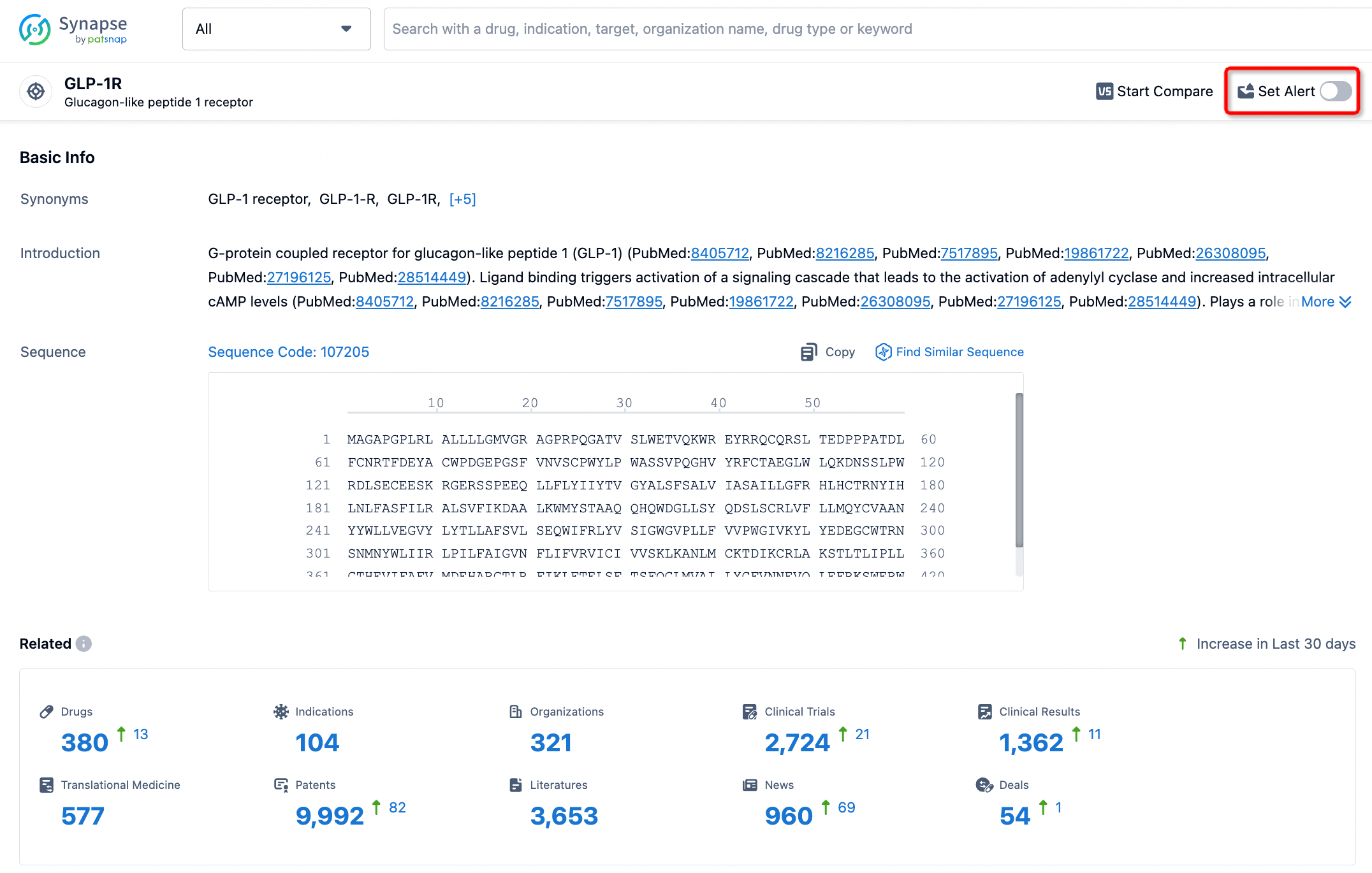
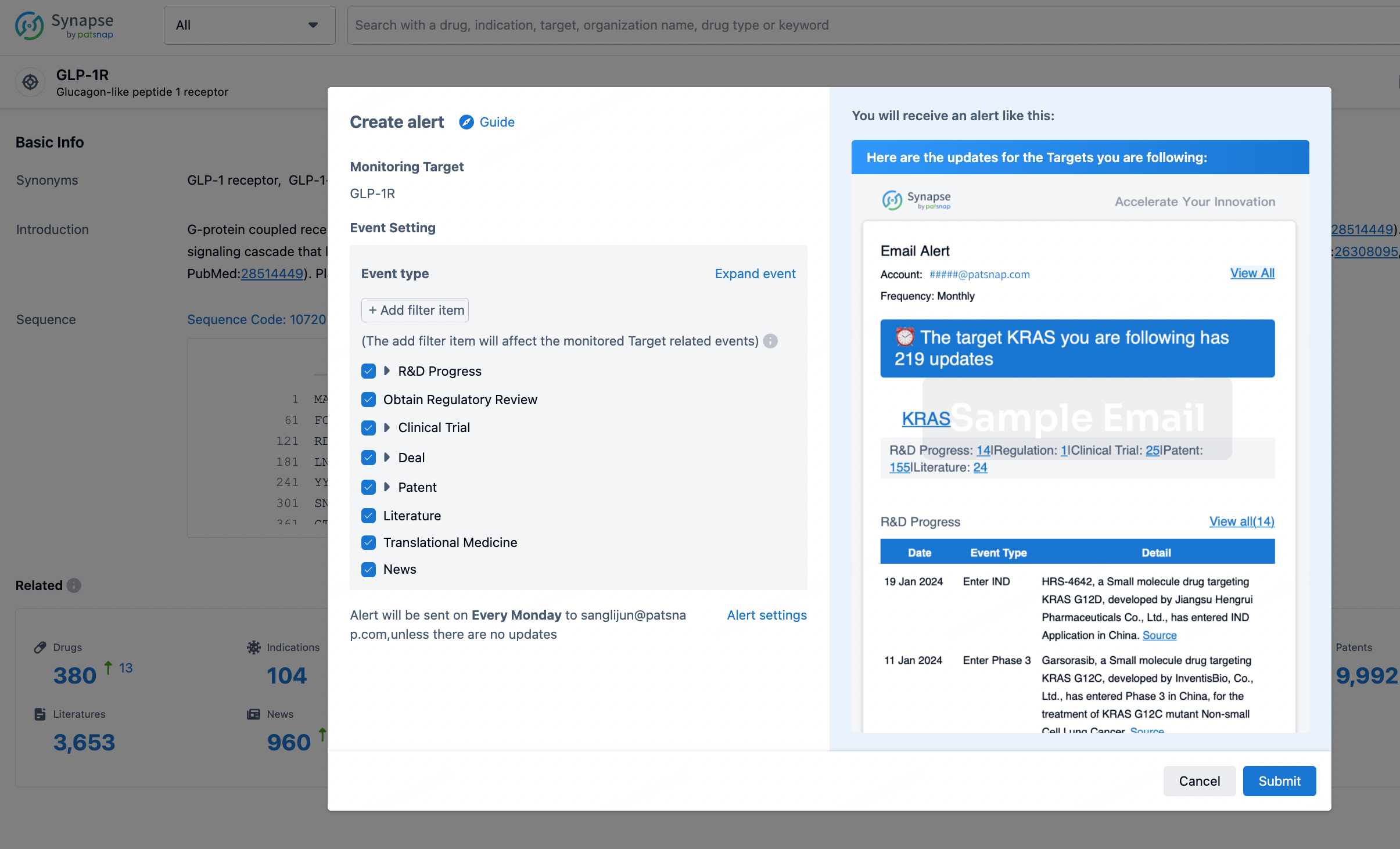
In the Synapse database, you can stay updated on the latest research and development advances of all targets. This service is accessible anytime and anywhere, with updates available daily or weekly. Use the "Set Alert" function to stay informed. Click on the image below to embark on a brand new journey of drug discovery!

AI Agents Built for Biopharma Breakthroughs
Accelerate discovery. Empower decisions. Transform outcomes.
Get started for free today!
Accelerate Strategic R&D decision making with Synapse, PatSnap’s AI-powered Connected Innovation Intelligence Platform Built for Life Sciences Professionals.
Start your data trial now!
Synapse data is also accessible to external entities via APIs or data packages. Empower better decisions with the latest in pharmaceutical intelligence.