Request Demo
What are MerTK inhibitors and how do they work?
21 June 2024
MerTK inhibitors represent a burgeoning area of research and therapeutic development in the field of oncology and immune modulation. MerTK, or Mer Tyrosine Kinase, is a receptor tyrosine kinase that plays a crucial role in the regulation of immune responses, cellular survival, and the clearance of apoptotic cells (a process known as efferocytosis). Aberrant MerTK signaling has been implicated in various malignancies and autoimmune conditions, making MerTK inhibitors a promising target for therapeutic intervention.
MerTK inhibitors work by specifically binding to the MerTK receptor and blocking its kinase activity. By inhibiting this pathway, these drugs can modulate various biological processes. For example, in cancer, MerTK overexpression helps tumors evade the immune system and supports cancer cell survival and proliferation. By inhibiting MerTK, these drugs aim to restore the immune system's ability to recognize and attack cancer cells. Additionally, MerTK inhibition can decrease the survival signals in cancer cells, making them more susceptible to apoptosis.
In the context of immune regulation, MerTK inhibitors can modulate the immune response. MerTK signaling is involved in the suppression of the immune response, which is beneficial in preventing autoimmunity but detrimental in the context of cancer. By blocking MerTK, these inhibitors can enhance the body's immune response against tumors. Moreover, MerTK inhibitors can affect the clearance of apoptotic cells, potentially modulating inflammatory responses and immune regulation in various diseases.
MerTK inhibitors are primarily explored for their potential in treating various forms of cancer. In many tumors, MerTK is overexpressed and contributes to the tumor's ability to evade immune detection. By blocking MerTK, these inhibitors can effectively turn the immune system against the tumor, making them a potential cornerstone in immuno-oncology. Clinical trials are currently ongoing to evaluate the efficacy of MerTK inhibitors in different cancer types, including melanoma, non-small cell lung cancer, and triple-negative breast cancer. Preliminary studies have shown promising results, with some patients experiencing significant tumor shrinkage and prolonged survival.
Beyond oncology, MerTK inhibitors are also being investigated for their potential in treating autoimmune diseases. In conditions like rheumatoid arthritis and lupus, the overactive immune response leads to chronic inflammation and tissue damage. MerTK signaling helps regulate immune responses and maintain self-tolerance. Inhibiting MerTK in these contexts can help recalibrate the immune system, potentially reducing the inflammatory response and alleviating symptoms of these debilitating diseases.
Furthermore, MerTK inhibitors may have a role in managing chronic inflammatory diseases. By influencing the process of efferocytosis and the clearance of apoptotic cells, these inhibitors can modulate the immune response and inflammation. For instance, in diseases like atherosclerosis, where the buildup of plaques involves chronic inflammation and cell death, MerTK inhibitors could potentially help in managing the disease progression by modulating these processes.
In conclusion, MerTK inhibitors are an exciting area of research with significant potential in oncology, immune modulation, and chronic inflammatory diseases. By specifically targeting the MerTK pathway, these drugs offer a novel approach to treating diseases characterized by immune evasion, chronic inflammation, and aberrant cell survival. As ongoing clinical trials continue to unravel their full potential, MerTK inhibitors may soon become a vital component of the therapeutic arsenal against various challenging diseases.
MerTK inhibitors work by specifically binding to the MerTK receptor and blocking its kinase activity. By inhibiting this pathway, these drugs can modulate various biological processes. For example, in cancer, MerTK overexpression helps tumors evade the immune system and supports cancer cell survival and proliferation. By inhibiting MerTK, these drugs aim to restore the immune system's ability to recognize and attack cancer cells. Additionally, MerTK inhibition can decrease the survival signals in cancer cells, making them more susceptible to apoptosis.
In the context of immune regulation, MerTK inhibitors can modulate the immune response. MerTK signaling is involved in the suppression of the immune response, which is beneficial in preventing autoimmunity but detrimental in the context of cancer. By blocking MerTK, these inhibitors can enhance the body's immune response against tumors. Moreover, MerTK inhibitors can affect the clearance of apoptotic cells, potentially modulating inflammatory responses and immune regulation in various diseases.
MerTK inhibitors are primarily explored for their potential in treating various forms of cancer. In many tumors, MerTK is overexpressed and contributes to the tumor's ability to evade immune detection. By blocking MerTK, these inhibitors can effectively turn the immune system against the tumor, making them a potential cornerstone in immuno-oncology. Clinical trials are currently ongoing to evaluate the efficacy of MerTK inhibitors in different cancer types, including melanoma, non-small cell lung cancer, and triple-negative breast cancer. Preliminary studies have shown promising results, with some patients experiencing significant tumor shrinkage and prolonged survival.
Beyond oncology, MerTK inhibitors are also being investigated for their potential in treating autoimmune diseases. In conditions like rheumatoid arthritis and lupus, the overactive immune response leads to chronic inflammation and tissue damage. MerTK signaling helps regulate immune responses and maintain self-tolerance. Inhibiting MerTK in these contexts can help recalibrate the immune system, potentially reducing the inflammatory response and alleviating symptoms of these debilitating diseases.
Furthermore, MerTK inhibitors may have a role in managing chronic inflammatory diseases. By influencing the process of efferocytosis and the clearance of apoptotic cells, these inhibitors can modulate the immune response and inflammation. For instance, in diseases like atherosclerosis, where the buildup of plaques involves chronic inflammation and cell death, MerTK inhibitors could potentially help in managing the disease progression by modulating these processes.
In conclusion, MerTK inhibitors are an exciting area of research with significant potential in oncology, immune modulation, and chronic inflammatory diseases. By specifically targeting the MerTK pathway, these drugs offer a novel approach to treating diseases characterized by immune evasion, chronic inflammation, and aberrant cell survival. As ongoing clinical trials continue to unravel their full potential, MerTK inhibitors may soon become a vital component of the therapeutic arsenal against various challenging diseases.
How to obtain the latest development progress of all targets?
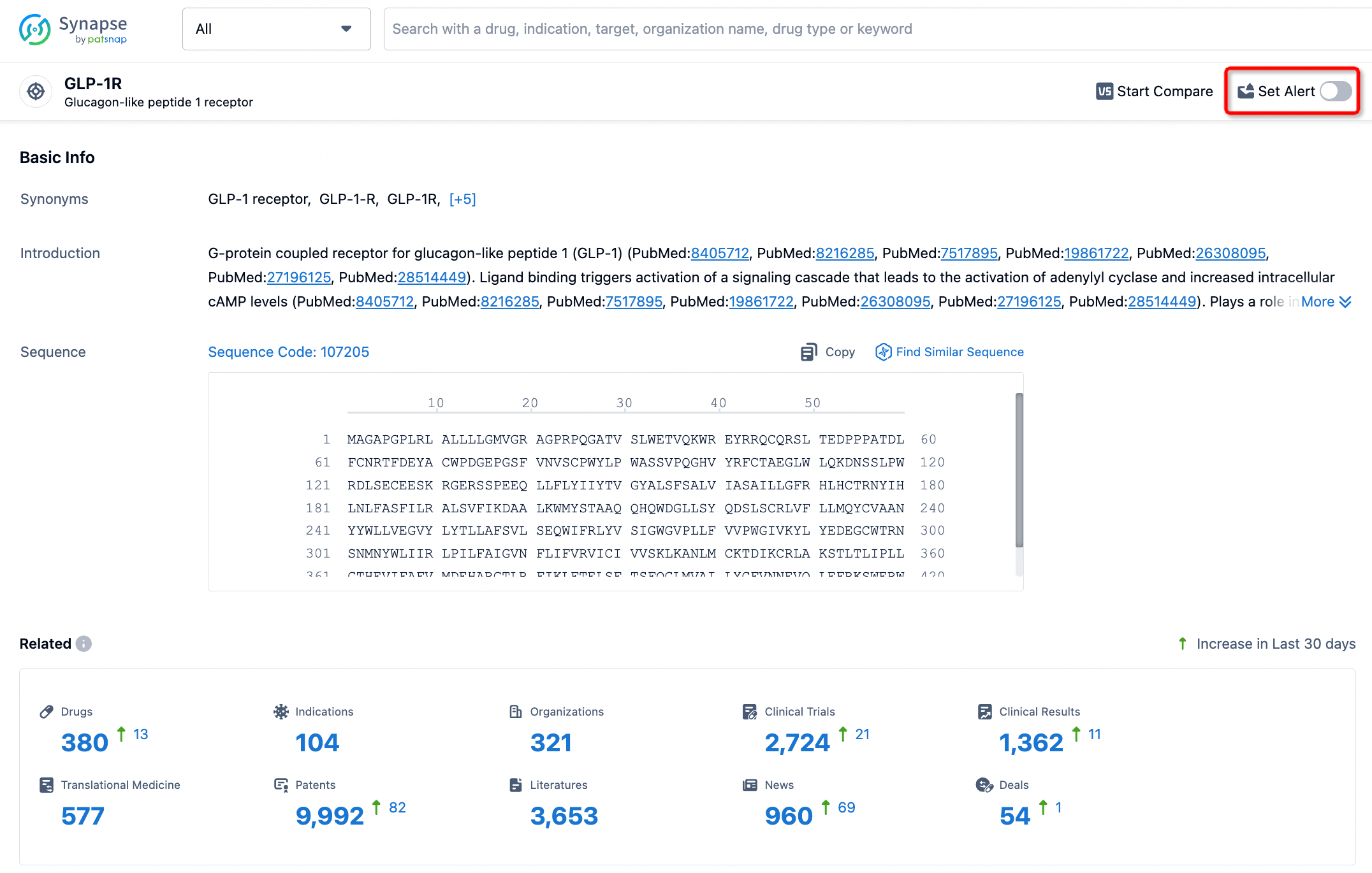
In the Synapse database, you can stay updated on the latest research and development advances of all targets. This service is accessible anytime and anywhere, with updates available daily or weekly. Use the "Set Alert" function to stay informed. Click on the image below to embark on a brand new journey of drug discovery!


Hiro LS Researcher
The AI Search Engine Built to Accelerate Biopharma Decisions
Search across billion-scale life sciences data to uncover signals, validate evidence, and act with confidence.
Ask any biopharma research question→
Get started for free today!
Accelerate Strategic R&D decision making with Synapse, Patsnap’s AI-powered Connected Innovation Intelligence Platform Built for Life Sciences Professionals.
Discover Synapse Data Servers
Synapse data is now integrated into the PatSnap LS Model Context Protocol (MCP) service. Customize your LLM agent now using our MCP server!