Request Demo
What are miR-34a inhibitors and how do they work?
25 June 2024
MicroRNAs (miRNAs) are small, non-coding RNA molecules that play a crucial role in regulating gene expression. Among these, miR-34a has been identified as a key player in various cellular processes, including apoptosis, cell cycle regulation, and senescence. miR-34a is often referred to as a "tumor suppressor" miRNA due to its ability to inhibit the expression of genes involved in cell proliferation and survival. However, in certain pathological conditions, the overexpression of miR-34a can lead to detrimental effects. This is where miR-34a inhibitors come into play, offering a promising avenue for therapeutic intervention.
miR-34a inhibitors are synthetic molecules designed to bind to miR-34a and prevent it from interacting with its target mRNAs. By doing so, these inhibitors can modulate the expression of genes that are otherwise suppressed by miR-34a. The primary mechanism through which miR-34a inhibitors operate involves sequence complementarity. The inhibitors are typically designed to have a sequence that is complementary to miR-34a, allowing them to bind selectively and with high affinity. This binding prevents miR-34a from interacting with its target mRNAs, thereby lifting the suppression on gene expression.
One of the most commonly used forms of miR-34a inhibitors is antagomirs. These are chemically modified, single-stranded RNA molecules that are complementary to miR-34a. The modifications enhance the stability of the antagomirs in the biological environment and improve their binding affinity to miR-34a. Another approach involves the use of locked nucleic acid (LNA) inhibitors, which incorporate a modified ribose ring structure to increase binding strength and specificity. Both antagomirs and LNA inhibitors have shown promising results in preclinical studies.
miR-34a inhibitors have garnered significant attention for their potential applications in various diseases, particularly cancer. As miR-34a is often upregulated in cancer cells, leading to the downregulation of tumor suppressor genes, inhibiting miR-34a can restore the expression of these crucial genes. This has been demonstrated in several types of cancer, including lung, breast, and liver cancers. For instance, preclinical studies have shown that miR-34a inhibition can reduce tumor growth and enhance the sensitivity of cancer cells to chemotherapy.
Apart from cancer, miR-34a inhibitors are being explored for their potential in treating cardiovascular diseases. miR-34a is known to regulate genes involved in cardiac fibrosis and hypertrophy. Overexpression of miR-34a has been linked to adverse cardiac remodeling and heart failure. Inhibiting miR-34a activity in animal models has shown to alleviate these pathological changes, suggesting a potential therapeutic application for miR-34a inhibitors in heart disease.
Neurodegenerative diseases are another area where miR-34a inhibitors could offer benefits. miR-34a has been implicated in the regulation of neuronal cell death and inflammation, processes that are central to diseases like Alzheimer's and Parkinson's. Early studies have indicated that inhibiting miR-34a can reduce neuronal loss and inflammation, providing a neuroprotective effect.
It is also worth noting that miR-34a inhibitors could play a role in regenerative medicine. miR-34a is involved in stem cell differentiation and senescence. By modulating miR-34a activity, it may be possible to enhance the regenerative capacity of stem cells, offering new avenues for tissue repair and regeneration.
Despite the promising preclinical data, the clinical translation of miR-34a inhibitors faces several challenges. These include issues related to the delivery of these inhibitors to target tissues, potential off-target effects, and the long-term safety of such therapies. However, advancements in drug delivery systems, such as nanoparticle-based carriers, are being explored to overcome these hurdles.
In conclusion, miR-34a inhibitors represent a promising class of therapeutic agents with potential applications in cancer, cardiovascular diseases, neurodegenerative disorders, and regenerative medicine. While significant strides have been made in understanding their mechanisms and potential benefits, further research is needed to address the challenges and pave the way for their clinical use. The future of miR-34a inhibitors looks promising, offering hope for new and effective treatments for a range of diseases.
miR-34a inhibitors are synthetic molecules designed to bind to miR-34a and prevent it from interacting with its target mRNAs. By doing so, these inhibitors can modulate the expression of genes that are otherwise suppressed by miR-34a. The primary mechanism through which miR-34a inhibitors operate involves sequence complementarity. The inhibitors are typically designed to have a sequence that is complementary to miR-34a, allowing them to bind selectively and with high affinity. This binding prevents miR-34a from interacting with its target mRNAs, thereby lifting the suppression on gene expression.
One of the most commonly used forms of miR-34a inhibitors is antagomirs. These are chemically modified, single-stranded RNA molecules that are complementary to miR-34a. The modifications enhance the stability of the antagomirs in the biological environment and improve their binding affinity to miR-34a. Another approach involves the use of locked nucleic acid (LNA) inhibitors, which incorporate a modified ribose ring structure to increase binding strength and specificity. Both antagomirs and LNA inhibitors have shown promising results in preclinical studies.
miR-34a inhibitors have garnered significant attention for their potential applications in various diseases, particularly cancer. As miR-34a is often upregulated in cancer cells, leading to the downregulation of tumor suppressor genes, inhibiting miR-34a can restore the expression of these crucial genes. This has been demonstrated in several types of cancer, including lung, breast, and liver cancers. For instance, preclinical studies have shown that miR-34a inhibition can reduce tumor growth and enhance the sensitivity of cancer cells to chemotherapy.
Apart from cancer, miR-34a inhibitors are being explored for their potential in treating cardiovascular diseases. miR-34a is known to regulate genes involved in cardiac fibrosis and hypertrophy. Overexpression of miR-34a has been linked to adverse cardiac remodeling and heart failure. Inhibiting miR-34a activity in animal models has shown to alleviate these pathological changes, suggesting a potential therapeutic application for miR-34a inhibitors in heart disease.
Neurodegenerative diseases are another area where miR-34a inhibitors could offer benefits. miR-34a has been implicated in the regulation of neuronal cell death and inflammation, processes that are central to diseases like Alzheimer's and Parkinson's. Early studies have indicated that inhibiting miR-34a can reduce neuronal loss and inflammation, providing a neuroprotective effect.
It is also worth noting that miR-34a inhibitors could play a role in regenerative medicine. miR-34a is involved in stem cell differentiation and senescence. By modulating miR-34a activity, it may be possible to enhance the regenerative capacity of stem cells, offering new avenues for tissue repair and regeneration.
Despite the promising preclinical data, the clinical translation of miR-34a inhibitors faces several challenges. These include issues related to the delivery of these inhibitors to target tissues, potential off-target effects, and the long-term safety of such therapies. However, advancements in drug delivery systems, such as nanoparticle-based carriers, are being explored to overcome these hurdles.
In conclusion, miR-34a inhibitors represent a promising class of therapeutic agents with potential applications in cancer, cardiovascular diseases, neurodegenerative disorders, and regenerative medicine. While significant strides have been made in understanding their mechanisms and potential benefits, further research is needed to address the challenges and pave the way for their clinical use. The future of miR-34a inhibitors looks promising, offering hope for new and effective treatments for a range of diseases.
How to obtain the latest development progress of all targets?
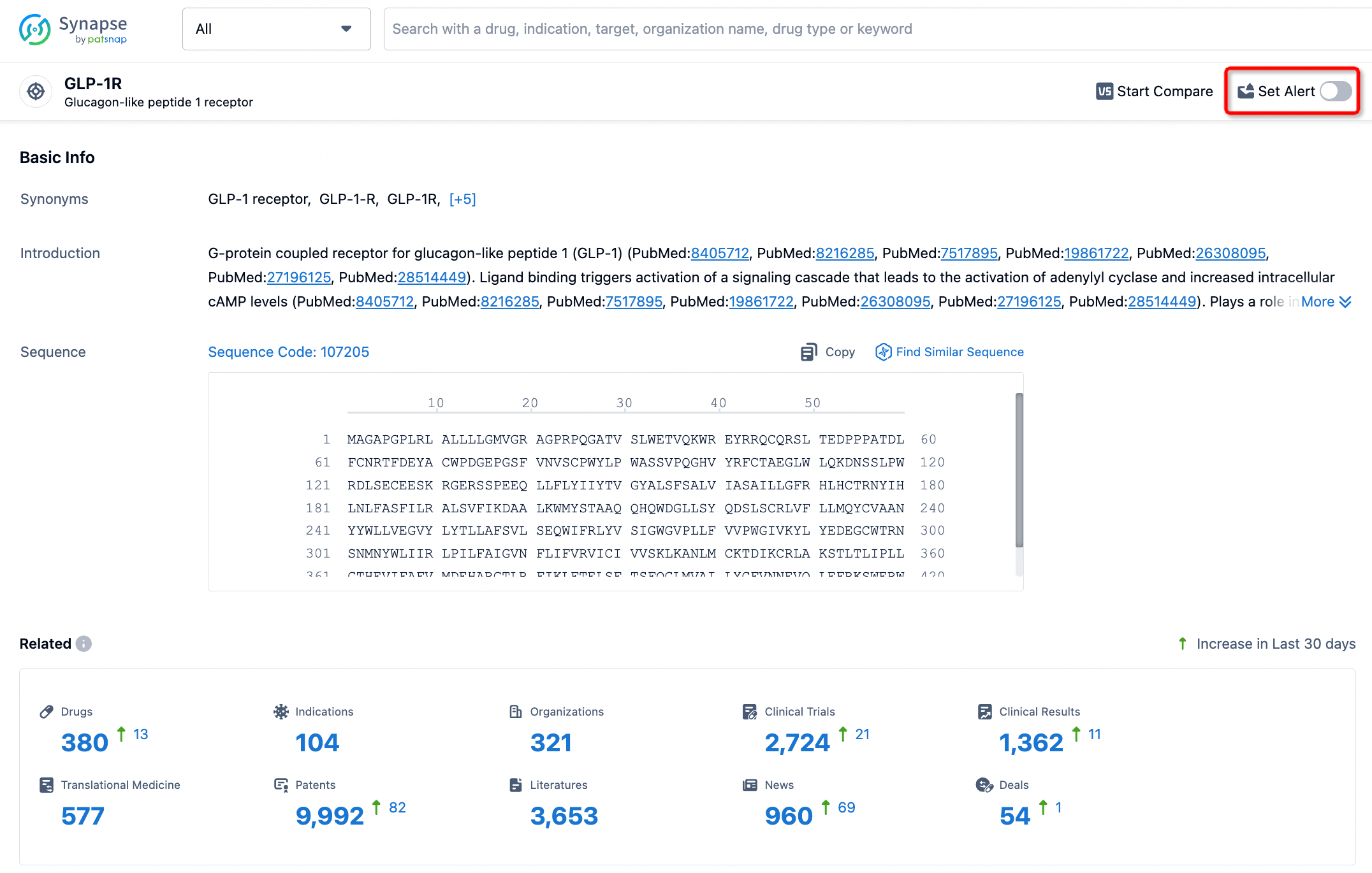
In the Synapse database, you can stay updated on the latest research and development advances of all targets. This service is accessible anytime and anywhere, with updates available daily or weekly. Use the "Set Alert" function to stay informed. Click on the image below to embark on a brand new journey of drug discovery!


AI Agents Built for Biopharma Breakthroughs
Accelerate discovery. Empower decisions. Transform outcomes.
Get started for free today!
Accelerate Strategic R&D decision making with Synapse, PatSnap’s AI-powered Connected Innovation Intelligence Platform Built for Life Sciences Professionals.
Start your data trial now!
Synapse data is also accessible to external entities via APIs or data packages. Empower better decisions with the latest in pharmaceutical intelligence.