Request Demo
What are MNK1 inhibitors and how do they work?
21 June 2024
MNK1 inhibitors represent a promising area of research in the field of targeted cancer therapy. MNK1, or MAP kinase-interacting serine/threonine-protein kinase 1, is an enzyme that plays a critical role in the regulation of protein synthesis and cellular response to stress. Over the years, researchers have identified its pivotal role in the progression of various cancers, making it an attractive target for therapeutic intervention. In this blog post, we will delve into the mechanisms of MNK1 inhibitors, how they work, and their potential applications in medicine.
MNK1 inhibitors function by specifically targeting the MNK1 enzyme, thereby disrupting its role in cellular signaling pathways. Normally, MNK1 is activated by upstream kinases such as ERK and p38 MAPK, which are part of the mitogen-activated protein kinase (MAPK) pathway. Once activated, MNK1 phosphorylates its downstream targets, including the eukaryotic translation initiation factor 4E (eIF4E). This phosphorylation event is crucial for the initiation of cap-dependent mRNA translation, which is essential for the synthesis of proteins involved in cell growth, survival, and proliferation.
By inhibiting MNK1, these compounds prevent the phosphorylation of eIF4E and other downstream targets. This blockade results in the suppression of protein synthesis and can lead to the inhibition of cell growth and induction of apoptosis, particularly in cancer cells. The selective targeting of MNK1 helps to minimize the impact on normal cells, reducing the likelihood of adverse side effects commonly associated with traditional chemotherapy.
MNK1 inhibitors are principally being investigated for their potential in cancer treatment. Several types of malignancies, including breast cancer, prostate cancer, and melanoma, exhibit elevated levels of MNK1 activity, which correlates with poor prognosis and resistance to conventional therapies. By targeting this kinase, researchers hope to overcome these challenges and improve patient outcomes.
One of the most significant applications of MNK1 inhibitors is in the treatment of breast cancer. Studies have shown that MNK1 activity is upregulated in certain subtypes of breast cancer, such as triple-negative breast cancer (TNBC), which is notoriously difficult to treat due to its aggressive nature and lack of hormone receptor expression. Preclinical models have demonstrated that MNK1 inhibitors can effectively reduce tumor growth and enhance the efficacy of other therapeutic agents, such as chemotherapy and targeted therapies.
Prostate cancer is another area where MNK1 inhibitors show promise. Androgen receptor (AR) signaling is a key driver of prostate cancer progression, and MNK1 has been implicated in the regulation of AR activity. Inhibition of MNK1 can disrupt this signaling axis, thereby impeding cancer cell growth and survival. Preliminary studies suggest that combining MNK1 inhibitors with existing AR-targeted therapies could offer a new avenue for treating advanced prostate cancer.
Melanoma, a particularly aggressive form of skin cancer, also stands to benefit from MNK1 inhibition. Aberrant activation of the MAPK pathway is a hallmark of melanoma, and MNK1 plays a crucial role in mediating the downstream effects of this pathway. By targeting MNK1, researchers aim to diminish the pro-survival and pro-proliferative signals in melanoma cells, thereby curbing tumor progression and potentially overcoming resistance to current treatments like BRAF and MEK inhibitors.
Beyond oncology, MNK1 inhibitors are being explored for their potential in treating other conditions characterized by dysregulated protein synthesis and cellular stress responses. For instance, some neurodegenerative diseases and inflammatory disorders may benefit from MNK1 inhibition, although this area of research is still in its infancy.
In conclusion, MNK1 inhibitors offer a novel and targeted approach to treating various cancers and potentially other diseases. By disrupting critical signaling pathways involved in protein synthesis and cellular stress responses, these inhibitors have the potential to improve outcomes for patients with hard-to-treat malignancies. As research progresses, we can expect to see more clinical trials and, hopefully, the eventual integration of MNK1 inhibitors into standard therapeutic regimens.
MNK1 inhibitors function by specifically targeting the MNK1 enzyme, thereby disrupting its role in cellular signaling pathways. Normally, MNK1 is activated by upstream kinases such as ERK and p38 MAPK, which are part of the mitogen-activated protein kinase (MAPK) pathway. Once activated, MNK1 phosphorylates its downstream targets, including the eukaryotic translation initiation factor 4E (eIF4E). This phosphorylation event is crucial for the initiation of cap-dependent mRNA translation, which is essential for the synthesis of proteins involved in cell growth, survival, and proliferation.
By inhibiting MNK1, these compounds prevent the phosphorylation of eIF4E and other downstream targets. This blockade results in the suppression of protein synthesis and can lead to the inhibition of cell growth and induction of apoptosis, particularly in cancer cells. The selective targeting of MNK1 helps to minimize the impact on normal cells, reducing the likelihood of adverse side effects commonly associated with traditional chemotherapy.
MNK1 inhibitors are principally being investigated for their potential in cancer treatment. Several types of malignancies, including breast cancer, prostate cancer, and melanoma, exhibit elevated levels of MNK1 activity, which correlates with poor prognosis and resistance to conventional therapies. By targeting this kinase, researchers hope to overcome these challenges and improve patient outcomes.
One of the most significant applications of MNK1 inhibitors is in the treatment of breast cancer. Studies have shown that MNK1 activity is upregulated in certain subtypes of breast cancer, such as triple-negative breast cancer (TNBC), which is notoriously difficult to treat due to its aggressive nature and lack of hormone receptor expression. Preclinical models have demonstrated that MNK1 inhibitors can effectively reduce tumor growth and enhance the efficacy of other therapeutic agents, such as chemotherapy and targeted therapies.
Prostate cancer is another area where MNK1 inhibitors show promise. Androgen receptor (AR) signaling is a key driver of prostate cancer progression, and MNK1 has been implicated in the regulation of AR activity. Inhibition of MNK1 can disrupt this signaling axis, thereby impeding cancer cell growth and survival. Preliminary studies suggest that combining MNK1 inhibitors with existing AR-targeted therapies could offer a new avenue for treating advanced prostate cancer.
Melanoma, a particularly aggressive form of skin cancer, also stands to benefit from MNK1 inhibition. Aberrant activation of the MAPK pathway is a hallmark of melanoma, and MNK1 plays a crucial role in mediating the downstream effects of this pathway. By targeting MNK1, researchers aim to diminish the pro-survival and pro-proliferative signals in melanoma cells, thereby curbing tumor progression and potentially overcoming resistance to current treatments like BRAF and MEK inhibitors.
Beyond oncology, MNK1 inhibitors are being explored for their potential in treating other conditions characterized by dysregulated protein synthesis and cellular stress responses. For instance, some neurodegenerative diseases and inflammatory disorders may benefit from MNK1 inhibition, although this area of research is still in its infancy.
In conclusion, MNK1 inhibitors offer a novel and targeted approach to treating various cancers and potentially other diseases. By disrupting critical signaling pathways involved in protein synthesis and cellular stress responses, these inhibitors have the potential to improve outcomes for patients with hard-to-treat malignancies. As research progresses, we can expect to see more clinical trials and, hopefully, the eventual integration of MNK1 inhibitors into standard therapeutic regimens.
How to obtain the latest development progress of all targets?
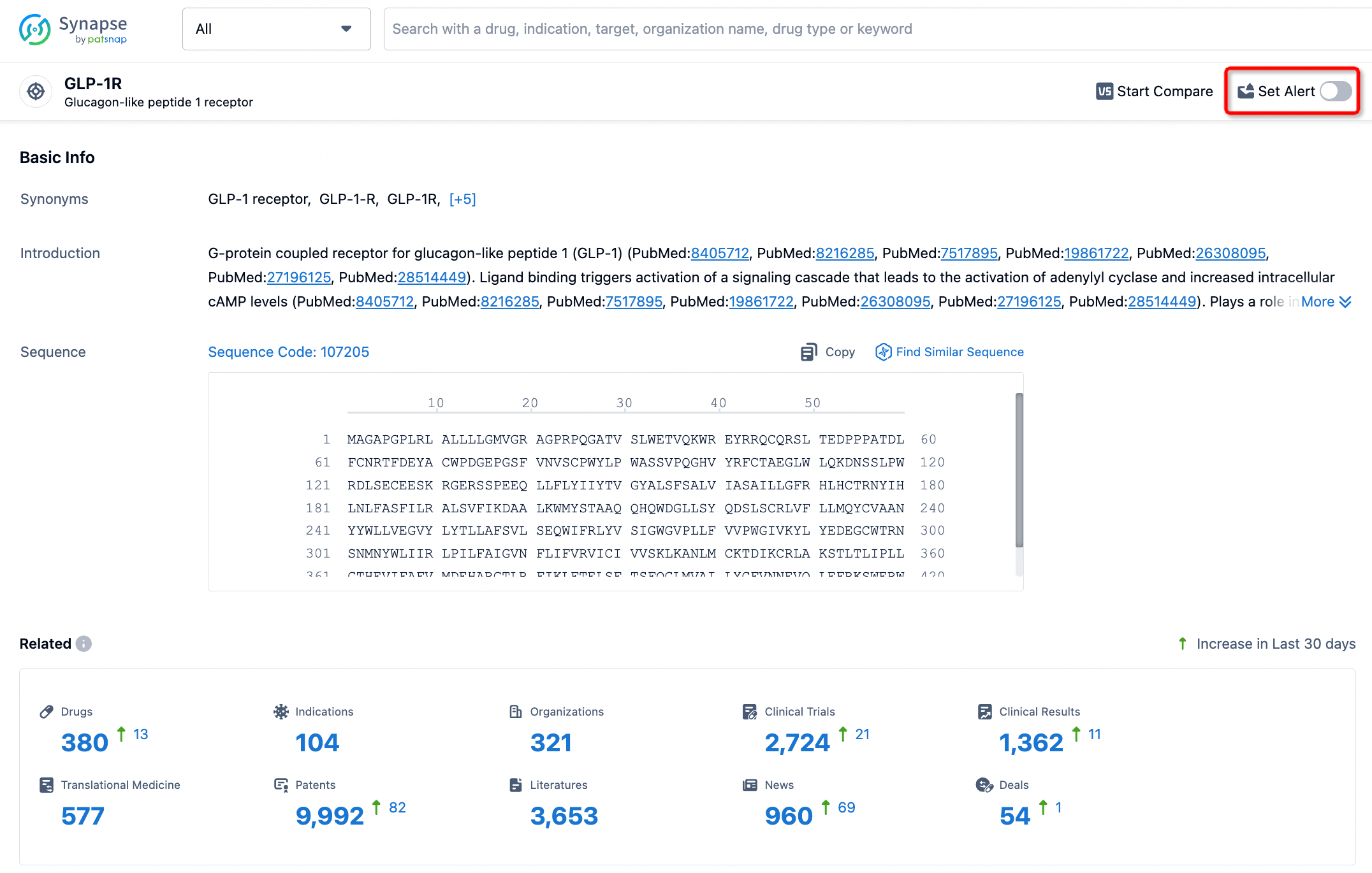
In the Synapse database, you can stay updated on the latest research and development advances of all targets. This service is accessible anytime and anywhere, with updates available daily or weekly. Use the "Set Alert" function to stay informed. Click on the image below to embark on a brand new journey of drug discovery!


AI Agents Built for Biopharma Breakthroughs
Accelerate discovery. Empower decisions. Transform outcomes.
Get started for free today!
Accelerate Strategic R&D decision making with Synapse, PatSnap’s AI-powered Connected Innovation Intelligence Platform Built for Life Sciences Professionals.
Start your data trial now!
Synapse data is also accessible to external entities via APIs or data packages. Empower better decisions with the latest in pharmaceutical intelligence.