Request Demo
What are MUC1 gene stimulants and how do they work?
26 June 2024
The MUC1 gene, also known as mucin 1, encodes a protein that plays a critical role in the protective mucous barriers of epithelial tissues, including those in the respiratory, digestive, and reproductive systems. This gene has garnered significant attention in the medical and scientific communities due to its involvement in various physiological processes and its potential as a therapeutic target. MUC1 gene stimulants, in particular, are an exciting area of research and development, with promising implications for treating a range of conditions.
MUC1 gene stimulants are compounds or treatments designed to enhance the expression or activity of the MUC1 protein. By stimulating the MUC1 gene, these treatments can potentially boost the protective functions of mucous barriers, making tissues more resilient against infections, injuries, and other stressors. To understand how these stimulants work, it is essential to delve into the mechanisms behind MUC1 expression and its role in cellular protection.
The mechanisms by which MUC1 gene stimulants operate are complex and multifaceted. At the cellular level, the MUC1 protein exists as a transmembrane glycoprotein characterized by a heavily glycosylated extracellular domain, which acts as a physical barrier against pathogens and environmental insults. When the MUC1 gene is stimulated, either through pharmaceutical agents, natural compounds, or other therapeutic interventions, the production of this protective protein is upregulated.
One common approach to stimulate the MUC1 gene involves the use of cytokines and growth factors, which can activate signaling pathways that lead to increased gene expression. For example, certain interleukins and tumor necrosis factors can bind to cell surface receptors and trigger intracellular cascades that culminate in the activation of transcription factors. These transcription factors then bind to the promoter regions of the MUC1 gene, enhancing its transcription and subsequent protein synthesis.
Another strategy involves the use of small molecule compounds that can directly interact with the regulatory elements of the MUC1 gene. These compounds may serve as agonists, binding to specific sites on the gene or its associated regulatory proteins, thereby promoting its expression. Additionally, some natural compounds, such as specific herbal extracts and dietary components, have been found to possess MUC1-stimulatory properties, although the exact mechanisms are still under investigation.
The use of MUC1 gene stimulants spans several therapeutic areas, reflecting the diverse roles of the MUC1 protein in health and disease. One of the primary applications is in the field of oncology. The MUC1 protein is overexpressed in many types of cancer, including breast, ovarian, and pancreatic cancers. In these contexts, MUC1 serves as a tumor-associated antigen, and its stimulation can enhance the visibility of cancer cells to the immune system, thereby improving the efficacy of immunotherapies.
In addition to oncology, MUC1 gene stimulants hold promise for treating inflammatory and infectious diseases. For instance, in respiratory conditions such as chronic obstructive pulmonary disease (COPD) and cystic fibrosis, the protective mucous layers are often compromised. By stimulating the MUC1 gene, it may be possible to reinforce these barriers, thereby reducing the susceptibility to infections and mitigating inflammation.
Furthermore, MUC1 gene stimulants may have applications in wound healing and tissue regeneration. The MUC1 protein is involved in cell signaling pathways that regulate proliferation, differentiation, and migration—processes that are crucial for tissue repair. Enhancing MUC1 expression could therefore accelerate the healing of wounds and recovery from injuries.
In conclusion, MUC1 gene stimulants represent a promising frontier in medical science, with the potential to impact a wide range of health conditions. By understanding and harnessing the mechanisms that regulate MUC1 expression, researchers and clinicians can develop innovative treatments that enhance the body's natural protective barriers, improve immune responses, and promote tissue repair. As research in this area continues to advance, it is likely that we will see even more exciting applications for MUC1 gene stimulants in the future.
MUC1 gene stimulants are compounds or treatments designed to enhance the expression or activity of the MUC1 protein. By stimulating the MUC1 gene, these treatments can potentially boost the protective functions of mucous barriers, making tissues more resilient against infections, injuries, and other stressors. To understand how these stimulants work, it is essential to delve into the mechanisms behind MUC1 expression and its role in cellular protection.
The mechanisms by which MUC1 gene stimulants operate are complex and multifaceted. At the cellular level, the MUC1 protein exists as a transmembrane glycoprotein characterized by a heavily glycosylated extracellular domain, which acts as a physical barrier against pathogens and environmental insults. When the MUC1 gene is stimulated, either through pharmaceutical agents, natural compounds, or other therapeutic interventions, the production of this protective protein is upregulated.
One common approach to stimulate the MUC1 gene involves the use of cytokines and growth factors, which can activate signaling pathways that lead to increased gene expression. For example, certain interleukins and tumor necrosis factors can bind to cell surface receptors and trigger intracellular cascades that culminate in the activation of transcription factors. These transcription factors then bind to the promoter regions of the MUC1 gene, enhancing its transcription and subsequent protein synthesis.
Another strategy involves the use of small molecule compounds that can directly interact with the regulatory elements of the MUC1 gene. These compounds may serve as agonists, binding to specific sites on the gene or its associated regulatory proteins, thereby promoting its expression. Additionally, some natural compounds, such as specific herbal extracts and dietary components, have been found to possess MUC1-stimulatory properties, although the exact mechanisms are still under investigation.
The use of MUC1 gene stimulants spans several therapeutic areas, reflecting the diverse roles of the MUC1 protein in health and disease. One of the primary applications is in the field of oncology. The MUC1 protein is overexpressed in many types of cancer, including breast, ovarian, and pancreatic cancers. In these contexts, MUC1 serves as a tumor-associated antigen, and its stimulation can enhance the visibility of cancer cells to the immune system, thereby improving the efficacy of immunotherapies.
In addition to oncology, MUC1 gene stimulants hold promise for treating inflammatory and infectious diseases. For instance, in respiratory conditions such as chronic obstructive pulmonary disease (COPD) and cystic fibrosis, the protective mucous layers are often compromised. By stimulating the MUC1 gene, it may be possible to reinforce these barriers, thereby reducing the susceptibility to infections and mitigating inflammation.
Furthermore, MUC1 gene stimulants may have applications in wound healing and tissue regeneration. The MUC1 protein is involved in cell signaling pathways that regulate proliferation, differentiation, and migration—processes that are crucial for tissue repair. Enhancing MUC1 expression could therefore accelerate the healing of wounds and recovery from injuries.
In conclusion, MUC1 gene stimulants represent a promising frontier in medical science, with the potential to impact a wide range of health conditions. By understanding and harnessing the mechanisms that regulate MUC1 expression, researchers and clinicians can develop innovative treatments that enhance the body's natural protective barriers, improve immune responses, and promote tissue repair. As research in this area continues to advance, it is likely that we will see even more exciting applications for MUC1 gene stimulants in the future.
How to obtain the latest development progress of all targets?
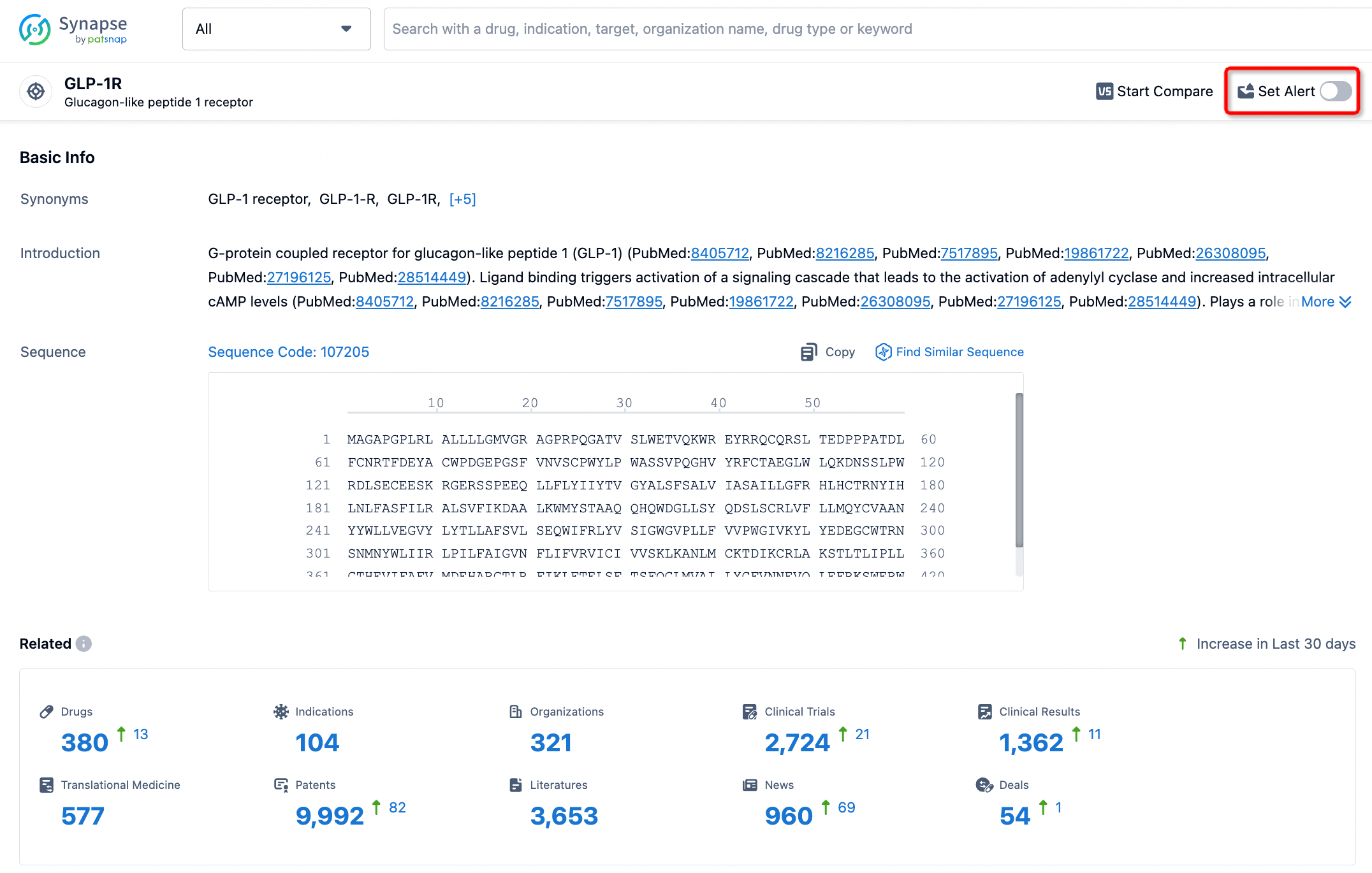
In the Synapse database, you can stay updated on the latest research and development advances of all targets. This service is accessible anytime and anywhere, with updates available daily or weekly. Use the "Set Alert" function to stay informed. Click on the image below to embark on a brand new journey of drug discovery!


AI Agents Built for Biopharma Breakthroughs
Accelerate discovery. Empower decisions. Transform outcomes.
Get started for free today!
Accelerate Strategic R&D decision making with Synapse, PatSnap’s AI-powered Connected Innovation Intelligence Platform Built for Life Sciences Professionals.
Start your data trial now!
Synapse data is also accessible to external entities via APIs or data packages. Empower better decisions with the latest in pharmaceutical intelligence.