Request Demo
What are MUC16 modulators and how do they work?
21 June 2024
MUC16, a protein also known as CA125, has garnered significant attention in the biomedical field due to its involvement in various physiological and pathological processes, including cancer. MUC16 modulators are emerging as a promising avenue for therapeutic interventions, particularly in oncology. In this blog post, we will delve into the basics of MUC16 modulators, explore how they work, and discuss their current and potential applications.
MUC16 modulators are agents that interact with the MUC16 protein to alter its function or expression. MUC16 is a large glycoprotein that plays a crucial role in cell adhesion, immune response, and intracellular signaling. It is most well-known as a biomarker for ovarian cancer, but its elevated levels have also been detected in other malignancies, such as pancreatic, breast, and lung cancers. The modulation of MUC16 can therefore have significant therapeutic implications.
MUC16 modulators work by targeting the protein or its associated pathways to either enhance or inhibit its activity. This can be achieved through various mechanisms. One approach involves the use of monoclonal antibodies designed to bind specifically to MUC16. These antibodies can block the interaction of MUC16 with its ligands, thereby disrupting signaling pathways essential for tumor growth and metastasis. Another strategy is the use of small molecule inhibitors that can penetrate cells and interfere with MUC16’s intracellular functions. Additionally, RNA-based therapies, such as antisense oligonucleotides and small interfering RNA (siRNA), can be used to downregulate the expression of MUC16 at the genetic level.
The effectiveness of MUC16 modulators can vary depending on the type and stage of cancer, as well as the specific molecular characteristics of the tumor. For instance, in ovarian cancer, where MUC16 is most prominently expressed, these modulators can be particularly effective. By blocking MUC16, these agents can inhibit tumor growth, reduce metastasis, and enhance the efficacy of existing chemotherapies. Furthermore, MUC16 modulators can also stimulate the immune system to recognize and attack cancer cells more effectively, offering a dual mechanism of action.
MUC16 modulators are primarily used in the context of cancer treatment. They are currently being investigated in clinical trials for their potential to improve outcomes in patients with MUC16-expressing tumors. In ovarian cancer, MUC16 modulators are being explored as both monotherapies and in combination with other treatments, such as chemotherapy and immunotherapy. The goal is to enhance the overall efficacy of treatment, reduce side effects, and improve patient survival rates.
Beyond cancer, MUC16 modulators could have applications in other diseases characterized by aberrant MUC16 expression. For example, research is being conducted to explore their potential in treating certain inflammatory and autoimmune conditions. By modulating MUC16 activity, it may be possible to alter the immune response and provide relief in diseases where inflammation plays a key role.
Moreover, MUC16 modulators hold promise for use in diagnostic applications. Given MUC16’s role as a biomarker, agents that can specifically bind to MUC16 could be used to develop more accurate diagnostic tests for early detection of cancers. This could lead to earlier interventions and better prognosis for patients.
In conclusion, MUC16 modulators represent a promising frontier in both therapeutic and diagnostic applications. By targeting a protein that plays a pivotal role in various cancers and other diseases, these modulators offer new avenues for treatment and early detection. While the research is still in its early stages, the potential benefits of MUC16 modulators are immense, and continued investigation will likely yield significant advancements in the field of medicine. As we gain a deeper understanding of MUC16 and its functions, the development of more effective and targeted modulators will undoubtedly follow, paving the way for improved patient outcomes.
MUC16 modulators are agents that interact with the MUC16 protein to alter its function or expression. MUC16 is a large glycoprotein that plays a crucial role in cell adhesion, immune response, and intracellular signaling. It is most well-known as a biomarker for ovarian cancer, but its elevated levels have also been detected in other malignancies, such as pancreatic, breast, and lung cancers. The modulation of MUC16 can therefore have significant therapeutic implications.
MUC16 modulators work by targeting the protein or its associated pathways to either enhance or inhibit its activity. This can be achieved through various mechanisms. One approach involves the use of monoclonal antibodies designed to bind specifically to MUC16. These antibodies can block the interaction of MUC16 with its ligands, thereby disrupting signaling pathways essential for tumor growth and metastasis. Another strategy is the use of small molecule inhibitors that can penetrate cells and interfere with MUC16’s intracellular functions. Additionally, RNA-based therapies, such as antisense oligonucleotides and small interfering RNA (siRNA), can be used to downregulate the expression of MUC16 at the genetic level.
The effectiveness of MUC16 modulators can vary depending on the type and stage of cancer, as well as the specific molecular characteristics of the tumor. For instance, in ovarian cancer, where MUC16 is most prominently expressed, these modulators can be particularly effective. By blocking MUC16, these agents can inhibit tumor growth, reduce metastasis, and enhance the efficacy of existing chemotherapies. Furthermore, MUC16 modulators can also stimulate the immune system to recognize and attack cancer cells more effectively, offering a dual mechanism of action.
MUC16 modulators are primarily used in the context of cancer treatment. They are currently being investigated in clinical trials for their potential to improve outcomes in patients with MUC16-expressing tumors. In ovarian cancer, MUC16 modulators are being explored as both monotherapies and in combination with other treatments, such as chemotherapy and immunotherapy. The goal is to enhance the overall efficacy of treatment, reduce side effects, and improve patient survival rates.
Beyond cancer, MUC16 modulators could have applications in other diseases characterized by aberrant MUC16 expression. For example, research is being conducted to explore their potential in treating certain inflammatory and autoimmune conditions. By modulating MUC16 activity, it may be possible to alter the immune response and provide relief in diseases where inflammation plays a key role.
Moreover, MUC16 modulators hold promise for use in diagnostic applications. Given MUC16’s role as a biomarker, agents that can specifically bind to MUC16 could be used to develop more accurate diagnostic tests for early detection of cancers. This could lead to earlier interventions and better prognosis for patients.
In conclusion, MUC16 modulators represent a promising frontier in both therapeutic and diagnostic applications. By targeting a protein that plays a pivotal role in various cancers and other diseases, these modulators offer new avenues for treatment and early detection. While the research is still in its early stages, the potential benefits of MUC16 modulators are immense, and continued investigation will likely yield significant advancements in the field of medicine. As we gain a deeper understanding of MUC16 and its functions, the development of more effective and targeted modulators will undoubtedly follow, paving the way for improved patient outcomes.
How to obtain the latest development progress of all targets?
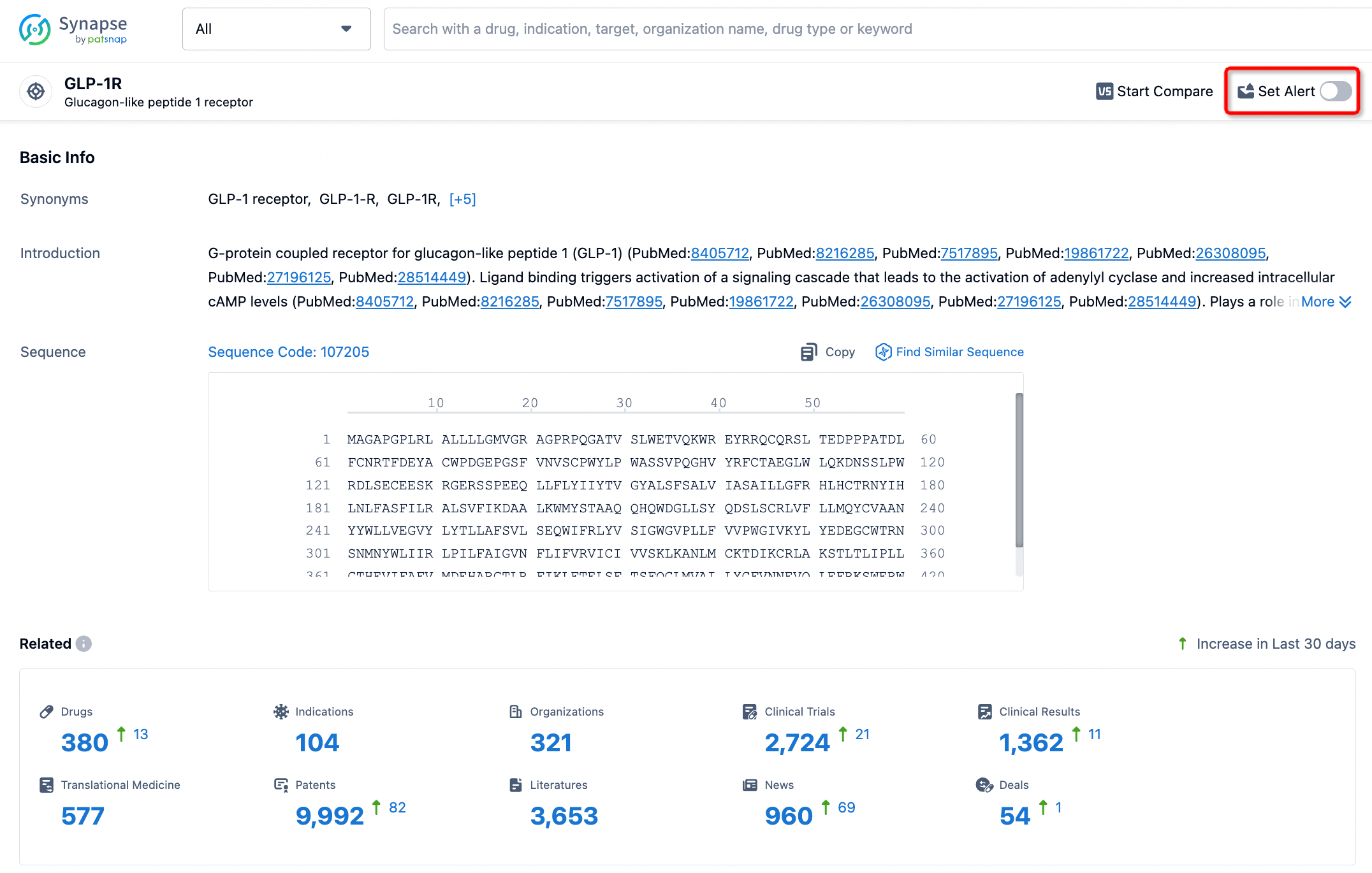
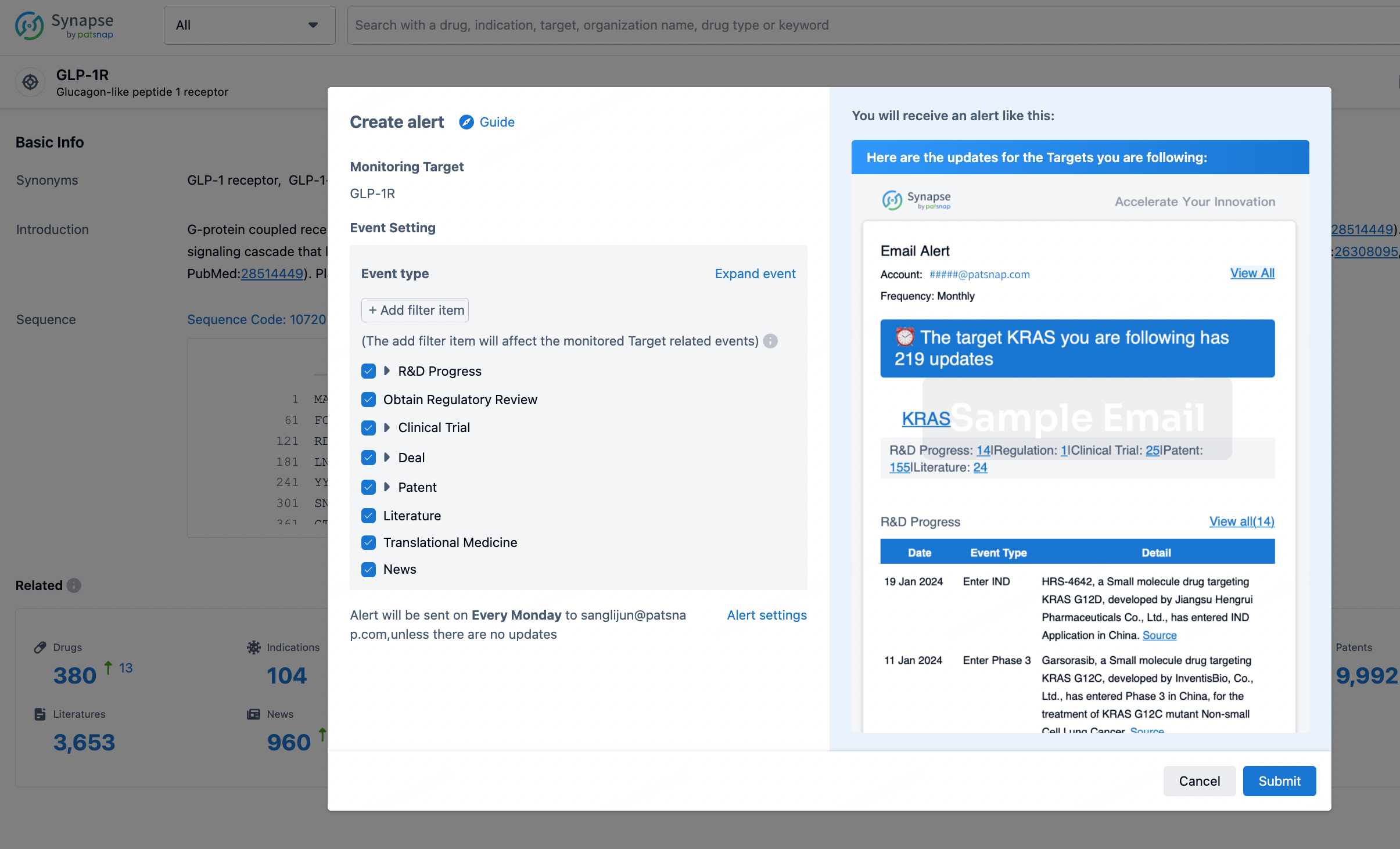
In the Synapse database, you can stay updated on the latest research and development advances of all targets. This service is accessible anytime and anywhere, with updates available daily or weekly. Use the "Set Alert" function to stay informed. Click on the image below to embark on a brand new journey of drug discovery!

AI Agents Built for Biopharma Breakthroughs
Accelerate discovery. Empower decisions. Transform outcomes.
Get started for free today!
Accelerate Strategic R&D decision making with Synapse, PatSnap’s AI-powered Connected Innovation Intelligence Platform Built for Life Sciences Professionals.
Start your data trial now!
Synapse data is also accessible to external entities via APIs or data packages. Empower better decisions with the latest in pharmaceutical intelligence.