Request Demo
What are nAChRα4&β2 agonists and how do they work?
21 June 2024
In recent years, the field of neuropharmacology has witnessed significant advancements, particularly in the development of selective agonists for nicotinic acetylcholine receptors (nAChRs). Among these, the nAChRα4β2 subtype has garnered considerable attention due to its prominent role in modulating neurochemical pathways implicated in various neurological and psychiatric conditions. This blog post delves into the fundamentals of nAChRα4&β2 agonists, exploring their mechanism of action and their therapeutic applications.
The nAChRα4β2 receptors are a subtype of nicotinic acetylcholine receptors, a group of ligand-gated ion channels widely expressed in the central nervous system (CNS). These receptors are pentameric structures composed of different subunits, and the α4β2 configuration is one of the most prevalent in the brain. They are primarily located in regions associated with cognitive function, reward, and mood regulation, such as the prefrontal cortex, hippocampus, and striatum.
When an agonist binds to nAChRα4β2 receptors, it induces a conformational change that opens the ion channel, allowing the influx of cations, particularly sodium (Na+) and calcium (Ca2+), into the neuron. This ion influx depolarizes the neuronal membrane, leading to the generation of an action potential and the subsequent release of neurotransmitters like dopamine, glutamate, and gamma-aminobutyric acid (GABA). These neurotransmitters play critical roles in synaptic plasticity, learning, memory, and mood regulation.
Additionally, the activation of nAChRα4β2 receptors can modulate the release of other neuromodulators and influence intracellular signaling pathways, further contributing to their broad spectrum of physiological effects. Notably, the receptor's high sensitivity to nicotine underscores its involvement in the addictive properties of tobacco, highlighting its significance in addiction research.
nAChRα4β2 agonists are being explored for a variety of therapeutic applications, given their ability to modulate critical neurochemical pathways. One of the most promising areas of research is in the treatment of cognitive deficits associated with neurodegenerative diseases such as Alzheimer's disease and Parkinson's disease. By enhancing cholinergic transmission and improving synaptic plasticity, these agonists have the potential to ameliorate symptoms of cognitive decline and improve quality of life for patients.
Beyond neurodegenerative diseases, nAChRα4β2 agonists are also being investigated for their potential in treating psychiatric disorders. For instance, preclinical and clinical studies have shown that these agonists can exert antidepressant-like effects, making them a potential alternative or adjunctive therapy for major depressive disorder (MDD). The modulation of dopamine release by nAChRα4β2 agonists also suggests their utility in addressing the dopaminergic deficits observed in conditions like schizophrenia and attention deficit hyperactivity disorder (ADHD).
Another noteworthy application of nAChRα4β2 agonists is in the realm of addiction treatment. Given the receptor's critical role in nicotine addiction, selective agonists can be used to mitigate withdrawal symptoms and reduce cravings in individuals trying to quit smoking. This approach offers a novel mechanism of action compared to traditional nicotine replacement therapies, which can enhance compliance and efficacy.
Moreover, the analgesic properties of nAChRα4β2 agonists are being explored for pain management. By modulating pain pathways in the CNS, these agonists could provide relief for chronic pain conditions without the risk of addiction associated with opioids.
The therapeutic potential of nAChRα4β2 agonists is vast, and ongoing research continues to uncover new applications and refine their pharmacological profiles. However, challenges remain, particularly in ensuring the selectivity and safety of these compounds to minimize adverse effects. Advances in medicinal chemistry and a deeper understanding of nAChR biology are likely to pave the way for the development of more effective and targeted therapies in the near future.
In conclusion, nAChRα4β2 agonists represent a promising frontier in the treatment of a wide array of neurological and psychiatric disorders. As research progresses, these compounds have the potential to significantly impact clinical practice and improve patient outcomes across multiple domains.
The nAChRα4β2 receptors are a subtype of nicotinic acetylcholine receptors, a group of ligand-gated ion channels widely expressed in the central nervous system (CNS). These receptors are pentameric structures composed of different subunits, and the α4β2 configuration is one of the most prevalent in the brain. They are primarily located in regions associated with cognitive function, reward, and mood regulation, such as the prefrontal cortex, hippocampus, and striatum.
When an agonist binds to nAChRα4β2 receptors, it induces a conformational change that opens the ion channel, allowing the influx of cations, particularly sodium (Na+) and calcium (Ca2+), into the neuron. This ion influx depolarizes the neuronal membrane, leading to the generation of an action potential and the subsequent release of neurotransmitters like dopamine, glutamate, and gamma-aminobutyric acid (GABA). These neurotransmitters play critical roles in synaptic plasticity, learning, memory, and mood regulation.
Additionally, the activation of nAChRα4β2 receptors can modulate the release of other neuromodulators and influence intracellular signaling pathways, further contributing to their broad spectrum of physiological effects. Notably, the receptor's high sensitivity to nicotine underscores its involvement in the addictive properties of tobacco, highlighting its significance in addiction research.
nAChRα4β2 agonists are being explored for a variety of therapeutic applications, given their ability to modulate critical neurochemical pathways. One of the most promising areas of research is in the treatment of cognitive deficits associated with neurodegenerative diseases such as Alzheimer's disease and Parkinson's disease. By enhancing cholinergic transmission and improving synaptic plasticity, these agonists have the potential to ameliorate symptoms of cognitive decline and improve quality of life for patients.
Beyond neurodegenerative diseases, nAChRα4β2 agonists are also being investigated for their potential in treating psychiatric disorders. For instance, preclinical and clinical studies have shown that these agonists can exert antidepressant-like effects, making them a potential alternative or adjunctive therapy for major depressive disorder (MDD). The modulation of dopamine release by nAChRα4β2 agonists also suggests their utility in addressing the dopaminergic deficits observed in conditions like schizophrenia and attention deficit hyperactivity disorder (ADHD).
Another noteworthy application of nAChRα4β2 agonists is in the realm of addiction treatment. Given the receptor's critical role in nicotine addiction, selective agonists can be used to mitigate withdrawal symptoms and reduce cravings in individuals trying to quit smoking. This approach offers a novel mechanism of action compared to traditional nicotine replacement therapies, which can enhance compliance and efficacy.
Moreover, the analgesic properties of nAChRα4β2 agonists are being explored for pain management. By modulating pain pathways in the CNS, these agonists could provide relief for chronic pain conditions without the risk of addiction associated with opioids.
The therapeutic potential of nAChRα4β2 agonists is vast, and ongoing research continues to uncover new applications and refine their pharmacological profiles. However, challenges remain, particularly in ensuring the selectivity and safety of these compounds to minimize adverse effects. Advances in medicinal chemistry and a deeper understanding of nAChR biology are likely to pave the way for the development of more effective and targeted therapies in the near future.
In conclusion, nAChRα4β2 agonists represent a promising frontier in the treatment of a wide array of neurological and psychiatric disorders. As research progresses, these compounds have the potential to significantly impact clinical practice and improve patient outcomes across multiple domains.
How to obtain the latest development progress of all targets?
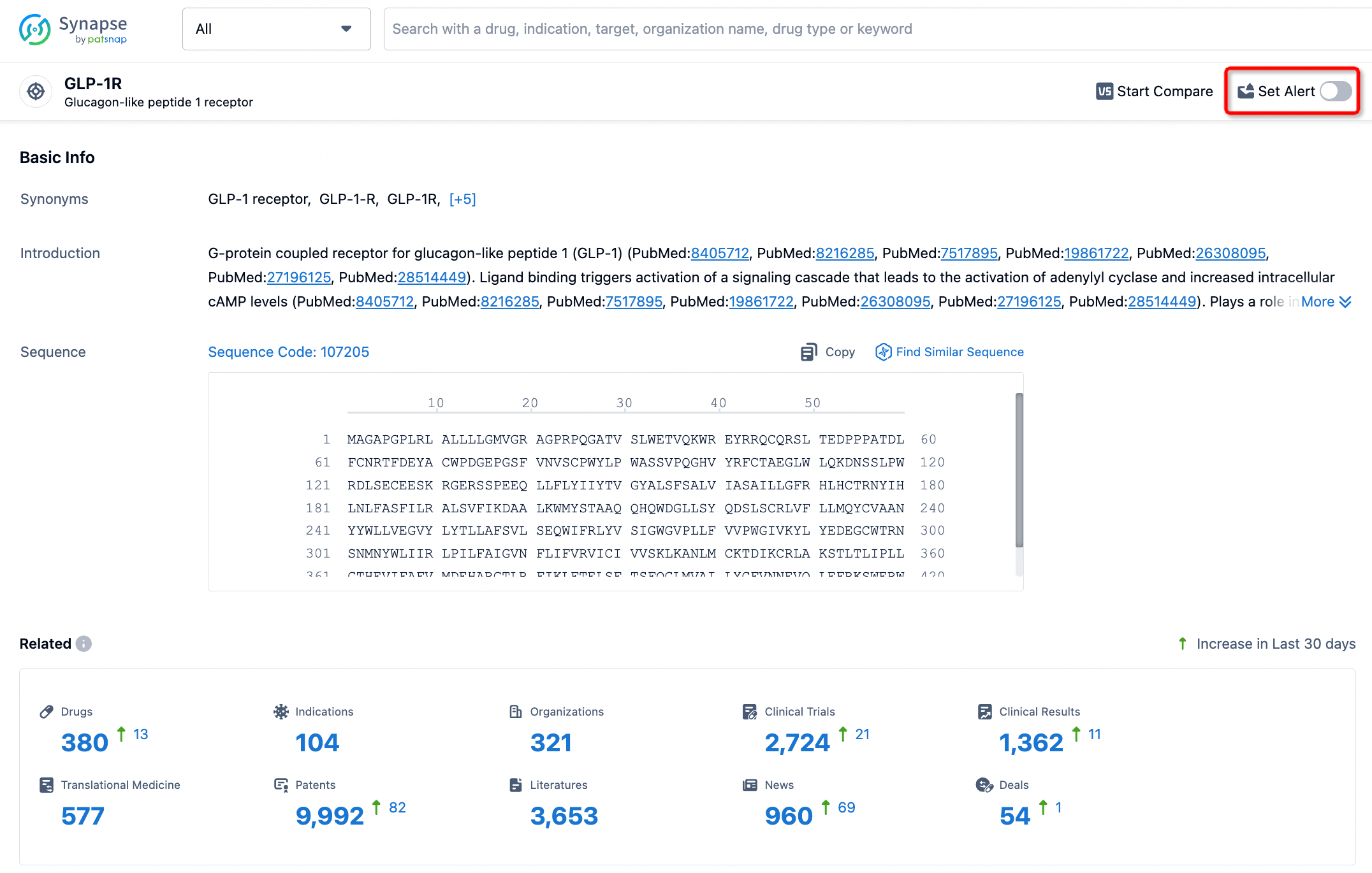
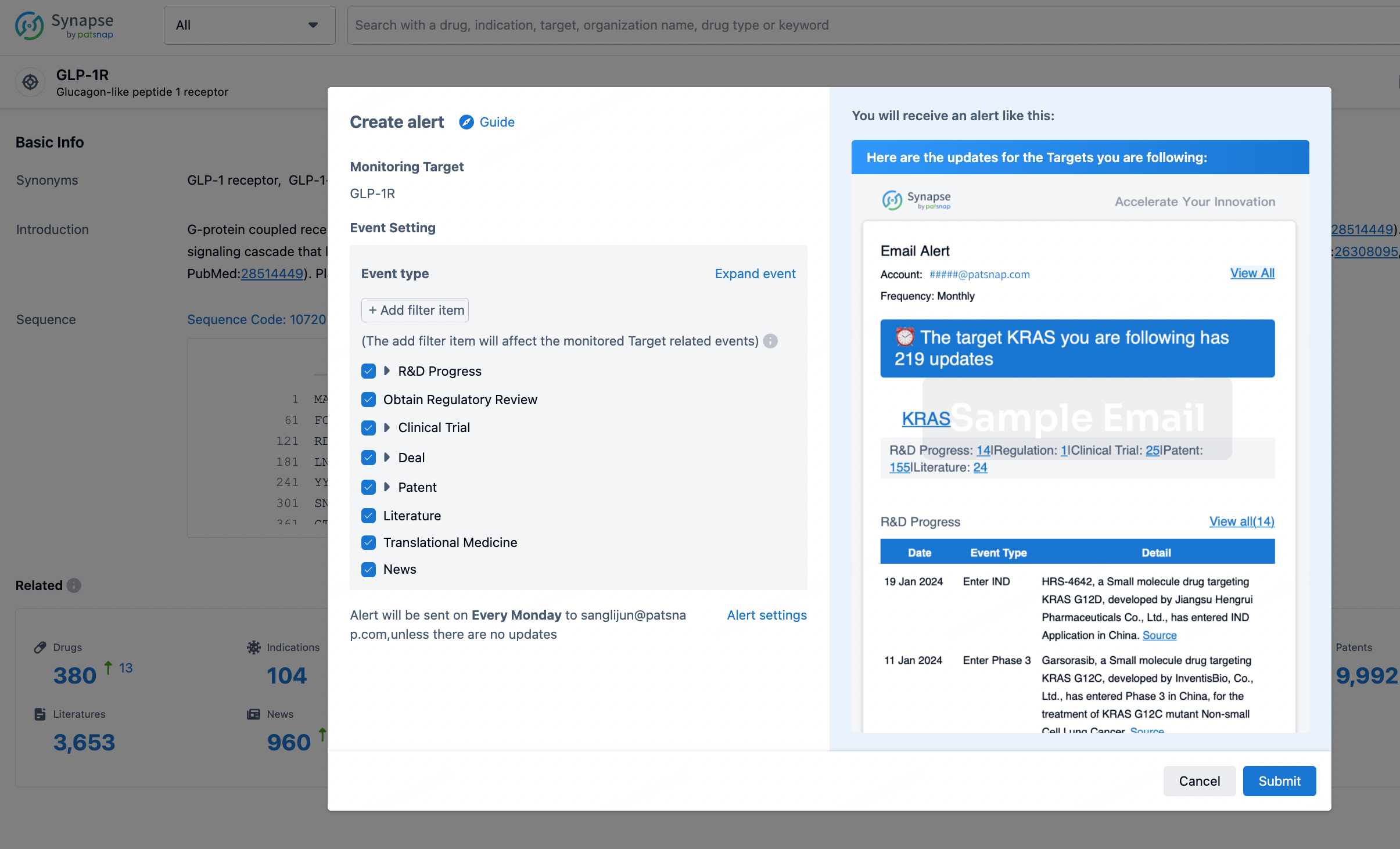
In the Synapse database, you can stay updated on the latest research and development advances of all targets. This service is accessible anytime and anywhere, with updates available daily or weekly. Use the "Set Alert" function to stay informed. Click on the image below to embark on a brand new journey of drug discovery!
AI Agents Built for Biopharma Breakthroughs
Accelerate discovery. Empower decisions. Transform outcomes.
Get started for free today!
Accelerate Strategic R&D decision making with Synapse, PatSnap’s AI-powered Connected Innovation Intelligence Platform Built for Life Sciences Professionals.
Start your data trial now!
Synapse data is also accessible to external entities via APIs or data packages. Empower better decisions with the latest in pharmaceutical intelligence.