Request Demo
What are NF-κB activators and how do they work?
25 June 2024
NF-κB, or nuclear factor kappa-light-chain-enhancer of activated B cells, is a protein complex that controls the transcription of DNA, cytokine production, and cell survival. NF-κB plays a pivotal role in regulating the immune response to infection. Although it has a fundamental role in normal cellular functions, its dysregulation has been linked to a variety of diseases, including cancer, inflammatory and autoimmune diseases, and septic shock. This post delves into the concept of NF-κB activators, how they work, and their various applications in the medical and research fields.
Introduction to NF-κB Activators
NF-κB activators are molecules or signals that stimulate the NF-κB pathway. This pathway is integral to the cellular response to stress, inflammatory signals, free radicals, ultraviolet irradiation, and bacterial or viral antigens. In its inactive state, NF-κB is bound to an inhibitor called IκB in the cytoplasm. NF-κB activators lead to the phosphorylation, ubiquitination, and subsequent degradation of IκB, which releases NF-κB. Once freed, NF-κB translocates to the nucleus where it binds to specific DNA sequences to initiate the transcription of target genes involved in immune and inflammatory responses.
How Do NF-κB Activators Work?
The activation of the NF-κB pathway involves a series of well-orchestrated steps. Initially, extracellular or intracellular signals trigger various receptors such as Toll-like receptors (TLRs), cytokine receptors, or antigen receptors. These receptors then activate intermediary proteins like kinases. One of the key kinases in this pathway is IκB kinase (IKK). When activated, IKK phosphorylates IκB, marking it for degradation by the proteasome. The degradation of IκB liberates NF-κB dimers, typically composed of p50 and p65 subunits. These dimers translocate to the nucleus and initiate the transcription of genes that encode pro-inflammatory cytokines, chemokines, and adhesion molecules.
The specificity of the NF-κB response is determined by several factors, including the type of activated receptor, the composition of the NF-κB dimer, and the presence of co-factors in the nucleus. Different activators can lead to the formation of different NF-κB dimers, each of which has a unique set of target genes. Additionally, post-translational modifications of NF-κB subunits can further fine-tune the cellular response.
What Are NF-κB Activators Used For?
NF-κB activators have a wide array of applications, both in research and clinical settings. In the realm of basic research, these activators are used to study the complex signaling networks and transcriptional programs regulated by NF-κB. By understanding how NF-κB is activated and how it functions, scientists can gain insights into the fundamental processes of cell survival, differentiation, and immune responses.
Clinically, NF-κB activators have potential therapeutic applications, particularly in cancer and autoimmune diseases. In oncology, for example, NF-κB is often constitutively active, leading to uncontrolled cell proliferation and survival. Targeting NF-κB activators could potentially suppress tumor growth and sensitize cancer cells to chemotherapy and radiotherapy. However, because NF-κB also plays a role in normal immune function, systemic activation or inhibition of this pathway must be approached with caution to avoid adverse effects.
In autoimmune diseases such as rheumatoid arthritis and inflammatory bowel disease, dysregulated NF-κB activity leads to excessive inflammatory responses. Modulating NF-κB activity with specific activators or inhibitors can help restore balance in the immune system and alleviate symptoms. Additionally, NF-κB activators are being investigated as adjuvants in vaccine development, where they could enhance the immune response to antigens.
In conclusion, NF-κB activators play a crucial role in the regulation of immune and inflammatory responses. Their ability to modulate the NF-κB pathway holds promise for various therapeutic applications, from treating cancer to managing autoimmune diseases. As our understanding of this complex signaling network continues to grow, so too will the potential for innovative treatments that harness the power of NF-κB activation.
Introduction to NF-κB Activators
NF-κB activators are molecules or signals that stimulate the NF-κB pathway. This pathway is integral to the cellular response to stress, inflammatory signals, free radicals, ultraviolet irradiation, and bacterial or viral antigens. In its inactive state, NF-κB is bound to an inhibitor called IκB in the cytoplasm. NF-κB activators lead to the phosphorylation, ubiquitination, and subsequent degradation of IκB, which releases NF-κB. Once freed, NF-κB translocates to the nucleus where it binds to specific DNA sequences to initiate the transcription of target genes involved in immune and inflammatory responses.
How Do NF-κB Activators Work?
The activation of the NF-κB pathway involves a series of well-orchestrated steps. Initially, extracellular or intracellular signals trigger various receptors such as Toll-like receptors (TLRs), cytokine receptors, or antigen receptors. These receptors then activate intermediary proteins like kinases. One of the key kinases in this pathway is IκB kinase (IKK). When activated, IKK phosphorylates IκB, marking it for degradation by the proteasome. The degradation of IκB liberates NF-κB dimers, typically composed of p50 and p65 subunits. These dimers translocate to the nucleus and initiate the transcription of genes that encode pro-inflammatory cytokines, chemokines, and adhesion molecules.
The specificity of the NF-κB response is determined by several factors, including the type of activated receptor, the composition of the NF-κB dimer, and the presence of co-factors in the nucleus. Different activators can lead to the formation of different NF-κB dimers, each of which has a unique set of target genes. Additionally, post-translational modifications of NF-κB subunits can further fine-tune the cellular response.
What Are NF-κB Activators Used For?
NF-κB activators have a wide array of applications, both in research and clinical settings. In the realm of basic research, these activators are used to study the complex signaling networks and transcriptional programs regulated by NF-κB. By understanding how NF-κB is activated and how it functions, scientists can gain insights into the fundamental processes of cell survival, differentiation, and immune responses.
Clinically, NF-κB activators have potential therapeutic applications, particularly in cancer and autoimmune diseases. In oncology, for example, NF-κB is often constitutively active, leading to uncontrolled cell proliferation and survival. Targeting NF-κB activators could potentially suppress tumor growth and sensitize cancer cells to chemotherapy and radiotherapy. However, because NF-κB also plays a role in normal immune function, systemic activation or inhibition of this pathway must be approached with caution to avoid adverse effects.
In autoimmune diseases such as rheumatoid arthritis and inflammatory bowel disease, dysregulated NF-κB activity leads to excessive inflammatory responses. Modulating NF-κB activity with specific activators or inhibitors can help restore balance in the immune system and alleviate symptoms. Additionally, NF-κB activators are being investigated as adjuvants in vaccine development, where they could enhance the immune response to antigens.
In conclusion, NF-κB activators play a crucial role in the regulation of immune and inflammatory responses. Their ability to modulate the NF-κB pathway holds promise for various therapeutic applications, from treating cancer to managing autoimmune diseases. As our understanding of this complex signaling network continues to grow, so too will the potential for innovative treatments that harness the power of NF-κB activation.
How to obtain the latest development progress of all targets?
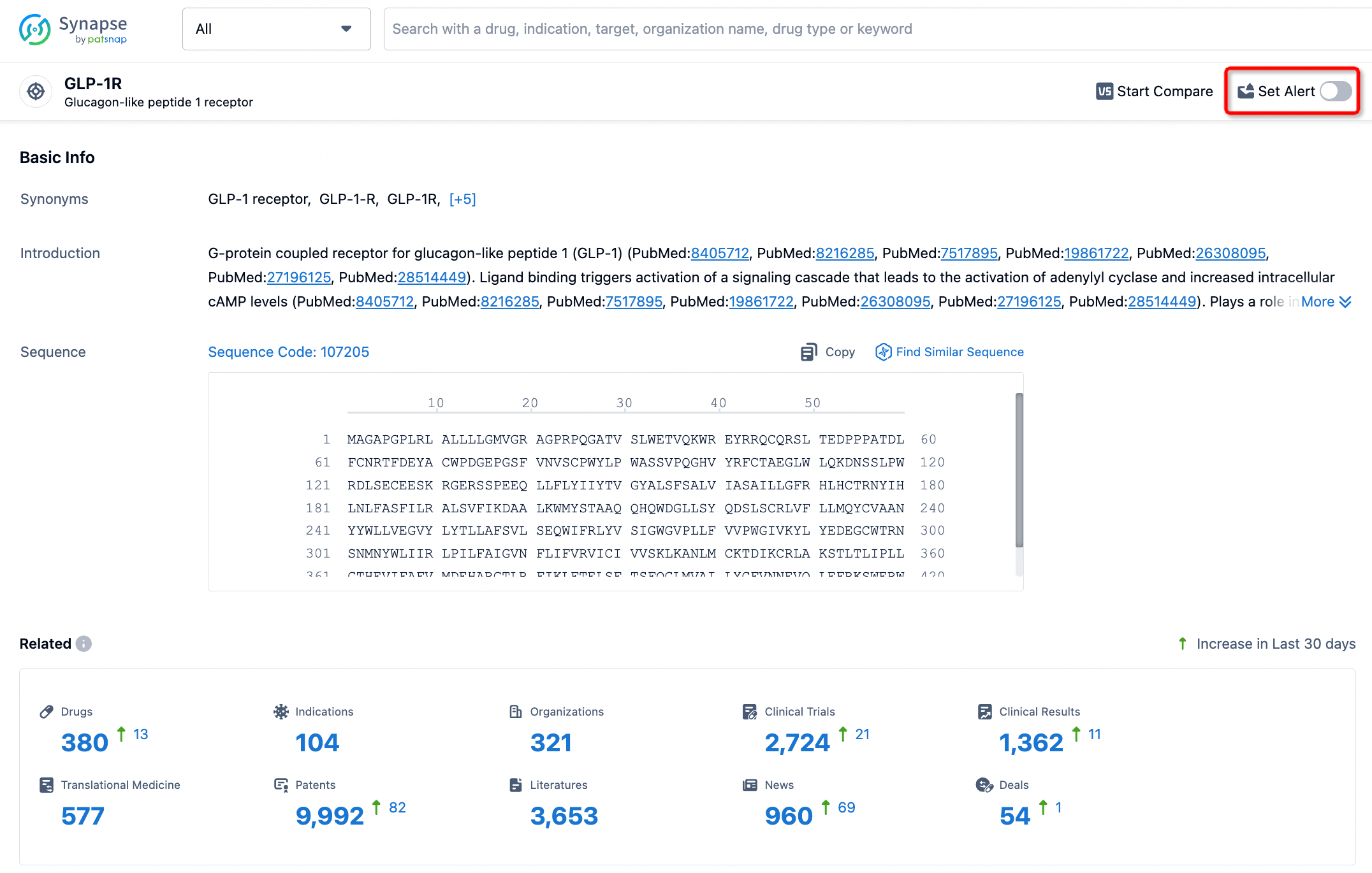
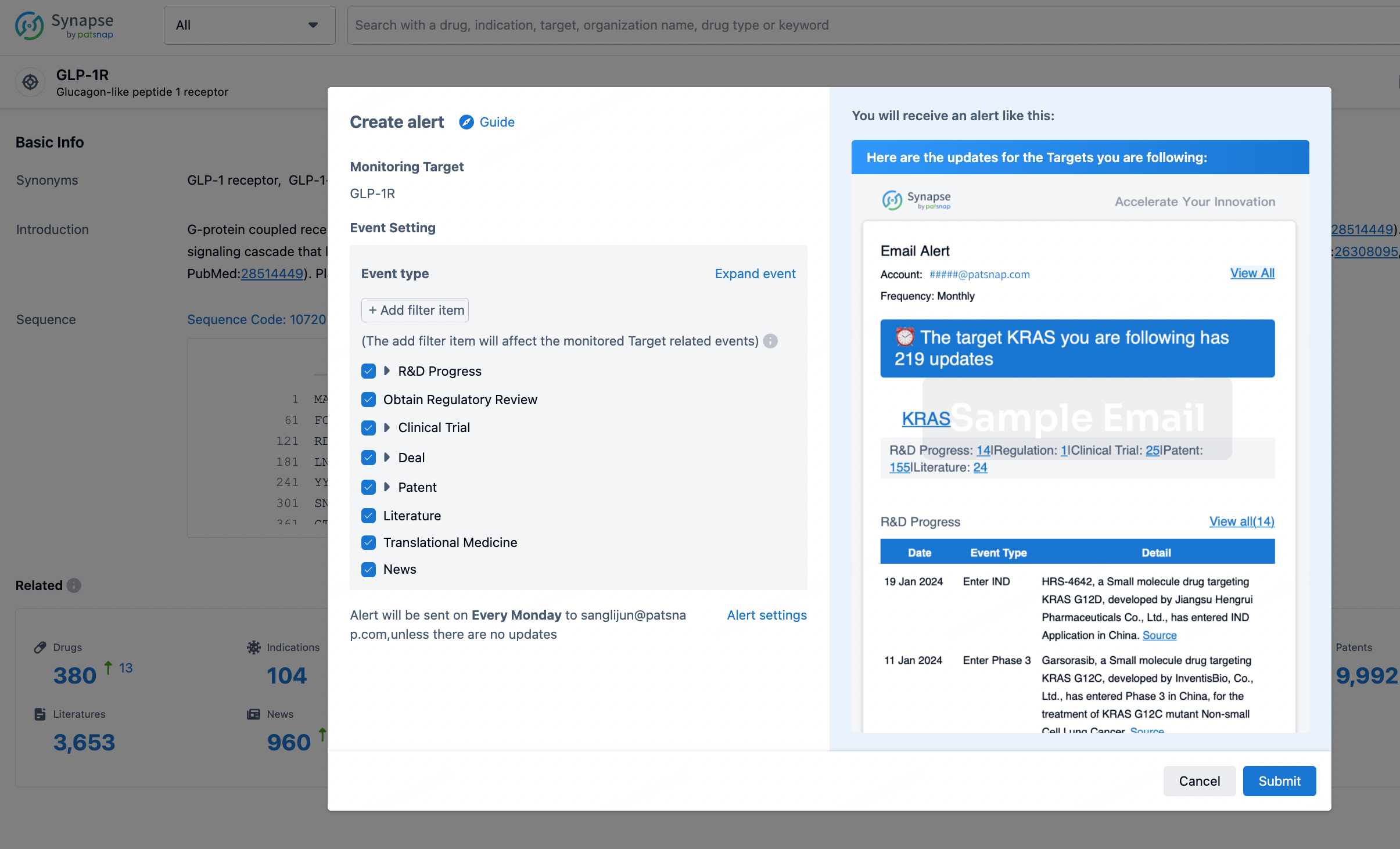
In the Synapse database, you can stay updated on the latest research and development advances of all targets. This service is accessible anytime and anywhere, with updates available daily or weekly. Use the "Set Alert" function to stay informed. Click on the image below to embark on a brand new journey of drug discovery!
AI Agents Built for Biopharma Breakthroughs
Accelerate discovery. Empower decisions. Transform outcomes.
Get started for free today!
Accelerate Strategic R&D decision making with Synapse, PatSnap’s AI-powered Connected Innovation Intelligence Platform Built for Life Sciences Professionals.
Start your data trial now!
Synapse data is also accessible to external entities via APIs or data packages. Empower better decisions with the latest in pharmaceutical intelligence.